
The year that never happened often does not feel distant.
It feels absent.
You try to recall it and find only fragments. A room you barely left. A screen you stared at too long. Conversations you know occurred but cannot place. When people mention it, agreement comes easily, not because it is remembered clearly, but because there is a shared recognition of blankness.
The memory is not missing.
It is unformed.
There is a temptation to say time moved too fast. That the days blurred because everything happened at once. Yet that explanation never fully settles. Other fast years left weight behind them. Years filled with movement, disruption, travel, or emotional rupture still carry residue.
This one did not.
It passed without edges.
Not empty while it unfolded, but hollow afterward. The kind of hollowness that becomes noticeable only when something is supposed to be there.
By the fifth or sixth attempt to describe it, people stop trying. Language fails before memory does.
Something about that year resists narration.

When Memory Loses Its Edges
The year that never happened did not disappear because it was overwhelming. It disappeared because it lacked transitions.
Memory does not operate like a calendar. It does not store time evenly or preserve duration. It records contrast. It relies on beginnings and endings, on shifts large enough to signal that one thing has stopped and another has begun.
Without those signals, experience slides past without anchoring.
Cognitive research on event segmentation shows that memory forms around moments of change rather than stretches of continuity. When environments remain static and routines repeat under low-grade pressure, memory compresses rather than accumulates.
Days blend. Weeks collapse. Months lose sequence.
This is why people can recall the first week of a trip in vivid detail but struggle to reconstruct the months before it. Novelty sharpens recall. Repetition dulls it.
The year that never happened was not empty.
It simply never attached itself to memory.
Stress played a role, but not the dramatic kind. Acute stress produces sharp memories. Prolonged ambient stress flattens them. When vigilance becomes constant, nothing stands out enough to be recorded deeply.
You do not remember days.
You remember thresholds.
That year produced almost none.
A familiar desk. The same walls. The same routes through digital space. The same muted anxiety humming beneath everything. Without clear transitions, memory stopped knowing where to file experience.
Time did not vanish.
It failed to register.
This flattening mirrors patterns explored in Why Modern Days Feel Forgettable — The Psychology of Invisible Time, where continuity replaces punctuation and memory thins as a result.
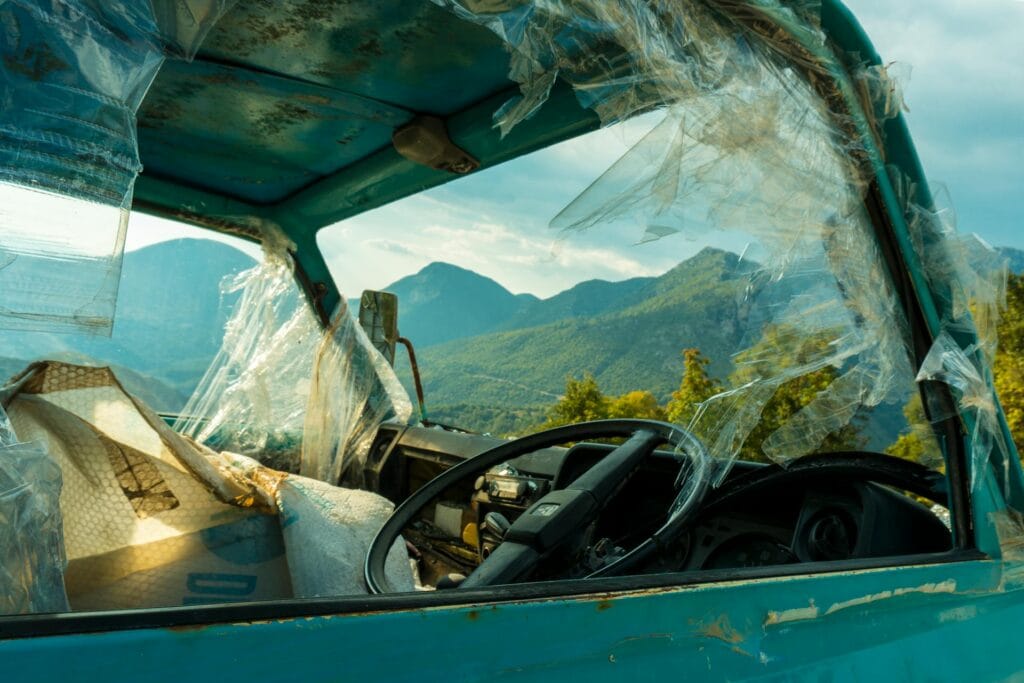
Stress without a Story
The year that never happened did not feel traumatic in the moment for many people. That is part of why it remains difficult to recall.
Prolonged stress without narrative resolution interferes with memory encoding. Experiences are processed just enough to function but not deeply enough to consolidate. Attention fragments. Presence becomes partial.
You were present enough to cope.
Not present enough to remember.
Research conducted during periods of collective strain found widespread distortions in time perception. Events felt out of order. Entire months collapsed into single impressions. People struggled to sequence their own lives afterward.
Even those who believed they managed well reported the same fog.
When stress becomes background rather than event, it stops producing memories and starts eroding them instead.
This was compounded by attention fragmentation. Days split into dozens of shallow interactions. Notifications interrupted thought before it could settle. Nothing demanded full engagement long enough to earn permanence.
Experience continued without arrival.
This same dynamic appears in Why People Are Obsessively Watching Videos That Never End, where consumption replaces participation and nothing ever fully concludes.
Without arrival, memory has nothing to hold.
A year becomes real not through productivity or intensity, but through difference. Difference in rhythm. In setting. In who you are required to be.
That year required very little differentiation.
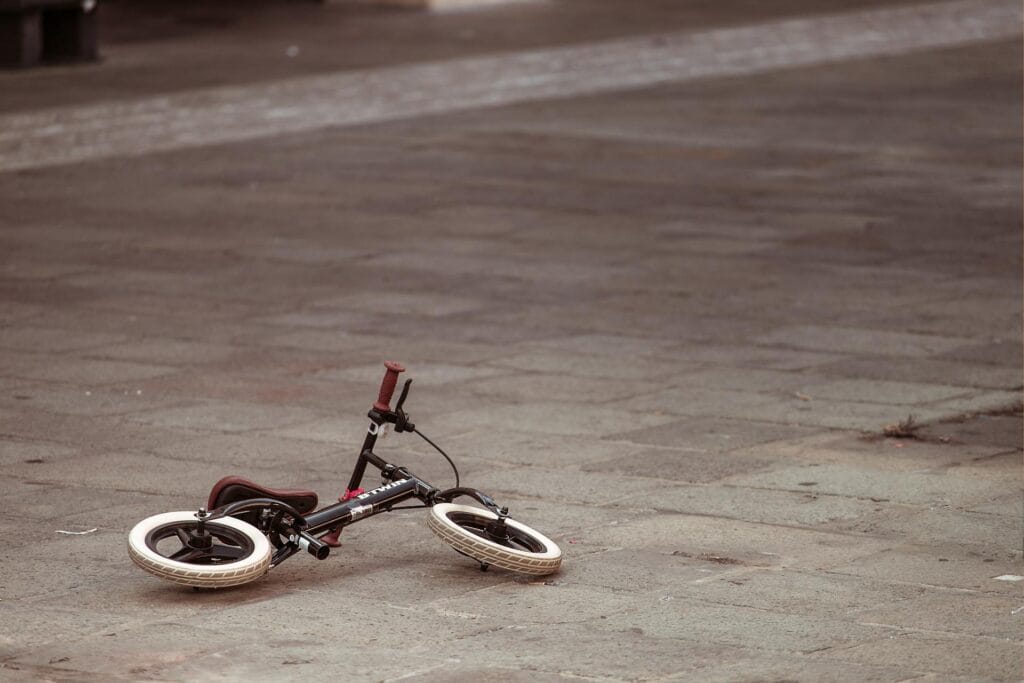
The Self That Did Not Update
Another reason the year that never happened feels absent is harder to admit.
Identity usually updates through friction. Through decisions that cost something. Through moments that force recognition of change. When those pressures disappear, the sense of self stalls quietly.
You lived. You functioned.
But you did not revise.
When people say the year feels missing, they are often pointing to this absence. Not the lack of events, but the lack of personal movement. Memory binds itself to identity shifts. We remember periods where something in us hardened, softened, clarified, or broke.
That year did not demand enough of you to change.
The self remained operational but unedited.
There is also a social dimension to this loss. Time becomes real partly through shared narration. Years are remembered because people argue about them later. They compare notes. They build a collective story.
That year resisted narration.
Everyone experienced it differently, yet similarly enough that comparison failed. There was no agreed storyline, only parallel suspensions. Without social stitching, private memory remained loose.
Photos did not help. They documented surfaces rather than transitions. The images exist, but they do not trigger recall. They feel like evidence of time rather than portals back into it.
This is why people say, “I know it happened, but I cannot feel it.”
That gap between knowing and feeling is where the year slipped away.
There is an unsettling implication here.
Modern systems increasingly reward continuity. Platforms reduce friction. Workflows favor sameness. Life is designed to be smooth rather than marked.
But memory does not thrive in smoothness.
It needs interruption. It needs moments that resist efficiency. It needs edges sharp enough to cut time into shape.
When those disappear, time does not simply pass quietly.
It fails to attach.
And once a year fails to attach, it does not recede. It lingers as absence.
Not gone.
Unplaced.

What Remains Unresolved
There is no clean way to retrieve a year that never fully formed.
Trying to reconstruct it often makes the absence more obvious. The harder you search for detail, the clearer the void becomes. Memory refuses to cooperate.
This does not mean something is wrong with you.
It means the conditions for memory were never met.
The disturbing part is not that a year vanished. It is that similar conditions now repeat quietly. Fewer boundaries. Fewer endings. Fewer moments that insist on being remembered.
The year that never happened was not an anomaly.
It was a preview.
And once you notice that, the feeling does not resolve.
It stays open.
Further Reading: Why are human babies so helpless at birth?
What I learnt from my kurdish barber in london
What is dharma? what the mahabharata knew about losing everything


 Psychology · Sep 22, 2026Chimpanzees Have Accents. They Grow into Them.
 The Margin · Sep 17, 2026People Are Seeing Ads in Their Dreams.
 Slow Meridian · Sep 16, 2026Autumn Leaves