Yayati Spent a Thousand Years Chasing Enough. He Never Found It.
Kama Purushartha, the third of the four aims of life, is the one nobody fully warns you about. Not because it is forbidden. Because it does not end where you expect it to. There is a king in the Mahabharata who is given everything and still cannot stop. His name is Yayati. He rules a…
Ashwatthama Curse: The Wound That Never Closes.
The Ashwatthama curse is not a punishment for what he did. It is a punishment for what he became. After the war ends, after the sleeping children are killed and the last fire dies, Krishna faces Ashwatthama in a field. He does not kill him. He takes the gem from his forehead, the one Ashwatthama…
What the Mahabharata Knew About Generational Trauma That Science Is Only Now Confirming
Karna and trauma arrive together in the Mahabharata before the first word of his story is spoken. Karna is sitting at the river’s edge, performing his morning prayers. He does this every day without fail. Through everything the world has done to him, this ritual holds. Kunti finds him there. She is his mother. He…
Dronacharya and Arjuna: Why He Chose a Student over His Own Son
Drona had one son and one student. He loved both completely. He could not serve both equally. The Mahabharata does not pretend otherwise. This is not a story about favouritism in the way the word is usually used. It is a story about the oldest conflict a teacher faces. What you owe the person who…
Ahamkara: The Ego the Gita Actually Warned You About. It Is Not What You Think
Duryodhana says something in the Mahabharata that most retellings quietly skip. He says: I know what is right. I cannot do it. I know what is wrong. I cannot stop myself. The Gita has a name for the mechanism behind that admission. Ahamkara meaning, in Sanskrit, is literally this: the I-maker. And understanding it changes…
Eklavya’s Thumb: The Story the Mahabharata Never Defends.
Why did Drona ask for Eklavya’s thumb? It is one of the most searched questions about the Mahabharata and one of the least honestly answered. The short answer is that Arjuna felt threatened and Drona acted on it. The longer answer says something uncomfortable about how institutions handle talent they did not produce and cannot…
Why Did No One Help Draupadi When She Asked the Most Logical Question in the Room?
Why did no one help Draupadi? It is a question that has sat unanswered for three thousand years. Not because there is no answer. Because the answer is uncomfortable. What Had Just Happened Yudhishthira sat down to gamble with Shakuni playing on behalf of Duryodhana. Round by round he lost everything. His wealth. His kingdom.…
Duryodhana Real Story: What the Mahabharata Actually Says
The Duryodhana real story is usually told as a simple warning. Greed destroyed him. Pride was his flaw. The Pandavas were righteous and he was not. Villain. Done. The Mahabharata is not done. What the text records, with careful attention, is something far more uncomfortable than villainy. A man was told, by nearly everyone he…
Draupadi’s Question in the Mahabharata Nobody Could Answer
Draupadi’s question in the Mahabharata was not rhetorical. She needed an answer. She asked it in a room full of the wisest, most senior men in the known world. Men who had spent their lives studying the very frameworks designed to answer it. Not one of them spoke. That silence is still one of the…
Abhimanyu Knew How to Enter the Chakravyuha. Nobody Taught Him How to Leave
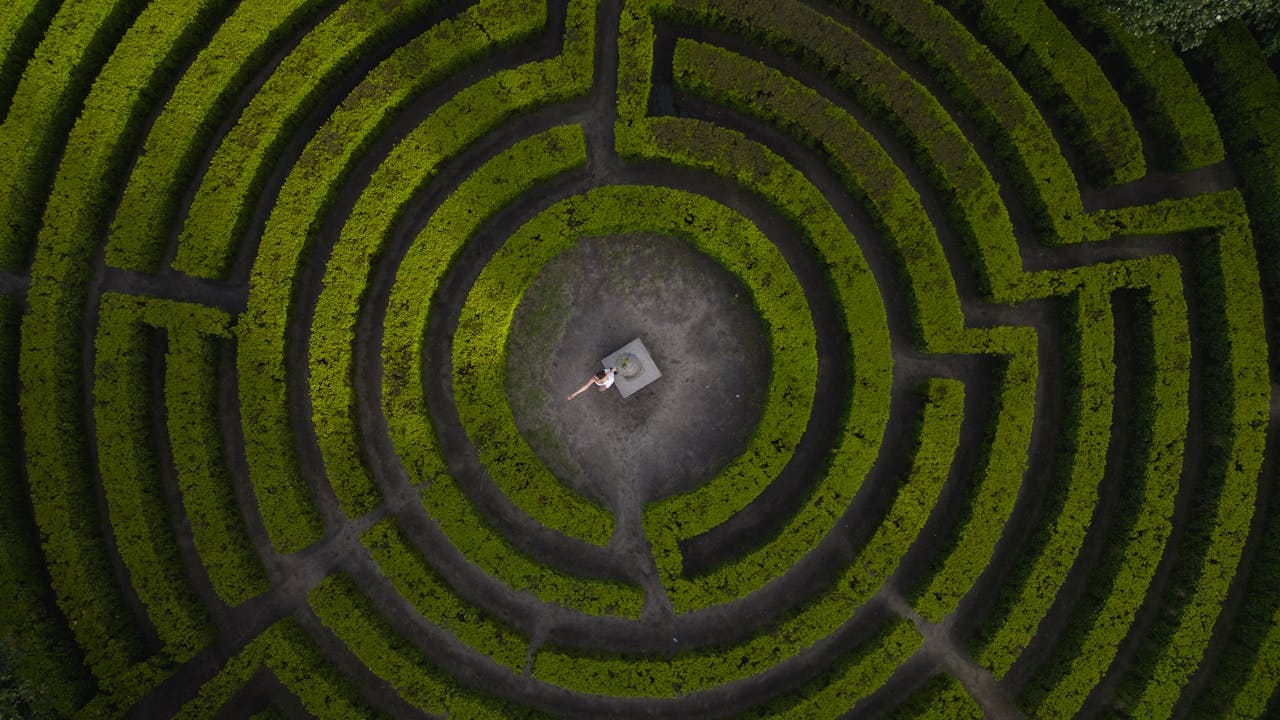
Abhimanyu learned the Chakravyuha meaning before he was born. His father Arjuna was explaining it to his mother Subhadra one night. The chakravyuha was a military formation shaped like a spinning wheel, seven layers of soldiers rotating inward, each ring harder than the last. Arjuna was describing how to enter it, how to read the…