Savitri and Satyavan story meaning and why it is the oldest argument against the idea that love is a feeling.
It is not a feeling in this story. It is a decision. Then a series of further decisions, each one more costly than the last, made by a woman who knew exactly what she was walking into and walked in anyway.
She had been warned. That is the part people forget.
She Already Knew
Savitri was a king’s daughter. Educated, traveled, given the rare freedom of choosing her own husband at a time when that was not standard practice.
She chose Satyavan.
A prince in exile. Living in a forest with his blind father. No kingdom, no title, no obvious future. And destined, according to the sage Narada who had consulted the relevant records, to die within exactly one year.
Narada told her father. Her father told her. Everyone in the story who knew told her.
She already knew.
She had met Satyavan in the forest and had seen what she needed to see. Not a romantic ideal. Not a project. A person whose quality she recognised and chose to stay close to.
She married him. They lived in the forest for a year. She counted the days. She kept count the way you keep count of something you know is ending.
On the day Narada had identified, she followed Satyavan into the forest to cut wood. She had been fasting for three days prior. She had not told him why.
He felt unwell. He lay down with his head in her lap.
Yama arrived.
What Kama Actually Is
Kama is the third of the four Purusharthas. The four aims of a complete human life that together form the old Indian map of what it means to live well.
Kama is usually translated as desire or pleasure. The translation is not wrong. It is just too small.
The tradition was specific. Kama is not appetite. It is not the passive experience of wanting something. It is the full orientation of a person toward what they love. The active force of it. The thing that makes a person move.
Dharma is the righteous path. Artha is the material ground beneath your feet. Kama is the reason you want to walk anywhere at all.
Without it, Dharma becomes obligation without direction. Artha becomes accumulation without purpose. The Purusharthas need Kama to be alive rather than correct.
But the texts are careful. Kama that is only longing becomes a kind of suffering. You want and want and the wanting itself becomes the whole activity. Nothing moves. Nothing reaches.
The distinction the Mahabharata makes through Savitri is between Kama as a feeling and Kama as a force.
Wanting is the beginning. Going to get it is the whole thing.
The Argument in the Forest
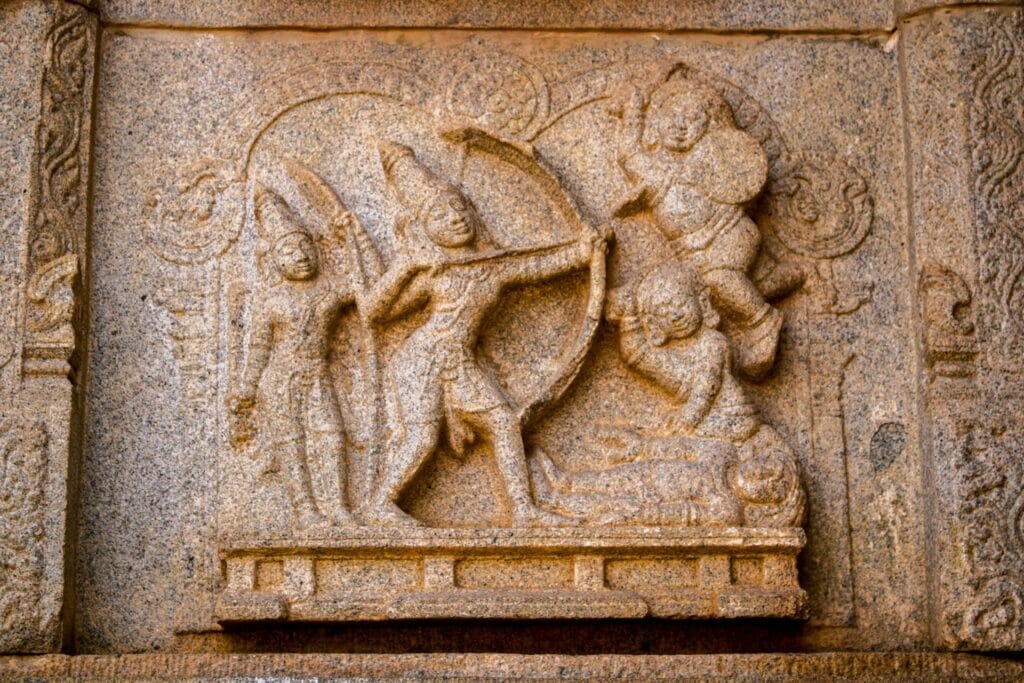
Yama came for Satyavan with a noose.
Savitri stood up and followed him.
Yama told her to go home. He explained, with some patience, that she was not dead and therefore had no business in this part of the forest. That her husband’s time had come correctly and the matter was settled.
She kept walking.
She did not rage. She did not bargain from panic. She spoke precisely, calmly, about dharma and the nature of the wise, and about how the company of the righteous is always worth continuing a little longer.
Yama, who by most accounts does not receive a great deal of conversation on these walks, was interested enough to offer her a boon. Anything except her husband’s life.
She asked for her blind father-in-law’s sight to be restored.
He granted it. She kept walking.
He offered another boon. She asked for her father’s kingdom, which had no heirs, to be given sons.
He granted it. She kept walking.
He offered a third boon. Anything, he said again. Except.
She asked for children of her own.
He granted it.
Then she stopped walking. And she pointed out, very quietly, that the boon he had just given her was impossible to fulfil with her husband dead.
Yama looked at her for a moment.
He returned Satyavan.
What the Three Days Actually Were
The commentators spend a great deal of time on the theology of this story. On what Yama’s boons mean and whether Savitri’s argument constitutes a loophole or a lesson.
That is not what the story is about.
The story is about what it costs to stay present in the direction of what you love when every reasonable voice in the room has told you not to.
Savitri did not win through cleverness alone. The cleverness was in service of something else. She had spent a year counting days toward the worst one. She had fasted three days in preparation to be strong enough to follow.
She had watched her husband fall ill and held him and known what was coming and stayed present for every moment of it.
The boons were precise because she had thought clearly under conditions that would undo most people’s thinking entirely.
Kama, in its fullest form, does not make you reckless. It makes you focused.
The grief was real. The fear was presumably real. She walked anyway. She argued calmly with Death for three days. She asked for exactly what she needed in exactly the right sequence.
This is not passion as it tends to appear in stories. No grand declaration. No collapse into feeling.
Just a woman who decided what she wanted, registered the full cost, and then moved toward it steadily.
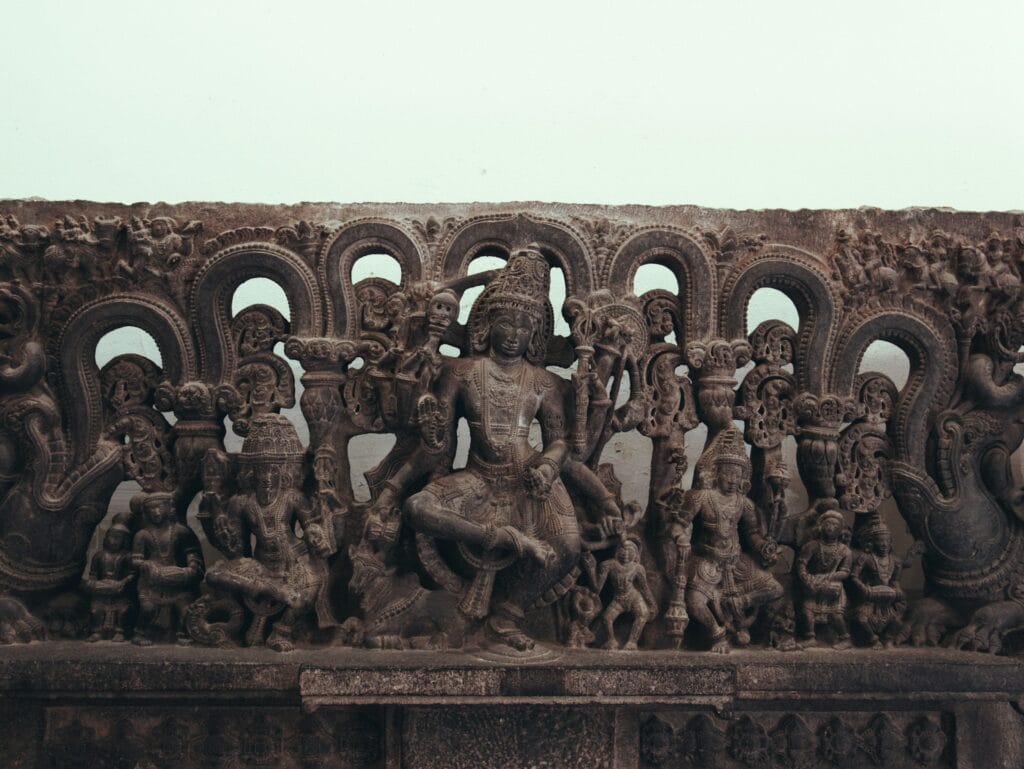
The Particular Modern Confusion
The modern version of Kama is mostly sold as the feeling.
The longing. The wanting. The ache of it. This is treated as the whole substance of the thing. You desire something, you feel it intensely, you are a person of deep feeling.
But the Mahabharata is not interested in how much you feel. It is interested in what you do.
There is a recognisable modern experience that lives in the space between wanting and moving. A person who knows exactly what they love and spends years feeling that love intensely and does not go toward it. Not because they cannot. Because going toward it is the frightening part.
Longing feels like love. It has the texture of love. It produces the internal experience of being a person who cares deeply.
But the Purusharthas framework is blunt about this. Kama without movement is not Kama. It is a private experience that resembles one of the aims of life without actually being it.
Savitri never argues about how much she loves Satyavan. She does not mention it. She follows Death into a forest and keeps walking and asks for what she needs.
The love is not the subject. The love is why she got up.
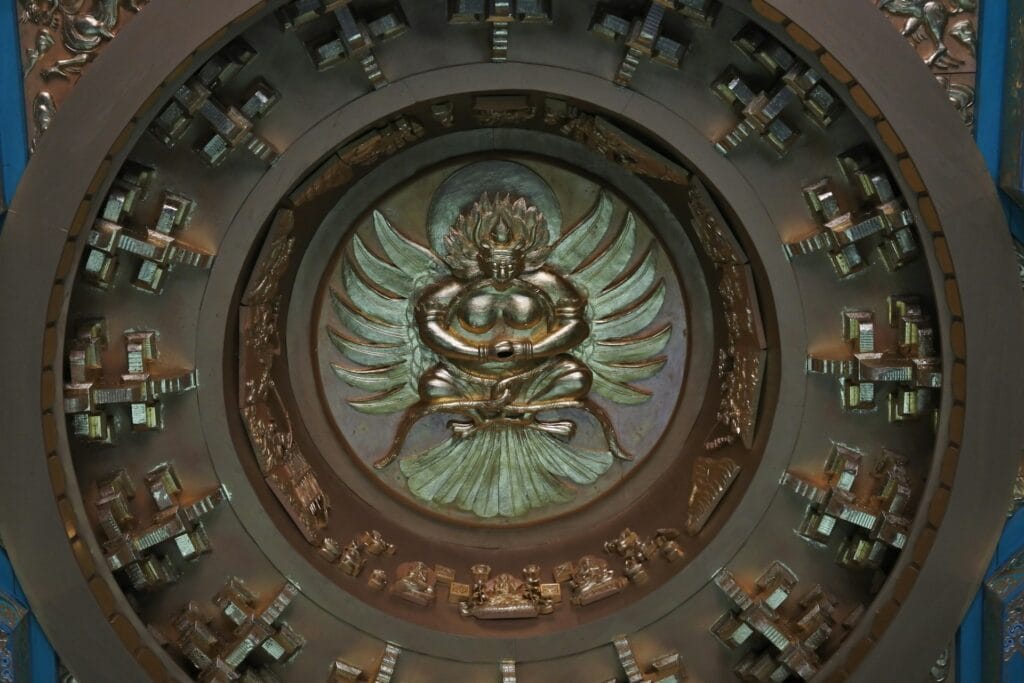
What the Forest Was
She did not get Satyavan back because she loved him more than other people love the people they lose.
People love the people they lose completely. That is not what separates Savitri.
What separates her is that she followed.
Not in a mystical sense. In the most ordinary sense available. She saw where things were going and she went there too. She prepared for the worst day of her life three days in advance. She did not look away from the fact of it. She walked into the difficulty with everything she had available.
The forest in this story is not a supernatural place. It is the place you arrive when you have decided not to let what you love disappear without making the full case for it.
Most people stand at the edge of that forest. They know where the path leads. They feel the pull of it.
Savitri just kept walking.
That is what Kama demands. Not the feeling. The walk.
Read Next: What is dharma? what the mahabharata knew about losing everything

 Psychology · Sep 22, 2026Chimpanzees Have Accents. They Grow into Them.
 The Margin · Sep 17, 2026People Are Seeing Ads in Their Dreams.
 Slow Meridian · Sep 16, 2026Autumn Leaves