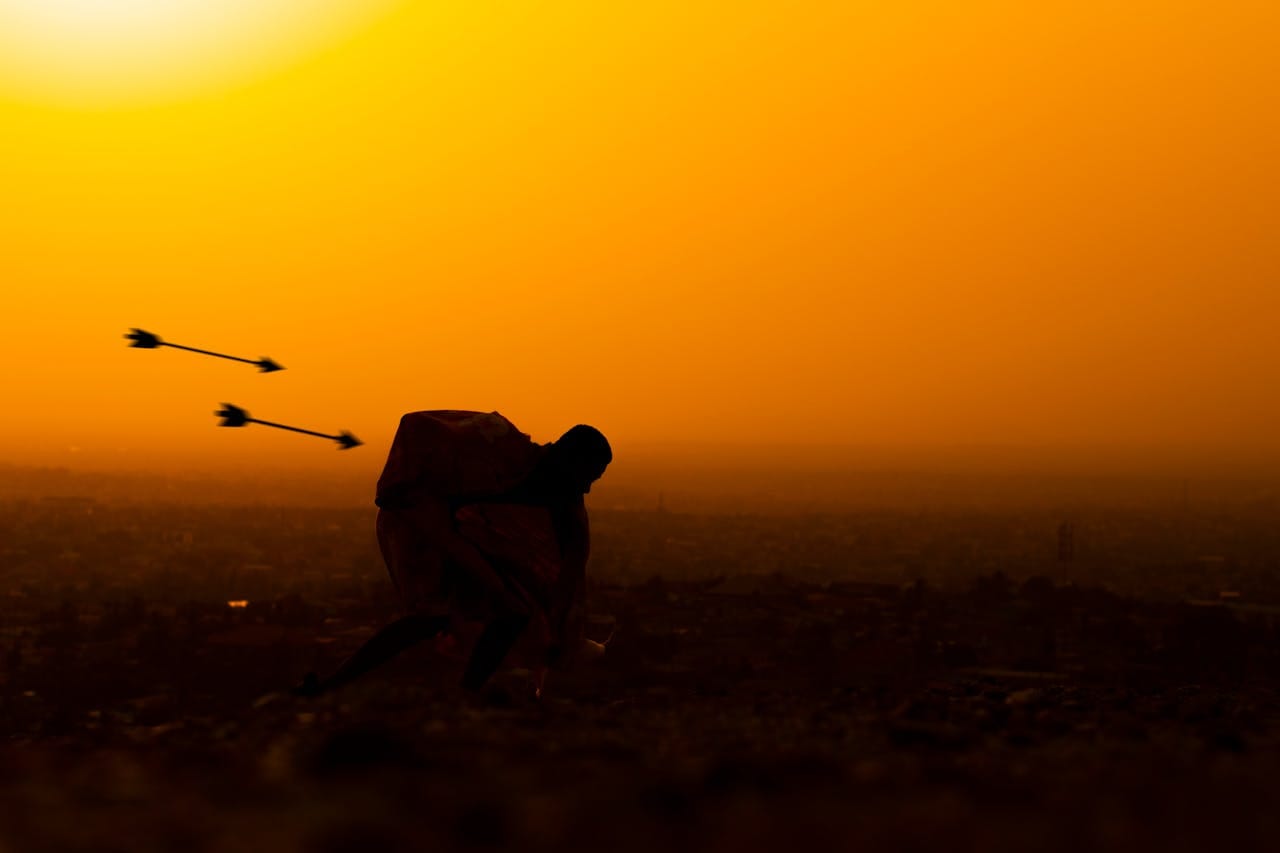
Why did Drona ask for Eklavya’s thumb? It is one of the most searched questions about the Mahabharata and one of the least honestly answered.
The short answer is that Arjuna felt threatened and Drona acted on it.
The longer answer says something uncomfortable about how institutions handle talent they did not produce and cannot control.
What Arjuna Found in the Forest
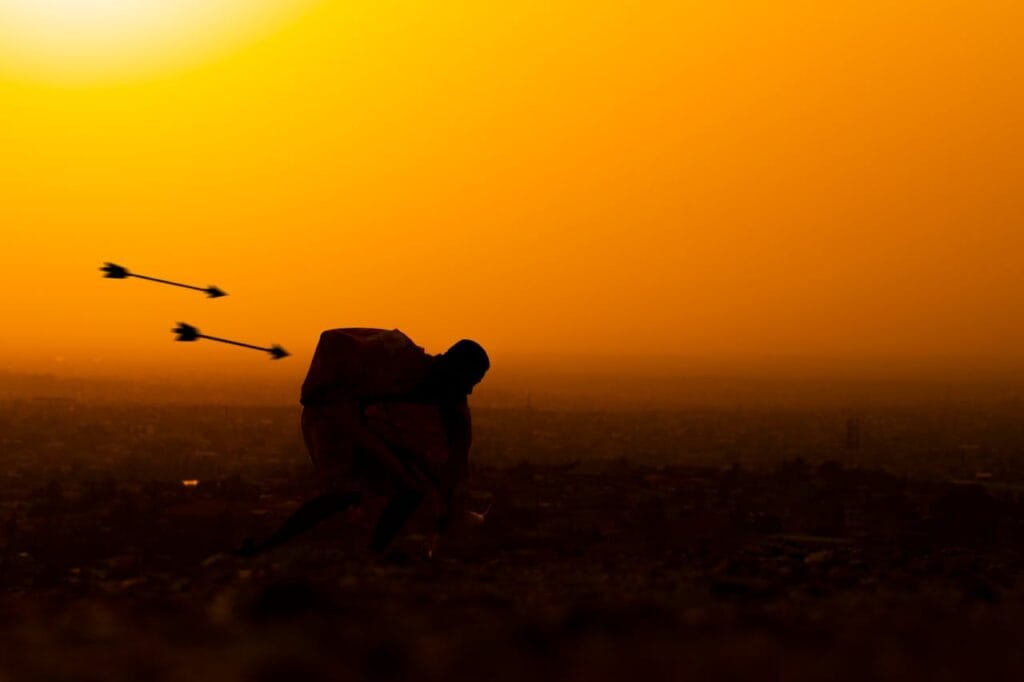
The Pandava princes were on a hunting trip in the forest when their dog wandered off alone and came back silenced.
Not injured. Silenced. Seven arrows had been fired in rapid succession into its open mouth, blocking it perfectly, without drawing a single drop of blood.
The princes stared at the dog. Not one of them, including Arjuna, could have done what had just been done to that animal. They went looking for whoever was responsible.
They found Eklavya.
Who Eklavya Was
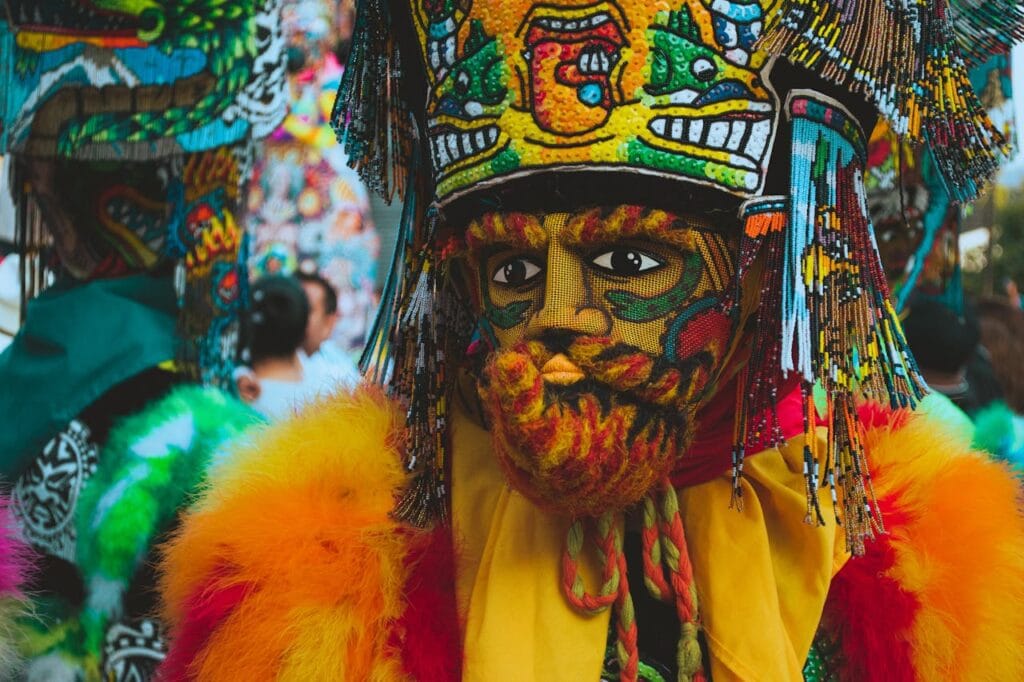
Eklavya was the son of Hiranyadhanus, chief of the Nishada tribe, a forest-dwelling hunting community that sat entirely outside the four-varna social system of ancient India.
He had come to Drona’s gurukul years earlier asking to be taught archery. Drona refused. He was employed by the Kuru royal family to train their princes. Eklavya was not a prince. He was a tribal boy from outside the recognised social order, and Drona turned him away.
Eklavya did not leave archery. He went into the forest, built a clay statue of Drona, treated it as his teacher, and practiced every day in front of it for years.
By the time Arjuna’s dog found him, he was better than anyone the royal gurukul had produced.
What Arjuna Did Next
Arjuna went directly to Drona.
He reminded his teacher of a promise Drona had made him: that no student of his would ever surpass Arjuna in archery. He was not making a casual observation. He was calling in a commitment.
Drona had never taught Eklavya. But Eklavya had taught himself using Drona’s image as his guide and claimed Drona as his guru. In his own mind, he was Drona’s student. And by any practical measure, he was now Drona’s best one.
Drona went to find him.
Why Did Drona Ask for Eklavya’s Thumb?
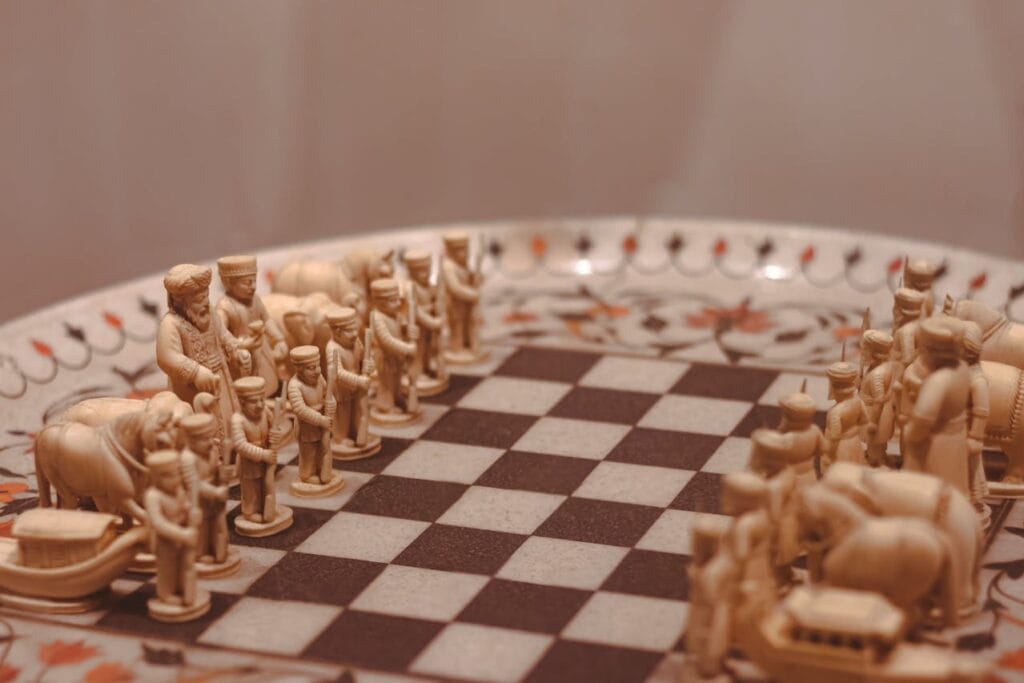
When Drona arrived, Eklavya did what any devoted student would do on seeing his teacher. He bowed, offered his respects, and said there was nothing he would not give as gurudakshina.
Drona asked for his right thumb.
He knew exactly what he was asking for. Without the right thumb, the grip required for high-level archery is gone. Eklavya would never shoot at that level again.
Eklavya cut off his thumb and handed it over without hesitation.
What the Mahabharata Actually Says About This
Here is the detail most retellings skip entirely.
The Mahabharata does not defend Drona. The text describes his demand using the word daruna, which translates as terrible, cruel, or dreadful. The epic is not asking you to admire what happened. It is telling you clearly how to feel about it.
And there is a second detail, buried in the Drona Parva, where Krishna later tells Arjuna the full picture. He says: “It was for your sake that Drona adopted the disguise of a preceptor and severed the Nishada’s thumb.”
Drona knew what he was doing. It was not impulsive. It was calculated.
Eklavya was also an ally of Jarasandha, one of the most powerful enemies of Hastinapur at the time. A supremely skilled archer fighting for the opposing side was a military threat. Drona had reasons beyond Arjuna’s ego. But the text still calls the act terrible, and Krishna’s framing still places it in the category of manipulation rather than wisdom.
The Mahabharata holds both things at once without resolving them, which is what makes it a serious piece of literature rather than a morality fable.
What Psychology Calls This
There is a well-documented pattern in organisations and institutions where a talented outsider appears, performs better than the insiders, and is then systematically removed or diminished by those in authority.
It does not always look like cruelty. It often looks like process. Like rules. Like a reasonable application of existing standards.
Drona had a contract with the Kuru family. He had a promise to Arjuna. He had a system to maintain. Every step he took was defensible within the logic of that system. The system itself is what made the act possible.
Psychologists who study institutional gatekeeping describe how organisations develop informal mechanisms to protect existing hierarchies from disruption by high performers who arrive from outside the expected pipeline.
The mechanisms vary. The function is the same: to ensure that talent which the institution did not produce does not outgrow the talent it chose to invest in.
Eklavya had not been admitted. He had not been trained. He had no patron, no caste standing, no political backing inside the structure. He had only his skill and his devotion.
Neither was enough. In fact, his devotion was the precise tool used against him. Because he revered Drona completely, he would give Drona anything. Drona knew that. He asked for the one thing that would restore the order Eklavya had disrupted simply by being extraordinary.
What the Story Is Really About
Why did Drona ask for Eklavya’s thumb? Because Eklavya had become the best archer in the world without asking anyone’s permission, and that was a problem the institution needed to solve.
The Mahabharata does not pretend otherwise. It calls it terrible. It records the demand, the compliance, and the loss without dressing any of it up.
Eklavya gave his thumb willingly, out of a devotion so complete it could not conceive of refusal. He went on practicing with what remained. He became a king. He fought in later battles. His sons fought at Kurukshetra.
The system took his thumb. It could not take the rest.
But the story is remembered for what was taken, not for what survived. The Mahabharata understood that too.
Read Next: Bhishma did not die when the arrows hit him. he chose when.
What the Mahabharata knew about being right and being ignored
What the Mahabharatha knew about wealth that nobody told you
 Psychology · Sep 22, 2026Chimpanzees Have Accents. They Grow into Them.
 The Margin · Sep 17, 2026People Are Seeing Ads in Their Dreams.
 Slow Meridian · Sep 16, 2026Autumn Leaves