
Ahamkara: the ego the Gita actually warned you about. It is not what you think

Some links on this page may be affiliate links. If you purchase through them, we may earn a commission at no extra cost to you.
KEY TAKEAWAYS
  • Ahamkara, or the 'I-maker,' is the mental function that filters all experience through the lens of self-identity, shaping how individuals interpret events in relation to themselves.
  • The Gita highlights the danger of Ahamkara when it dominates perception, causing people to act in self-protective ways that prevent them from doing what they know is right.
  • Neuroscience's default mode network parallels Ahamkara, showing how excessive self-referential thinking correlates with mental health issues and how its quieting leads to ego dissolution and clarity.
  • Duryodhana's tragic flaw in the Mahabharata exemplifies being trapped by Ahamkara, where protecting self-image overrides rational action and leads to suffering.
  • The Gita prescribes acting from discernment (Buddhi) without the self-referential craving (Nishkama), enabling clear, value-aligned action free from the burdens of identity defense.
GLOSSARY
Ahamkara
The Sanskrit term meaning 'I-maker,' referring to the mental function that constructs and protects the self-identity by interpreting all experience in relation to 'I' or 'me.'
Buddhi
The faculty of discernment or intellect in the Gita's framework, responsible for clear, rational decision-making beyond self-referential bias.
Nishkama
A state of action without craving or attachment to outcomes, where one acts without the self-referential filter imposed by Ahamkara.
Default Mode Network (DMN)
A network of brain regions active during rest that engages in self-referential thinking, memory, and social comparison, mirroring the function of Ahamkara in neural terms.
Antahkarana
The 'inner instrument' in Samkhya philosophy comprising Buddhi (discernment), Manas (mind), and Ahamkara (I-maker), which together process experience and identity.
Ego Dissolution
A neuroscientific term describing the reduction of self-boundaries and self-referential processing, often experienced in meditation or psychedelic states, paralleling the Gita's concept of liberation.
FAQ
What is Ahamkara and why is it important in the Mahabharata?
Ahamkara is the 'I-maker,' a mental function that filters all experience through self-identity. In the Mahabharata, it explains why characters like Duryodhana act against their better judgment, as their self-image traps them in destructive patterns.
How does the Gita suggest overcoming the negative effects of Ahamkara?
The Gita advises acting from Buddhi, the faculty of discernment, without the self-referential craving of Ahamkara. This means performing duties without attachment to outcomes or self-image, a state called Nishkama.
What does neuroscience reveal about the concept of Ahamkara?
Neuroscience identifies the default mode network (DMN) as the brain's correlate to Ahamkara, showing that excessive self-focused thinking is linked to mental health issues, while reduced DMN activity corresponds to ego dissolution and clearer perception.
Why was Duryodhana unable to act according to what he knew was right?
Duryodhana was trapped by Ahamkara; his identity was so tied to never yielding or losing that accepting peace felt like self-annihilation. This illustrates how Ahamkara can make correct action feel impossible when it threatens self-image.
Does the Gita advocate for losing one's sense of self to overcome Ahamkara?
No, the Gita does not call for self-erasure but for quieting the compulsive self-referential filter. The self remains, but actions are taken without the burden of defending or protecting an identity, allowing clearer and freer decision-making.
EDITORIAL NOTE
This piece is part of The Present Minds — essays on psychology, identity, and modern life.

Comments

Leave a Reply

Your email address will not be published. Required fields are marked *

The Present Minds
By Navneet Shukla April 25, 2026 Purusharth

Ahamkara: the ego the Gita actually warned you about. It is not what you think

7 min read · 1,289 words
Tap to switch read mode. Original contrast is live.
Navneet Shukla
Written By Navneet Shukla Founder · Editor · Systems Architect

Navneet Shukla writes about how people think and how modern life shapes that thinking. The Present Minds is where he explores it.

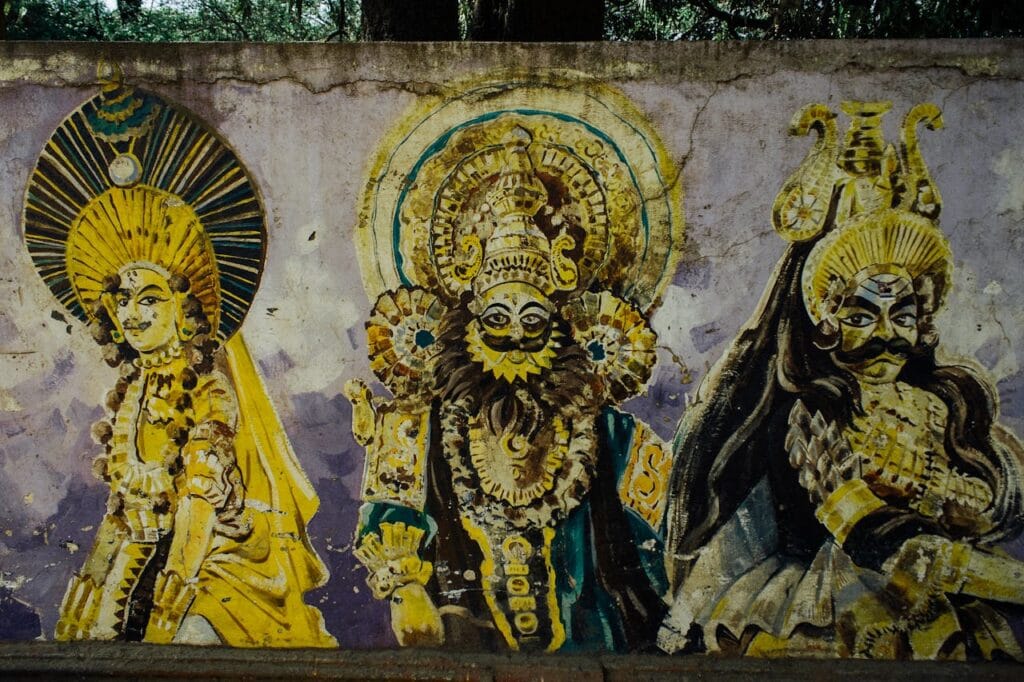
Duryodhana says something in the Mahabharata that most retellings quietly skip. He says: I know what is right. I cannot do it. I know what is wrong. I cannot stop myself. The Gita has a name for the mechanism behind that admission.

Ahamkara meaning, in Sanskrit, is literally this: the I-maker. And understanding it changes how you read almost every bad decision a person ever makes.
ahamkara meaning ego Gita Duryodhana self-referential processing

The I-Maker

Ahamkara is a Sanskrit compound. Aham means I. Kara means maker. The I-maker. Not the self, exactly. Not consciousness. The function that takes every piece of experience and passes it through a single filter: what does this mean for me?

This is worth sitting with. Ahamkara meaning, in the Gita’s framework, is not arrogance. It is not pride or vanity or ego in the way a therapist might use the word. It is something more fundamental. It is the habit of making yourself the subject of every sentence in your own experience.

The meal becomes: did I enjoy it enough? The conversation becomes: how did I come across? The achievement becomes: is this proof of who I am? The failure becomes: is this proof of who I am? Every experience, routed through the same question. The I-maker working constantly, quietly, converting life into data about the self. This is Ahamkara meaning in its plainest form.

Ahamkara is not the self. It is the compulsion to protect an idea of the self from everything that happens.

The Samkhya philosophy that underpins the Gita describes Ahamkara as one of the components of the inner instrument, the antahkarana. It sits between Buddhi, the faculty of discernment, and Manas, the processing mind. Its job is identity construction. To draw a line around experience and say: this is mine, this is me, this is what I am.

That function is not inherently wrong. The problem the Gita identifies is when it runs without interruption. When it becomes the whole of how a person encounters the world.
ahamkara meaning ego Gita Duryodhana self-referential processing

What Neuroscience Found

The default mode network is Ahamkara meaning rendered in neural tissue.

In the early 2000s, neuroscientists began mapping a network of brain regions that activate when a person is not focused on any external task. They called it the default mode network. What it does, primarily, is think about the self. It processes memories. It imagines futures. It runs social comparisons. It asks, in effect, what does this mean for me?

The DMN is Ahamkara meaning rendered in neural tissue.

Researchers found something uncomfortable. In people with depression, anxiety, and chronic rumination, the default mode network is overactive and poorly regulated. The self-referential processing does not switch off when attention is needed elsewhere. The I-maker keeps running.

They also found something useful. In experienced meditators, in people in flow states, in participants given psilocybin in controlled settings, DMN activity drops sharply. People in these states consistently report the same experience: a sense of the boundaries of the self becoming less rigid.

Less I-maker. More direct contact with what is actually in front of them.

The Gita called this the direction of liberation. Neuroscience called it ego dissolution. They are describing the same territory from opposite ends.

Duryodhana’s Trap

Return to Duryodhana. His entire arc in the Mahabharata is a portrait of Ahamkara working at full capacity with no counterweight.

Every offer of peace is a threat to the I-maker. To accept Krishna’s terms is not just to give back land. It is to become someone who yielded. Someone who lost. The I-maker has built an identity so completely around never being that person that peace itself becomes existential danger.

This is why the line he speaks is so precise. He is not deluded about what is right. Ahamkara does not operate by making you blind. It operates by making the cost of correct action feel like annihilation.

The person who knows they should apologise and cannot. The person who sees the relationship failing and cannot be the one to change first. The person who recognises their position is wrong and argues harder anyway. This is Ahamkara at work. Not stupidity. Not malice. The I-maker protecting an image of the self from the one thing that could actually free it.

The Gita does not say Duryodhana was evil. It says he was trapped. The trap had his own name on it.

what does Ahamkara mean in the Gita

What the Gita Actually Prescribes

The Gita’s response to Ahamkara is not self-erasure. This is the most common misreading. Krishna does not tell Arjuna to stop being a person, to hollow out his identity, to become indifferent.

He tells him to act from Buddhi, the discerning faculty, rather than from Ahamkara. To do what the situation requires without routing the action through the question of what it means for him. To be present to the decision rather than present to the decision’s implications for his self-image.

The word he uses for the alternative is Nishkama. Without craving. Not without feeling, not without preference, not without care. Without the Ahamkara layer that converts every outcome into a referendum on the self.

This is surgical. The self does not disappear. The I-maker quiets. What remains is a person who can act clearly, because the action is no longer carrying the additional weight of identity protection.

Modern psychology reaches a similar conclusion through a different route. Research on psychological flexibility, the capacity to act in accordance with values even when uncomfortable feelings are present, consistently shows that people who can observe their thoughts and emotions without fusing with them report higher wellbeing, better relationships, and more sustained performance.

The key variable is not the absence of self-awareness. It is the absence of self-defence.

Ahamkara in Hinduism

The Lighter Thing

The Gita is not asking for something inhuman. It is asking for something that is, in practice, lighter than the alternative.

Carrying Ahamkara at full weight is exhausting. Every interaction is a potential verdict. Every failure is an identity event. Every success must be protected. The I-maker never rests because the project of maintaining a self through external evidence is a project that cannot be completed.

What the Gita points toward is the experience, even briefly, of acting without that weight. Doing the thing because it is the right thing. Saying what is true because it is true. Meeting another person without the constant background calculation of what the encounter means for you.

Ahamkara meaning becomes clearest here, in the gap between knowing and doing. Duryodhana could not get there. The weight had become the person. He fought the war he knew he would lose rather than become someone the I-maker could not recognise.

ego in Bhagavad Gita

What Remains

Ahamkara meaning, stated simply, is this. It is a function that has exceeded its brief.

It was designed to help you navigate. To hold a stable sense of self across time, to learn from experience, to understand consequences. When it works in service of Buddhi, it is useful. When it displaces Buddhi entirely, it becomes the thing Duryodhana described. Knowledge without the freedom to act on it.

The Gita does not promise that quieting the I-maker is easy. It does not offer a technique in the way a self-help framework would. It offers something more honest: a clear account of what the mechanism is, what it costs, and what becomes possible when it is no longer running every decision.

The war had already begun when Arjuna asked the question. The I-maker had already made its demands on both sides.

Krishna answered anyway. Precisely. Without drama.

That, too, is the practice.

Read Further: Duryodhana real story: What the Mahabharata actually says

Why Did No One Help Draupadi When She Asked the Most Logical Question in the Room?

Bhishma did not die when the arrows hit him. he chose when.

Navneet Shukla
Written By

Navneet Shukla

Founder · Editor · Systems Architect

Navneet Shukla writes about how people think and how modern life shapes that thinking. The Present Minds is where he explores it.

Key Takeaways
  • Ahamkara, or the 'I-maker,' is the mental function that filters all experience through the lens of self-identity, shaping how individuals interpret events in relation to themselves.
  • The Gita highlights the danger of Ahamkara when it dominates perception, causing people to act in self-protective ways that prevent them from doing what they know is right.
  • Neuroscience's default mode network parallels Ahamkara, showing how excessive self-referential thinking correlates with mental health issues and how its quieting leads to ego dissolution and clarity.
  • Duryodhana's tragic flaw in the Mahabharata exemplifies being trapped by Ahamkara, where protecting self-image overrides rational action and leads to suffering.
  • The Gita prescribes acting from discernment (Buddhi) without the self-referential craving (Nishkama), enabling clear, value-aligned action free from the burdens of identity defense.
Glossary
Ahamkara
The Sanskrit term meaning 'I-maker,' referring to the mental function that constructs and protects the self-identity by interpreting all experience in relation to 'I' or 'me.'
Buddhi
The faculty of discernment or intellect in the Gita's framework, responsible for clear, rational decision-making beyond self-referential bias.
Nishkama
A state of action without craving or attachment to outcomes, where one acts without the self-referential filter imposed by Ahamkara.
Default Mode Network (DMN)
A network of brain regions active during rest that engages in self-referential thinking, memory, and social comparison, mirroring the function of Ahamkara in neural terms.
Antahkarana
The 'inner instrument' in Samkhya philosophy comprising Buddhi (discernment), Manas (mind), and Ahamkara (I-maker), which together process experience and identity.
Ego Dissolution
A neuroscientific term describing the reduction of self-boundaries and self-referential processing, often experienced in meditation or psychedelic states, paralleling the Gita's concept of liberation.
FAQ
What is Ahamkara and why is it important in the Mahabharata?
Ahamkara is the 'I-maker,' a mental function that filters all experience through self-identity. In the Mahabharata, it explains why characters like Duryodhana act against their better judgment, as their self-image traps them in destructive patterns.
How does the Gita suggest overcoming the negative effects of Ahamkara?
The Gita advises acting from Buddhi, the faculty of discernment, without the self-referential craving of Ahamkara. This means performing duties without attachment to outcomes or self-image, a state called Nishkama.
What does neuroscience reveal about the concept of Ahamkara?
Neuroscience identifies the default mode network (DMN) as the brain's correlate to Ahamkara, showing that excessive self-focused thinking is linked to mental health issues, while reduced DMN activity corresponds to ego dissolution and clearer perception.
Why was Duryodhana unable to act according to what he knew was right?
Duryodhana was trapped by Ahamkara; his identity was so tied to never yielding or losing that accepting peace felt like self-annihilation. This illustrates how Ahamkara can make correct action feel impossible when it threatens self-image.
Does the Gita advocate for losing one's sense of self to overcome Ahamkara?
No, the Gita does not call for self-erasure but for quieting the compulsive self-referential filter. The self remains, but actions are taken without the burden of defending or protecting an identity, allowing clearer and freer decision-making.
Editorial Note

This piece is part of The Present Minds, essays on psychology, identity, and modern life.

Discussion
No comments yet. Be the first.