Abhimanyu learned the Chakravyuha meaning before he was born.
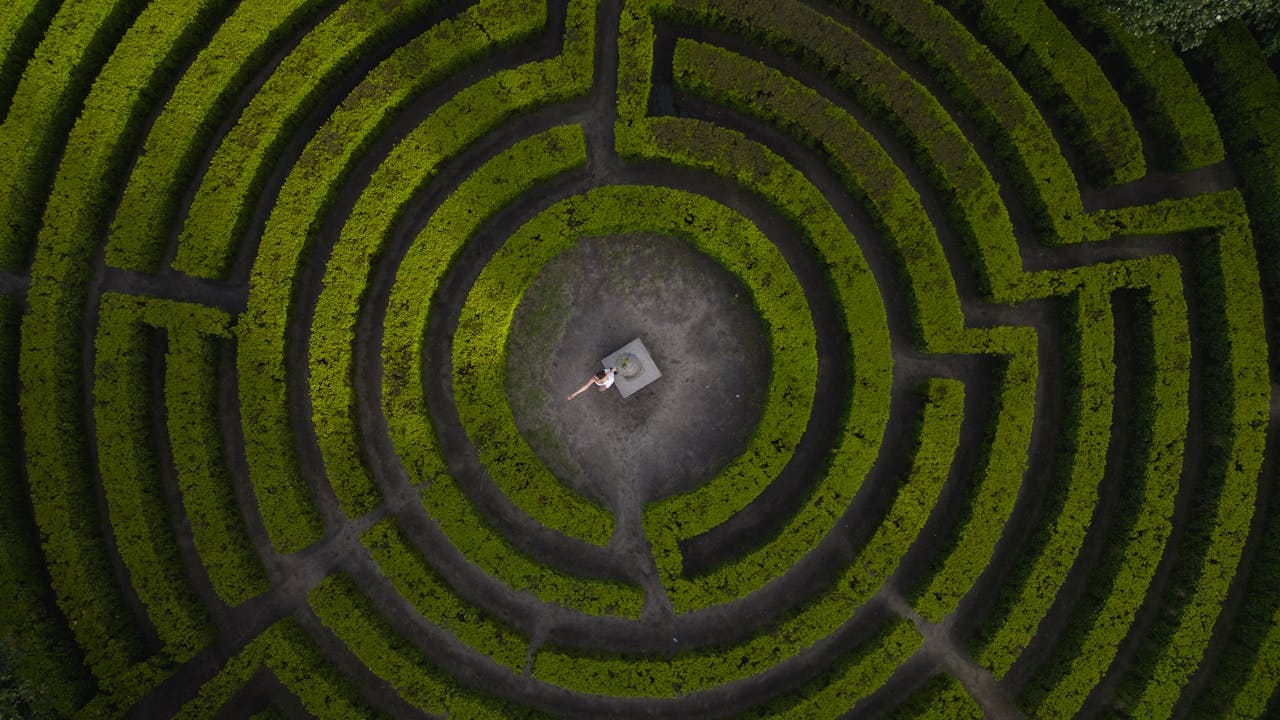
His father Arjuna was explaining it to his mother Subhadra one night. The chakravyuha was a military formation shaped like a spinning wheel, seven layers of soldiers rotating inward, each ring harder than the last. Arjuna was describing how to enter it, how to read the gaps, how to move through the layers without being swallowed.
Subhadra fell asleep.
Arjuna stopped speaking. The lesson ended there, in the middle, at the point where entry becomes exit. The child in the womb had heard everything up to that moment.
He heard nothing after it.
What the Chakravyuha Meaning Actually Is
The word comes from two Sanskrit roots. Chakra means wheel. Vyuha means formation. Together, chakravyuha meaning is this: a military arrangement built like a spinning disc, concentric rings of soldiers rotating in opposite directions, designed so that forward is easy and backward is impossible.
You could enter it. Almost nobody could leave.
On the thirteenth day of the war at Kurukshetra, Drona deployed it. He had one calculation: Arjuna was the only warrior in the Pandava army who knew both how to enter and how to escape the chakravyuha. On that same day, Arjuna had been pulled to a different front by the Samsaptakas, warriors sworn to fight him or die. He was gone.
The Pandavas looked at each other across the formation. There was only one person left who knew the chakravyuha at all.
He was sixteen years old.
What Abhimanyu Said
Yudhishthira asked him directly. Abhimanyu said he knew how to breach the formation and move through it. He did not know how to get out. He said this plainly. He did not pretend otherwise.
The plan was simple on paper. Abhimanyu would break the outer ring. The other Pandava warriors would follow immediately behind him. Once they were all inside, they would fight together and find a way through.
It required one thing to work: that nobody blocked the entrance behind Abhimanyu.
Jayadratha had been granted a boon. On that one day, he could hold back all the Pandavas except Arjuna. He stood at the breach Abhimanyu had made and he did not move.
Abhimanyu was inside the chakravyuha. Alone.
The plan had a single point of failure. It failed at that exact point. This is what plans built around half-knowledge always do.
What Happened Inside
He fought.
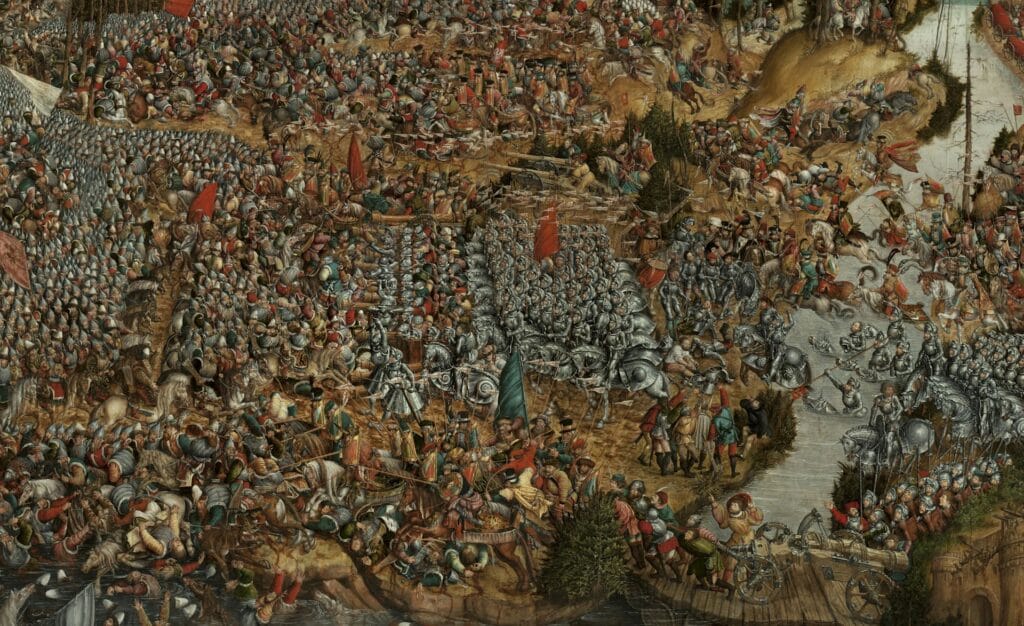
This is the part the Mahabharata records in detail and the part that resists easy summary. A sixteen-year-old boy, alone inside a formation of the greatest warriors of his age, held them.
He wounded Karna. He knocked Duryodhana from his chariot. He killed Dushasana’s son. He moved through the rings of the chakravyuha the way his father had described in the dark, in pieces, half a lesson held in a body that had grown around it.
The Kaurava commanders understood they could not take him cleanly. So they did not try.
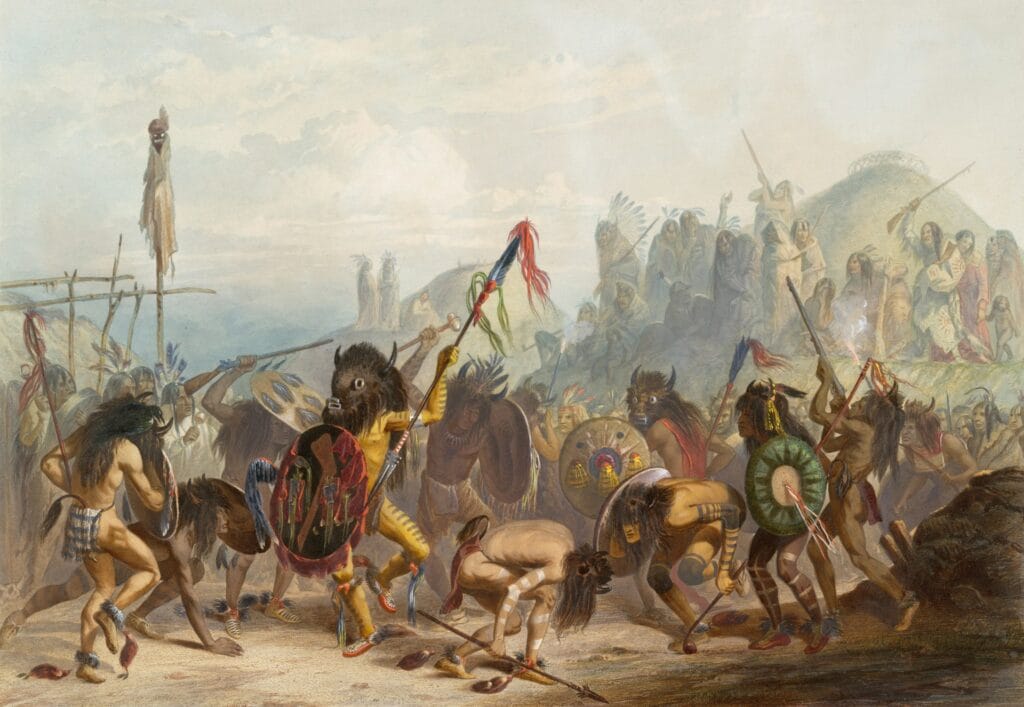
Karna destroyed his bow. Another warrior killed his horses. A third took his chariot. They came at him from every direction simultaneously, six or seven of the greatest warriors in the field, attacking a single boy who was now fighting on foot with whatever he could lift.
He lifted a chariot wheel. He kept fighting.
The Mahabharata says he was smiling.
The Psychology of Half-Knowledge
There is a particular kind of confidence that comes from knowing enough to begin.
It feels like competence. It presents like readiness. It carries a person past the hesitation that might otherwise have saved them. Abhimanyu was not reckless. He was not showing off. He assessed what he knew, stated clearly what he did not know, and stepped forward anyway because nobody else could.
This is the trap that half-knowledge sets. It is not ignorance. Ignorance keeps a person out. Half-knowledge lets them in.
The chakravyuha meaning, understood this way, is not just a military formation. It is any system designed so that entry is the easy part. Any situation where the knowledge required to begin is available and the knowledge required to finish is not. Any room a person walks into with half the preparation the room requires.
Half-knowledge is more dangerous than none. None keeps you at the door. Half walks you to the centre and leaves you there.
The Mahabharata does not let Abhimanyu’s death be simple. It does not say he was foolish to enter. It says the breach in the plan was not his. The knowledge he lacked was not his failure to acquire. The lesson ended before he could hear it.
He carried what he had. He used all of it.
What He Left Behind
Abhimanyu died on the thirteenth day. His father came back to the battlefield that evening and found out.
What followed was Arjuna’s vow to kill Jayadratha before sunset the next day. What followed, further down, was the entire trajectory of the war’s final days. Abhimanyu’s death changed the temperature of Kurukshetra. It made what had been a war of armies into something more personal on both sides.
The Mahabharata uses his death precisely. He is not a lesson about courage, though he had it. He is not a lesson about sacrifice, though he made it. He is the Mahabharata’s clearest portrait of what it costs when knowledge is passed incompletely, received in fragments, and then required in full.
Subhadra fell asleep. Arjuna stopped speaking.
The chakravyuha meaning is still in the gap between those two sentences.
Read Next: Arjuna put down his bow at Kurukshetra. Krishna told him to pick it up.
What the Mahabharata knew about being right and being ignored
Yoga Kshema Meaning: the bhagavad gita verse nobody finishes reading
 Psychology · Sep 22, 2026Chimpanzees Have Accents. They Grow into Them.
 The Margin · Sep 17, 2026People Are Seeing Ads in Their Dreams.
 Slow Meridian · Sep 16, 2026Autumn Leaves