The relationship between memes and feelings seems obvious until you look at it directly. You feel something. Someone else made a meme about something close to it. You forward it. The feeling seems shared. But something in that exchange is not quite what it appears to be.
You learned the word pointing at the same objects I did. A fire engine. A stop sign. An apple. We both said red and everyone agreed. But the actual sensation, the specific quality of red inside your experience, nobody can verify that it matches mine. It might. It might not. Language is an agreement about the outside world. It was never designed to transmit the inside one.
Philosophers have a name for this. They call it the problem of qualia. It has been unresolved for centuries. It will probably stay that way.
This used to be a philosophical curiosity. Social media turned it into a daily problem.
The Meme as Translation
Memes and feelings operate on a substitution model.
You feel something. Something specific, textured, slightly hard to name. A particular kind of tiredness that is not physical. The specific ache of wanting to be somewhere else while you are somewhere that should be fine. The feeling of being in a room full of people and becoming less visible by the minute.
You reach for language. Language is slow. Language requires you to look at the feeling directly and find the exact words for its exact shape. That is uncomfortable. It takes longer than a conversation usually allows.
Then someone sends you a meme. A character with a specific expression. Four words of caption. And something in you says yes, that.
You forward it. The other person reacts. The feeling feels shared.
But what got shared was the container. Not what was inside it.
The meme was close enough. It was not exact. The original feeling, the specific texture of your specific experience, never got expressed. It got substituted. And you moved on without noticing the difference.
What Recognition Is Not
The confusion between memes and feelings is really a confusion between recognition and understanding.
Recognition says someone else felt something in this neighbourhood. Understanding says someone received the specific thing you were carrying and held it accurately. Memes are very good at the first. They cannot do the second.
This matters because loneliness is not the absence of people. Research on social connection consistently finds that what reduces loneliness is not proximity or frequency of contact. It is the feeling of being accurately known. Of having your inner experience received rather than approximated.
A meme travels because it is general enough to land with millions of people. That generality is its strength as a cultural object. It is also exactly why it cannot do the thing we are increasingly asking it to do.
You cannot be accurately known by something designed to be universally recognisable. Those are opposite requirements.
We thought social media was making people feel less alone. It was teaching people to mistake recognition for connection.
The Muscle That Stops Getting Used
There is a psychological condition called alexithymia. It means, roughly, no words for feeling. People with it can experience emotions physically but struggle to identify them, name them, or describe them to others.
It is not rare. Estimates suggest around ten percent of people experience it significantly. A larger number experience something milder. A general flatness. A difficulty accessing the precise version of what they are feeling rather than a rough category of it.
What is interesting is that alexithymia exists on a spectrum and that spectrum can shift. The less you practice articulating your inner experience precisely, the harder precise articulation becomes. The muscle weakens. The approximate version becomes the only version available.
Memes are extraordinarily good at making approximation feel sufficient.
Why find the exact word when the gif does the job? Except the gif does not do the job. It does something adjacent to the job. It gestures at the job from a comfortable distance.
Over time, a generation that grew up forwarding feelings rather than forming them is finding the forming harder. Not impossible. Harder. The vocabulary is there. The habit of reaching for it is not.

What the Feed Actually Trained You For
Social media platforms are not designed around expression. They are designed around response. The unit of the feed is not the original thought. It is the reaction to someone else’s thought.
Like. Share. Repost. The actions are all responsive. Even when you post your own content, the training is immediate. Does it land? How many people recognised it? The metric of a feeling’s validity became its reach.
This is a strange thing to do to human interiority. To make the value of an inner experience contingent on how many people agreed with your approximation of it.
The feelings that travel are the ones that are general enough to be widely recognised. The feelings that do not travel, the specific ones, the strange ones, the ones that do not have a ready meme, quietly stop getting expressed. Not because they stop existing. Because expressing them stops feeling worth the effort when nothing recognisable comes back.
The feed did not silence anyone. It just made specificity feel unrewarded until people quietly stopped trying.

What Gets Lost in the Agreement
Return to the problem of qualia. The red you see and the red I see may be identical. They may not be. We have built an entire civilisation on the agreement that the word is sufficient. It mostly is. For the outside world, language does the job well enough.
The inside world is different. The inside world is where the specific texture of your experience lives. The particular quality of your grief, your joy, your exhaustion, your longing. These are not things language was built to transmit with precision. They require effort, attention, and a willingness to look directly at the feeling and stay there long enough to find the right words.
Memes removed the requirement to do that. They offered a shortcut that felt like arrival but was actually a bypass.
The bypass is comfortable. It is fast. It produces the warm sensation of being understood without requiring either party to do the work of actual understanding.
And slowly, across millions of interactions, the capacity for the longer route atrophies. Not gone. Just less available than it was.
What Remains
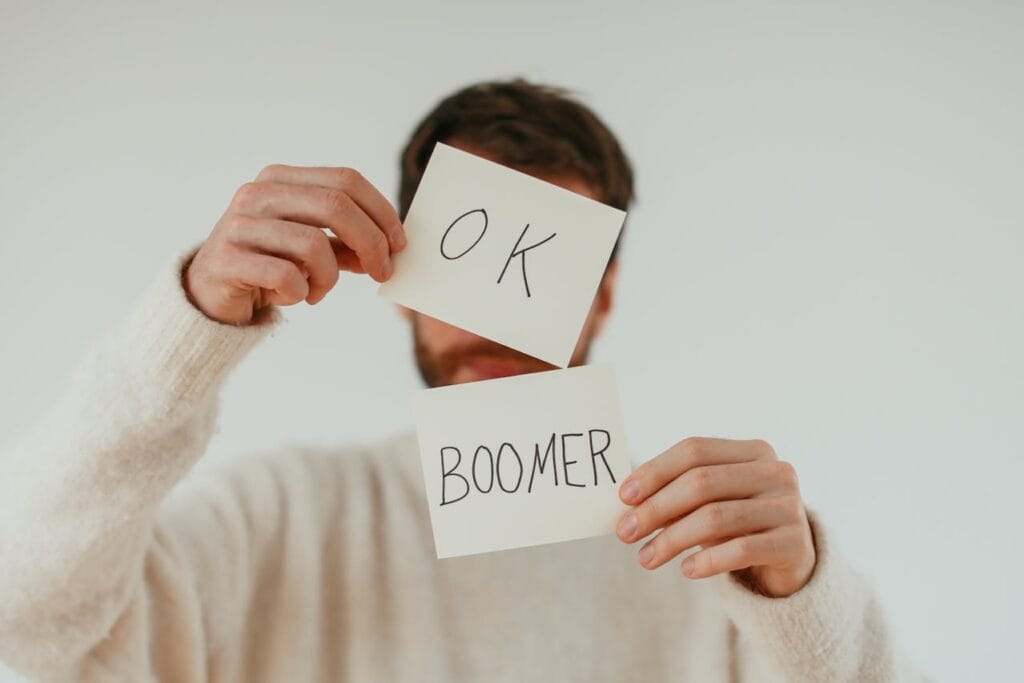
Memes and feelings will keep travelling together. The question is whether anything precise travels with them. This is not an argument against memes. They are funny. They are efficient. They are genuinely one of the more creative collective art forms of the last twenty years.
It is an argument for noticing what they cannot do and stopping asking them to do it.
The feeling you are reaching for when you forward something is real. It deserves the longer route sometimes. The one where you sit with it long enough to find its actual shape and put that shape into words someone else has to receive without a template.
That is slower. It is less immediately gratifying. Nobody gives it a like.
But it is the only version that actually crosses the gap.
The problem of qualia remains unsolved. Two people cannot confirm their experience of red is the same. What they can do is try, carefully and specifically, to describe what they see.
That trying is not a small thing. It is, in fact, the whole of what connection requires.
Read Next: After Twenty Years by O. Henry: the promise both of them Kept
Ahamkara: the ego the Gita actually warned you about. It is not what you think

 Psychology · Sep 22, 2026Chimpanzees Have Accents. They Grow into Them.
 The Margin · Sep 17, 2026People Are Seeing Ads in Their Dreams.
 Slow Meridian · Sep 16, 2026Autumn Leaves