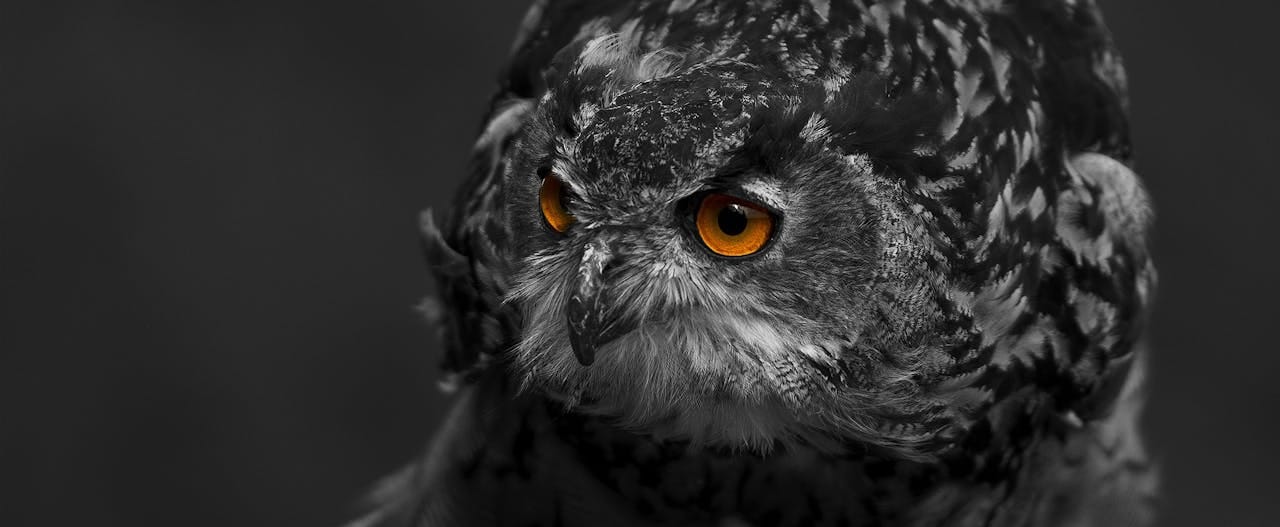
Are night owls more sadistic? It sounds like the kind of question designed to generate outrage clicks. It is also, as of December 2025, a question with a genuine scientific answer.
The answer is yes. Measurably. Across two separate studies, using two different populations and two different methods. People who naturally prefer staying up late are more likely to derive pleasure from other people’s pain than people who naturally wake early.
Before you check what time you went to bed last night, it is worth understanding what this finding actually means, what it does not mean, and why the explanation behind it is considerably more interesting than the headline.
The Study and the Bug Machine
The research was published in December 2025 in the journal Chronobiology International. It was conducted by Heng Li, a researcher at Sichuan International Studies University in China, who had been watching something specific during the COVID-19 pandemic.
Night owls, he noticed, seemed more likely to disregard public health guidelines. Not because they were misinformed. Not because they were reckless.
Something else. He began wondering whether people who are active at night might have a systematically different relationship to other people’s suffering.
To test the idea he ran two studies. The first used 170 university students and self-report questionnaires measuring chronotype alongside established scales for sadistic personality. The correlation was there. Evening types scored higher on sadism measures than morning types.
The second study went further. It recruited 214 adults, a broader non-student sample, and introduced what researchers call a bug-killing paradigm.
Participants were shown a coffee grinder modified to appear as though it could crush live insects. They were told bugs would be placed inside it. They were given the choice: volunteer to be the exterminator, or do something else.
Twenty-five people chose to operate the machine. When the researchers analysed the data, a person’s sleep preference was a statistically significant predictor of whether they chose to crush the bugs. Night owls were meaningfully more likely to volunteer.
This matters because it moves the finding beyond self-report. It is one thing to score differently on a questionnaire. It is another to make a behavioural choice that reflects an actual appetite for causing harm.
What Everyday Sadism Actually Means
The term sadism in this research does not mean what most people picture when they hear it.
Everyday sadism is a psychological construct describing a mild but measurable tendency to enjoy other people’s discomfort. It is not clinical. It is not violent. It is the person who finds a particular satisfaction in watching someone fail.
Who enjoys arguments a little more than is strictly necessary. Who chooses the more cutting remark when a neutral one would have sufficed. Who laughs at something that hurts someone else and feels, briefly, better for it.
Research over the past decade has identified everyday sadism as a meaningful personality dimension that predicts certain behaviours independently of other dark traits.
It has been proposed as the fourth component of what researchers now call the Dark Tetrad: narcissism, psychopathy, Machiavellianism, and sadism. Each trait is distinct. Each predicts different patterns of behaviour. Together they describe the architecture of what psychologists mean when they talk about dark personality.
Night owls scoring higher on everyday sadism does not mean that people who prefer late nights are dangerous. It means that, on average, they are slightly more likely to experience the mild, everyday version of that trait than people who prefer mornings.
Why Darkness and Dark Personalities May Go Together
The explanation Li proposes is called the niche-specialisation hypothesis. It is worth understanding because it reframes the finding entirely.
The hypothesis begins with an evolutionary observation. Humans with dark personality traits, those who manipulate, exploit, and deceive, face a practical problem. These strategies work best when detection is unlikely. In ancestral environments, detection was least likely at night.
Low light, reduced visibility, diminished cognitive sharpness in people who had been awake all day. Night was the ideal operating environment for anyone whose social strategy depended on not being caught.
Over generations, the argument goes, dark traits and nocturnal preference may have been selected together. Not because darkness causes cruelty but because the combination was adaptive.
The cheater strategy, as researchers call it, works best in the dark. So the people most inclined toward it may have gradually become the people most inclined toward the dark.
This is why the finding connects specifically to the niche. It is not that staying up late makes you cruel. It is that the personality traits associated with nocturnality and those associated with exploitative social strategies may have developed in parallel, reinforcing each other across evolutionary time.
What This Is Not Saying
Are night owls more sadistic than morning people on average? The research says yes, modestly and measurably.
Does that mean night owls are bad people? No.
The effect size in both studies is real but not large. The vast majority of people who prefer staying up late are not sadistic in any meaningful sense. Chronotype is one variable among dozens that shape personality. The researchers themselves are explicit about the limitations.
The studies are correlational. They cannot prove causation in any direction. It is possible that a third unmeasured variable influences both sleep preference and sadistic tendency simultaneously. It is possible the relationship runs in the opposite direction entirely.
What the research identifies is a statistical pattern at the population level. Knowing that someone is a night owl tells you nothing useful about their specific character. It tells you, at best, that they belong to a group with a marginally elevated average score on one personality dimension.
This is the level of precision at which population psychology operates. It is useful for understanding patterns. It is useless for judging individuals.
The Darker Portrait of Night Owls
This is not the first time research has painted night owls in unflattering colours.
A 2013 study on the Dark Triad, narcissism, psychopathy, and Machiavellianism, found that evening chronotypes scored higher on all three traits, particularly on Machiavellianism and secondary psychopathy. A 2025 study found that night owls are at significantly higher risk of depression, partly mediated by poorer sleep quality, higher alcohol consumption, and lower mindfulness.
The emerging portrait is of a chronotype that is more cognitively flexible in certain ways, more willing to take risks, more creative in some research, and also more prone to a cluster of traits that tend toward social exploitation, emotional dysregulation, and difficulty with the structures that morning-oriented societies have built for morning-oriented people.
The night owl is not a villain. But the research suggests they are not simply a romantic archetype of creative rebellion against conventional schedules either.
They are a biological type, shaped by forces that predate alarm clocks and office hours by several hundred thousand years, carrying tendencies that were once adaptive and now express themselves in the specific social and psychological textures of modern life.
Are night owls more sadistic? A little. On average. As a group.
What you do with that information, and what time you choose to read it, is entirely your own business.
Read next: Brain Rot Is Real: What the Science Actually Found
Why Do We Rehearse Arguments That Never Happen?
Why are human babies so helpless at birth?
What is dharma? what the mahabharata knew about losing everything


 Psychology · Sep 22, 2026Chimpanzees Have Accents. They Grow into Them.
 The Margin · Sep 17, 2026People Are Seeing Ads in Their Dreams.
 Slow Meridian · Sep 16, 2026Autumn Leaves