
This article explains confirmation bias explained simply, without academic jargon or political framing.
You scroll past a headline that confirms what you already suspected. You feel a small sense of recognition. Of course. That makes sense. You keep reading.
Later that day, you encounter an article arguing the opposite. You skim it. Something feels off. The tone irritates you. The examples seem weak. You close the tab.
Nothing dramatic happened. No argument. No shouting. Just a quiet preference for one version of reality over another.
That preference has a name.
Confirmation bias is one of the most studied psychological tendencies in modern research. Put simply, it is the tendency to notice, believe and remember information that supports what we already think, while discounting information that challenges it.
It is not a rare defect found in extreme personalities. It is a built-in feature of the human mind.
To understand confirmation bias explained simply, imagine your mind as a filter rather than a camera. A camera records what is in front of it. A filter selects what it prefers. Confirmation bias is the filter that keeps our internal world feeling stable.
The term itself emerged in the 1960s through the work of psychologist Peter Wason. In a famous experiment, participants were given a simple number sequence and asked to identify the rule behind it.
Most people tested examples that confirmed their initial hypothesis instead of trying to disprove it. Even when the rule was different from what they assumed, they searched for confirming evidence rather than challenging it.
That pattern appears everywhere.
We do not only form beliefs based on evidence. We often form beliefs first, then search for evidence that protects them.
The uncomfortable part is that this process feels rational while it is happening. That is why confirmation bias matters.
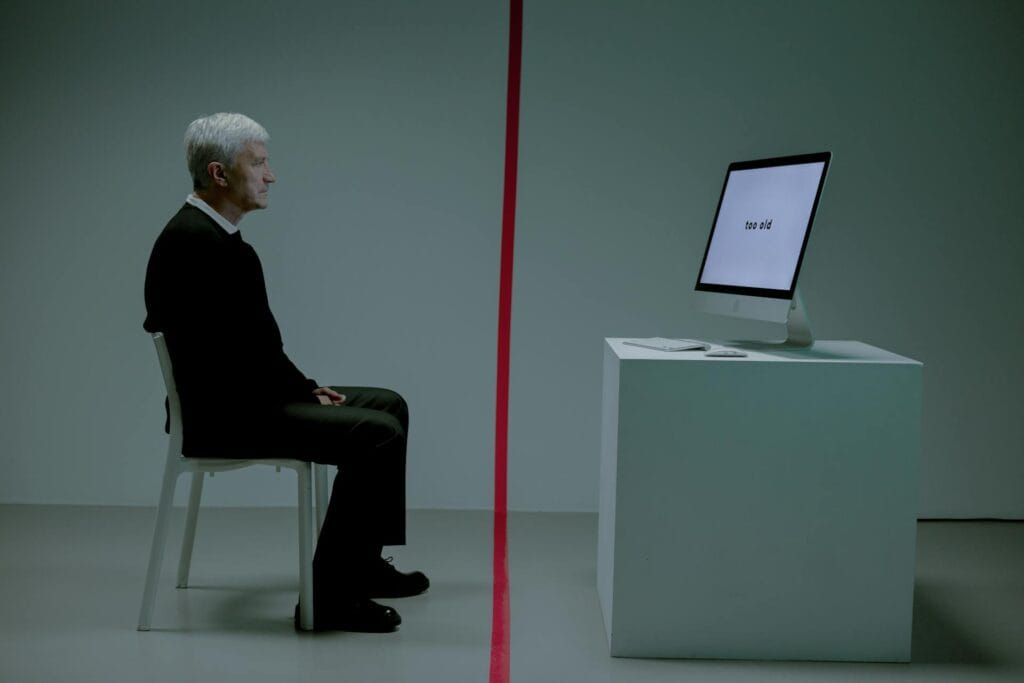
How Confirmation Bias Actually Works
At a biological level, the brain prefers coherence. Consistency reduces cognitive strain. When information aligns with what we already believe, it requires less mental effort to process. When information conflicts with our beliefs, it creates friction. That friction feels like discomfort.
This is not accidental. Human beings evolved in environments where rapid decision-making improved survival. Doubt is slow. Certainty is efficient. If early humans had paused to examine every belief from all angles before acting, they would not have lasted long.
Confirmation bias can therefore be understood as a shortcut. It simplifies complexity. It preserves mental energy. It helps maintain a stable sense of identity.
Consider something simple. If you believe you are good at your job, you are likely to remember praise more vividly than criticism. If you believe a particular political party is irresponsible, you will notice stories that reinforce that view more readily than stories that complicate it.
If you think a friend is unreliable, each late arrival strengthens your belief, while punctual days fade into the background.
The mind highlights confirming examples. It minimises contradictory ones.
There are three common ways this happens.
First, selective exposure. We choose sources that align with our views. We subscribe to certain newsletters, follow certain accounts, read certain commentators. This feels like preference. It is also reinforcement.
Second, selective interpretation. When faced with ambiguous information, we interpret it in ways that support our prior beliefs. The same event can be described as decisive leadership or reckless aggression depending on the observer.
Third, selective memory. We recall confirming evidence more easily. Disconfirming evidence becomes hazy.
These mechanisms operate quietly. Most people do not wake up intending to protect their worldview. They simply experience information through a lens that already exists.
“Belief is rarely built from scratch. It is assembled from pieces that feel familiar.”
The danger is not that we have beliefs. The danger is that we mistake the comfort of confirmation for the proof of truth.

Why Technology Makes It Stronger
Confirmation bias existed long before the internet. But technology has changed its scale and speed.
In earlier eras, exposure to opposing viewpoints was often unavoidable. Newspapers carried multiple perspectives. Local communities included people with varied experiences. Conversations happened in shared physical spaces.
Digital platforms have reorganised that environment.
Algorithms are designed to maximise engagement. Engagement increases when content feels relevant. Content feels relevant when it aligns with existing preferences. Over time, the system learns what you respond to and shows you more of it.
This is not a conspiracy. It is optimisation.
If you watch videos about a particular economic theory, you will be shown more of the same. If you engage with posts criticising a public figure, similar critiques will surface. The feedback loop is efficient.
The result is often described as a filter bubble. Inside the bubble, your beliefs feel widely shared and strongly validated. Dissenting perspectives appear either extreme or absent.
The psychological bias merges with technological structure.
“An algorithm does not create your beliefs. It quietly strengthens the ones you already lean toward.”
The amplification matters because repetition increases perceived truth. Studies have shown that repeated exposure to a statement makes it feel more accurate, even when it is false. This effect is known as the illusory truth effect. When confirmation bias and algorithmic repetition combine, certainty hardens.
Social identity deepens this process. Many beliefs are not just opinions. They are signals of belonging. Political views, lifestyle choices, even consumer preferences can become markers of group membership. Challenging a belief then feels like threatening membership itself.
In that context, defending a belief is not only about facts. It is about preserving identity.
Modern cultural power shifts have made this more visible. Information no longer flows primarily from central authorities. It circulates through networks. Authority fragments. Competing narratives coexist. In such an environment, confirmation bias offers stability.
It says: stay with what feels consistent.
The cost of that stability can be intellectual rigidity.

The Quiet Danger of Defending Certainty
There is something appealing about certainty. It simplifies the world. It reduces anxiety. It provides direction.
But certainty can also narrow perception.
When confirmation bias operates unchecked, it can lead to polarisation. Groups drift further apart because each side encounters mainly confirming evidence. Misunderstandings multiply. Opposing views appear not just wrong but incomprehensible.
On a personal level, the bias can shape relationships. If you believe someone does not respect you, you may interpret neutral actions as dismissive. The belief strengthens. The relationship shifts accordingly. The original assumption becomes self-fulfilling.
This dynamic is subtle. It rarely begins with hostility. It begins with interpretation.
There is a deeper tension here. If confirmation bias is natural, is it possible to escape it?
Research suggests that complete elimination is unrealistic. The goal is not to remove bias entirely but to become aware of it. Awareness introduces pause. Pause introduces space for alternative interpretations.
One method psychologists recommend is actively seeking disconfirming evidence. Instead of asking, “How is this correct?” ask, “Under what conditions might this be wrong?” This shifts the mental posture from defence to inquiry.
Another approach involves perspective-taking. Deliberately engaging with well-articulated opposing views reduces caricature. It does not guarantee agreement, but it complicates oversimplification.
The challenge is that these practices require effort. They are cognitively demanding. They slow decision-making. In fast digital environments, slowness feels inefficient.
There is also an uncomfortable question. What if some of our most cherished beliefs are less stable than we assume? What if the narratives we defend most fiercely are partly sustained by selective exposure rather than comprehensive understanding?
That question does not have a satisfying answer.
“Intellectual maturity begins when defending a belief becomes less important than understanding it.”
Yet modern culture often rewards performative certainty. Online debates encourage sharp positions. Nuance receives fewer shares. Measured doubt does not trend.
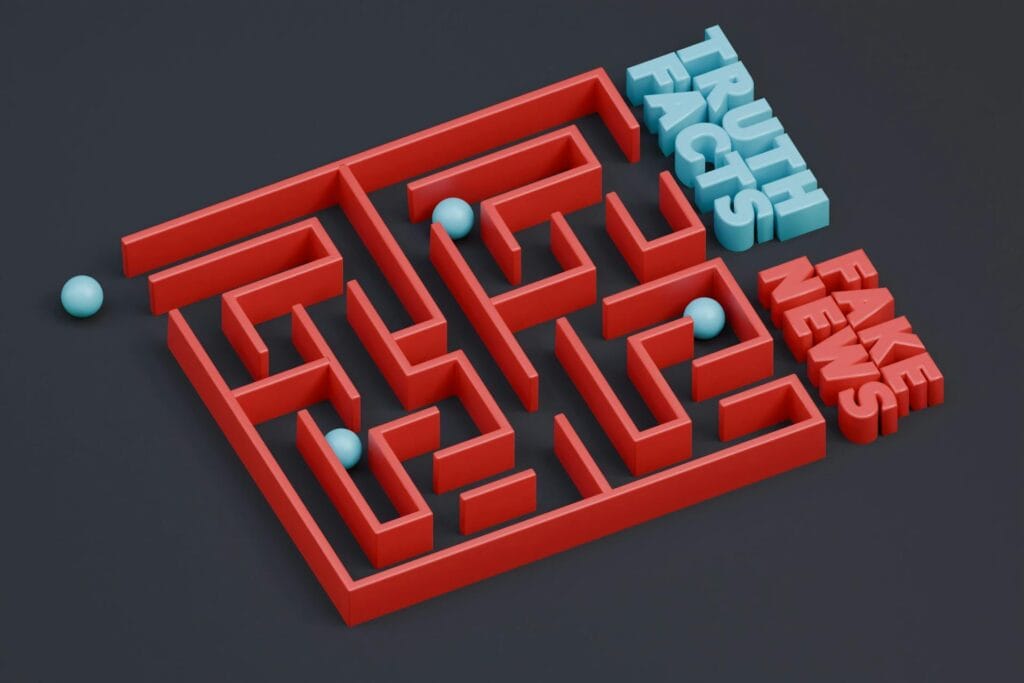
The Conclusion That Stays with US
The tension between clarity and complexity is constant.
Confirmation bias is not inherently malicious. It is protective. It maintains coherence in a world of overwhelming information. Without some filtering, we would be paralysed.
But protection can turn into insulation.
When insulation becomes isolation, dialogue weakens. Collective problem-solving becomes harder. Shared reality fragments.
The responsibility, then, falls partly on individuals and partly on systems. Individuals can cultivate habits of reflection. Systems can design environments that encourage exposure to diverse perspectives. Neither task is simple.
The more immediate step is recognition.
Recognition that when something feels instantly right, it might be worth asking why. Recognition that irritation toward opposing views might signal identity protection rather than factual disagreement. Recognition that comfort is not always evidence.
Confirmation bias explained simply is the mind’s preference for familiarity over challenge. In small doses, it preserves stability. In excess, it narrows vision.
We build beliefs from patterns we notice. We defend them because they anchor who we think we are.
The question is not whether you have confirmation bias.
The question is how tightly you are holding what it confirms.
Read Next: Why are human babies so helpless at birth?
What is dharma? what the mahabharata knew about losing everything
Deep questions to ask someone to know them better (that actually work)

 Psychology · Sep 22, 2026Chimpanzees Have Accents. They Grow into Them.
 The Margin · Sep 17, 2026People Are Seeing Ads in Their Dreams.
 Slow Meridian · Sep 16, 2026Autumn Leaves