Gamsutl village has no road. There used to be one. It collapsed decades ago and nobody rebuilt it. Now the only way in is a two-hour hike up a mountain path that the original residents carved out for moving cattle.
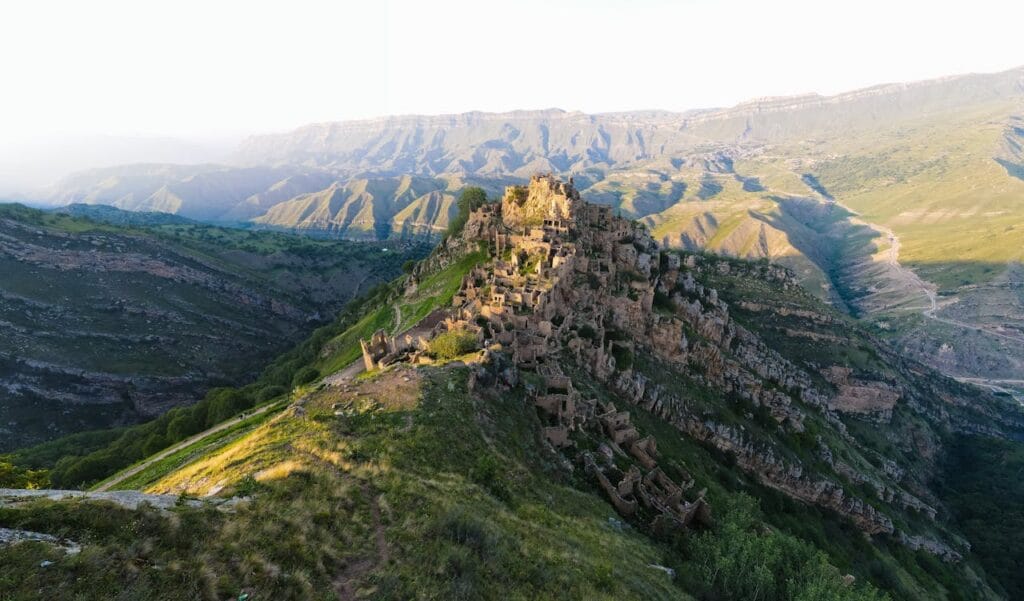
The village sits at an altitude of 1,418 metres above sea level in the Gunibsky District of Dagestan. It is perched on the crest of a mountain between two rocky peaks, surrounded by cliffs that drop into gorges on either side.
It was built this way deliberately.
The people who founded it two thousand years ago understood something about the relationship between height and survival. Nobody had ever conquered Gamsutl village. Not once, across two millennia of wars, invasions, and empires moving through the Caucasus.
The thing that finally emptied it was not an army. It was modernity. And the last man standing against it was a retired schoolteacher who called himself mayor of a city of one.
What It Was
As recently as the last century, Gamsutl was very much alive. There was a school, a hospital, a shop, even a post office and a maternity ward.
Three thousand people at its peak. Houses built directly into the mountain rock. Streets so narrow two people could barely pass each other.
A community that had survived the Caucasian Wars, that had sheltered the legendary Imam Shamil during the resistance against Russian imperial expansion, that had been called Shamil’s Siberia because it was so remote even exile felt like exile there.
The name Gamsutl comes from the Avar language and means at the foot of the khan’s fortress.
Finds from across its history tell a specific story. Christian crosses, Arabic inscriptions, and symbols resembling the Star of David have surfaced in Gamsutl. Taken together, they suggest that people of different beliefs and cultures once shared this place.
Two thousand years of continuous habitation. Multiple faiths. Multiple empires. The same mountain.
Then the road washed away.
How a Village Dies
It does not happen at once.
In the 1970s, mudslides swept away the bridge over the river. The residents of Gamsutl were cut off from the outside world for two months. This event prompted many to move out and abandon their homes.
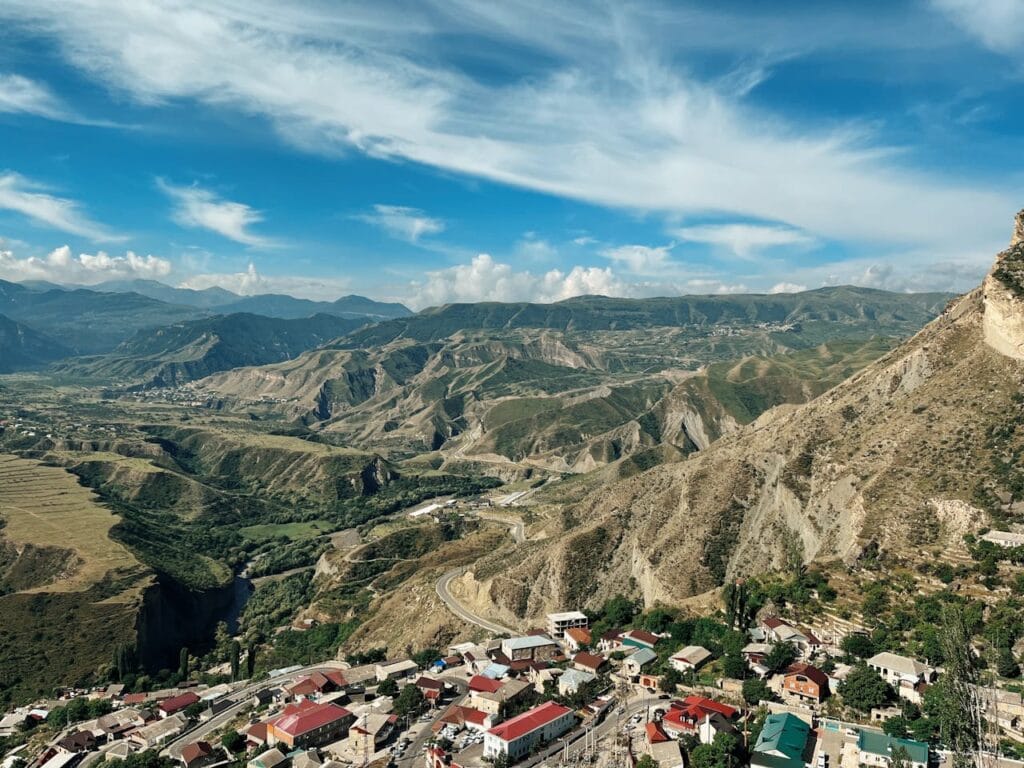
Before that, it had been the young leaving first. The city of Makhachkala was three hours away. There was work there. There were schools, hospitals, roads that stayed intact. The number of inhabitants fell to 200 in 1970 and to 17 in 2002.
Seventeen people holding a two thousand year old village together.
Then ten. Then five. Then one.
Gamsutl village was never abandoned all at once. It was abandoned slowly, one decision at a time, until only one decision remained.
The Man Who Stayed
Abduljalil Abduljalilov returned from the city to spend his final years in his ancestral home.
He did not stay because he had nowhere else to go. He had been to the city. He came back.
He called himself mayor and became quite famous after a series of television reports.
Think about what that means. Mayor of a city of one. An elected office with no electorate. A title that was simultaneously absurd and completely serious. He maintained it with full conviction.
His house stands out from among the others. It is completely preserved. The rest of the houses are in ruins.
He kept one house standing in a village of collapsing walls. He walked streets that had no other footsteps. He looked out from the Tooth Rock over the Andalal Valley every morning the same way the khan’s sentries had looked out two thousand years before him.
He was not delusional. He was not unable to leave. He was making a specific choice that most people find very difficult to understand from the outside.
He was staying.
There is a kind of love for a place that does not require the place to love you back. Abduljalil understood this. Most of us never have to.
What Nobody Conquered
Gamsutl village was never taken by force.
In its centuries-old history, it was never conquered by a single army. The cliffs made it impregnable. The single narrow path made it defensible. Every invader who looked up at it apparently decided the climb was not worth what they would find at the top.
This detail matters more now than it did when the village was full.
Because what finally emptied Gamsutl was not war. It was the slow gravity of an easier life somewhere else. Roads that stayed intact. Jobs that paid consistently. Schools that did not require a mountain climb to reach.
Modernity is very good at making the difficult feel unnecessary. At making the particular, specific, irreplaceable feel like an inconvenience that can be solved by moving somewhere more convenient.
Abduljalil disagreed. He stayed until 2015, when he died in the house he had kept standing.
Today, 70 abandoned homes are all that remain of this ancient stronghold.
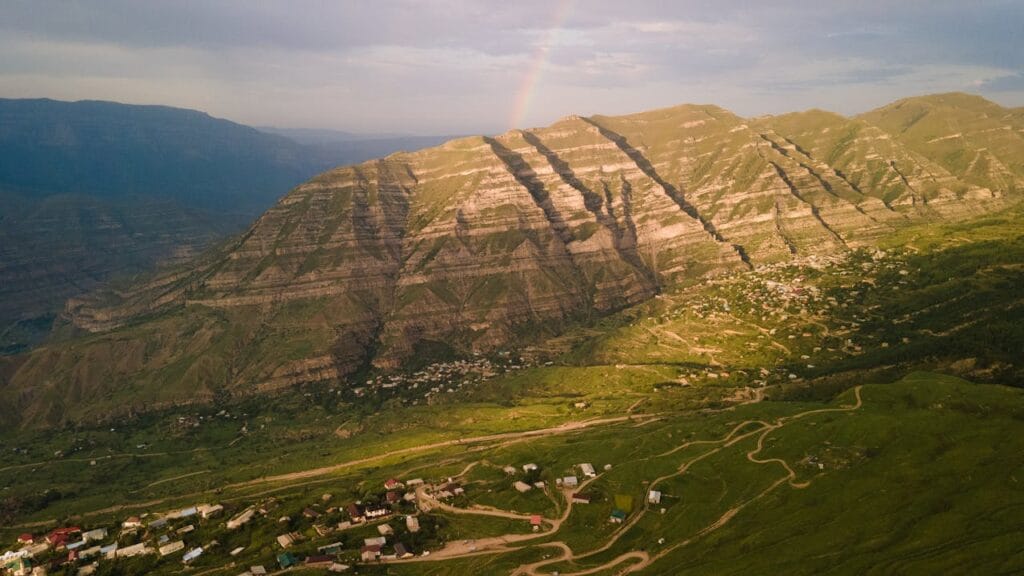
What Happened After
Something unexpected occurred after Abduljalil died.
People started coming.
Not to live. To see. The same inaccessibility that had emptied the village became, in the age of Instagram and adventure travel, its primary appeal. The two-hour hike that had made the place impractical for residents made it feel earned for visitors.
Gamsutl is often likened to the Machu Picchu of the Caucasus for its dramatic ruins and sweeping mountain views.
The comparison is apt in more ways than one. Machu Picchu was also abandoned. Also inaccessible. Also preserved by the very isolation that made it impossible to sustain. Both places are now more visited than they ever were inhabited.
Rising interest brings worries though. Many houses are collapsing, and visitors can accidentally harm what remains. For now, there is no program in place to protect the site from decay. Without a plan, fascination has a way of turning into erosion.
The village that no army could conquer is now threatened by the people who love it.
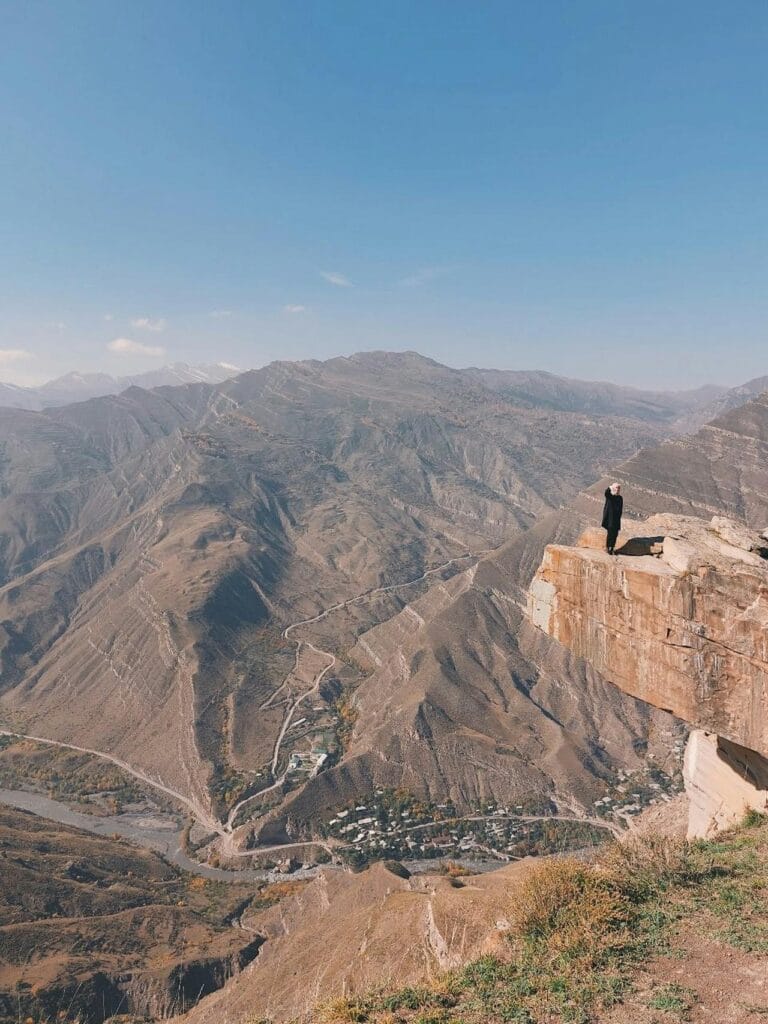
What Remains
There is a specific kind of place that only becomes legible after it is gone.
Gamsutl village was a functioning community for two thousand years. It had schools and hospitals and a post office. It had politics and disputes and marriages and funerals. It had a mayor, right up until the end, even when the mayor had no one left to govern.
It is now a ruin that thousands of people hike two hours to see.
What they are looking for is not entirely clear. History, perhaps. Beauty, certainly. But also something harder to name. The proof that a place can matter so much to a person that they stay inside it alone rather than leave it to collapse without witness.
Abduljalil Abduljalilov died in the house he chose. His village outlived him as a ruin rather than a memory.
That is not nothing. In a world that moves very quickly toward whatever is easier, it is actually quite a lot.
The path up the mountain still exists. It is still narrow. It still takes two hours.
People are still climbing it.
Read Next: Fujifilm Instax Mini review: Beautiful camera, Terrible odds