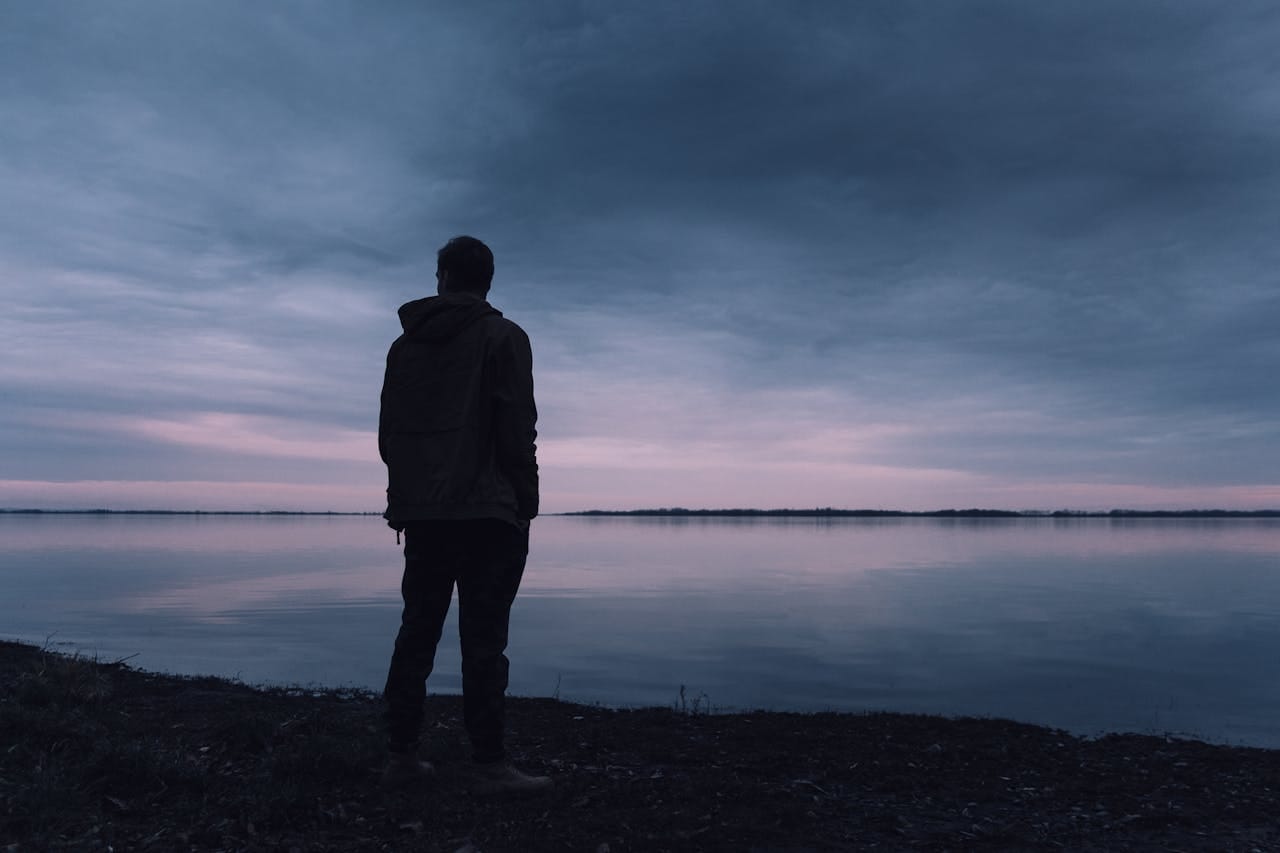
Solitude psychology is one of the most misunderstood fields in modern mental health research.
We have spent decades studying loneliness, its harms, its causes, its epidemic spread through wealthy societies with more screens and fewer third places. Loneliness research is abundant, urgent, and well-funded.
The research on solitude, on chosen aloneness, on the specific and restorative experience of being with yourself without distraction, is far thinner. We have treated them as the same thing.
They are not the same thing. At all.
The distinction matters more than most people realise, and the neuroscience of what actually happens in the brain when a person is genuinely alone is one of the quieter revelations in recent psychology.
The Difference That Changes Everything
Loneliness is the experience of being alone against your will, or of feeling disconnected even when surrounded by people. It is characterised by a sense of unwanted isolation, of being unimportant or invisible to others. It is painful in the way hunger is painful: a signal that something necessary is absent.
Solitude is different in its most fundamental property. It is chosen. It is being alone on your own terms, for your own reasons, in a state of voluntary withdrawal from social contact.
That single distinction, choice, changes almost everything about the psychological and physiological experience that follows.
Thuy-vy Nguyen, associate professor at Durham University who runs the university’s Solitude Lab and co-authored a book called Solitude: The Science and Power of Being Alone, has spent years establishing what solitude does that social interaction cannot.
Her research consistently finds that time spent in genuine solitude produces a specific deactivation effect in the nervous system. High-arousal positive emotions like excitement and enthusiasm decrease. But so do high-arousal negative emotions like anxiety, irritability and distress.
What remains is a lower, quieter register of experience. Calm. Contentment. The emotional equivalent of a room after the noise has been turned off.
This is not deprivation. It is restoration.
What the Default Mode Network Is Doing
When people are alone and not focused on any external task, a specific network of brain regions becomes active. Neuroscientists call it the default mode network.
It activates during rest. It activates during daydreaming. It activates when a person is thinking about the past or imagining the future or considering the perspective of another person.
For a long time, researchers assumed it was simply what the brain did when it had nothing else to do: background noise.
The research of the last two decades has radically revised that view. The default mode network is not idle. It is doing some of the most important cognitive work the brain performs.
It is where autobiographical memory is consolidated and integrated. It is where the narrative self, the continuous story of who you are across time, is maintained and updated.
It is where creative connections between unrelated ideas form, the process that produces insight, originality and the solutions that arrive in the shower rather than at the desk.
Solitude activates the default mode network in a way that sustained social interaction, which constantly redirects attention outward, does not allow.
Every notification, every conversation, every social demand pulls resources away from this network and redirects them to the brain’s attention and social processing systems.
The default mode network needs quiet to do its work. Solitude provides the quiet.
Why Creative People Have Always Sought It
There is a consistent pattern across the lives of people whose work required genuine originality: they sought solitude deliberately, defended it fiercely, and described it as the condition without which the work could not happen.
Darwin walked his Thinking Path alone every morning before sitting down to write. Kafka wrote almost exclusively at night, alone, after his family had gone to sleep. Nikola Tesla worked in isolation to a degree that alarmed his colleagues.
Georgia O’Keeffe moved to the New Mexico desert and stayed for decades. Simone de Beauvoir wrote every morning alone in a cafe before meeting anyone.
A 2024 study from the University of Arizona confirmed what these biographies suggested. Creative individuals, when left alone with their thoughts, show different patterns of default mode network activity than less creative individuals.
Their minds during idle time are more associative, more exploratory, more comfortable moving between unconnected ideas. Solitude does not just allow creativity. For certain kinds of minds, it appears to be the condition that makes the specific quality of their thinking possible.
This is not an argument that you need to be a genius to benefit from being alone. It is an argument that the capacity for original thought, whatever its scale, requires the kind of interior space that genuine solitude creates.

Adults Spend Two to Six Hours Alone Every Day
Most people do not think of themselves as spending significant time in solitude. The research says otherwise.
On average, adults spend between two and six hours per day alone, not counting sleep. That is a significant portion of waking life. It is time that exists, already, in most people’s schedules.
The question the solitude research is increasingly asking is not how to create more time alone but what happens to that time depending on how it is framed and used.
A 2025 study tested an intervention called Solitude Crafting with 75 emerging adults. The intervention had two components: de-stigmatising solitude by explaining the research on its benefits, and guiding participants toward specific meaningful activities during their alone time.
Over five days, participants who received the intervention reported measurable improvements in emotional wellbeing compared to a control group.
The activity itself mattered less than the framing. People who understood that solitude could be restorative, and who approached it intentionally rather than experiencing it as a default or a failure of social connection, benefited more from the same amount of time alone.
How you think about being alone changes what being alone does to you. That is not a soft finding. It is a measurable, replicable result.

The Problem with Being Alone without Choosing It
None of this applies to involuntary isolation.
The same research that finds solitude restorative is consistent in its finding that unwanted aloneness, time spent alone that was not chosen and is not welcomed, produces the opposite effects. Loneliness activates the stress response. It elevates cortisol.
It impairs sleep, immune function and cognitive performance over time. The distinction between solitude and loneliness is not semantic. It is physiological.
This is the nuance the loneliness epidemic conversation has sometimes missed. The problem is not aloneness. The problem is aloneness experienced as rejection, as invisibility, as evidence that nobody cares whether you are there.
The same empty room, the same silence, the same absence of other people, produces completely different neurological responses depending on whether the person inside it chose to be there.
The Capacity That Needs Rebuilding
There is something else the research points toward that is worth sitting with.
The ability to be genuinely alone, to be in your own company without discomfort, without reaching for distraction, without filling the silence with a podcast or a scroll, is a capacity that can atrophy.
Adults who reported higher tolerance for solitude in their own self-assessments showed greater wellbeing across multiple studies.
But the research also found that many people, particularly younger adults who have grown up in an environment of perpetual connectivity, find intentional solitude actively uncomfortable at first.
Wilson et al. found in 2014 that a significant proportion of participants, when left alone in a room with nothing to do for 15 minutes, chose to administer mild electric shocks to themselves rather than sit with their own thoughts. The finding was widely cited because it was striking. People would rather feel pain than feel nothing.
The researchers were careful not to over-interpret this. But the pattern it revealed is real: for people unaccustomed to silence, the interior voice can feel threatening rather than restoring. The default mode network, under-exercised, can produce rumination and anxiety rather than creative wandering and calm.
Like any capacity, this one can be rebuilt. The Solitude Crafting research suggests that intention and reframing matter. Starting small. Removing the stigma. Treating time alone as something chosen and valuable rather than something to be filled or escaped.
What Solitude Actually Is
The philosopher Paul Tillich wrote that the first duty of love is to listen. He was talking about listening to another person. But the same quality of attention, patient, open, without agenda, can be turned inward.
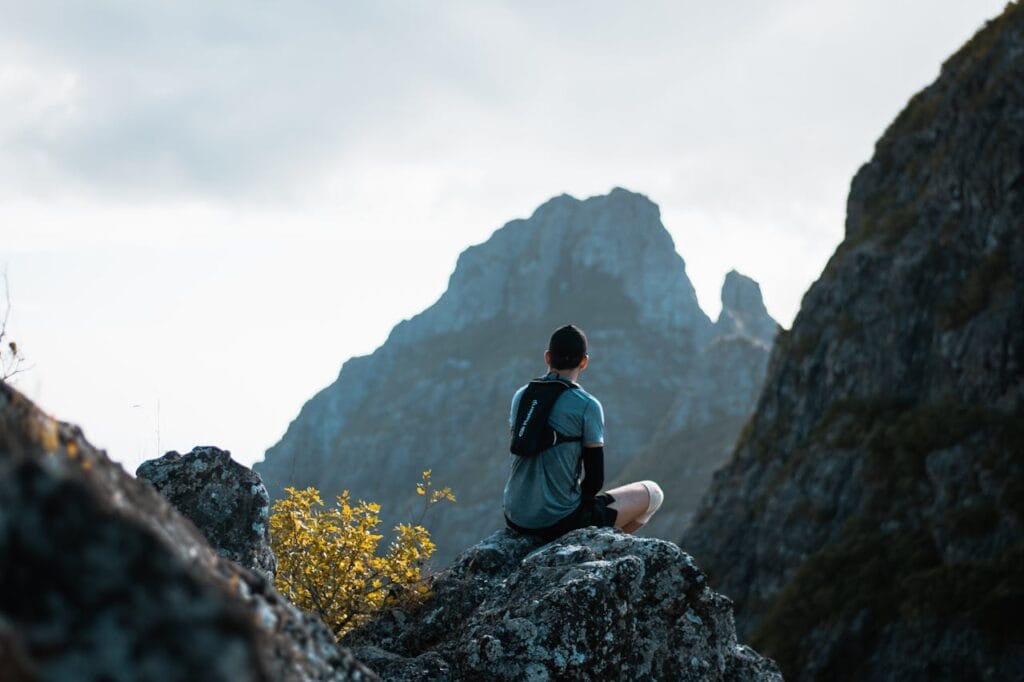
Solitude is not the absence of company. It is the presence of yourself.
Not the performed self, the one with the polished responses and the managed impressions.
The actual interior self, the one that is still mid-sentence on thoughts that started three days ago, that has feelings it has not named yet, that knows things about what it wants that it has not admitted.
Adults spend two to six hours a day alone. Most of that time is spent looking at a screen.
The research is not prescriptive about what to do instead. It simply says that time spent in genuine solitude, chosen, intentional, quiet, is not wasted time. It is, in a specific and measurable sense, the time when the self is being maintained.
The world will be loud again in a moment. It always is.
Read next: The Kaius Column

 Psychology · Sep 22, 2026Chimpanzees Have Accents. They Grow into Them.
 The Margin · Sep 17, 2026People Are Seeing Ads in Their Dreams.
 Slow Meridian · Sep 16, 2026Autumn Leaves