You already know why football makes you feel alive when nothing else does. You just haven’t let yourself say it out loud yet.
Football refuses to disappear becomes clear the moment ordinary people turn into something more alert, more vulnerable, and more alive when the match begins.
A phone stops scrolling. A kettle gets forgotten. Someone who has been quiet all day suddenly argues like it matters. Not because the stakes are rational, but because the body recognises a certain kind of tension and leans into it.
On Champions League nights, millions of lives pause at the same time. Different languages, different jobs, different private worries, and yet the same collective flinch when the ball breaks loose in the final third. The pause matters more than the highlights.
Shared focus is getting rare.
Football did not earn this place by being efficient, moral, or modern. It earned it by being stubbornly human, even when that humanity looks messy from close up.
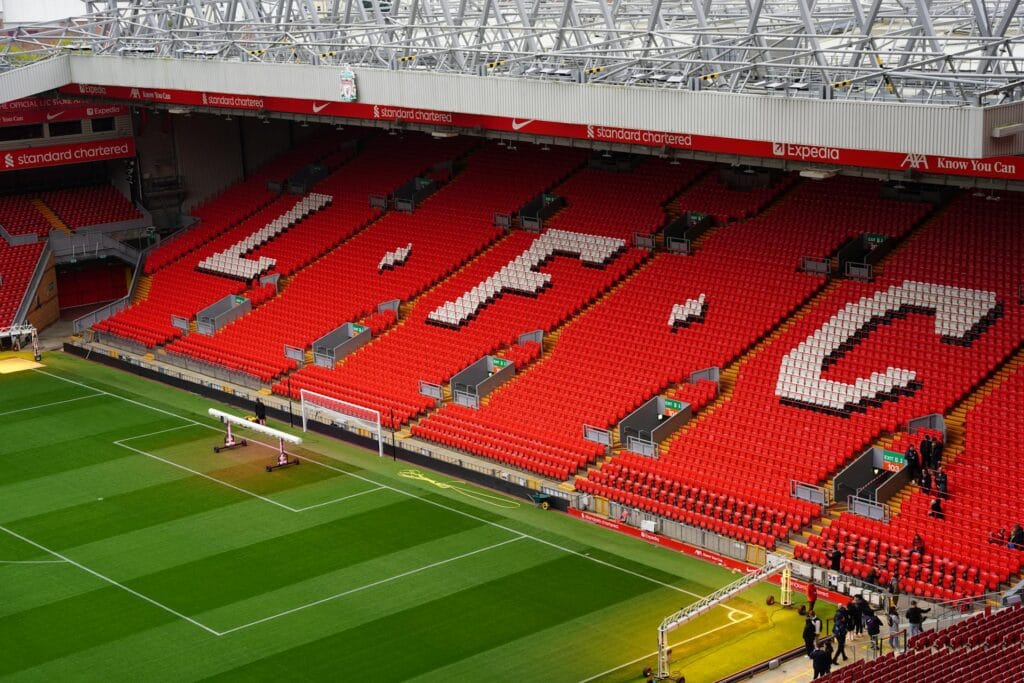
Why Football Refuses to Disappear When Everyone Watches
Long before stadiums, sponsorships, and governing bodies, versions of football existed in streets, fields, and village squares. Balls were stuffed with cloth or stitched from leather. Rules bent with the weather and the mood of the crowd. The game sometimes looked violent, disorganised, and only loosely contained.
And it still persisted.
Not because it entertained in the way streaming entertains, but because it did something essential. It turned conflict into play. It created boundaries without war. It allowed competition without annihilation.
Football’s grammar stays simple: a space, two sides, a moving object, and constraints strict enough to hold chaos but loose enough to allow improvisation. That balance is not trivial. Human beings keep inventing structures like this because they solve a problem that never went away.
People want uncertainty, but not infinity. People crave tension, but not danger. People want outcomes that feel consequential, but not consequences that destroy them.
Football offers that bargain in ninety minutes.
The modern world tried to replace this with substitutes. Entertainment platforms offer stimulation without risk. Politics offers conflict without resolution. Social media offers performance without shared stakes. None of these synchronise attention in the same way.
Football gathers attention. It does not ask for constant interaction. It asks for presence.
Attention is not just a resource, it is a form of belonging.
When the Crowd Becomes the Point
When industrial life expanded, football did not vanish. It organised. Factories emptied into terraces. People learned to suffer and celebrate in public again. Loyalty moved from land and lineage to clubs and colours, not as a moral upgrade, but as a new kind of anchor.
For some, it became the first ritual that did not rely on religion or royalty. Belonging without doctrine. Identity without a syllabus. A weekly repetition that made time feel shaped rather than spilled.
Even people who claim they do not care often understand it quickly once they watch. No backstory is required to feel the pressure of a match approaching its end. The body reads the clock. The mind reads the narrowing options.
A goal is a collective event. Even alone, it rarely feels solitary.
Here is a concrete moment, small but un-theoretical. A stranger in a pub spills half a drink during a late corner. Nobody laughs. Someone steadies the glass. Another person pulls a chair back without being asked. The corner gets cleared. Everyone exhales together, like a single organism pretending it is not one.
It is easy to mock that intensity until it happens around you. Then it becomes hard to deny that something real is taking place.
Football refuses to justify itself. It does not apologise for tribalism, disappointment, or the rawness of attachment. It absorbs modern layers without surrendering its core. Tactics evolve. Technology intervenes. Money distorts. The essential experience remains recognisable.
People cry over football without needing a diagnosis.
People return after loss without demanding closure.
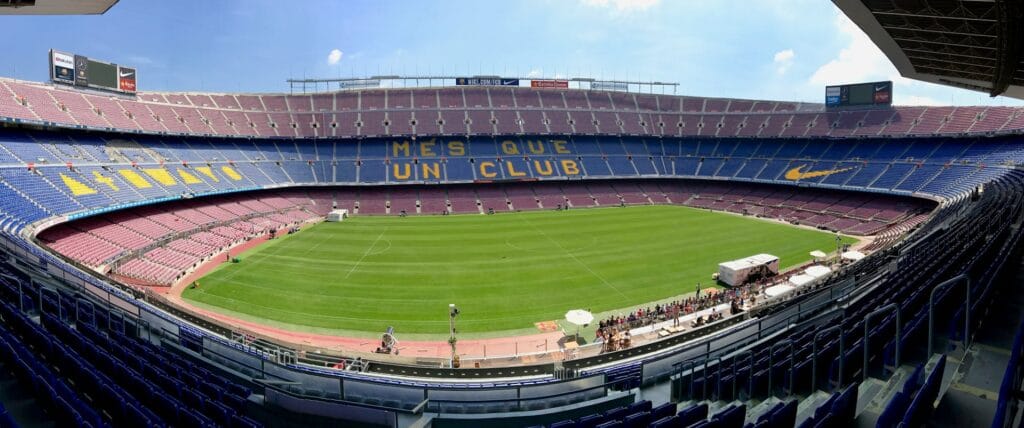
What the Game Gives That Nothing Else Does
Modern thinking prefers clean narratives and moral conclusions. Football offers neither. It carries injustice without rewriting itself. It allows luck to decide outcomes. It asks people to accept that effort does not guarantee reward.
This is where football starts to feel like a provocation. Everything else insists on control: control your feed, control your image, control your work, control your future. Football insists on exposure. You can prepare and still lose.
Sometimes nothing fixes the score.
A disruption enters here and refuses to be resolved: maybe football is not a ritual of belonging at all, but a ritual of substitution. Maybe it gives people a place to discharge anger that should be aimed elsewhere. Maybe the roar is not community but misdirected hunger. Maybe it pacifies more than it unites.
That thought sits there. It does not get cleaned up later.
And yet, even if it were partly true, it would not explain the full pull. Distraction alone does not make a room hold its breath.
Football holds meaning without commentary, and that capacity connects it to older forms of human resilience. Survival often depends not on elegance, but on depth, excess, and tolerance for failure. A related reflection on that kind of endurance sits at What kind of creature survives 400 million years.
Football behaves similarly. It absorbs disruption without collapsing. It carries conflict without resolving it. It survives because it is overbuilt in a strange, human way.
The repetition is not a flaw. It is the mechanism.
Each generation inherits the game without needing to redesign it. Parents pass it on not because it is useful, but because it feels complete. It already works. It does not beg to be improved by opinion.
That completeness is unsettling in a world obsessed with optimisation.
Why Football Makes You Feel Alive When Nothing Else Does: Takeaway
Modern life offers constant opinion and very little shared tension. People argue together online while watching completely different realities. Even big events fracture into private timelines. The background hum of disagreement becomes permanent, but it does not create togetherness.
Football does something simpler. On big nights, people gather not to agree, but to witness. They submit to uncertainty together. They accept outcomes they cannot control. They share a structure for emotion that does not require ideology.
The chants change but the recognition remains. A missed chance needs no translation. A late winner turns strangers into allies for thirty seconds.
Meaning often arrives through synchrony, not through explanation.
The game also teaches a peculiar kind of patience. Not the calm patience of self-help, but the tense patience of waiting inside something that might break either way. This is one reason people who feel scattered during the week feel strangely gathered during a match.
The ninety minutes have edges. The week often does not.
This connects to a broader pattern: modern time can feel thin even when it is full. The days pass, but they do not land. Another piece that circles that thinning sits at Why modern days feel forgettable.
Football, in contrast, leaves marks. It gives memory a handle.
Ask a fan where they were for a specific goal and the answer arrives with bizarre clarity. The street, the friend, the exact second the room changed. Not because the event was objectively important, but because the emotion was shared and contained.
None of this makes football pure. Money still distorts. Violence still spills. Tribalism still hurts. The game can amplify ugliness as easily as it amplifies joy.
Football refuses to be polite.
Football refuses to disappear because it keeps offering a rare deal: feel deeply, together, about something that does not pretend to save you.
And when the final whistle goes, the room breaks apart again, people return to their private lives, and the shared organism dissolves, as if it never existed, until the next time the lights go on and the ball starts moving.
Further Reading: Why are human babies so helpless at birth?
What is dharma? what the mahabharata knew about losing everything