
A Dutch breeder is revolutionizing french bulldogs by breeding them the right way.
Not long ago, anyone with even a passing interest in dogs would have recognised a French bulldog instantly. Big ears, square face, compact body.
The breed became so popular that it soon replaced many others as fashion’s favourite canine family member. Instagram feeds plastered with smiling owners and their squishy-faced companions helped cement them as one of Britain’s most beloved small breeds.
But somewhere behind all that cuteness, a quiet issue was growing. The very features that made French bulldogs so recognisable, their short snouts, heavy build, big eyes, were also linked to serious health problems. Breathing difficulties, overheating, spinal issues and painful joints became common. The dogs looked adorable. But many of them lived uncomfortably.
Now a breeder in the Netherlands is quietly turning that narrative on its head by establishing something different: healthier French Bulldogs.
This isn’t a complaint about beauty or popularity. It’s a celebration of people who care enough to change what success looks like in dog breeding.
A New Template for a Much-Loved Breed
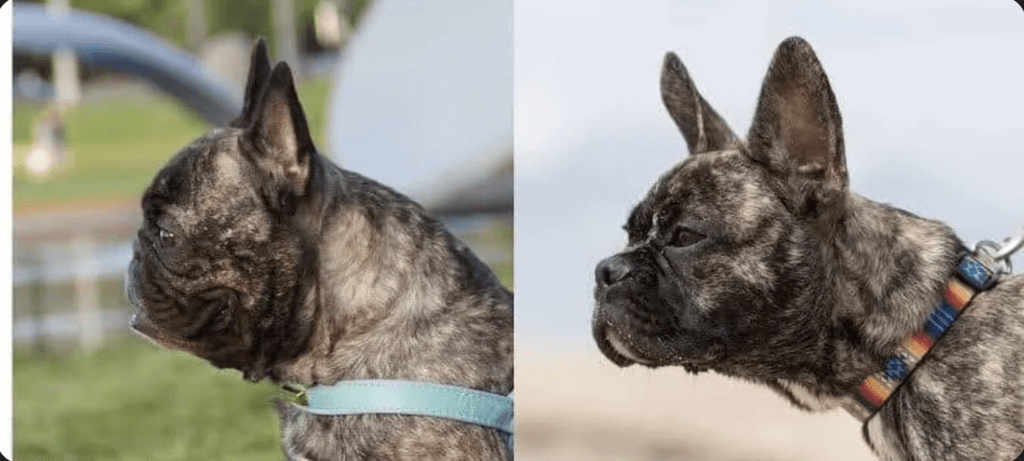
On one side of the photo you’ve likely seen, there’s an award-winning show dog. Let’s call him Arnie. He’s impeccable by traditional show standards. He has won titles. He looks exactly like a French bulldog that magazines would promote, posters would print, and Instagram would share.
On the other side is Flint, bred by Hawbucks French Bulldogs — the kennel trying to redefine what a French bulldog can be. Flint’s appearance is subtly different: a calmer muzzle, a more balanced body, eyes set in a way that reduces strain. He isn’t a “trophy chest” dog, and that’s the point.
Flint represents a healthier template. It’s not about rejecting aesthetics. It’s about prioritising wellbeing over conforming to an outdated standard.
A breeder like this doesn’t attract attention by accident. It comes from internal pressure to see dogs thriving, not just posing. It comes from heartbreak at watching beloved pets struggle. And it comes from a belief, quiet, patient, stubborn, that beauty should not come with suffering.
In the UK alone, French bulldogs are among the most popular companion dogs. But statistics show they have some of the highest rates of congenital health problems among common breeds. That has led responsible breeders and veterinarians to ask hard questions: Should popularity trump the dog’s quality of life? And if not, what do we do now?
Breeders like the one behind Flint are answering that question by saying “we can do better”.
Breeding for Health, Not Just Headlines
The work of redefining a breed’s standard is not glamorous. It is slow. It is meticulous. It involves tracking lineage, monitoring respiratory function, watching for spinal curvatures, and seeing how puppies grow over years.
It requires patience.
Thousands of social media posts get likes every day. But what often goes unnoticed is the quiet labour behind a healthier bloodline. For decades, dog shows rewarded dogs that matched a look big expressive eyes, a certain chin structure, a short face. Those same features make the dog vulnerable to a host of serious medical problems.
Flint’s lineage was bred with an explicit aim: reduce extreme features that interfere with breathing, reduce joint strain and develop a more sustainable, heartier form.
Where conventional show lines pushed the envelope of appearance, this new line pulls back toward functionality.
And the results are promising. Dogs like Flint breathe easier, play longer, tire less quickly and show fewer signs of distress in warm weather — a big deal in a breed known for overheating.
What’s happening here isn’t about replacing one look with another. It’s about reshaping what success means for a breed millions of people love.
This evolution matters because dogs are not garments. They are lives. And a life lived with strain is not a life fully lived.
What UK Dog Lovers Are Starting to Notice
Across the UK, there’s a quiet shift in how dog owners talk about French bulldogs. In local parks and vet waiting rooms, people now discuss breathing issues and comfort more often than ear size or coat colour. Where once the question was “Isn’t she cute?”, it has begun to sound like “Is he comfortable?”
That shift happened gradually. It was not dramatic. It did not go viral overnight. Instead, it grew out of countless conversations between owners noticing pattern, the difficulty walking on hot pavement, the snorting at the slightest exertion, the anxious panting at summer temps that other breeds handle easily.
Meanwhile, responsible breeders started to speak up. Not loudly, not in outrage, but in measured tones: “We want dogs that live well.” “We want lines that thrive.” “We want puppies with long, comfortable lives.”
Those statements might sound simple. They are not. They run against decades of entrenched breed standards and layers of tradition. Changing that requires more than a single kennel. It requires community.
And that community exists.
Social groups focused on canine health, vet associations warning about breeding problems, UK clubs openly discussing reforms, all of these are part of the landscape now.
This gives the effort behind Hawbucks French Bulldogs more meaning. It’s not just a single story. It’s part of a larger shift in how people think about dogs.
At first glance, Flint might just look like “a different French bulldog”. But in circles that care about canine welfare, he represents something important: evidence that a beloved breed can be both recognisable and healthier.
That’s not trivial.
What This Means for the Future of Breeding
If the story of healthier French Bulldogs spreads, it could influence more breeders to reconsider what they promote.
It doesn’t mean every dog has to look the same. It means priorities can change.
Dogs can be bred with an eye toward longevity and comfort, not just appearances that impress judges or look good in photos.
And that shift could ripple out far beyond French bulldogs.
Other popular breeds face similar criticisms: pugs, bulldogs, dachshunds and others that have physical traits linked to health difficulties. The broader conversation is now happening in kennel clubs, vet practices, and among owners themselves.
What used to be whisper discussions on message boards are now mainstream concerns. People no longer hide the discomfort. They talk about it. They seek alternatives. They support breeders who prioritise wellness.
There is no single authority telling everyone what to do. But there is a growing consensus among conscientious owners and professionals: Wellbeing matters more than tradition.
That consensus is a kind of quiet revolution.
And dogs like Flint are its mild-mannered ambassadors.

Where People Go from Here
For many UK dog lovers, the shift feels personal. People who once dreamed of a certain look are now wondering if that dream came with a cost they didn’t understand.
Suddenly, the way a dog breathes matters as much as the way it looks.
That change is not a condemnation of anyone’s preferences. It’s an invitation to think differently.
Show dogs will still exist. Competitions will still happen. But the wider public is starting to value a dog’s quality of life in ways that reshape the hobby and the industry together.
And that’s good news.
Because what matters most for any dog is not the applause it gets on stage, but the comfort and joy it carries through its everyday life.
Dogs aren’t just fashion statements. They are companions. They lay on sofas, chase sticks, follow the garden path, and look back at their humans with trust.
If breeders can help those lives be longer, healthier, easier, that’s worth celebrating.
Breeders like the one behind Flint are doing just that — one puppy at a time, reshaping a tradition into something better.
And UK dog lovers are noticing.
Further Reading: Why are human babies so helpless at birth?
What I learnt from my kurdish barber in london
Deep questions to ask someone to know them better (that actually work)

 Psychology · Sep 22, 2026Chimpanzees Have Accents. They Grow into Them.
 The Margin · Sep 17, 2026People Are Seeing Ads in Their Dreams.
 Slow Meridian · Sep 16, 2026Autumn Leaves