Surprising facts are much better when your first reaction is not “interesting.”
It should be: “There is absolutely no way that is true.”
So this is not another list telling you that bananas are berries or honey lasts a long time.
There are probably more planets in the observable universe than there have been seconds since the Big Bang. A moth can remember something that happened when it was a caterpillar. A poet once marched into a European city with soldiers and decided to run the place himself.
And those are not even the strangest ones.
1. There are probably more planets than seconds since the Big Bang
The universe is about 13.8 billion years old.
That works out to roughly 435 quadrillion seconds.
An absurd number, until you start counting planets.
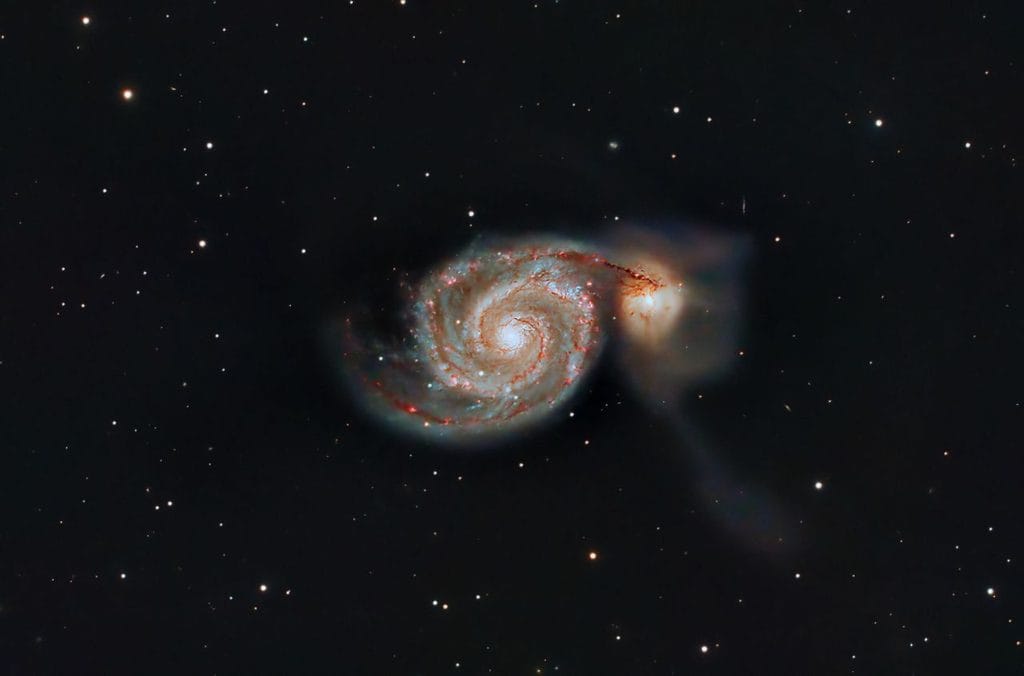
NASA says our Milky Way alone contains at least 100 billion planets. It also estimates that the observable universe contains at least 100 billion galaxies.
If our galaxy is even roughly representative, you very quickly end up with something in the neighbourhood of 10 sextillion planets.
That would mean tens of thousands of planets for every single second the universe has existed.
Large numbers stop behaving like normal numbers remarkably quickly.
2. Surprising Facts : Every other planet can fit between Earth and the Moon
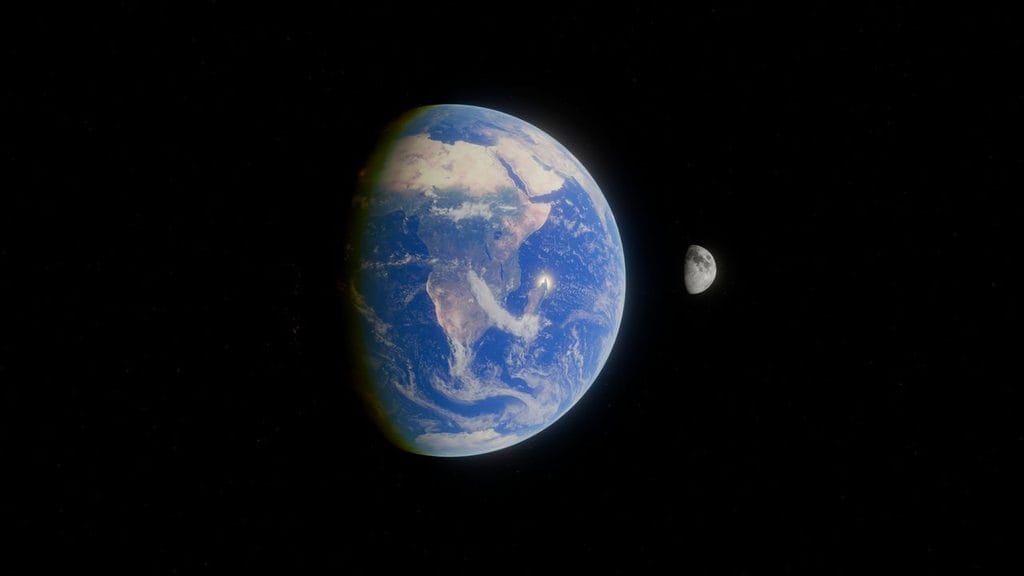
This internet fact is almost true all the time and completely true at the right time.
Add together the diameters of Mercury, Venus, Mars, Jupiter, Saturn, Uranus and Neptune and you get roughly 388,000 kilometres.
The average Earth-Moon distance is not quite enough once you account for the sizes of Earth and the Moon themselves.
But the Moon’s orbit is elliptical.
At its farthest point, called apogee, the Moon is about 405,500 kilometres from Earth.
At that distance, there is enough room between the surfaces to line up all seven other planets.
There would even be a little space left.
Obviously gravity would turn this into the most catastrophic experiment in human history.
But geometrically, it works.
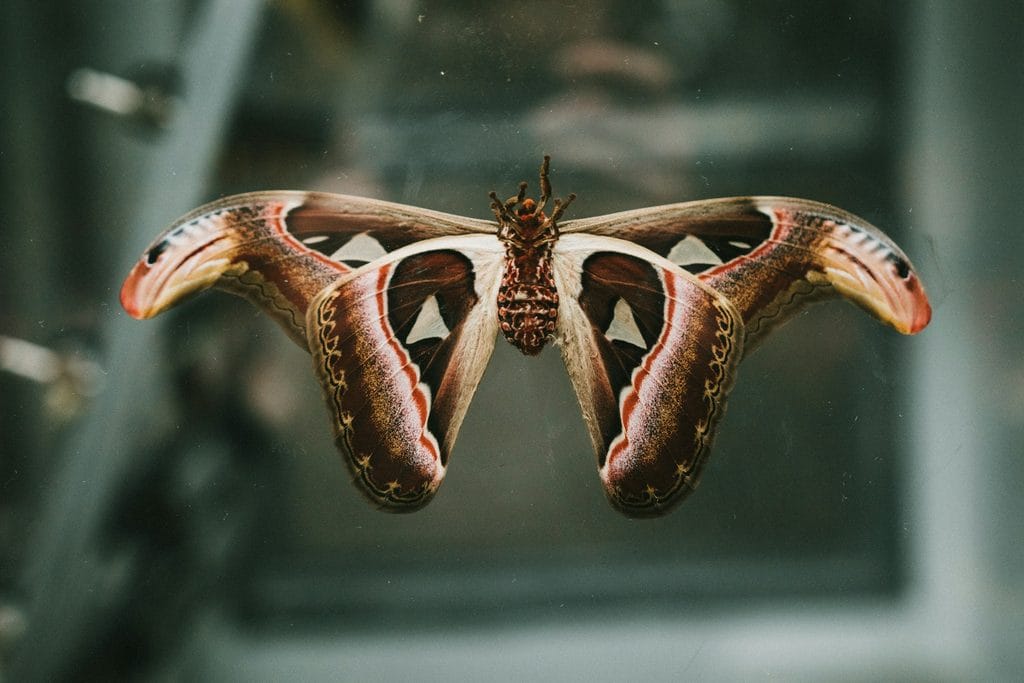
3. A moth can remember being a caterpillar
The popular version of metamorphosis says a caterpillar enters its chrysalis, dissolves into soup and somehow rebuilds itself as a butterfly.
That is a little exaggerated. The transformation is enormous, but some important structures survive.
Apparently, memories can too.
Researchers trained tobacco hornworm caterpillars to avoid a particular smell by pairing it with a mild electric shock.
Then the caterpillars became moths.
The adult moths still avoided the smell.
Which means something learned by an animal crawling around eating leaves somehow survived one of the most dramatic bodily transformations in nature.
New body.
Wings.
Completely different life.
Same opinion about that horrible smell.
4. Dogs really do have special “puppy dog eye” muscles
Your dog may have anatomy specifically suited to looking tragically disappointed in you.
Researchers comparing domestic dogs with wolves found that dogs generally have a muscle called the levator anguli oculi medialis, or LAOM.
Its job is to raise the inner eyebrow.
Wolves either lacked the muscle or had it in a much less developed form. Dogs also produced the eyebrow movement more frequently and more intensely when interacting with humans.
The expression makes their eyes appear larger and gives them that familiar sad, almost childlike face.
Researchers suggested that during thousands of years of domestication, humans may have unconsciously favoured dogs that were particularly good at making expressions we responded to.
So generations of humans may have accidentally helped engineer the face your dog now uses when you refuse to give him your dinner.

5. A normal pencil can write around 45,000 words
Your pencil contains far more writing than it looks capable of.
The American Chemical Society estimates that an average pencil contains enough graphite to write roughly 45,000 words.
That is around half the length of many novels.
And despite everyone calling the centre “lead”, there is no lead in an ordinary pencil.
It is mostly graphite mixed with clay.
So humanity has spent centuries calling one of the world’s most common writing materials by the wrong substance.

6. A shuffled deck of cards may create something that has never existed before
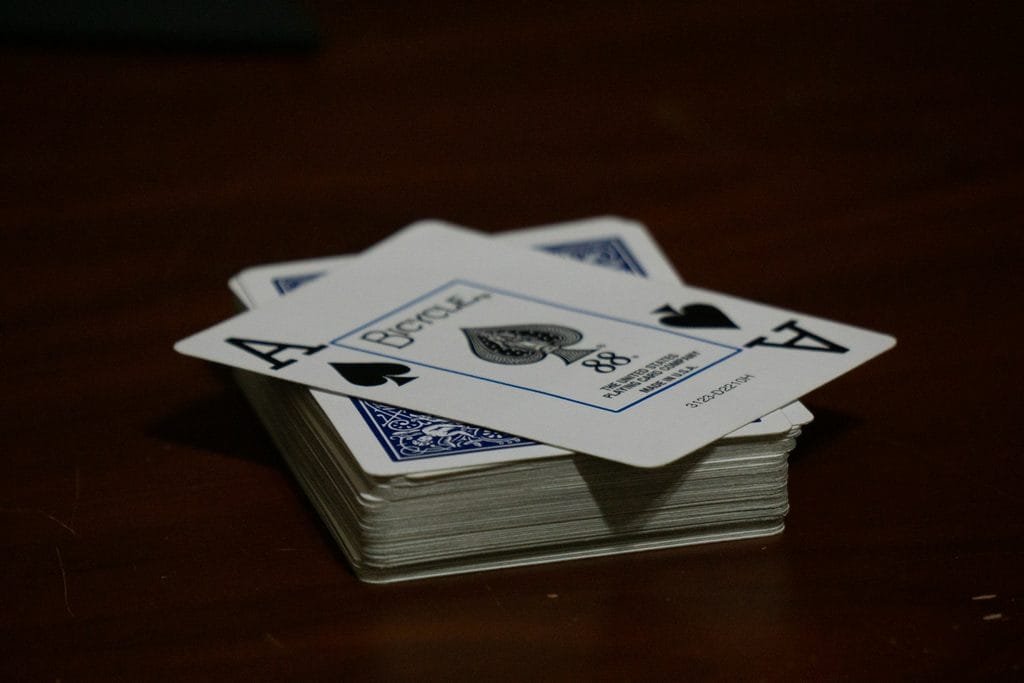
Shuffle a normal deck of 52 cards properly.
Look at the order.
There is a very good chance that exact arrangement has never existed before.
The number of possible arrangements of a 52-card deck is written as 52 factorial.
It comes to roughly:
8 × 10⁶⁷ possible arrangements.
The universe has existed for only about 10¹⁷ seconds.
Even if someone had been shuffling decks billions of times every second since the beginning of the universe, they would not come remotely close to producing every possible order.
You can create something almost certainly unique in cosmic history while sitting at a kitchen table.
7. A poet once invaded a city because he was angry about the end of World War I
This may be my favourite one.
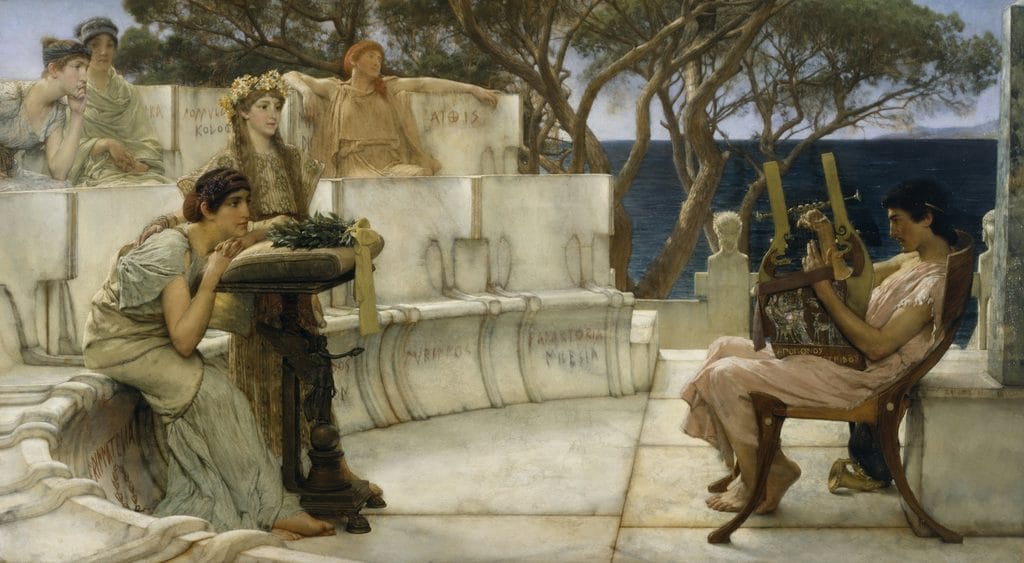
His name was Gabriele D’Annunzio.
He was not a general who happened to write poetry.
He was one of Italy’s most famous poets who happened to enjoy war.
After World War I, Italian nationalists were furious about the postwar settlement. One particular obsession was the Adriatic port of Fiume, now Rijeka in Croatia.
D’Annunzio decided diplomacy was taking too long.
So in September 1919, he gathered thousands of volunteers, including many veterans, marched into Fiume and seized the city.
The Italian government had not ordered him to do it.
D’Annunzio and his allies created a constitution for their bizarre new state. It declared that:
“Music is a social and religious institution.”
Every commune was supposed to have a choir and an orchestra supported by the state.
His city attracted soldiers, revolutionaries, nationalists, artists, anarchists, adventurers and political extremists.
Military life was equally unhinged.
Eventually the Italian army had enough.
Italian forces attacked Fiume in December 1920 and forced D’Annunzio out.
But his political theatre did not disappear.
History rarely worries about whether its plot sounds realistic.
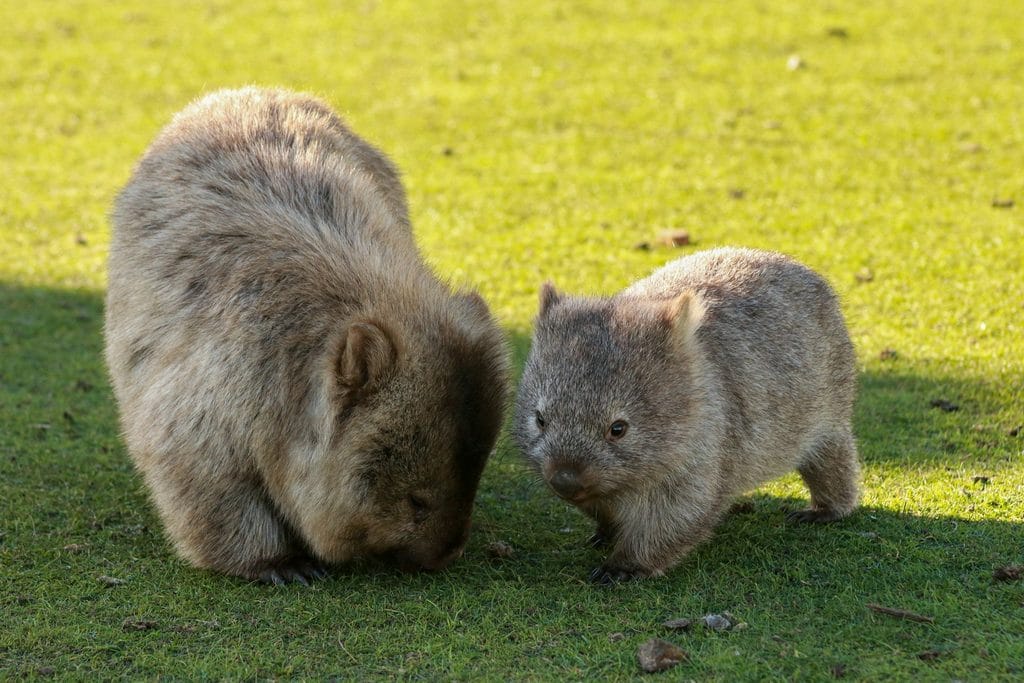
8. Wombats poop cubes
Not vaguely square.
Not “sort of box shaped.”
Cubes.
Scientists actually studied how wombats manage this, because their intestines are obviously not square.
The answer is wonderfully strange.
Different sections of a wombat’s intestine have different levels of stiffness. As the intestine contracts and the material moves through it, those differences gradually form flat sides and corners.
The cubes take shape in roughly the final 17 percent of the intestine.
Nature invented a biological cube-making machine.
For poop.
9. French was once the language of English government
England and France spent centuries fighting each other.
Which makes this slightly awkward.
After the Norman Conquest of England in 1066, Norman French became the language of the ruling elite and government.
And tiny pieces of it never completely disappeared.
The UK Parliament still uses Norman French during some formal parliamentary procedures, including parts of Royal Assent.
Parliament itself explains why:
Those procedures began hundreds of years ago, when Norman French was the official language of government.
So parts of the British state still contain linguistic leftovers from medieval French-speaking rulers.
History is full of things nobody ever bothered to uninstall.

10. Wales has almost three sheep for every person
This sounds like a joke about Wales.
The numbers actually work.
Official statistics counted approximately 8.81 million sheep and lambs in Wales in 2025.
The human population was approximately 3.18 million.
That gives Wales around 2.8 sheep for every human being.
The sheep do not yet have voting rights.
So humanity remains in control.
For now.

11. Polar bears have black skin
Look underneath all that white fur and a polar bear is surprisingly dark.
Even stranger, the individual hairs in its coat are not actually white.
They lack pigment and are essentially transparent.
Light interacting with the fur makes the animal appear white. The hairs are also hollow, helping provide insulation.
So a polar bear is essentially a black-skinned animal wearing an enormous coat of transparent hair.
Nature’s colour choices are complicated.

12. There is a disease that gradually destroys your ability to sleep
It is called fatal familial insomnia.
That name is horribly accurate.
FFI is an extremely rare inherited prion disease associated with a mutation in the PRNP gene.
It attacks parts of the brain, particularly the thalamus, that are deeply involved in sleep and the regulation of automatic bodily functions.
People can develop progressively severe insomnia, sweating, high blood pressure, memory problems, movement difficulties and confusion.
There is currently no cure.
The average course of the disease is about 18 months.
The frightening part is that this is not simply extreme insomnia.
The brain systems responsible for producing normal sleep are progressively being damaged.
Sleep is something most of us assume the body will eventually force us to do.
FFI shows that even something that fundamental depends on very specific machinery inside the brain.

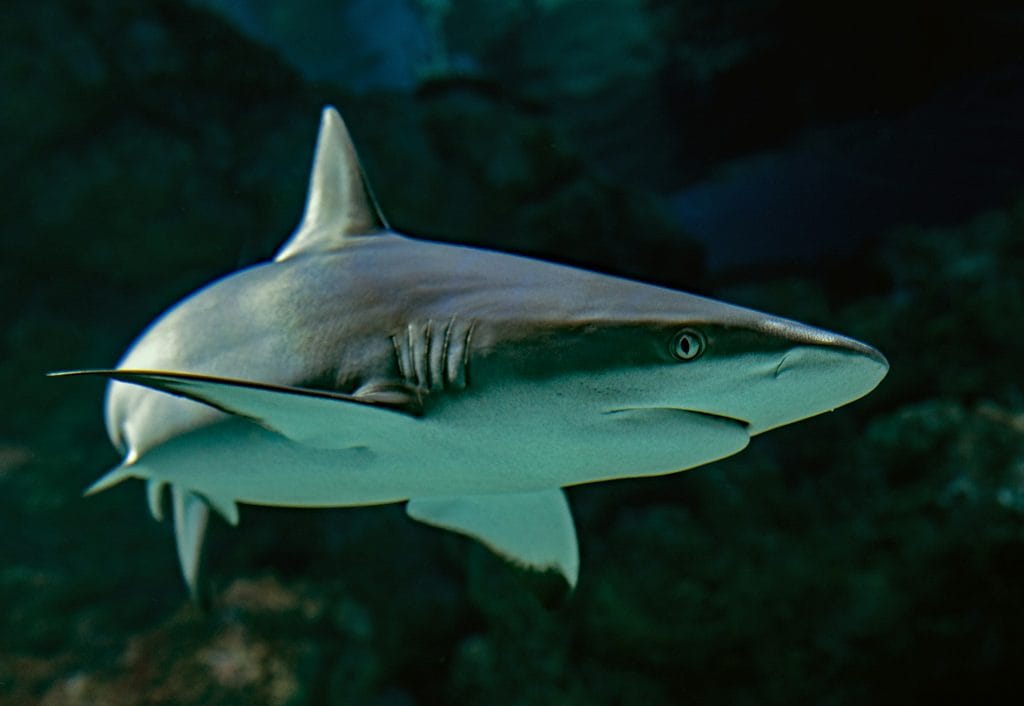
13. Sharks are older than trees
Trees feel ancient.
Sharks would disagree.
Shark ancestors have existed for more than 400 million years.
The oldest known forests with sophisticated tree systems appeared tens of millions of years later.
That means there was a period in Earth’s history when sharks were already swimming through the oceans but forests, as we would recognise them, did not exist.
Sharks also survived multiple mass extinctions.
Dinosaurs arrived.
Dinosaurs disappeared.
Sharks kept swimming.
14. A teaspoon of neutron star material would weigh about 10 million tons
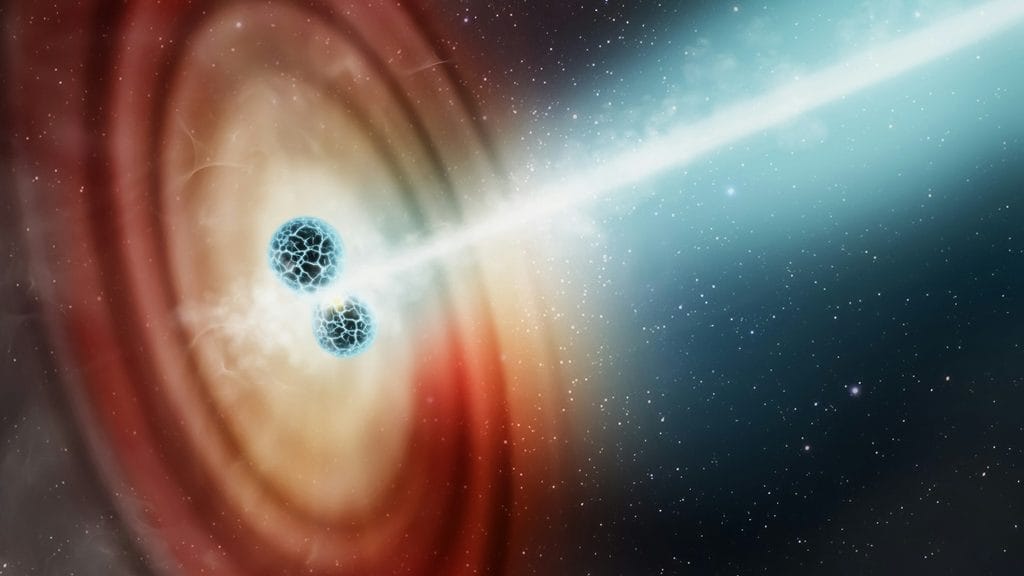
When certain massive stars die, gravity crushes their cores so violently that electrons and protons are squeezed together into neutrons.
The result can be a neutron star.
These objects pack an enormous amount of mass into something roughly the size of a city.
NASA gives one particularly stupid-sounding comparison:
A single teaspoon of neutron star material would weigh about 10 million tons.
Ten million tons.
On a teaspoon.
Space repeatedly demonstrates that everyday human intuition has absolutely no business trying to understand astrophysics.
15. Cleopatra lived closer to us than she did to the building of the Great Pyramid
This one completely breaks the way most of us imagine Ancient Egypt.
The Great Pyramid of Giza was completed around 2560 BCE.
Cleopatra VII lived from 69 BCE to 30 BCE.
So roughly 2,500 years separated Cleopatra from the construction of the Great Pyramid.
Only about 2,055 years separate Cleopatra’s death from us in 2026.
In other words:
Cleopatra is closer to us in time than she was to the people who built the Great Pyramid.
When Cleopatra looked at the pyramids, she was already looking at ancient history.
That is how ridiculously long ancient Egyptian civilisation lasted.
Read Next: 15 Geography Facts That Sound Completely Made Up
What Happens When Scientists Try to Test an Out-of-Body Experience



 Psychology · Oct 17, 2026A Monkey Bite Killed the King of Greece
 The Margin · Oct 13, 202615 Geography Facts That Sound Completely Made Up
 Psychology · Oct 11, 2026Brutal Honesty Is Not a Personality Trait