
An out of body experience is easy to describe and almost impossible to test.
Someone feels as if they have left their body. They may say they floated above themselves, moved through a room, or saw something from a place their physical eyes could not possibly have been.
The obvious scientific response is fairly simple.
Fine. If you can see from somewhere outside your body, tell us what is in the other room.
Researchers recently tried exactly that.
The experiment did not work.
At least, not in the way they had planned.
How Do You Test an Out of Body Experience?
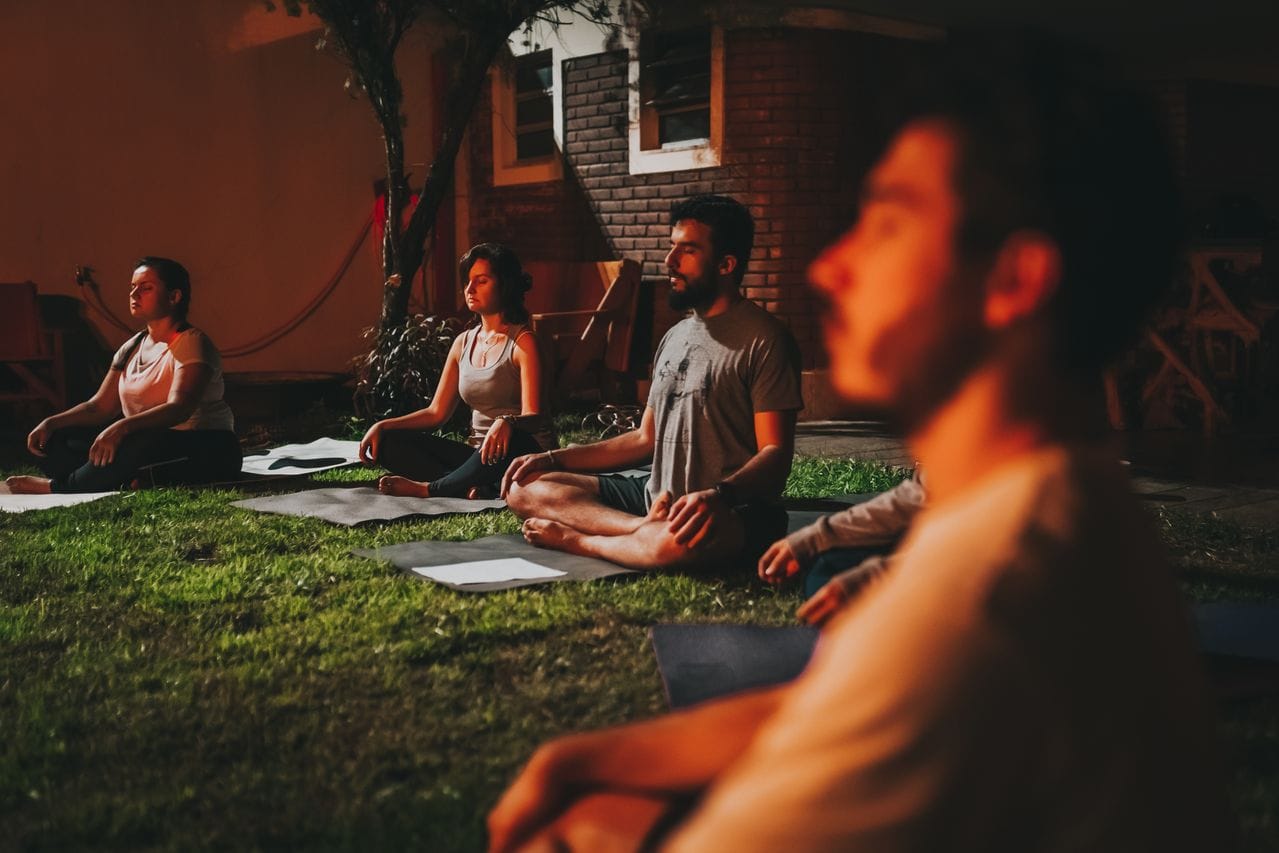
The study was led by researchers connected to the University of Virginia and carried out in Brazil. Twenty-one people took part, all connected with an institute where people practise techniques intended to produce out-of-body experiences.
The setup was surprisingly straightforward.
A laptop was placed in another room that the participant could not see. On the screen was a randomly chosen image. The participant did not know what the image was. The researchers working with them did not know either.
The idea was that if someone had an out of body experience and really perceived the other room, they might be able to describe what was on that screen.
After each attempt, participants described whatever they had seen.
Ten of the 21 people said they had actually experienced leaving their body. Thirteen gave descriptions that could be compared with the hidden images.
Then the researchers checked whether those descriptions matched the correct pictures better than they would by chance.
They did not.

The Main Experiment Failed
This is the part worth being very clear about.
Nobody successfully proved that they could leave their body, travel into another room and identify the hidden target.
Not one individual result was strong enough to beat chance in a statistically meaningful way. When the researchers looked at all 13 usable attempts together, the result was still no better than chance.
If the study had ended there, the conclusion would have been wonderfully boring.
Researchers tested a strange claim.
The claim did not pass the test.
End of story.
Except two of the participants said something afterwards that the experiment had not asked them to report.
And that is where the paper becomes much more interesting.
Two People Were Looking in the Wrong Place
The hidden image was supposed to be the target.
But during later conversations, one participant described something else.
They said that in another room, behind closed doors, one researcher had been sitting on the left looking at a laptop while another person farther back was reading a book.
According to the trial records, that was correct.
A second participant gave another description. This person said one researcher was sitting on the right taking notes, while another was on the left using the computer.
Again, the records from that session matched the description. The organisers said the participants had no ordinary way to see the researchers in that room.
This sounds considerably more exciting than failing to identify a picture on a laptop.
It is also where we have to be careful.
No, This Does Not Prove People Can Leave Their Bodies
The researchers themselves do not claim that it does.
Those descriptions were not part of the planned experiment.
That matters a lot.
If you design a test in advance, decide exactly what counts as success, run it, and then somebody succeeds, you have something you can properly analyse.
If something interesting happens afterwards that you were not specifically testing for, it is different.
You can notice it.
You can investigate it.
You can design the next experiment around it.
But you cannot go backwards and pretend it was the test all along.
The authors say exactly that. The unexpected descriptions cannot be treated as evidence that out-of-body perception is real because they were not part of the study’s planned measurements.
This is probably the most interesting thing about the entire paper.
Science did not get a strange result and immediately announce that consciousness can float through walls.
It said, essentially:
We did not prove what we came here to prove.
But we saw something else.
Can we test that properly next time?
Why Not Just Put Another Hidden Picture Somewhere?
Researchers have been doing versions of that for decades.
The logic makes perfect sense. If someone says they can see a room while their body remains somewhere else, put a number, picture or object somewhere only that viewpoint could reveal.
If they identify it repeatedly under controlled conditions, things get interesting very quickly.
There have been unusual cases in the past, but the overall problem has always been getting reliable results that can be repeated.
There is another difficulty too.
People who report an out of body experience do not necessarily describe it like somebody deliberately walking around a building and reading labels.
They often describe an experience that is brief, strange and difficult to control.
Imagine having the most unusual experience of your life and being expected to remember that you are supposed to find a laptop and study the photograph displayed on it.
The researchers behind the new study now wonder whether the target itself may be part of the problem.
A random image on a screen might simply be less noticeable than two real people sitting in a room.
Their suggestion for future experiments is surprisingly practical: make the surroundings part of the test too.
A researcher might wear something unusually bright, sit in an unexpected place, or do something memorable behind a closed door. If participants repeatedly describe those details without having seen them normally, then researchers would have something planned in advance that could actually be measured.
That would be a much stronger test.

Out-of-Body Experiences Are Not Especially Rare
Whatever causes them, the experience itself is real in one important sense: people genuinely report having it.
Reviews have estimated that around 10 to 20 percent of people may experience something resembling an out-of-body state at least once, although estimates vary between studies. These experiences have been reported across different cultures and can happen during sleep, extreme stress, meditation, illness and other situations.
Scientists have also found strong reasons to think the brain plays a major role in producing the feeling.
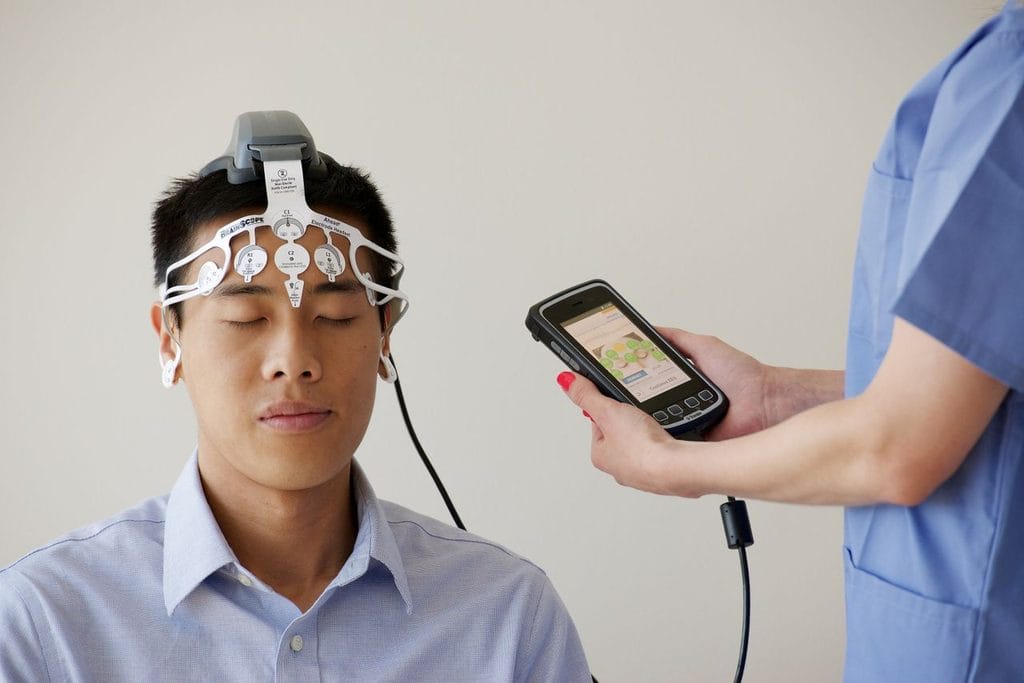
Research has repeatedly linked out-of-body experiences with an area where the temporal and parietal parts of the brain meet. That region helps combine information about where your body is, what you see and where you feel yourself to be. Disturbing that process can produce very strange changes in how a person experiences their own body.
In one well-known medical case, electrical stimulation of part of the brain repeatedly produced an out-of-body sensation in a patient.
That gives science a plausible explanation for how someone can sincerely feel that they are outside themselves.
But it leaves another question untouched.
If somebody reports information they apparently could not see normally, where did that information come from?
That is the part experiments like this are trying to test.
The Difference Between an Experience and an Explanation
This is where conversations about strange experiences usually become unnecessarily hostile.
Someone says they had an out of body experience.
One person immediately says they proved the soul exists.
Another says they imagined the entire thing.
Both may be answering a different question from the one being asked.
A person can have an experience that feels completely real without knowing what caused it.
We do this constantly.
Dreams feel real while they are happening.
Optical illusions make us see things incorrectly even after we understand the trick.
Pain can be completely real even when the body part that seems to hurt is no longer there.
An experience does not become fake simply because the brain produced it.
But experiencing something does not automatically prove our explanation for it either.
That is why this experiment is useful even though it failed.
It separates the two questions.
Do people genuinely feel as if they leave their bodies?
Clearly, some do.
Can they then obtain information they could not have received through ordinary senses?
This study did not show that.
And those two unexpected descriptions do not change the answer.
Not yet.
The Weird Result Is Really a Better Question
There were only 21 people in this study.
Only 13 produced descriptions that could be tested against the hidden targets.
The main result was negative.
That should remain the headline inside our heads even if the strange part is more fun to talk about.
But those two descriptions give researchers something useful.
Instead of asking participants to find one boring target hidden in another room, the next experiment could make the whole unseen room part of the test.
Where is each researcher sitting?
What are they doing?
What colour are they wearing?
What unusual object is beside them?
Decide those things randomly before every session. Keep them hidden. Record everything. Then see whether the participants can describe them more accurately than chance.
If they cannot, we learn something.
If they can, repeatedly, under increasingly strict conditions, we learn something much stranger.
Either result would be interesting.
That is probably what I like most about this experiment.
It did not answer the enormous question.
It made the next question easier to ask.
Read Next: Your Brain Does Not Know Where You End. It Is Always Guessing.

 Psychology · Oct 17, 2026A Monkey Bite Killed the King of Greece
 Psychology · Oct 15, 202615 Surprising Facts That Sound Completely Made Up
 The Margin · Oct 13, 202615 Geography Facts That Sound Completely Made Up