
Body ownership is not as fixed as it feels.
Your brain is deciding, right now, what belongs to you and what does not. It does this constantly, without asking. And as three experiments show, it gets it wrong surprisingly easily.
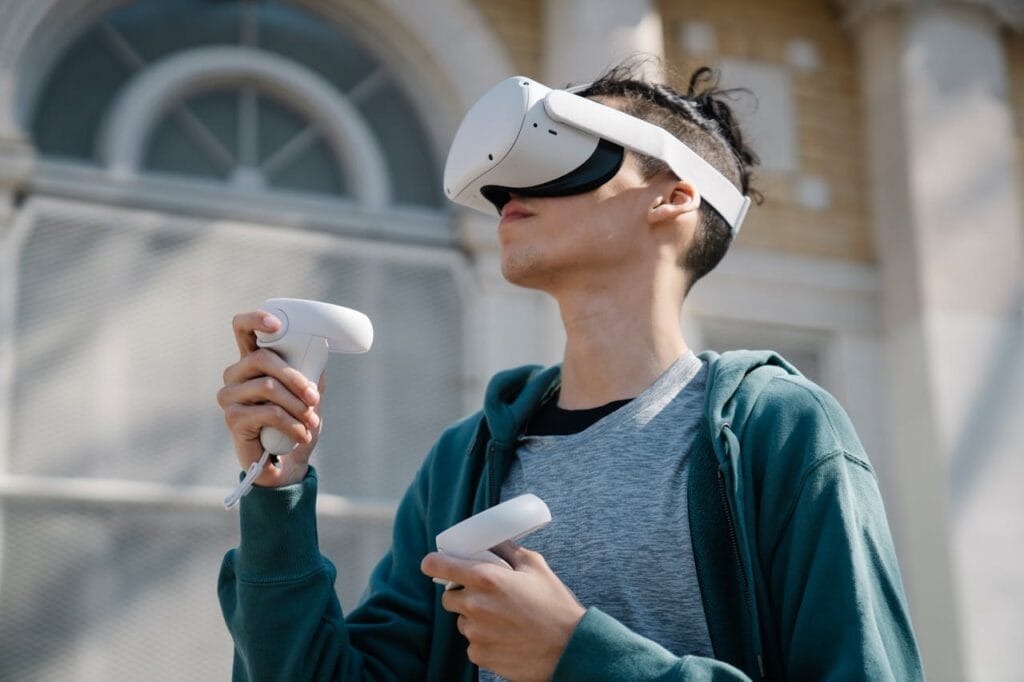
I found this out firsthand in a VR headset.
“Score 845, Kills 29, Accuracy 87%.” The numbers hung in the display. Impressed, I decided to go one more round.
I looked at the controllers turning into a sword and took a stance. I was completely immersed, dodging attacks, aiming and swinging with surprising control. There was no physical entity in front of me.
And yet my brain was responding to this invented reality as though it were real. Close attackers first. Distant ones left for later.
As the attackers grew closer, I clasped the controller tighter, almost as if it were an actual sword. The line between my real hands and the virtual hands on screen grew thin.
In a few minutes, my brain had reassigned what was mine. The ownership of my hand had shifted to a ghostly hand on a screen.

The Rubber Hand and the Truth About Body Ownership
Back in 1998, the same flexibility was documented in a now famous experiment: the Rubber Hand Illusion.
A rubber hand was placed in front of a participant while their real hand was hidden behind a screen. Both hands were then stroked synchronously with a brush for about a minute.
The participants looked at the rubber hand while feeling the touch.
Then a hammer struck it.
The participant reacted with shock, as though it were their own hand. When asked to point to their real hand afterward, they indicated a location shifted toward the rubber one.
The brain had temporarily reassigned body ownership.
More strikingly, researchers recorded a drop in temperature in the real hand during the illusion. Not just a psychological response. A physiological one. The brain had begun to disown the real hand at a level a thermometer could measure.
The brain does not verify what is yours. It finds the most coherent story the signals agree on, and calls that story you.
How the Brain Decides What Is Yours
How does the brain decide what belongs to the self?
The answer lies in multisensory integration. The brain takes inputs from vision, touch, movement, and proprioception, the hidden sense that tells you where your limbs are without looking, and weaves them into a single coherent body map.
When these signals are congruent, the brain assigns body ownership. When they are manipulated to point elsewhere, ownership follows.
In the rubber hand illusion, visual cues pointed to the rubber hand receiving the same touch the real hand was feeling. The brain followed the consensus. It did not check. It concluded.
But vision and touch are not the only levers.
Movement matters too. In a later modification, participants wore a VR headset and a data glove. The movements of the real hand were tracked and a virtual hand moved synchronously on screen.
The same shock on impact. The same drift in localisation.
The body map is not fixed at birth. It is being actively redrawn, all the time, based on incoming evidence. Usually all the signals agree. The illusion breaks that agreement deliberately.
And the brain, remarkably, follows.
Can Body Ownership Be Relocated Entirely?
If the brain can be fooled into owning a single hand, the next question is obvious.
Can it be fooled into owning an entirely different body?
To a significant extent, yes. When participants wore a VR headset projecting a camera view of their own body from behind, and that virtual body was stroked synchronously with their real back, participants began to feel the projected body was theirs.
They drifted toward it physically.
The whole self, briefly reassigned to a body they were watching from the outside.
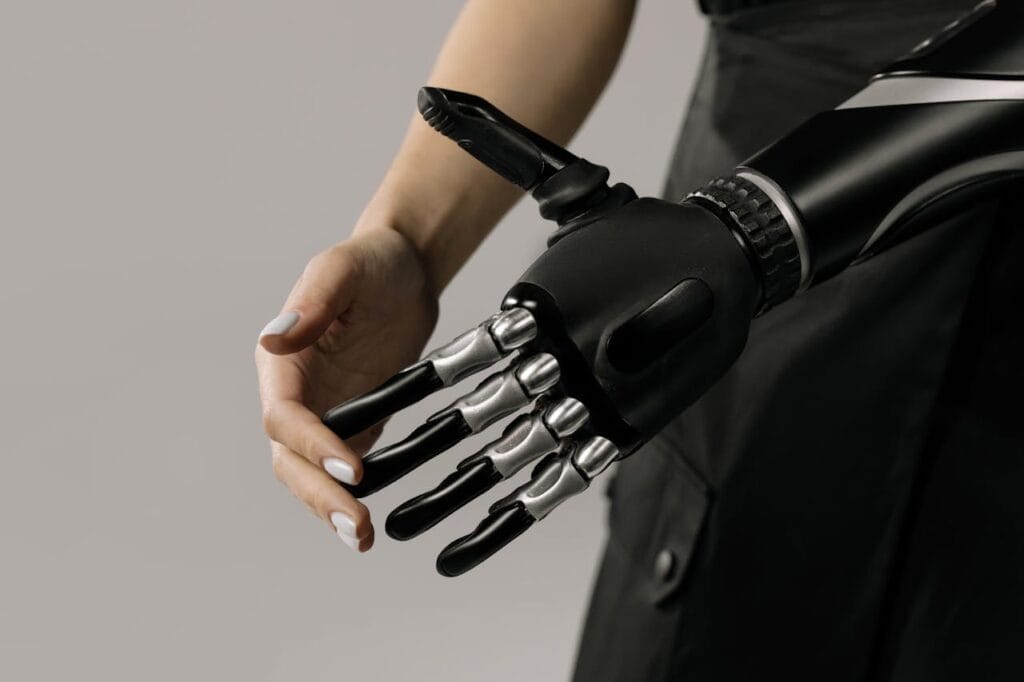
Researchers have since used variations of these illusions to reduce phantom limb pain in amputees, giving the brain a coherent body signal to follow in place of the missing one. The same flexibility that makes the brain susceptible to illusion also makes it available for repair.
The body map, it turns out, is editable.
Body ownership is not a fact the brain records. It is a conclusion the brain reaches. And conclusions can be revised.

What the Headset Showed Me
I think about that VR session differently now.
The few minutes it took for my brain to shift ownership, to respond to a virtual hand being struck with something close to alarm, was not confusion. It was the system working exactly as it was designed.
The signals agreed. The brain committed.
What the rubber hand, the data glove, and the VR headset all demonstrate is the same uncomfortable truth.
The self is not a fixed address. It is a best guess. Revised constantly, held loosely, and surprisingly willing to relocate.
The brain’s loyalty is not to the biological body. It is to coherence.
The unsettling part is not that this happens inside a headset.
It is that the same process is running right now, in ordinary life, without you ever asking it to.
Read Next: Procrastination Psychology: Why Your Brain Always Delays

 Psychology · Oct 17, 2026A Monkey Bite Killed the King of Greece
 Psychology · Oct 15, 202615 Surprising Facts That Sound Completely Made Up
 The Margin · Oct 13, 202615 Geography Facts That Sound Completely Made Up