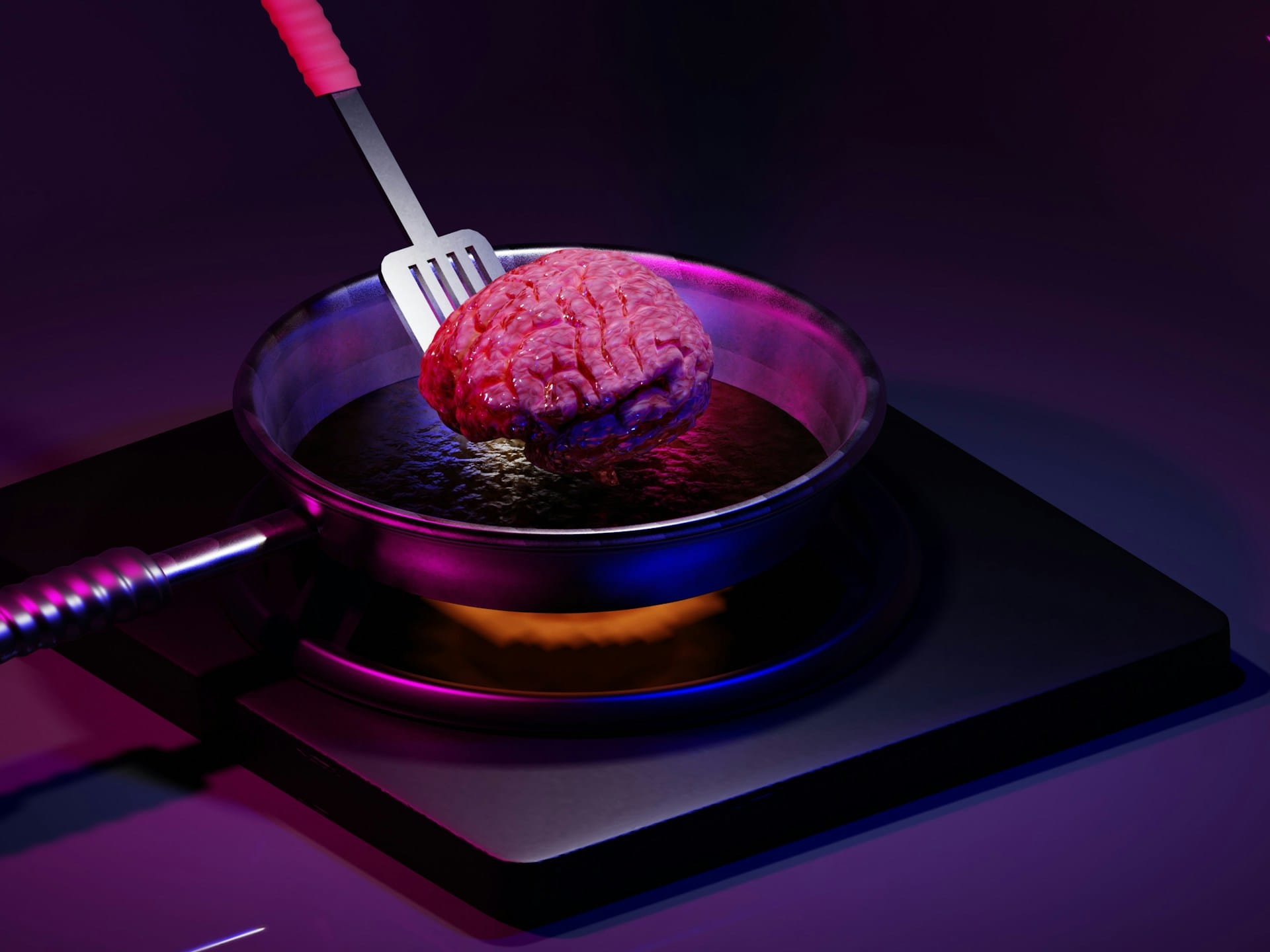
Not serotonin. Not dopamine. Something much less discussed, and possibly more important to choline and anxiety than anyone knew until recently.
A meta-analysis published in Molecular Psychiatry looked at 25 brain scan studies.
It compared 370 people with anxiety disorders against 342 people without.
The finding was consistent and measurable: people with anxiety disorders had about 8% less choline in their brains. The gap was strongest in the prefrontal cortex.
That is the part of the brain that controls thinking, emotional regulation, and behaviour.
What choline and anxiety have to do with each other
Choline is an essential nutrient.
The body produces a small amount on its own. Most of it has to come from food. Eggs, beef, salmon, chicken, soybeans. The kind of thing a person can be quietly under-eating for years without knowing.
Inside the brain, choline does several jobs.
It is a core ingredient in cell membranes. It is involved in the production of acetylcholine, a neurotransmitter tied to memory, mood, and muscle control. It helps regulate how brain cells are built and maintained.
When choline levels drop, membrane dynamics shift.
The research team measured this using a technique called proton magnetic resonance spectroscopy. An MRI that reads the chemistry of brain tissue directly, without opening anything up.
The brain scan does not lie. It shows what is there and what is not.
What the prefrontal cortex losing choline actually means
The prefrontal cortex is where most of the management happens.
It weighs risk. It regulates emotional responses. It talks the amygdala down when the amygdala is convinced something is dangerous.
In anxiety disorders, that conversation breaks down. The threat signal runs loud and the regulating response cannot match it.
Low choline in the prefrontal cortex may be part of why.
Not the whole story. But a measurable, consistent, chemical part of it.
Jason Smucny, co-author of the study and assistant professor of psychiatry at UC Davis, said this clearly: this is the first meta-analysis to show a chemical pattern in the brain across anxiety disorders.
Not in one type of anxiety. Across them.
Generalised anxiety disorder, panic disorder, social anxiety disorder. The choline and anxiety pattern held in all three.
The deficit was not specific to one condition. It showed up wherever anxiety did.
This is not the serotonin story again
In 2023, a major UCL meta-analysis found no consistent evidence that low serotonin causes depression.
The serotonin hypothesis had underpinned psychiatric treatment for decades. The finding shook the field.
Choline and anxiety are not the same story. The researchers are careful about that.
Richard Maddock, senior author of the study and professor of psychiatry at UC Davis, has been direct about what this does and does not prove.
It is not yet known whether low dietary choline causes anxiety.
It is not yet known whether raising choline levels in the brain reduces it.
What is known is that the pattern is there, it is consistent across 25 studies, and it is measurable.
That is a different kind of claim than serotonin ever had at the same stage.
What choline and anxiety research means for treatment
Most people do not get enough choline from food.
That is not a fringe claim. Maddock made it explicitly. The average diet, across the population, falls short of adequate choline intake.
The foods richest in it are egg yolks, beef liver, salmon, chicken. Broccoli and soybeans carry meaningful amounts too.
The research team recommends future studies test whether dietary changes or choline supplementation can shift brain chemistry and improve outcomes for people with anxiety disorders.
That research has not been done yet at scale.
But the logic being tested is straightforward: if a measurable deficit exists across anxiety disorders, and if that deficit can be corrected through diet or supplementation, then something useful becomes available that does not require a prescription.
That is worth investigating carefully.
Nobody is saying eat more eggs and your anxiety disappears. The researchers are saying the deficit is real and the next question matters.
What remains
Anxiety disorders affect around 30% of adults in the United States at some point in their lives.
They are the most common mental illness in the country. And despite decades of treatment, the outcomes remain uneven.
The choline and anxiety finding does not rewrite that picture overnight.
What it does is add a chemical detail that was not in the picture before. A measurable, consistent, cross-diagnostic deficit in a nutrient the brain genuinely needs.
The question of whether correcting it helps is still open.
The fact that nobody thought to ask it carefully until now is the part worth sitting with.
Read Next: Artificial Neurons Brain Cells Can Now Communicate.
Thailand Travel Tips That Nobody Writes About but Everyone Needs

 Psychology · Oct 17, 2026A Monkey Bite Killed the King of Greece
 Psychology · Oct 15, 202615 Surprising Facts That Sound Completely Made Up
 The Margin · Oct 13, 202615 Geography Facts That Sound Completely Made Up