Karna and trauma arrive together in the Mahabharata before the first word of his story is spoken.
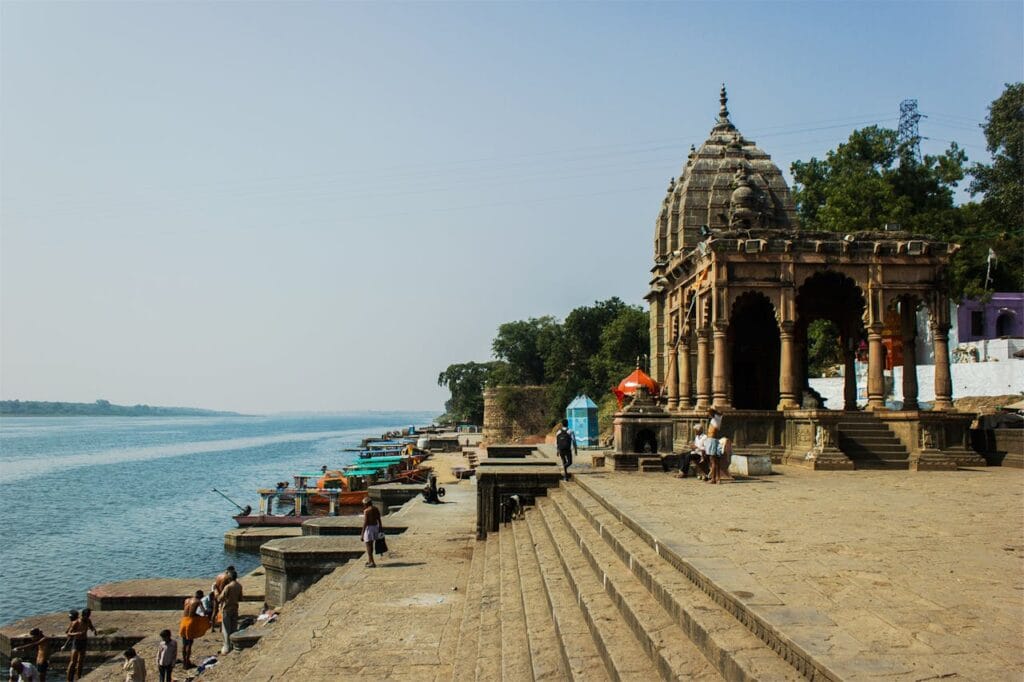
Karna is sitting at the river’s edge, performing his morning prayers.
He does this every day without fail. Through everything the world has done to him, this ritual holds.
Kunti finds him there.
She is his mother. He does not know this yet. She does.
She tells him the truth. His lineage. His father. His brothers. The throne that should have been his. She offers him everything she took from him the day she set him on the water.
Karna listens.
Then he refuses.
Not because he does not want what she is offering. But because by that point, the wound had become the person. The inherited pain had been carried so long it had stopped feeling like something he was holding.
It felt like something he was.
This is what generational trauma does.
The Mahabharata understood it three thousand years before the word existed.
Karna and trauma: a portrait the epic never softens
In the decades after the Holocaust, researchers began studying the children of survivors.
These children had not been in the camps. Had not experienced the original events. And yet something in them had changed anyway.
Trauma can change the way genes are expressed without changing the genes themselves. Studies on Holocaust survivors found chemical alterations in a gene involved in stress regulation. Those same alterations were found in their children, even though they were born much later.
The body remembered what the mind never knew.
Trauma can leave molecular scars on DNA, influencing gene expression without altering the genetic code. These changes can be passed down, predisposing future generations to anxiety, heightened stress responses, and altered emotional regulation.
You arrive already calibrated for dangers that no longer exist.
Already carrying the survival responses of people you never met.
Already shaped by experiences you never had.
Generational trauma in Mahabharata philosophy named this thousands of years before the laboratory confirmed it.
Karna as portrait
Karna was born with golden armour fused to his skin.
The epic’s language is always precise. The armour was not earned. It arrived with him. It was part of him before he took his first breath.
This is the Mahabharata expressing in myth what epigenetics expresses in chemistry.
You do not choose what you are born carrying.
His wound was not poverty. Not the caste system. Not rejection, though all of these compounded it.
His wound was identity. The absence of a name the world would recognise as his own.
He spent his entire life trying to claim something taken from him before he could speak.
Every door closed. Every credential was questioned. His teacher Parashurama cursed him when the truth of his birth emerged. The knowledge that could have protected him dissolved at the moment he needed it most.
He did not choose any of this.
It was handed to him.
He was exceptional by every measure. Courage. Skill. Loyalty. Generosity. The Mahabharata is careful to make this clear.
He was not diminished by his wound.
He was imprisoned by it.
What the brain confirmed
The brain does not begin blank. It begins full.
A 2026 study from the Institute of Science and Technology Austria found that the hippocampus, the brain’s memory centre, arrives in the world dense with connections shaped by genetic inheritance.
The architecture of everything that came before the first experience.
The brain then spends years pruning. Cutting away what is not reinforced. Strengthening what is used.
But the starting point follows the lineage.
The connections strengthened by your ancestors’ fear become your default. Their survival responses become your first instincts. Their unresolved pain becomes your nervous system’s baseline.
Karna’s wound was structural before it was social.
He arrived already wired for the experience of being unwanted.
Generational trauma in Mahabharata wisdom understood what neuroscience is now mapping. The past does not stay in the past. It travels forward in the body.
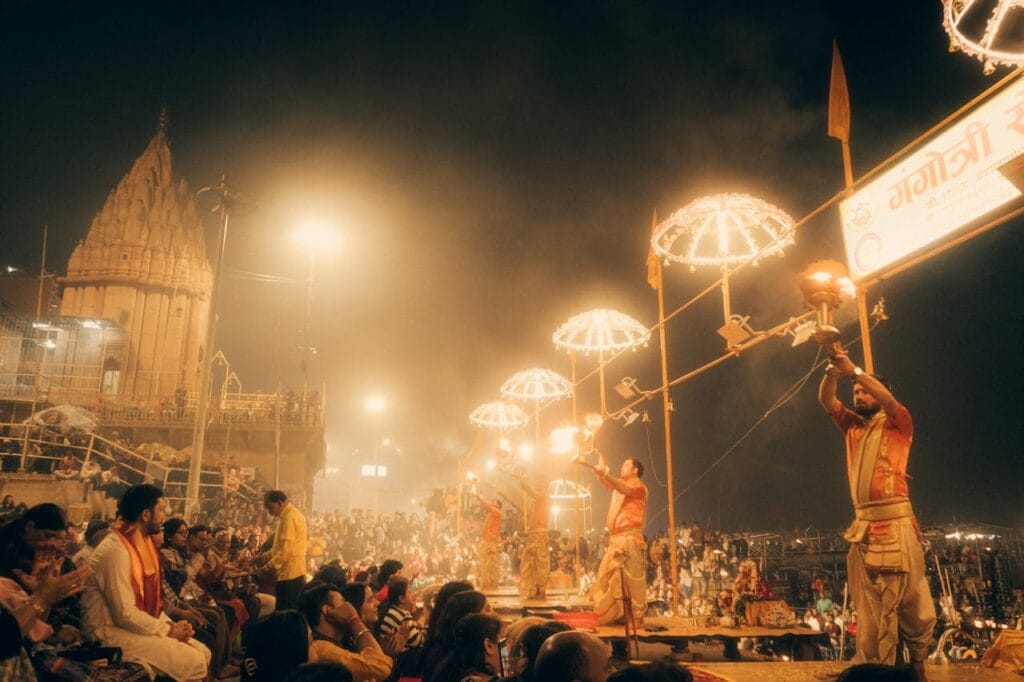
The ritual that understood this
Hindu philosophy built a practice around exactly this problem.
Pitra Daan. The offering to ancestors.
On the surface it looks like ceremony. Water at the river’s edge. Prayers for those who came before.
But the philosophy underneath is more precise.
Pitra Daan is the recognition that the living carry what the dead could not complete. The offering is not gratitude. It is settlement.
A conscious acknowledgement that you have been carrying something that was never yours to carry indefinitely.
The tradition understood that you cannot fully inhabit your own life while you are still living out someone else’s unresolved story.
Not because the past is not real.
But because the past belongs to those who lived it.
And you have somewhere new to go.

The four aims and the unpaid debt
The Purusharthas are not a checklist. They are a sequence.
Dharma gives you your obligations. Artha gives you ground to stand on. Kama opens you to genuine experience. Moksha asks you to release your grip on all of it.
But there is something beneath all four that Pitra Daan points toward.
You cannot fulfill Dharma cleanly while living out someone else’s unresolved story. You cannot build Artha from inherited scarcity. You cannot receive Kama if your nervous system is permanently calibrated for threat.
And Moksha is not available to a person still carrying what was never theirs.
Karna never got there.
At the river’s edge, when Kunti offered him the truth, he had everything he needed to step out of the inherited story.
But the wound had been load-bearing for too long.
To release it would have required him to stop being the person the wound had made him.
This is what unreleased generational trauma does at its most complete. It does not just weigh on you. It becomes you. The debt and the person stop being distinguishable.
What Yudhishthira completed
Yudhishthira carries his own inheritance.
The weight of being the righteous one in a war that righteousness could not cleanly survive. The lie that leads to Drona’s death. The feet that touch the earth for the rest of his life.
He is not free of inherited weight. No one in the Mahabharata is.
But at the end of the epic, at the gates of heaven, something rare happens.
Tested one final time, he refuses to abandon the dog who has followed him. He will not enter paradise if entrance requires cruelty.
The dog is Dharma in disguise.
Yudhishthira passes not by being perfect but by being the first person in his lineage to act from something other than fear, obligation, or inherited pain.
He enters not as a hero. As someone who has completed what was asked of him.
Not by the world. Not by his ancestors.
By himself.
This is Pitra Daan at its deepest. Not the ritual. The act of becoming the person in your line who stops the pattern.
What remains
Mahabharata philosophy and modern epigenetics have arrived at the same place from opposite ends of three thousand years.
Science says the cycle is not inevitable. It can be interrupted. Sustained, conscious intervention can alter the chemical markers of inherited trauma.
The tradition says every person carries the unresolved weight of those who came before. The Purusharthas are the path by which a person develops enough ground to look back and say: this was theirs. I have carried it long enough.
From here I choose what comes next.
Karna sat at the river every morning. He poured the water. He spoke the prayers.
He just could not let the wound go.
That is the tragedy.
And the map.
The river is still there. The offering can still be made.
It just requires becoming someone the wound no longer recognises as itself.
Read Next: The Man Who Owns the Moon. He Has Been Selling It Since 1980.
Your Brain Doesn’t Start Blank. It Starts Full. Then It Cuts.
Michael Ventris Decoded a 3,000 Year Old Script. Then He Was Gone.
 Psychology · Oct 17, 2026A Monkey Bite Killed the King of Greece
 Psychology · Oct 15, 202615 Surprising Facts That Sound Completely Made Up
 The Margin · Oct 13, 202615 Geography Facts That Sound Completely Made Up