
Kama is the most misunderstood word in all of Hindu philosophy.
Say it to most people and they think of one thing. The Kama Sutra. Dimly lit book covers. A manual for sexual acrobatics that someone’s aunt had hidden on a shelf.
That is not what Kama means. It never was.
Kama is the third of the four Purusharthas, the aims of a complete human life. It means desire, yes. But the ancient texts describe it as any pleasure experienced through the senses, including hearing, seeing, tasting, smelling and feeling, in harmony with the mind and soul. Music that moves you. A meal cooked with care. The appreciation of beauty. The love of another person. The joy of making something. The warmth of belonging somewhere.
The ancient concept is more expansive than the modern usage, broadly referring to any desire, wish, passion, pleasure, or enjoyment of art and beauty, the aesthetic, enjoyment of life, affection, love and connection.
All of that is Kama.

What the Kama Sutra Is Actually About
Most people know the Kama Sutra exists. Almost nobody has read it.
Vatsyayana’s Kamasutra is often misunderstood to be a book solely about sexual and intimate relationships, but it was written as a guide to the nature of love, sexuality, finding a life partner, maintaining one’s love life, and emotional fulfillment in life.
Only 20 percent of the text concerns sexual positions. The rest is philosophy, psychology, and practical guidance on how to live a life rich with genuine pleasure and deep connection.
The Kama Sutra has attained its classic status because it is fundamentally about essential, unchangeable human attributes: lust, love, shyness, rejection, seduction, manipulation, and its insights into the psychology of eroticism remain highly relevant.
The Western version most people encountered was Richard Burton’s Victorian-era translation, which according to scholars stripped women’s agency from the text, added prudish qualifications, and turned a nuanced philosophical work into something that confirmed what nineteenth-century Orientalists already wanted to believe about India.
The real text is something else entirely.
Why Desire Was Treated as Sacred
Here is the thing that takes a moment to absorb.
India is perhaps the only civilisation to elevate Kama, desire and pleasure, to a goal of life.
Not a guilty indulgence. Not a weakness to manage. A goal. One of four that together constitute a complete human life.
This is not hedonism. The ancient texts are precise about the conditions under which Kama is legitimate and life-giving. Desire pursued at the expense of Dharma, the ethical foundation, or Artha, material stability, or Moksha, liberation, becomes destructive. The Mahabharata makes this vivid: King Ravana’s ruin comes from desire without boundaries, while the Pandavas enjoy royal life fully while remaining within the limits of Dharma.
The framework is not saying: want everything, take everything. It is saying: desire is natural, real and necessary, and a life that suppresses it entirely is as unbalanced as a life that surrenders to it entirely.
The four Purusharthas emphasise that desire and love is necessary to satisfy the mind, otherwise an unsatisfied mind will be restless, ethics to satisfy the conscience, and spirituality for the soul.
Restlessness from unmet desire is not a moral failing. It is a signal. The framework treats that signal with respect.
What Modern Life Does to Kama
Contemporary culture has a complicated relationship with desire that the Purusharthas framework diagnoses with uncomfortable precision.
On one hand, desire is everywhere. Advertising is entirely predicated on manufacturing it. Social media is engineered to keep it perpetually stimulated and perpetually unmet. The attention economy is, in a real sense, a desire economy: capture what people want, remind them they do not have it, sell them a version of it, repeat.
This is not Kama. This is Kama without Dharma. Desire extracted from the framework that gives it meaning and used as a commercial mechanism.
On the other hand, there is a long tradition in both Western religious thought and contemporary wellness culture of treating desire as suspect. The idea that wanting things is a character weakness. That ambition is ego. That pleasure is distraction from what really matters. That the spiritually evolved person has transcended desire rather than integrated it.
This too misses the point. Suppression is not liberation. The tension between active pursuit of pleasure and renunciation of all pleasure for the sake of spiritual liberation led ancient scholars to propose action with renunciation, or craving-free, dharma-driven action, as a possible solution.
The key word is craving-free, not desire-free. The Purushartha framework does not ask you to stop wanting. It asks you to want without being enslaved by the wanting.
The Difference Between Desire and Craving
This distinction is subtle and important.
Vatsyayana, the author of the Kama Sutra, defines Kama as happiness. Not as hunger. Not as lack. As the pleasure of the senses experienced in harmony with the mind and soul.
Craving is desire in a state of suffering. It is the gap between what is and what is wanted, experienced as painful. It drives compulsive behaviour. It cannot be satisfied because satisfaction itself becomes the next thing to crave.
Kama, properly understood, is different. It is the full, present experience of pleasure. The music that you actually hear, rather than the music you wish you were hearing. The meal you actually taste, rather than the meal you are photographing for later. The person you are actually with, rather than the version of them you are constructing in your mind.
This is not easy. It requires the same quality of attention that every contemplative tradition has ever asked for.
But the Purusharthas framework makes an argument that most Western traditions do not: that this quality of attention, applied to sensory and emotional experience, is not a distraction from spiritual life. It is part of it.
Kama and the Senses
Vatsyayana lists sixty-four arts and skills as subjects under the purview of Kama. Music. Dance. Painting. Cooking. Conversation. The cultivation of beauty in domestic life. Poetry. The art of storytelling.
These are not frivolities. They are the forms through which human beings experience the world as beautiful rather than merely functional.
There is a direct connection here to the Heidegger article in the Editorial cluster. What Heidegger called techne, the bringing-forth of beauty and truth through art and craft, is what the Kama Sutra describes as the cultivation of the senses in service of genuine pleasure.
Both traditions are making the same observation: the person who can truly see a sunset, truly hear a piece of music, truly taste a meal, is experiencing something that the person extracting content from those same events is missing entirely.
Kama, in this sense, is the capacity for genuine aesthetic experience. The ability to let something beautiful be beautiful, rather than immediately converting it into utility, performance, or standing-reserve.
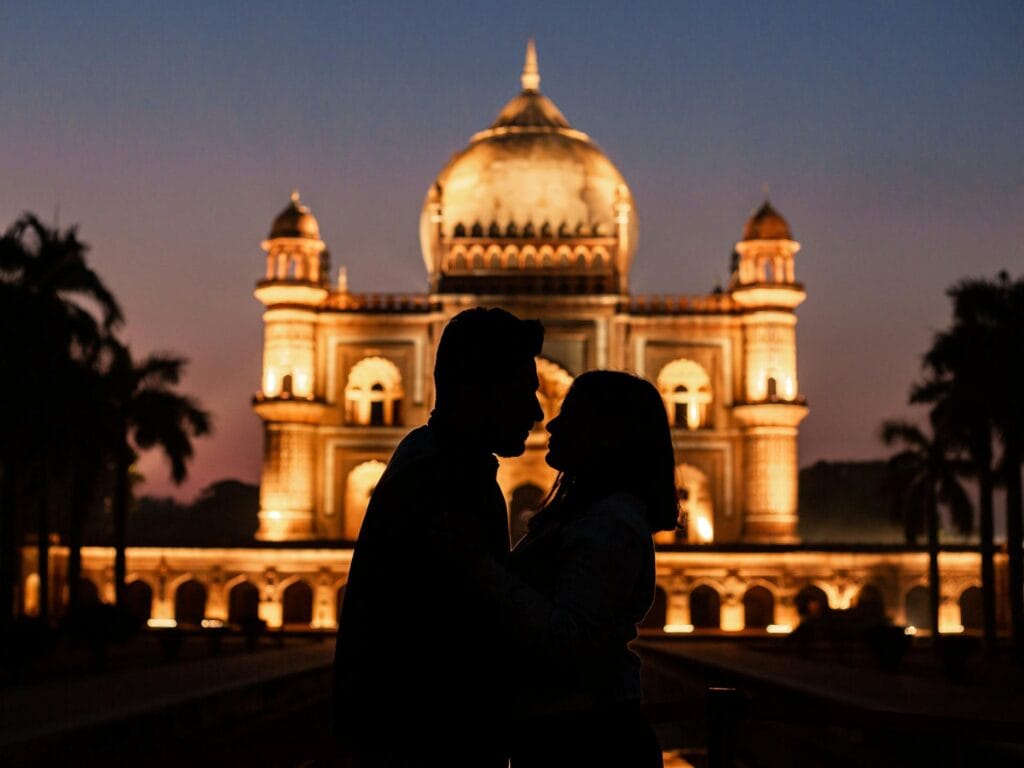
The Life the Framework Envisions
The Kamasutra offers a specific view on how Kama relates to the stages of life.
In youth, Kama and Artha take precedence: learn, build, desire fully, experience deeply. In middle life, the balance shifts. In old age, Dharma and Moksha come forward.
This is not a hierarchy that dismisses pleasure. It is a sequence that takes it seriously enough to assign it a proper time. The person who suppresses Kama entirely in youth does not arrive at Moksha purified. They arrive depleted and unintegrated, having skipped a necessary stage of human development.
Kama’s inclusion as a Purushartha has had a humanising influence on Hindu culture. It acknowledges that happiness and emotional fulfillment are important for human wellbeing. This gave cultural space for art, literature, and love to flourish in the Indian tradition alongside religion and duty.
This is the dimension of the framework that contemporary self-improvement culture consistently misses.
The question is not: how do I eliminate desire so I can be free?
The question is: how do I desire well, so that my wanting enriches my life rather than consuming it?
Kama, properly understood, is the ancient answer to that question.
And it turns out that answer involves sixty-four arts, a treatise on love that is not about sexual positions, and the radical idea that pleasure, beauty and connection are not obstacles to a meaningful life.
They are part of what a meaningful life is made of.
This article is part of the Purushartha series.
Read the pillar: Purushartha: The Proven 3,000-Year Blueprint They Sold You
Read next in the series: Artha: Why Getting Rich is a Spiritual Duty, Not a Sin
References and Affiliate Links:
- https://fmipa.umri.ac.id/wp-content/uploads/2016/03/Hoopers_A.KAMASUTRA._Sex_PositionsBookFi.org.pdf
- https://www.yogajournal.com/yoga-101/philosophy/finding-your-souls-purpose-the-four-purusharthas/
- https://en.wikipedia.org/wiki/Vātsyāyana
- https://www.psychologytoday.com/gb/blog/ataraxia/202405/an-outline-of-the-kama-sutra
- https://www.euppublishing.com/doi/10.3366/E0036924109000870#:~:text=Most%20recently,%20in%20his%20Orientalism,years%20since%20its%20first%20publication.
- https://www.bibliovault.org/BV.book.epl?ISBN=9780810129931

 Psychology · Sep 22, 2026Chimpanzees Have Accents. They Grow into Them.
 The Margin · Sep 17, 2026People Are Seeing Ads in Their Dreams.
 Slow Meridian · Sep 16, 2026Autumn Leaves