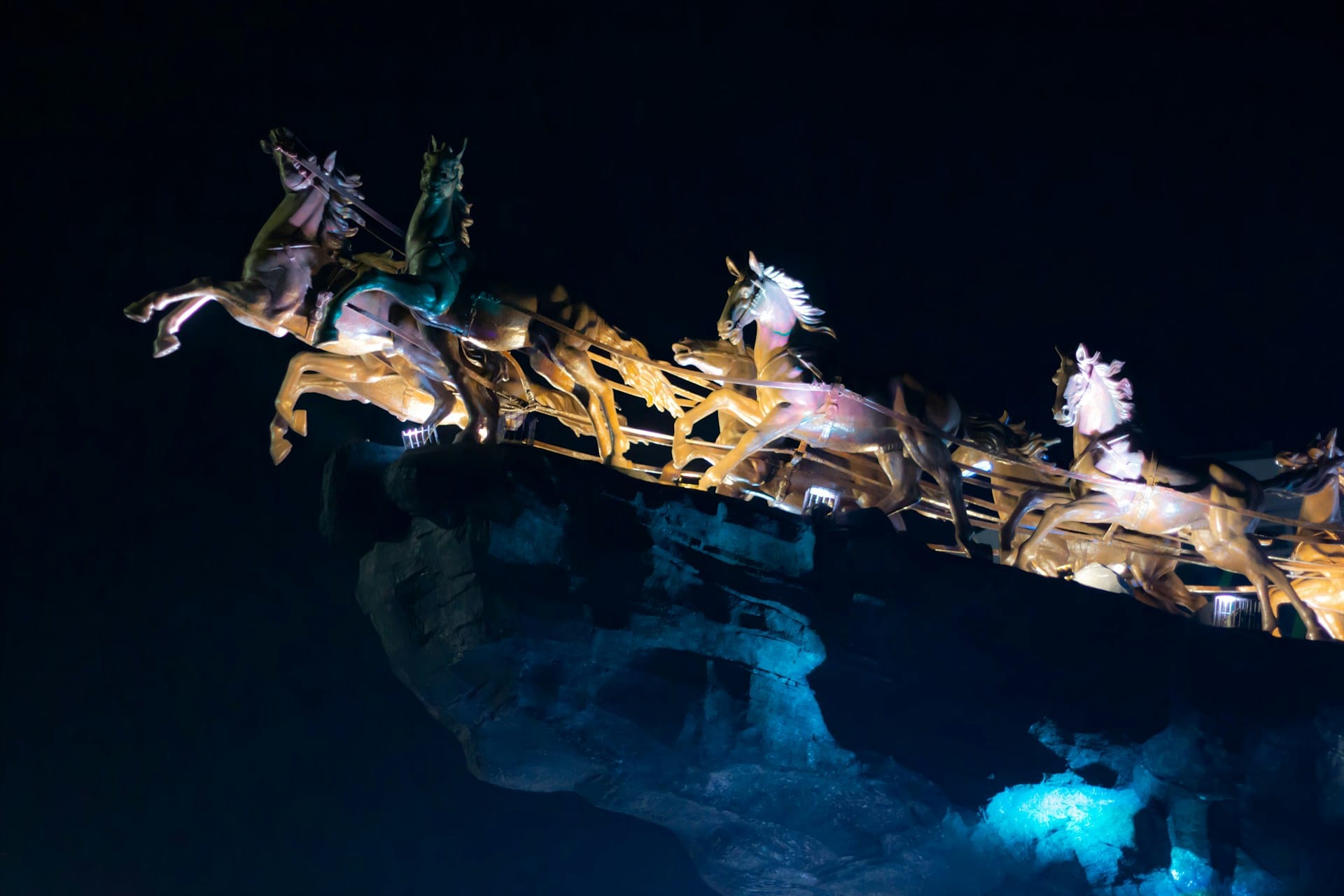
Drona had one son and one student. He loved both completely. He could not serve both equally. The Mahabharata does not pretend otherwise.
This is not a story about favouritism in the way the word is usually used. It is a story about the oldest conflict a teacher faces. What you owe the person who earned it versus what you owe the person who is simply yours.
Dronacharya and Arjuna is one of the Mahabharata’s most precise psychological portraits. And the most uncomfortable thing about it is that Drona never stops being right and wrong at exactly the same time.
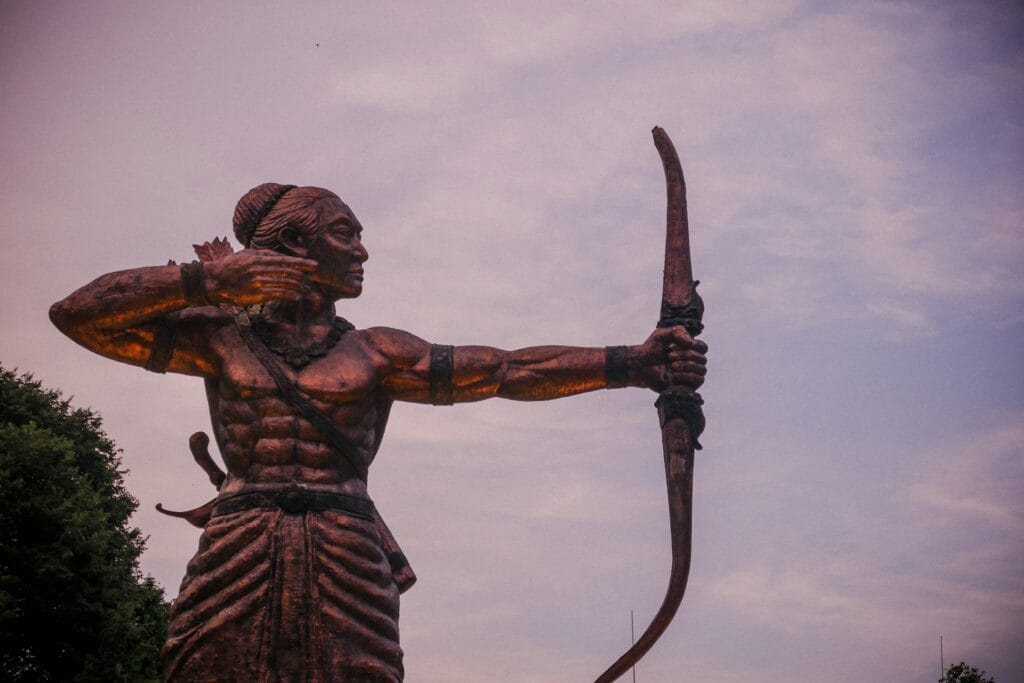
What Drona Wanted From the Beginning
Drona was a Brahmin who had mastered the art of war. He had studied under Parashurama. He carried knowledge that most warriors in Hastinapur could not access. He was also poor in a way that humiliated him.
Ashwatthama grows up in poverty. He is once found weeping after seeing wealthy children drink milk while he is given water mixed with powdered rice as a substitute.
Drona remembered that. He carried it.
When the Kuru royal family offered him a position as teacher to the princes, he accepted. He had a condition. Unstated, internal, but absolute. His son would not grow up the way he had. Whatever knowledge he gave these princes, Ashwatthama would receive equally.
This is where the story actually begins. Not with Arjuna. With a father who had decided, before the first lesson, that his son would not be left behind.
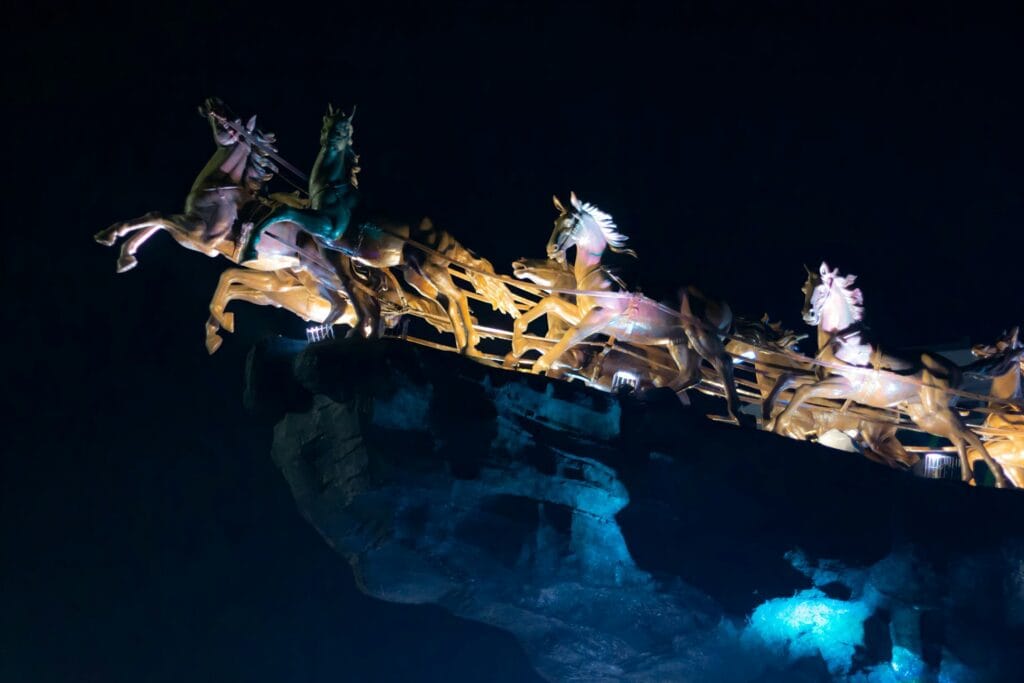
The Water Vessels
To ensure his students spent more time on tasks, Drona gave each one a narrow-mouthed vessel for fetching water, which took longer to fill. He gave his own son Ashwatthama a broad-mouthed vessel, allowing him to fill it quickly and return sooner. During the extra time gained, Drona taught Ashwatthama advanced weapon techniques.
This detail is easy to miss. It is not dramatic. No confrontation, no declaration of preference. Just a different vessel. A small mechanical advantage that created time.
Drona was not neglecting his students. He was stealing minutes for his son.
Arjuna noticed.
Upon discerning the arrangement, Arjuna expedited his own tasks using the Varuna weapon to fill his vessel instantly and arrived at the same time as Ashwatthama.
He did not complain. He did not confront his teacher. He found a way to close the gap.
Drona tried to give his son more time. Arjuna refused to let time be the difference.
This is the dynamic that defines their relationship. Drona keeps creating conditions for Arjuna to surpass. Arjuna keeps surpassing them. Not because Drona intended it. Because Arjuna would not accept any ceiling.
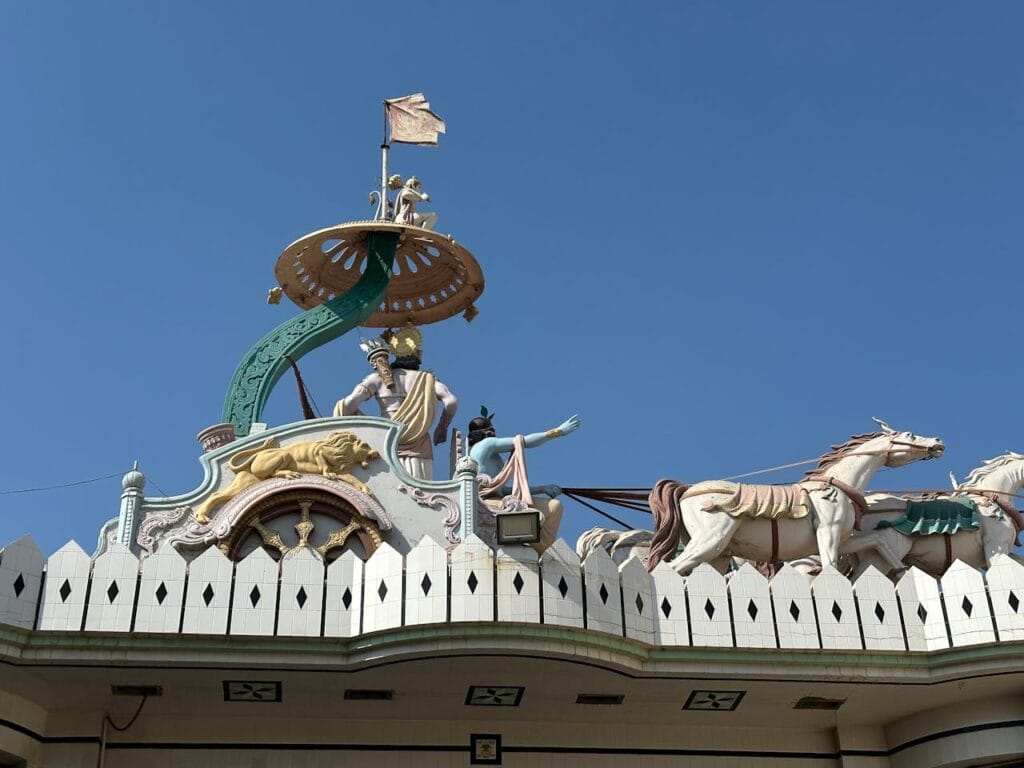
The Bird Test
Dronacharya placed a wooden bird on the branch of a tree and told the princes to focus on the bird’s eye without shooting. He called them one by one and asked what they saw. Most students said they saw flowers, the tree, other princes. When Arjuna’s turn came, he said he saw only the bird’s eye. Drona motioned him to shoot. The arrow hit exactly.
Every student had been given the same instruction. Only Arjuna had understood what the instruction was actually testing.
Not aim. Attention.
Drona was partial especially to Arjuna and Ashwatthama. As a guru he loved Arjuna more than anyone. But this is important to understand correctly. Drona did not love Arjuna instead of Ashwatthama. He loved Arjuna because Arjuna kept showing him something he had never seen in a student before.
Complete presence. Nothing held back. No part of the mind elsewhere.
A teacher who has spent a life mastering something does not choose a favourite casually. They recognise something. Drona recognised it in Arjuna and could not unfeel the recognition.
What He Did to Ekalavya
This is the part that does not resolve cleanly.
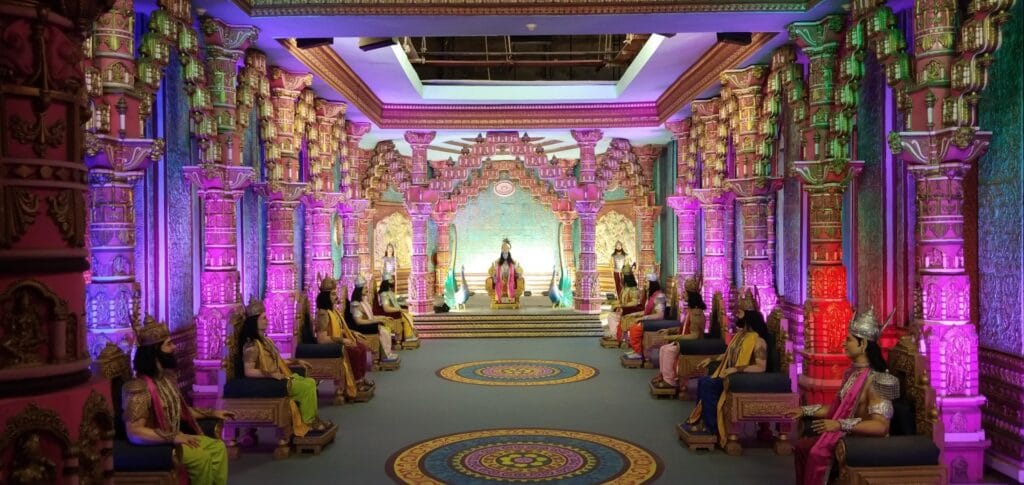
Ekalavya, the son of a Nishadha chief, approached Drona seeking instruction. Since Ekalavya belonged to the Nishada tribe, Drona refused to train him alongside the Kauravas and Pandavas.
Ekalavya left. He built a clay statue of Drona in the forest and taught himself. By his determination alone, he became a warrior of exceptional prowess. When the Kuru princes encountered his work, the evidence was undeniable. Ekalavya had become, in isolation, what most of them could not become under direct instruction.
Drona accepted Ekalavya as his student retrospectively, but demanded the thumb of his dominant hand as gurudakshina, in order to limit his abilities and further growth in archery, thus ensuring Arjuna’s supremacy.
Ekalavya gave it without hesitation.
The Mahabharata does not soften this. Drona took the thumb of a student he had refused to teach, from a boy who had worshipped his clay image as a guru anyway. He did it to protect a promise he had made to Arjuna.
A teacher who demanded the instrument of someone else’s excellence so that his chosen student could remain unrivalled.
This is the decision that defines the Dronacharya and Arjuna story more than any other.
Drona knew what he was doing. That is the part the Mahabharata wants you to sit with.
What Ashwatthama Inherited
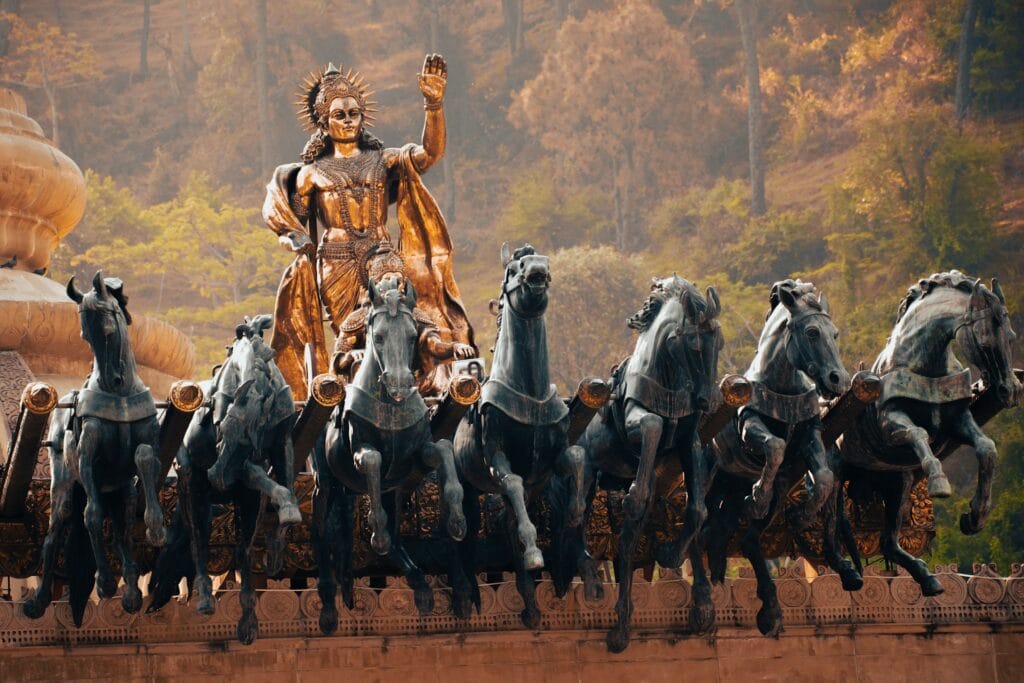
Ashwatthama is entrusted with the knowledge of several celestial weapons, including the Narayanastra and the Brahmashirastra. Bhishma himself places him on par with Arjuna when assessing the warriors before the war.
Drona did not fail his son in knowledge. He gave him everything.
What he could not give him was the thing he gave Arjuna without meaning to. His complete belief. The specific quality of attention a teacher reserves for the student who astonishes them.
Dronacharya’s favouritism towards Arjuna and nepotism towards his son Ashwatthama highlight the paradox of his character. A guru who succumbs to personal biases, presenting the complex interplay of human emotions, moral dilemmas, and the pursuit of dharma.
Ashwatthama fought in the war. He survived it. He watched his father die on the fifteenth day through a lie the Pandavas constructed around his own name.
Krishna suggested the Pandavas use a plan where Bhima would kill an elephant named Ashwatthama and then claim to Drona that he had killed his son. Drona, disbelieving, approached Yudhishthira for the truth.
Yudhishthira responded with the cryptic words: Ashwatthama is dead. But the elephant and not your son. Krishna had the other warriors blow trumpets and conchs so that Drona only heard that Ashwatthama was dead.
The man who gave everything to protect his son was destroyed by the sound of his son’s name.
What the Mahabharata Is Actually Saying
The story of Dronacharya and Arjuna is not a lesson about finding a good teacher.
It is a portrait of what happens when love and recognition pull in different directions and a person cannot choose cleanly between them.
Drona loved Ashwatthama the way parents love. Unconditionally, anxiously, with a memory of poverty and a determination that his son would not carry that weight.
He recognised Arjuna the way teachers recognise. Involuntarily, completely, with the specific helplessness of someone who has spent a life developing an eye for excellence and cannot look away from it when it appears.
Both loves were real. Neither was wrong exactly. But they could not both be honoured fully. Every time Drona gave Arjuna more, he took something from Ashwatthama that could not be returned. Not knowledge. Something quieter and harder to name.
The certainty of being the one his father would choose.
The Mahabharata does not tell you Drona was wrong. It shows you what being right in two directions at once costs a person.
What Remains
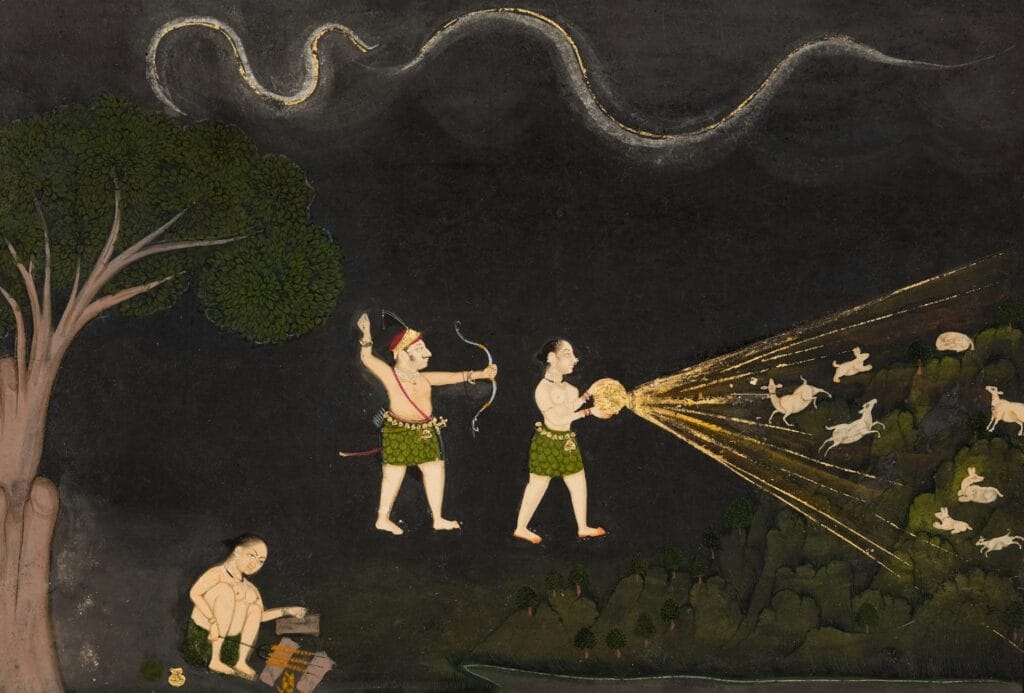
Drona died on the battlefield believing his son was dead. He put down his weapons and sat in meditation. Dhrishtadyumna beheaded him.
Ashwatthama was alive. He outlived the war. He carried the grief of what his father’s choices had made him. A warrior equal to Arjuna in every measurable way, who spent his life in the shadow of his father’s most famous love.
Dronacharya and Arjuna is not a story about a great teacher and his greatest student.
It is a story about a man who could not stop being a father and a guru at the same time, and what fell through the gap between the two.
The vessel he gave his son filled faster. It was never quite enough.
Read Next: Fujifilm Instax Mini review: Beautiful camera, Terrible odds
Procrastination psychology: Why your brain always delays
Why memes replace feelings. And why that should worry you
The 5 Best AI Chatbots for Building a Website for Free

 Psychology · Oct 17, 2026A Monkey Bite Killed the King of Greece
 Psychology · Oct 15, 202615 Surprising Facts That Sound Completely Made Up
 The Margin · Oct 13, 202615 Geography Facts That Sound Completely Made Up