Former Prince Arrest headlines moved faster than the explanation.
Within minutes, images circulated across phones and timelines. A former prince, once positioned near the centre of British ceremonial life, now pictured in the language of police process. Not ceremony. Not balcony appearances. Not state dinners. A different setting. A different tone.
The headline was stark. Andrew Mountbatten-Windsor, son of Duke of Edinburgh arrested in connection with the ongoing investigation linked to the Epstein files. Released under investigation. No charges announced at the time of reporting. The words travelled globally before the legal details had time to settle.
For many, the reaction was not shock. It was fatigue.
This was not the first time the name resurfaced in connection with the wider Epstein scandal. The case has lingered for years, crossing jurisdictions, exposing networks of power, leaving fragments of unanswered questions. Each new development lands into a public memory already shaped by earlier interviews, denials and settlements.
But something about an arrest, even if procedural and temporary, changes the tone.
It moves a story from association to confrontation.
The monarchy has always depended on distance. Distance from ordinary legal vulnerability. Distance from public scandal. Distance from the mechanics of accountability that apply to everyone else. When that distance collapses, even partially, it forces a new kind of reckoning.
The impact of a former prince’s arrest
Royal identity is built on symbolism. Titles, uniforms, protocol and ritual create an image of continuity and stability. The individual person inside the role becomes secondary to the institution they represent. That insulation has historically protected reputations.
But digital media does not respect insulation.
The same platforms that once amplified royal weddings now circulate arrest photographs. The shift is not just reputational. It is structural. Public figures no longer exist at a ceremonial remove. They exist inside the same feed as everyone else.
When a former prince is reported as being questioned or detained in connection with an investigation, the event does not unfold quietly. It becomes content. Comment threads fill instantly. Opinion hardens before facts stabilise. The distinction between allegation, process and outcome blurs in the speed of reaction.
This is not unique to royalty. Politicians, celebrities and executives experience similar scrutiny. But the monarchy carries a particular symbolic charge in the United Kingdom. It represents heritage, national identity and continuity. When one of its members appears in criminal headlines, the symbolic damage extends beyond the individual.
Reputation is no longer managed through press statements alone. It is negotiated in real time by millions of observers.
The Epstein case itself sits at the intersection of power and exploitation. It exposed how wealth and influence can shield behaviour for years. It raised uncomfortable questions about networks that spanned continents. Each associated name, regardless of legal status, carries that weight.
That weight is difficult to separate from public imagination.
The legal principle of presumption of innocence remains central. An arrest under investigation is not a conviction. Process matters. Evidence matters. Courts matter. But public perception rarely waits for formal resolution. It reacts to optics.
And the optics are powerful.
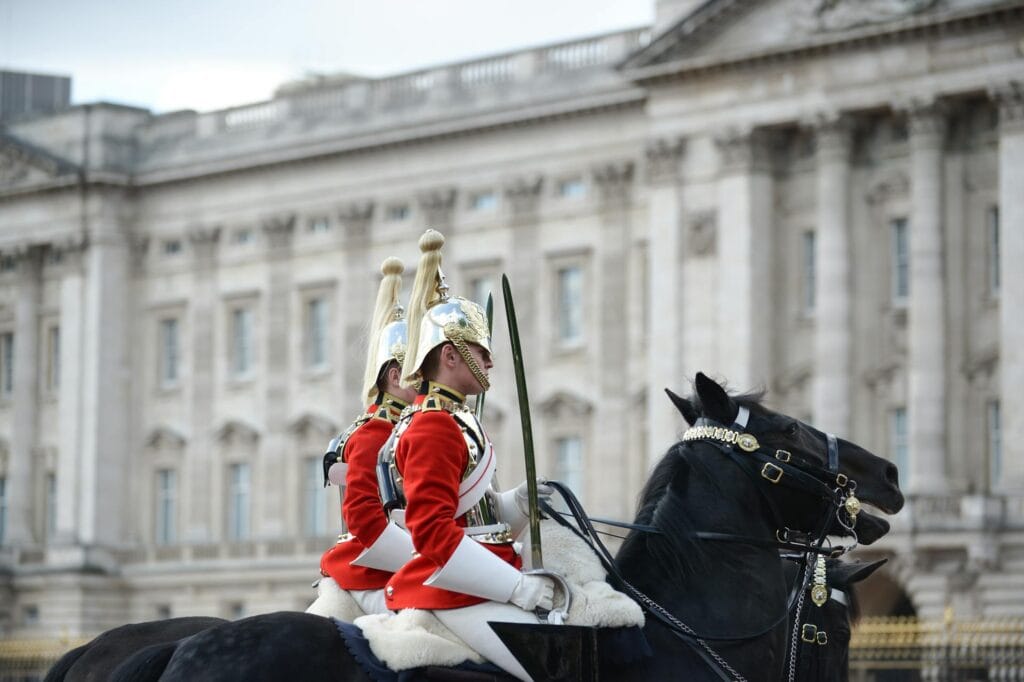
Public perception and royal accountability after former prince arrest
There is a tension at the heart of constitutional monarchy. The institution depends on personal conduct, yet it claims to transcend individual flaws. When a royal figure faces scrutiny, the palace must balance legal caution with reputational preservation.
The question becomes larger than one man.
Can an institution built on inherited legitimacy adapt to an era of relentless accountability? Can symbolic authority survive repeated association with scandal? Or does each episode erode the distance that sustains it?
In recent years, the monarchy has faced generational transition, media fragmentation and political neutrality challenges. Public support remains significant, but it is not unquestioned. Younger audiences in particular engage with royal news less as reverence and more as spectacle.
When arrest headlines surface, the conversation shifts from gossip to governance.
There is also the international dimension. The Epstein investigation has involved multiple countries, high profile settlements and ongoing document releases. Each development reopens scrutiny of those connected socially or professionally. In that context, an arrest becomes part of a larger narrative about elite accountability.
Elite accountability is no longer a theoretical demand. It is a public expectation.
Yet the legal system operates at a different pace from public discourse. Investigations take time. Evidence must be examined carefully. The distance between headline and verdict can stretch months or years. In that gap, speculation thrives.
This gap is where institutions are tested.
If no charges result, reputational damage may linger regardless. If charges do result, consequences extend further. Either way, the image of invulnerability is difficult to restore.

The erosion of monarchical distance
There was a time when royal scandal unfolded slowly. Newspapers dominated the cycle. Statements were issued through formal channels. The public absorbed information at a controlled pace.
That era has ended.
Now, a live news alert appears on a commuter’s phone before official spokespeople finish drafting responses. International outlets update minute by minute. Social media collapses commentary, analysis and accusation into the same stream. The former prince’s name sits beside unrelated trending topics, stripped of hierarchy.
Hierarchy is harder to maintain in an algorithmic feed.
This matters because monarchy relies on hierarchy. The ritual, the costume, the ceremony all signal separation from ordinary life. Arrest language disrupts that separation. It frames a royal figure as subject to the same procedural vocabulary as any other citizen.
Some see this as healthy. Accountability applied evenly reinforces the rule of law. Others see it as destabilising. The monarchy functions partly as national theatre. Repeated scandal weakens the script.
But beneath these reactions lies a more uncomfortable question.
If power once insulated individuals from scrutiny, and that insulation is now thinning, what replaces it? Does transparency strengthen institutions, or does it expose fragilities that cannot be repaired?
The former prince’s situation remains legally unresolved at the time of reporting. Investigations continue. Outcomes are uncertain. But the symbolic shift has already occurred. The image of arrest, even temporary, enters public memory.
Memory is persistent.
It does not catalogue legal nuance with precision. It stores impressions. It links names to headlines. It remembers the photograph more clearly than the footnotes.
For the monarchy, this presents a long term challenge. For the broader public, it presents a moment of reflection about how power and accountability intersect in the modern era.
The arrest of a former prince, even under investigation and without formal charge, signals something about the present climate. Distance is shrinking. Optics matter. Institutions are less insulated from individual conduct than they once were.
Whether that shift leads to deeper trust or further erosion remains uncertain.
What is clear is that the photograph will linger long after the live blog closes.
Further Reading: Deep questions to ask someone to know them better (that actually work)