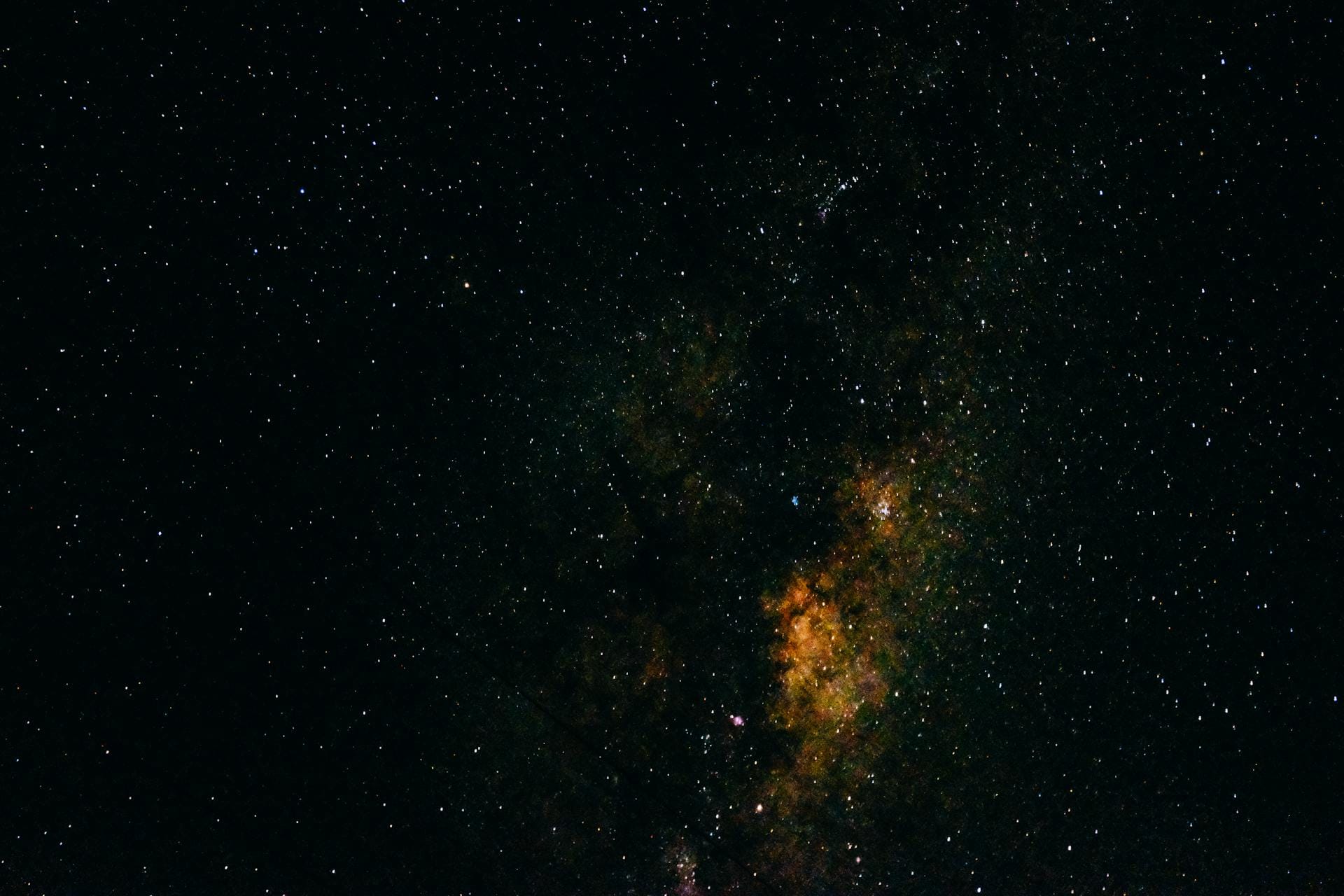
Discover the real story behind the viral Pulsar Sound Meaning story on social media
It is late at night. You are scrolling, half-awake.
Then a video stops you cold.
A blue-black image of deep space. A caption: “Real Pulsar Sound Meaning”
You press play. A steady beat fills your ears. Slow. Even. Unwavering. Like something ancient is breathing.
You sit up.
Within minutes, the comments split into two completely different worlds. One side types excitedly about electromagnetic radiation and neutron stars. The other writes: “This is Shiva’s damru.” Others insist ancient sages already knew this rhythm. That modern science is simply catching up to wisdom that was hidden, quietly waiting.
The sound never changes. What changes is the story people tell about it.
What Is a Pulsar and What Are You Hearing?
Somewhere in our galaxy, a star far larger than our Sun ran out of fuel. It did not quietly flicker out. It exploded in a supernova, one of the most violent events the universe produces. The outer layers were blasted into space. The core survived.
That core collapsed into something almost impossibly dense. Picture squeezing the entire mass of the Sun into a sphere the size of a city. That is a neutron star. If it is also spinning and shooting beams of radiation outward, we call it a pulsar.
Think of it as a cosmic lighthouse. As it rotates, its beam sweeps across space. If Earth sits in that beam’s path, we catch it again and again, regular and precise, patient as a clock.
Scientists translate those invisible radio pulses into audio, so human ears can process what they otherwise cannot. The sound in the video is not drifting through space. Space is silent. What you are hearing is data, converted into something we can feel.
A dead star, dressed in sound. And yet, the moment it hits your ears, something stirs.

Why People Link the Pulsar Sound to Shiva’s Damru
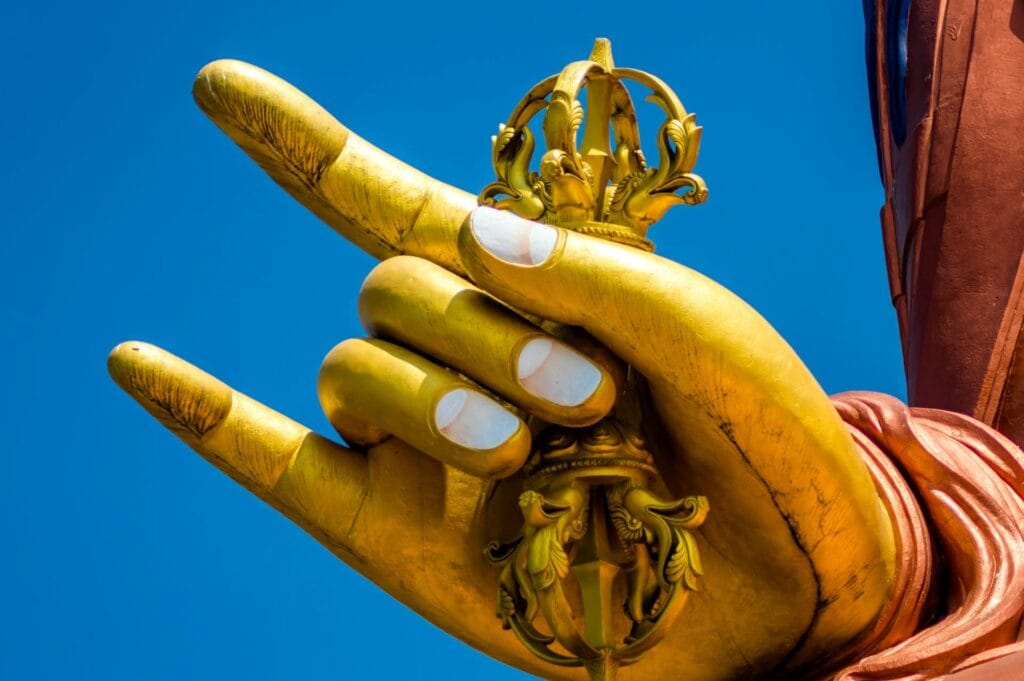
In classical Hindu iconography, Shiva appears as Nataraja, the Lord of the Dance, holding a small drum called the damru. That drum is not decoration. It carries the weight of an entire cosmology. It represents rhythm as the pulse of creation, the unfolding of time, the idea that the universe itself is vibration: one long, breathing sound that never fully stops.
Now hear the pulsar sound, a dead star, thousands of light-years away, tapping out a steady, metronomic beat.
Of course the mind leaps. Of course it does.
This is not irrational. It is deeply, unavoidably human. Both involve rhythm. Both reach toward something cosmic. Both carry the suggestion that creation and destruction cycle endlessly through a pulse no one controls.
And this impulse reaches far beyond Hindu symbolism. Drums have been considered sacred across virtually every culture that has ever existed: in West African ceremonies, Sufi rituals, monastic chanting, Indigenous traditions on every continent. Rhythm does not just make music. It synchronises people. It dissolves fear. The heartbeat is the first sound any of us ever hear, before we have language for anything.
For someone raised with the image of Shiva’s damru, the pulsar sound pattern lands directly on a symbol already loaded with memory and love. For someone else, the same sound evokes “the universe breathing.” The specific symbol varies. The mechanism is identical: we take the unknown and anchor it to something we already hold sacred.
This is not a failure of intelligence. This is cognition doing exactly what it evolved to do. Find familiar shapes in the dark so the darkness becomes bearable.
The unknown becomes manageable the moment it resembles something we already revere. The magic only turns dangerous when metaphor hardens into proof.
Did Ancient Civilisations Know About Pulsars?
Running alongside the damru comparisons is a stronger claim. More urgent. More personal.
Not just that ancient traditions symbolised cosmic rhythm. The claim is that they knew it. That sacred texts encoded astrophysics thousands of years before telescopes existed. That pulsars were understood, preserved in metaphor, waiting patiently for modern science to finally catch up.
This story is intoxicating. And before dismissing it, it is worth understanding exactly why.
For communities whose histories were belittled or erased, whose traditions were labelled primitive or superstitious by colonial structures, the idea that their ancestors possessed sophisticated cosmic knowledge is genuinely validating. It reframes the past, not as ignorance waiting to be corrected, but as quiet, profound wisdom expressed differently. That matters. That heals something real.
It also makes complexity feel manageable. Modern astrophysics demands years of advanced mathematics, instruments that cost hundreds of millions of dollars, and painstaking peer review. The myth of ancient omniscience bypasses all of that with a whisper: real truth was once felt, not calculated. For anyone who has been failed by institutions, that idea feels almost like justice.
Ancient civilisations were genuinely extraordinary. Indian astronomers computed planetary cycles with remarkable precision. Greek thinkers mapped the heavens using geometry alone. That record is real and deserves far more credit than it receives.
And yet, pulsars were not detected until 1967, using radio telescopes that did not exist before the twentieth century. The physics required to understand them was developed within living memory. There is no historical evidence that any ancient culture knew what a neutron star was in any scientific sense.
Acknowledging this does not shrink ancient achievement. It simply respects a distinction worth keeping: symbolic cosmology and empirical astrophysics are not the same language. One explores meaning. The other measures mechanism. Both are valuable. Neither is made richer by pretending to be the other.
The deeper ache is simpler: we want our traditions to contain everything. We want the sacred and the scientific to be one complete map. Sometimes, beautifully, they rhyme. But rhyming is not the same as being identical.

The Psychology Behind Pulsar Sound Belief
Here is the most honest question. Even when someone understands the damru comparison is poetic rather than literal, why do so many people hold onto the connection?
Because belief was never really about data.
It is about identity. When a symbol like Shiva’s damru is tied to who you are, what your family carried across generations, any validation of that symbol feels like validation of you. The pulsar stops being an astronomical object. It becomes recognition: a star across time, quietly nodding at your tradition.
There is also a mechanical explanation. Our brains find patterns everywhere, including in unconnected things. Psychologists call this apophenia. A steady pulse resembles a drumbeat. A drumbeat resembles ritual. Ritual resembles the sacred. Each link feels earned, even when the chain was built from association rather than evidence.
Pattern recognition is the engine of both science and superstition. The difference is that science tests its patterns, actively tries to break them, asks what would prove me wrong? Superstition protects the pattern from that question. But the underlying impulse, finding meaning in structure, is completely shared between the two.
When a teenager in Chennai hears the pulsar and feels the damru, and someone in São Paulo hears the same sound and thinks “the universe dreaming,” they are doing the exact same thing: taking something vast, cold, and indifferent, and making it personal. Making it speak back.

What the Pulsar Sound Reveals About US
The pulsar does not know we exist.
It spins at hundreds of rotations per second. It has been doing this for millions of years. It will continue long after every culture that ever named it or argued about it has gone quiet.
And yet here we are, pressing play, feeling something.
In a world full of noise and speed and things that move too fast to hold, a steady pulse from deep space offers something rare: stability. Something older than any of our problems. Something bigger than whatever is keeping you up tonight.
The star offers none of this intentionally. But we are built to seek meaning regardless, in rhythm, in symbols, in the deep dark between stars.
So we listen. We project. We reach.
A dead stellar core becomes a bridge between physics and faith, between raw data and ancestral memory, between the cold mathematics of a neutron star and a small drum held by a dancing god.
The pulse continues. Exact. Indifferent. Eternal.
What you hear inside it says less about the star, and more about the extraordinary, meaning-hungry creature pressing play.
And honestly? That might be the most astonishing discovery of all.
Further Reading: Five times the world refused to give up



 Psychology · Sep 22, 2026Chimpanzees Have Accents. They Grow into Them.
 The Margin · Sep 17, 2026People Are Seeing Ads in Their Dreams.
 Slow Meridian · Sep 16, 2026Autumn Leaves