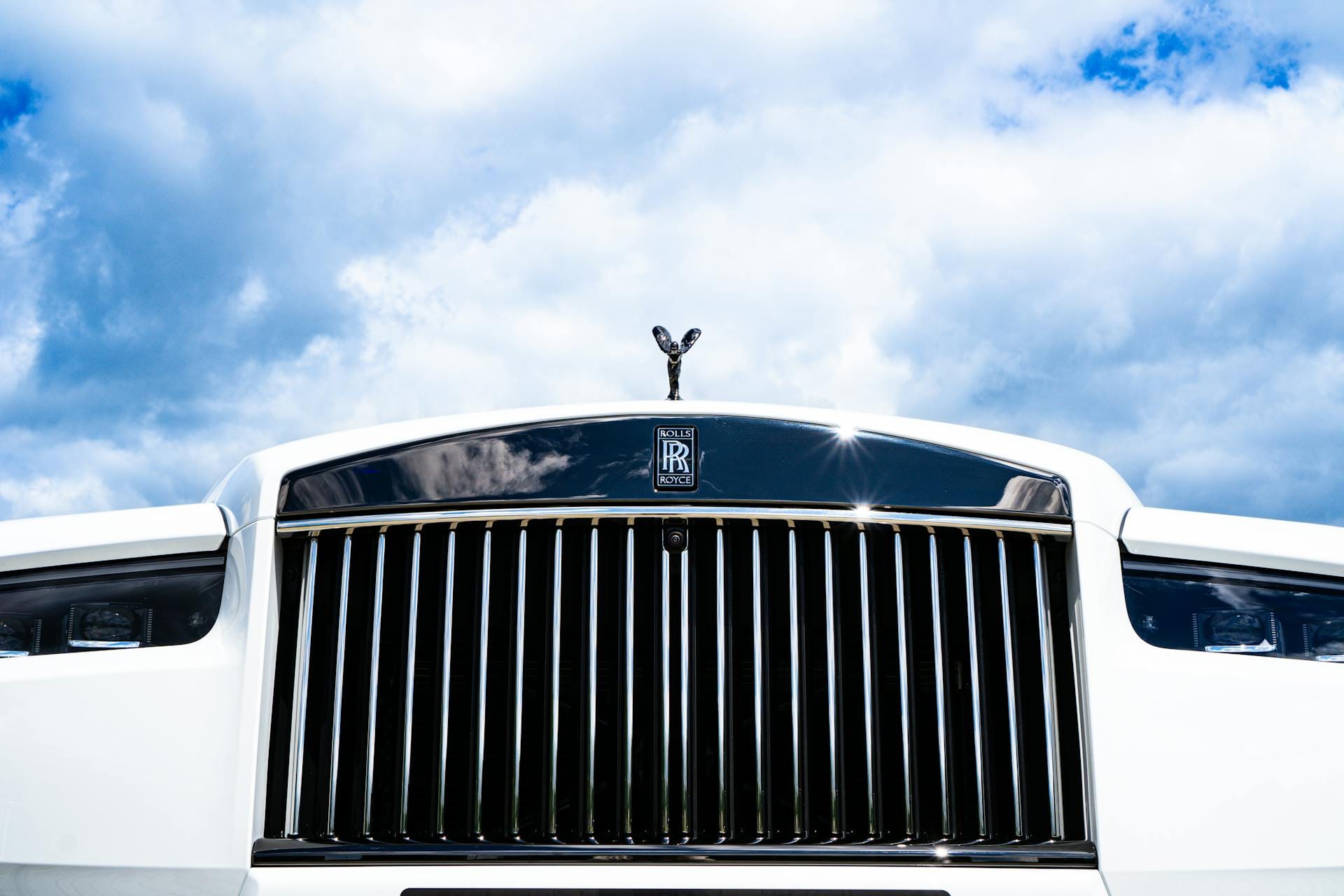
Rolls-Royce hit a record high on the London Stock Exchange today. Then it hit another one. It has been doing this virtually every trading day of 2026.
This morning the company announced underlying operating profit of £3.46 billion for 2025, a 40 percent increase on the previous year and ahead of every analyst forecast. It launched a share buyback program worth between £7 billion and £9 billion over the next three years.
It upgraded its targets for 2028. And it told the market it expects to hit its medium-term financial goals two years earlier than planned.
The shares rose 6 percent on the day. The market value of the company is now over £112 billion.
Five years ago, Rolls-Royce came close to bankruptcy.
That distance, from existential crisis to record highs in half a decade, is the real story. Not the buyback numbers. Not the profit guidance. The story is what it takes to turn a great institution around, who gets credit for it, and what it actually looks like from the inside when it works.

The Burning Platform
To understand where Rolls-Royce is today, you need to understand where it was in 2020.
The pandemic hit the company harder than almost any other major British business. Rolls-Royce’s civil aerospace division, its largest revenue driver, makes engines for wide-body aircraft including the Boeing 787 Dreamliner and the Airbus A350. It sells those engines at thin margins or at a loss. The real money comes from long-term service contracts tied to how many hours the engines fly.
When global aviation collapsed overnight in March 2020, the flying hours disappeared. The revenue disappeared with them.
The stock fell nearly 2,000 percent from its pandemic low to where it trades today, which means at the bottom, the market was pricing in something close to ruin. The company raised emergency capital. It sold assets. It cut thousands of jobs. It burned through cash at a pace that made survival a genuine question rather than a rhetorical one.
The man who inherited that situation was Tufan Erginbilgic.
The Man with the Plan
Erginbilgic, a former BP executive, became CEO in January 2023. He did not arrive quietly.
In one of his first major addresses to staff, he described Rolls-Royce as a “burning platform.” The phrase was deliberate. It comes from a famous 1988 letter by Nokia consultant Pekka Niskanen about the psychological difficulty of change: people will not leap from a burning oil platform into cold water unless the fire is real and visible. Erginbilgic was making the fire visible.
His restructuring was direct and unsentimental. He focused on three things: improving margins, fixing the balance sheet, and generating cash.
Under his leadership, the company swung from £3.8 billion in net debt to a net cash position of £1.08 billion, and expanded operating margins by nearly 500 basis points in a single year.
That is not incremental improvement. That is a fundamental reorientation of how the business operates.
The market noticed. Rolls-Royce shares have increased nearly 14-fold in three years under Erginbilgic, outperforming even Nvidia.
What Is Actually Driving the Growth
The turnaround is real. But it is also being carried by three powerful external tailwinds that Erginbilgic did not create but has positioned the company to benefit from.
The first is aviation recovery. Airlines are flying more wide-body routes than at any point since before the pandemic. Every additional hour a Rolls-Royce engine flies generates revenue under those TotalCare service contracts. The civil aerospace business grew 15 percent in 2025 compared to the previous year.
The second is defence spending. European governments, spooked by the war in Ukraine and the uncertainty around US security commitments under the Trump administration, are increasing military budgets at the fastest pace in decades. Rolls-Royce makes engines for military aircraft and naval power systems. The defence unit grew 8 percent in 2025.
The third is data centres. This one is newer and less obvious. Rolls-Royce’s power systems division makes generators and energy infrastructure used to power large industrial facilities.
The explosion in AI infrastructure has produced an explosion in data centre construction. The power systems business benefited significantly from the rapid build-out of data centres and higher military spending on naval power systems.
Three growth engines. All running simultaneously. All for reasons that have nothing to do with what Erginbilgic did internally, but everything to do with whether he had the company in a position to capture them when they arrived.
He did.
The Buyback and What It Signals
A share buyback is, on its surface, simple. The company uses its cash to buy its own shares on the open market, reducing the number of shares in circulation and increasing the value of each remaining share.
What it signals is more interesting.
This year’s programme represents Rolls-Royce’s first multi-year buyback programme ever, following last year’s £1 billion buyback which was the company’s first since 2014. That gap, over a decade without returning capital to shareholders in this form, tells you everything about how precarious the balance sheet was for most of that period.
A buyback is a statement of confidence. It says: we have enough cash to run the business, invest in its future, and still have enough left over to give some back. Companies do not announce £9 billion buyback programmes when they are worried about survival.
The Trump complication adds a layer worth noting. An executive order issued last month bans US defence contractors from paying dividends or repurchasing shares until they can demonstrate they are delivering products on time and on budget.
CEO Erginbilgic said Rolls-Royce is meeting the US government’s demands and does not expect the shareholder returns plan to impact the company’s relationship with the US administration.
Whether that confidence is warranted will become clearer over the coming months as defence contracts are renegotiated under the new order.
The Razor and the Razorblade
One way to understand why Rolls-Royce is so valuable is through a simple business model analogy.
The company makes wide-body aircraft engines, the razors, which are often sold at thin margins or at a loss. The real money comes from long-term service agreements called TotalCare contracts, the razorblades.
Once an airline buys a Rolls-Royce engine, it is committed to that engine for the life of the aircraft. The maintenance, repair, and overhaul work flows back to Rolls-Royce under contract. The installed base of engines is the asset. There are roughly 6,000 Trent engines with captive aftermarket contracts in service.
Each one is a long-term annuity. Each hour it flies generates revenue. And each new engine sold today creates another decades-long revenue stream.
This is why the recovery of wide-body aviation matters so much to the company’s finances. It is also why the potential return to narrow-body aircraft, which Erginbilgic mentioned as a future ambition this morning, would be transformative. Narrow-body jets, the Airbus A320 and Boeing 737 families, are the workhorses of global aviation. They vastly outnumber wide-body aircraft. Getting back into that market would multiply the installed base enormously.
It would also require enormous capital, new engine development, and direct competition with CFM International and Pratt & Whitney, who have owned that space for decades. The ambition is clear. The execution is a different conversation.
The Questions the Numbers Do Not Answer
The results today are genuinely impressive. The trajectory is real. The business is healthier than it has been in at least a decade.
But there are questions worth asking that the press conference did not fully answer.
Rolls-Royce currently trades at more than 40 times expected 2026 earnings, significantly higher than its 10-year average multiple of around 15 times. At that valuation, the market has already priced in a great deal of future success.
The company does not just need to perform well. It needs to consistently exceed expectations, as it has done for the past two years, for the current share price to be justified.
Supply chains remain a persistent problem across the entire aerospace industry. Rolls-Royce itself pointed to ongoing challenges in its November 2025 update, expecting them to persist well into 2026.
Currency is a structural issue. The company earns heavily in dollars but reports in sterling. The dollar has fallen about 9 percent against the pound so far this year. Hedging helps in the short term. It does not solve the underlying exposure.
And with 82 percent institutional ownership, any shift in sentiment could move the exit door very quickly.
None of these risks invalidate the turnaround. They are the ordinary conditions of running a large, complex, globally exposed engineering business.

What the Psychology of Turnarounds Tells US
There is a pattern in corporate turnarounds that plays out with enough consistency to be worth naming.
The crisis creates the mandate. When a business is visibly failing, resistance to change collapses. People who would normally defend the status quo accept that the status quo is the problem. The burning platform is not a metaphor when the platform is actually burning.
The new leader gets credit that is partly deserved and partly structural. Erginbilgic made real and difficult decisions. He also arrived at the moment when aviation was recovering, defence budgets were rising, and data centre demand was exploding.
The skill is in recognising the wave and being positioned to ride it. He did that. Whether the same results would have arrived under different leadership is a question that cannot be answered.
The market rewards the narrative as much as the numbers. A 14-fold increase in three years reflects genuine improvement in cash generation and margins. It also reflects a change in how investors feel about the company’s future. Sentiment and fundamentals reinforce each other on the way up. They also reinforce each other on the way down.
The turnaround at Rolls-Royce is real. The question for the next three years is whether the business can grow into the valuation the market has already given it.
Today, at least, the answer is looking good.
Read next:
Why are human babies so helpless at birth?
What I learnt from my kurdish barber in london
Deep questions to ask someone to know them better (that actually work)

 Psychology · Sep 22, 2026Chimpanzees Have Accents. They Grow into Them.
 The Margin · Sep 17, 2026People Are Seeing Ads in Their Dreams.
 Slow Meridian · Sep 16, 2026Autumn Leaves