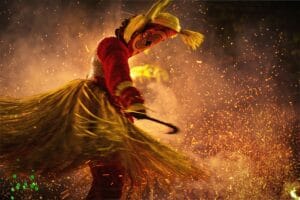
Arjuna looked across the battlefield to understand his Svadharma meaning as he saw his grandfather on the other side of the field.
Then his uncles. His teachers. His cousins. Men he had eaten with and trained beside and grown up knowing. Standing across from him in armour. Waiting.
He put his bow down.
His hands were shaking. His mouth was dry. He told Krishna, who was driving his chariot, that he could not fight. That winning a kingdom was not worth the cost of the men who would die for it.
Then he sat down in the chariot and stopped speaking.
What happened next is the Bhagavad Gita’s answer to a question every person eventually asks. The question of Svadharma Meaning: what am I actually here to do, and what happens when I cannot bring myself to do it.
The Gita begins here. Not with a battle. With a man who cannot move.
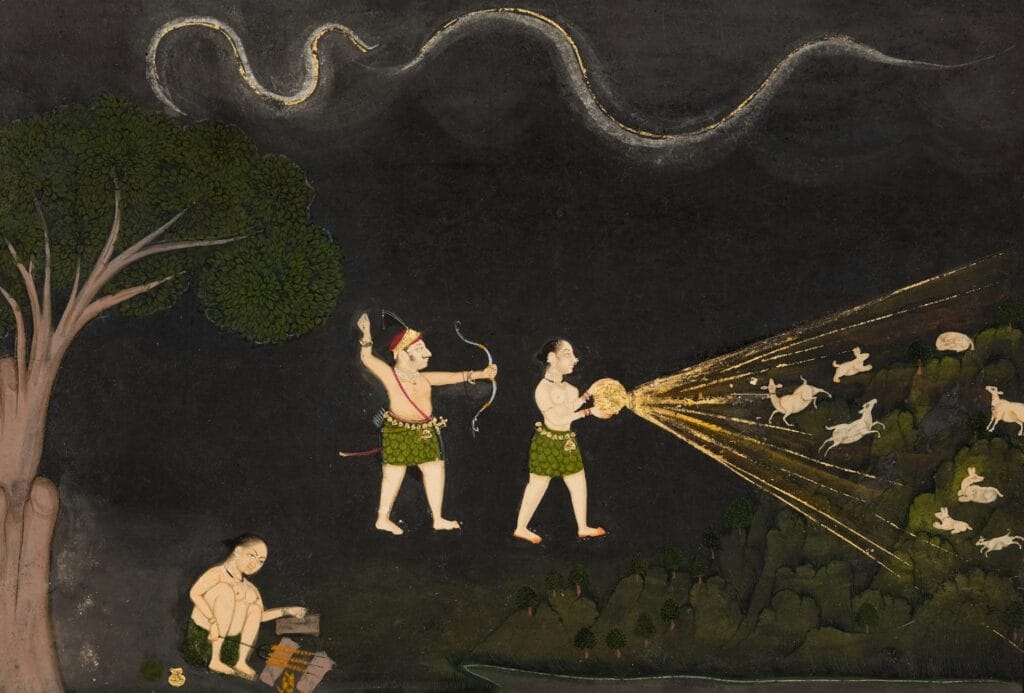
The Collapse on the Battlefield
The first chapter of the Bhagavad Gita has a formal name: Arjuna Vishada Yoga. The yoga of Arjuna’s grief.
This is not accidental. The text is telling you something about what follows. What Arjuna experienced at Kurukshetra was not cowardice. The Mahabharata is careful about this. It shows a man whose hands physically fail him. Whose body refuses the instruction his mind is giving.
He was the greatest archer alive. He had trained for war his entire life. His svadharma, the duty particular to his nature and his position, was to fight.
And he could not.
A person can know exactly what they are supposed to do and still find themselves entirely unable to do it. That is not weakness. That is the beginning of the real question.
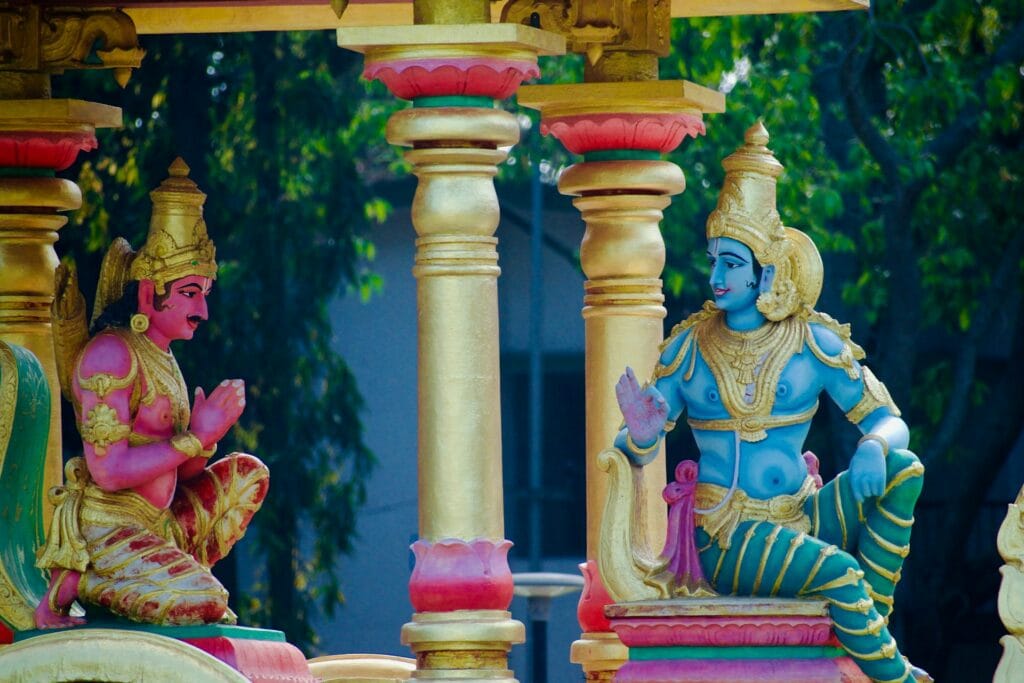
What Svadharma Meaning Actually Comes Down To
Svadharma is a Sanskrit compound. Sva means one’s own. Dharma means duty, the grain of a thing, the law of its nature. Together, svadharma meaning is this: the duty that belongs to you specifically. Not to people in general. Not to a role in the abstract. To the particular person you are.
Krishna’s answer to Arjuna does not begin with comfort. It begins with a question about identity.
Who are you? Not what do you feel. Not what do you want. Who are you, by nature, and what does that nature require of you?
For Arjuna, the answer was a warrior. Not because someone assigned him the role. Because his entire life pointed in one direction. His training, his instincts, the way his mind worked under pressure.
The Bhagavad Gita is direct about this. Better to perform your own svadharma imperfectly than another’s duty well. A death inside your own dharma is better than a life spent performing someone else’s.
This sounds severe. It is precise.

The Person Who Picks up Someone Else’s Life
Arjuna’s crisis is not ancient. It is recognisable.
It is the person who has spent fifteen years in a career chosen by the fear of disappointing someone. The person who is good at something they do not love and cannot explain why that combination feels like slow defeat. The person who wakes up one day and realises they have been performing a version of themselves rather than living as one.
Svadharma meaning, in those terms, is not passion. That framing is too loose and too optimistic. It is closer to nature. What you are built for. What you return to without being told.
The difficulty is that svadharma cannot be discovered in safety. Arjuna did not learn what he was made of by staying home. He found it by arriving at the worst possible moment and falling completely apart.
Svadharma is not the life that feels comfortable. It is the life that fits, even when what it asks of you does not.
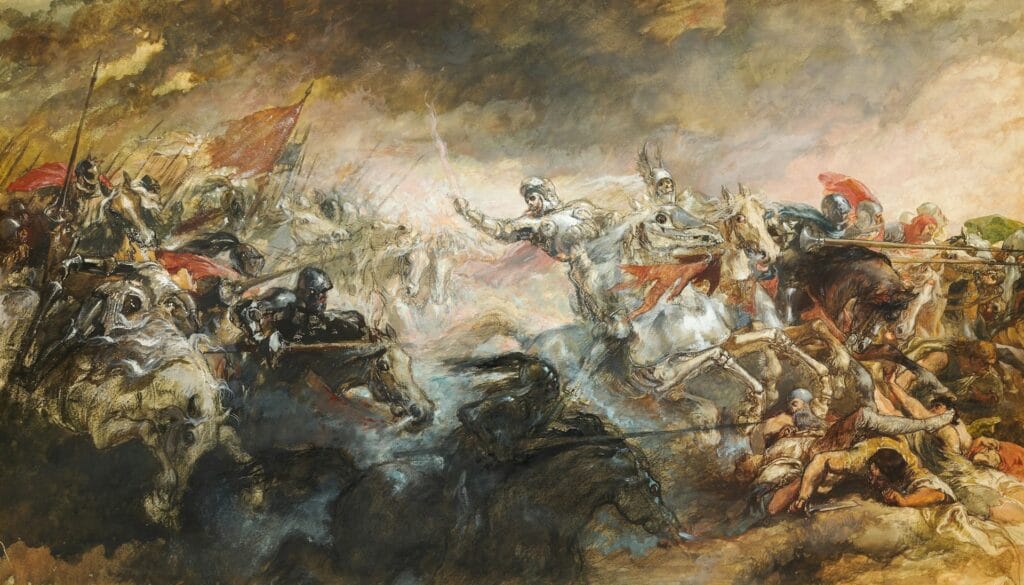
What Krishna Did Not Say
Krishna did not tell Arjuna his feelings were wrong.
He did not say the grief was an illusion. He did not promise that winning would be painless. He said something more difficult: that the grief and the duty could occupy the same moment, and that only one of them was his to act on.
The Gita’s treatment of svadharma is not a call to suppress feeling. It is a call to locate yourself beneath the feeling. To ask what remains when the grief is acknowledged and set beside you instead of in front of you.
Arjuna’s svadharma did not change because his uncles were standing across the field. His nature did not change. The battlefield did not change. What changed, slowly, through eighteen chapters of conversation, was his ability to see clearly enough to act.
The Gita does not ask Arjuna to stop grieving. It asks him to grieve and move at the same time. Those are not the same instruction.
What He Picked Up
He picked up the bow.
Not because Krishna convinced him the war was good. Not because the grief disappeared. Because he understood, finally, what he was and what that required of him.
Svadharma meaning is not the removal of doubt. It is the decision to act from your nature with the doubt still present. Because the alternative is a life spent performing a duty that was never yours, and the Gita considers that the greater loss.
Arjuna was a warrior. He fought.
The Gita does not record that he felt certain. It records that he moved.
That is the whole lesson. And it is enough.
Read Next: What the Mahabharata knew about being right and being ignored
What the Mahabharatha knew about wealth that nobody told you
What is dharma? what the mahabharata knew about losing everything