Do dogs have self-control? Put a piece of food in front of one and the question suddenly becomes much more interesting.
Now tell it not to touch it.
There is a particular few seconds that most dog owners know very well.
The dog looks at the food.
Then at you.
Then back at the food.
Sometimes it looks away completely, as though refusing to acknowledge that the food exists is the only way through this difficult period.
Eventually, if you are lucky, it leaves it alone.
We normally call that obedience.
But researchers in Hungary recently asked a much more interesting question.
What is happening inside the dog’s brain while it is trying not to do the thing it very clearly wants to do?
Apparently, quite a lot.
Do Dogs Have Self-Control? The Brain Gives US a Clue
The study comes from researchers at Eötvös Loránd University and the HUN-REN Research Centre for Natural Sciences in Budapest.
They worked with 14 family dogs.
Instead of putting the dogs inside a large brain scanner, researchers used EEG, which measures electrical activity using electrodes placed around the head.
The dogs were awake.
During some recordings they were simply resting. During others, they had to obey a restraint command and resist doing something they wanted to do.
Researchers collected 226 recordings, each lasting about 30 seconds.
Then they compared what the dogs’ brains were doing while resting with what happened while the animals were controlling themselves.
That comparison is where things became interesting.
The Brain Changed When the Dog Had to Resist
Human brains show certain patterns when we deliberately stop ourselves from doing something.
Imagine reaching for another biscuit and deciding against it.
Or typing an angry reply and deleting it.
Or hearing your alarm in the morning and somehow managing not to throw your phone across the room.
One brain pattern linked with this kind of control involves something called theta activity around the front of the brain.
You do not really need to remember the name.
The important part is that researchers looked for something similar in dogs.
And they found it.
When the dogs were restraining themselves, activity in roughly the same frequency range became stronger around the front and middle of the head. The study also found other changes that pointed toward the involvement of connections across the brain associated with control.
In simple terms, the dogs’ brains did not look exactly the same when they were just sitting around and when they were actively resisting something.
More interestingly, part of the change looked surprisingly similar to what researchers see during human cognitive control.

So Is Your Dog Having an Internal Argument?
This is where it becomes very easy to go too far.
The study does not prove that your Labrador is sitting there thinking:
I desperately want that chicken, but My Human specifically told me no, and I value this relationship.
We cannot read that from an EEG.
We do not know what the dog is consciously experiencing.
And the researchers themselves are careful about this. They describe the work as a first inquiry into brain signals associated with cognitive control in dogs. The patterns they measured also cannot tell us exactly which particular kind of mental control is happening.
But the results make another explanation less satisfying.
A dog obeying a command may not simply be responding like a machine that has learned:
sound happens → movement stops.
At least some forms of obedience seem to involve brain systems associated with actively controlling behaviour.
Which makes that look between the dog and the sandwich considerably more interesting.
Not Doing Something Is Actually Quite Difficult
We usually notice intelligence when an animal does something.
A dog opens a door.
Finds a hidden object.
Learns a word.
Recognises someone.
Solves a puzzle.
But there is another kind of intelligence that is much less dramatic.
Not doing something.
Stopping.
Waiting.
Ignoring.
Resisting.
Those behaviours are easy to miss because nothing happens.
But controlling an action can require more work than performing one.
The researchers make this distinction using two very different examples.
A mouse freezing when it detects a predator can rely on an ancient, automatic response.
A human deciding to stop smoking after years of doing it involves something far more deliberate.
Both result in someone not doing something.
The machinery underneath can be completely different.
The researchers wanted to know which side dogs might be closer to when they deliberately obey restraint commands.
Their EEG results suggest that, at least sometimes, the answer may be more complicated than a simple trained reflex.
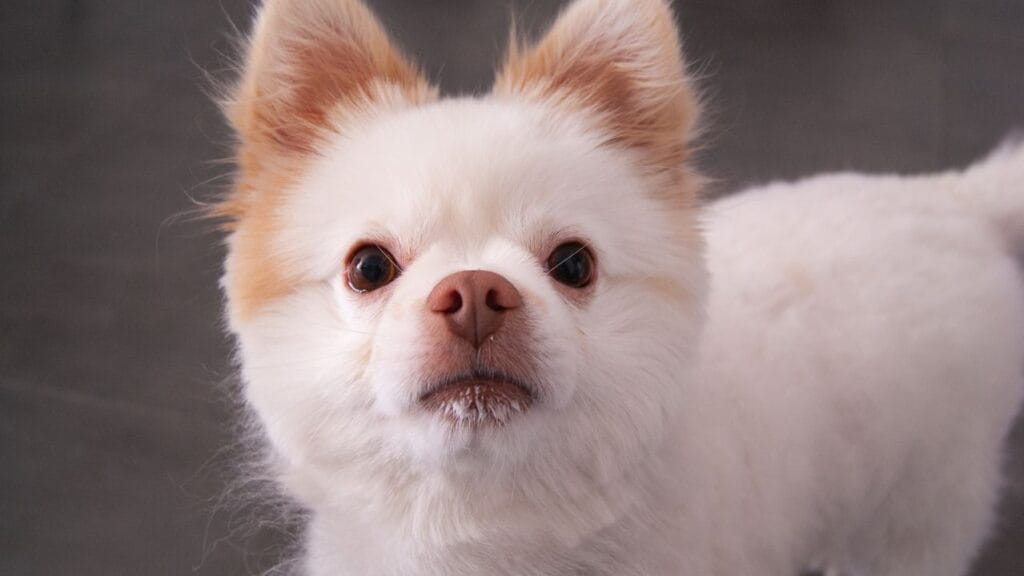
We Have Been Studying the Wrong End of the Dog
There is another strange part to this research.
Dogs are probably the animals whose minds humans feel most confident pretending to understand.
We say they are jealous.
Guilty.
Happy.
Embarrassed.
Protective.
Stubborn.
Manipulative.
We have entire conversations with them and are occasionally offended when they do not respond appropriately.
Yet researchers behind the new study point out that we actually know surprisingly little about how the frontal parts of a dog’s brain work compared with animals such as rats.
Part of the problem is practical.
Studying an awake animal’s brain while it behaves normally is difficult.
EEG could make some of that easier because it is cheaper and less restrictive than methods such as fMRI. The dogs in this experiment could remain awake while researchers recorded what their brains were doing.
That opens up much stranger questions than whether a dog knows sit.
What happens when a dog waits?
Changes its mind?
Stops itself?
Gets distracted?
Chooses between two things?
A surprising amount of a mind may be hiding inside moments where the animal appears to be doing almost nothing.
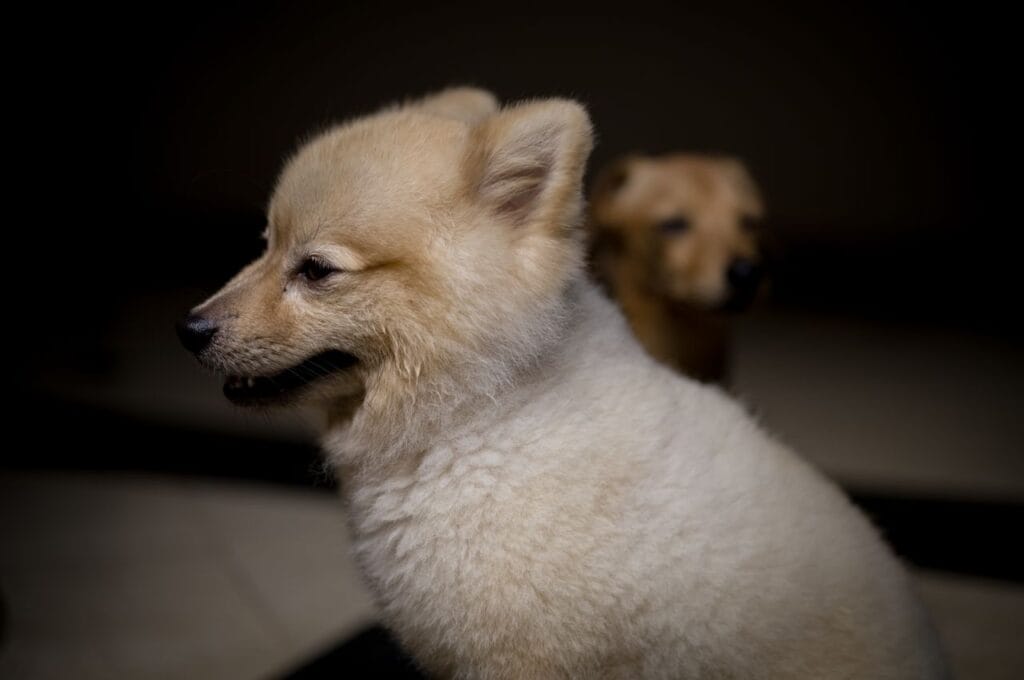
Fourteen Dogs Cannot Tell US Everything
This is also worth saying because the headline is much more fun than the limitation.
There were only 14 dogs in this experiment.
That is small.
The paper is peer-reviewed and published in Animal Cognition, but the researchers describe the work as an early step, not the final explanation of canine self-control.
The study also does not prove that dog and human self-control are identical.
It found a similar EEG signature.
Similar matters.
Identical would be a much bigger claim.
What the research gives us is evidence that when dogs have to restrain themselves, their brains show changes that are hard to explain as nothing more than automatic obedience.
And honestly, that is already interesting enough.
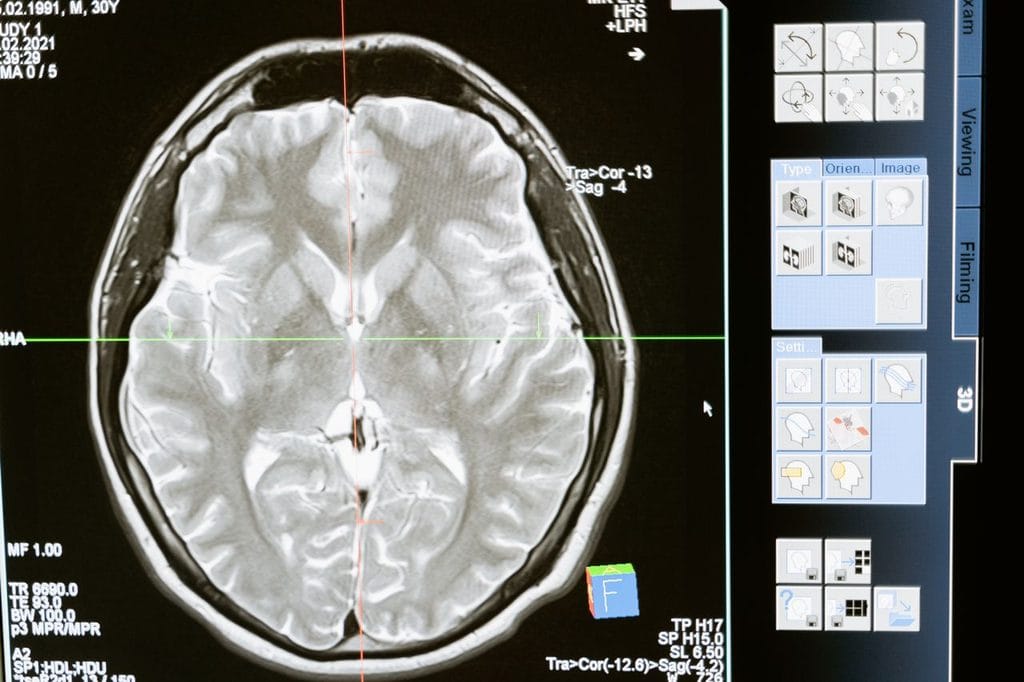
“Good Dog” Suddenly Means Something Slightly Different
Most of us see the result.
The dog did not take the food.
The dog stayed when the door opened.
The dog walked past another animal instead of running toward it.
Good dog.
What we do not see is whatever happened between wanting to move and deciding not to.
Perhaps that is the more interesting part.
Self-control is strange because success looks like nothing.
No bite.
No jump.
No chase.
No stolen sandwich.
Just an animal sitting quietly while something inside its brain appears to be working harder than it was a few seconds earlier.
The next time a dog looks at something it desperately wants, looks at you, and reluctantly decides against it, we still cannot know exactly what it is thinking.
But we now have a little evidence that it may not be doing nothing.
It may actually be trying.
Next Article: Why Are Human Babies So Helpless at Birth?


 Psychology · Sep 22, 2026Chimpanzees Have Accents. They Grow into Them.
 The Margin · Sep 17, 2026People Are Seeing Ads in Their Dreams.
 Slow Meridian · Sep 16, 2026Autumn Leaves