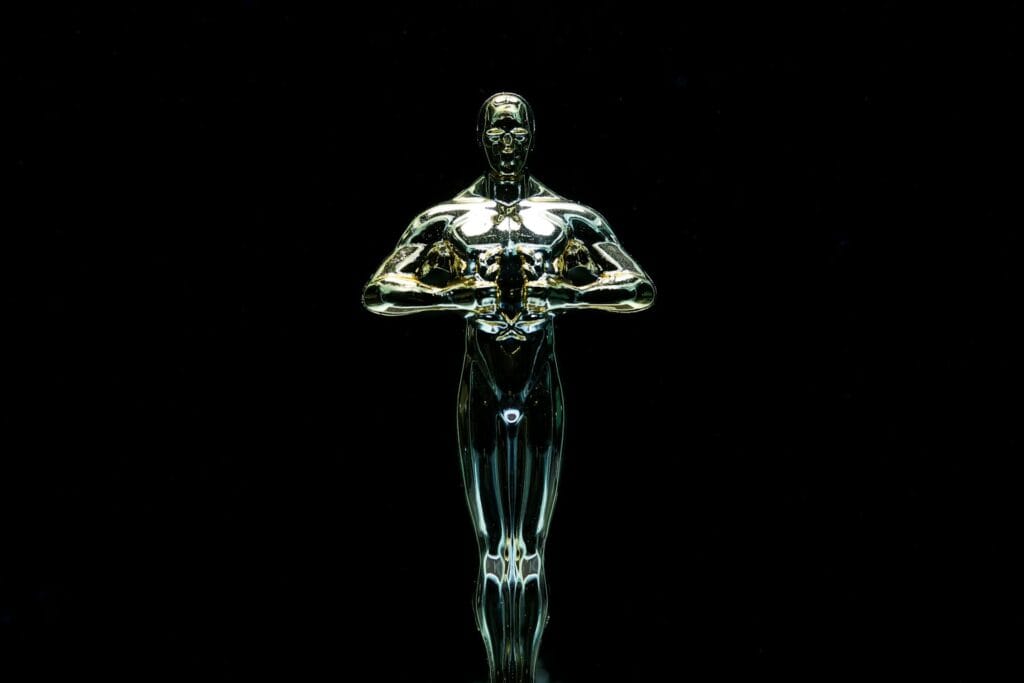
Bad Bunny Grammy win wrote a new chapter in history on February 1, 2026, in Los Angeles. His album DeBÍ TiRAR MáS FOToS, which translates to “I Should Have Taken More Photos,” became the first Spanish-language album in the history of the Grammy Awards to win Album of the Year.
In 68 years of the ceremony, in 68 years of music’s self-declared biggest night, not a single album recorded entirely in Spanish had ever taken home the top prize.
That is not a music fact. That is a cultural fact. And understanding why it matters requires going further back than February 1st.
What actually happened in the room
Harry Styles presented the award. The same Harry Styles who, in 2023, beat Bad Bunny in the same category when Bad Bunny’s Un Verano Sin Ti became the first Spanish-language album ever nominated for Album of the Year. Three years later, Styles stood at the podium and read out the winner’s name.
Before accepting his golden gramophone on stage at Crypto.com Arena, Bad Bunny had an emotional moment to himself. While everyone in the audience stood and applauded, he stayed in his seat, covered his eyes with his hands, and broke down in tears.
He was still wiping his eyes when he reached the microphone.
The first words he spoke were “Puerto Rico.” He continued his speech in Spanish: “There’s nothing we can’t achieve. Thank you to God, thank you to the Academy, and thank you to all those who have believed in me my entire career, all of the people who have worked on this album, and thanks to Mami for giving birth to me in Puerto Rico.”
Not a word of English. The most prestigious award in American popular music, accepted entirely in Spanish, in a room full of the American music industry’s most powerful people. The choice was not accidental. Nothing about this night was accidental.
The album and what it was actually about
To understand why the win landed the way it did, you need to understand what the album is.
DeBÍ TiRAR MáS FOToS honours Bad Bunny’s homeland and draws from Puerto Rico’s diverse musical traditions, including plena, jíbaro, salsa and reggaeton. Throughout the album, Bad Bunny explores themes of cultural erasure and US political influence. He also addresses the ongoing gentrification of Puerto Rico.
Bad Bunny, born Benito Antonio Martínez Ocasio in Vega Baja, Puerto Rico, made an album that was specifically, deliberately, unapologetically Puerto Rican. Not Puerto Rican as a flavour or an aesthetic. Puerto Rican as a statement of resistance. The album does not meet the mainstream on its own terms and invite it in. It goes home and tells the mainstream: come here if you want to understand something.
That is a significant artistic decision for an artist of his commercial scale. Bad Bunny is regularly among the most streamed artists in the world across all genres and all languages. He did not need to make this album to maintain his position. He made it because something needed to be said, and he was the person who could say it at the volume required to be heard.
The title itself carries weight. I Should Have Taken More Photos is an expression of grief about a place changing faster than memory can hold it. It is about looking back at a version of Puerto Rico that is being erased, quietly and systematically, by displacement, gentrification, and the particular violence of a territory whose residents are American citizens without full political representation.
He made an album about loss and called it the thing you say when you realise you did not document enough of what you loved before it changed. The Recording Academy gave that album its highest honour.
68 years of not winning
The Grammy Awards began in 1959. The United States had a Spanish-speaking population then. It has always had one. Today, approximately 42 million people in the United States speak Spanish as their first language, making it the second most spoken language in the country. The Latin music industry generates billions of dollars annually. Latin artists have topped American charts, sold out American stadiums, and shaped the direction of American popular music for decades.
And for 68 years, not one of them won Album of the Year.
This is not because Spanish-language music lacked quality or ambition. It is because the Recording Academy, like most institutions governing cultural prestige in America, operated according to an implicit hierarchy of language. English was the language of seriousness. English was the language of significance. Other languages could be celebrated in their own categories, could win their own awards, could be acknowledged as culturally valuable without being treated as culturally central.
Bad Bunny was nominated in this category in 2023 for his album Un Verano Sin Ti, which became the first Spanish-language album ever nominated for Album of the Year. That nomination was itself historic. But nomination and victory are different things. Nomination says: you are good enough to be considered. Victory says: you won, on our terms, in our room, by the standards we apply to everything.
That second thing did not happen until February 1, 2026.
Language as power
There is a tendency, when moments like this are discussed, to frame them primarily as representation. A group that was previously excluded has now been included. The institution has opened its doors a little wider. Everyone should feel good about that.
This framing, while not wrong, misses something more important.
Language is not a delivery mechanism for content. It is not a neutral vehicle that carries ideas from one person to another. Language is the structure through which experience is organised, named, and made shareable. Concepts exist in one language that have no equivalent in another, not because the ideas are untranslatable but because the cultures that produced each language shaped it around different perceptions of what needed to be named.
When an institution consistently honours only one language, it is not merely excluding speakers of other languages from recognition. It is implicitly asserting that the experiences, structures, and ways of understanding the world embedded in that language are the ones that matter most. That the thoughts most worth thinking are best expressed in English. That music most worth celebrating is the music that does not require a translation.
This is not a conspiracy. It is the ordinary operation of cultural power: the assumption that the dominant group’s norms are the universal standard, made so routinely and so automatically that it stops looking like a choice.
Bad Bunny winning Album of the Year in Spanish does not dismantle that structure. But it introduces, at the highest symbolic level available in the music industry, a counter-assertion. The most celebrated album of the year was made by a man who gave his acceptance speech in Spanish, about a small island in the Caribbean, drawing on musical traditions that most of the room in Los Angeles had never studied.
In his acceptance speech, he said in Spanish: “Puerto Rico, believe me when I tell you that we are much bigger than 100 by 35,” referring to a Puerto Rican colloquialism about the island’s small size. “And there is nothing we can’t achieve.”
He was not speaking to the room. He was speaking past it.
The ICE moment and why it came first
Before the Album of the Year win, earlier in the ceremony, Bad Bunny won Best Música Urbana Album. He used that acceptance speech differently.
“Before I say thanks to God, I’m going to say ICE out,” he said, starting his speech in English to huge applause. “We’re not savage, we’re not animals, we’re not aliens. We are humans and we are Americans.”
He switched to English for this message deliberately. The Album of the Year speech was in Spanish for a reason. The anti-ICE message was in English for a different reason: it was addressed directly to the people in the room and the people watching who might otherwise have been able to look away.
He was not the only artist to use the platform that night. Billie Eilish also used her Song of the Year acceptance speech to criticise immigration enforcement. Several artists wore “ICE out” pins on the red carpet, including Justin and Hailey Bieber and Joni Mitchell.
But Bad Bunny’s statement carried a specific weight that no other artist’s could. He is Puerto Rican. Puerto Ricans are American citizens. The argument that immigrants are somehow not American runs directly into the existence of Puerto Rico, a territory whose people have held American citizenship since 1917 and who remain, under the current constitutional structure, without a voting representative in Congress or the right to vote in presidential elections.
“Trevor, I have some news for you,” Bad Bunny said to host Trevor Noah during the ceremony. “Puerto Rico is part of America.”
It was a joke. It was also not a joke.
The diaspora and the mirror
The reaction to the win was not uniform, and that non-uniformity is itself worth examining.
In Puerto Rico, in Puerto Rican communities across the United States, and across the wider Latin diaspora, the response was immediate and visceral in a way that went far beyond appreciation for a good album winning a prize. People who had never listened to a Grammy broadcast watched it. People who had watched for decades and never expected this cried at it.
This is the specific emotion of diaspora recognition, a feeling that has no precise equivalent in English, though the Portuguese word saudade approaches part of it. It is the particular sensation of seeing something from home, something that carries the weight of where you are from and what that place means to you, acknowledged by a world that has historically looked past it.
The Assaí article in this series describes what happens when a displaced culture refuses to erase itself, building a Japanese city in the middle of Brazil across generations, constructing a castle on a hill as a statement that the community remembers where it came from. The Bad Bunny Grammy win operates through the same psychology. It is not only about music. It is about the accumulated weight of not being seen, and then, suddenly, unmistakably, being seen.
The album is called I Should Have Taken More Photos. It is about documenting what you love before it changes or disappears. The Grammy win is, in a sense, a photograph. A record of a moment when something that had been overlooked for 68 years was finally, formally, acknowledged.

What changes now
The honest answer is: probably less than the moment deserves, and more than the cynics will admit.
Awards do not redistribute power. A Grammy does not return gentrified neighbourhoods. A trophy does not change immigration policy. The institutional structures of the music industry will not be transformed because one Spanish-language album won one award in one year.
But symbolic moments are not nothing. They change what is imaginable. For the next generation of Latin artists making work rooted in their own languages and cultures, the ceiling that did not exist on paper but existed in practice has been demonstrably removed. The argument that English is required for this level of recognition has been answered, with evidence, in public.
By awarding DeBÍ TiRAR MáS FOToS Album of the Year, the Recording Academy recognised music as cultural testimony and resistance. Bad Bunny’s historic win reinforces art’s role in amplifying marginalised voices and reminds audiences that creative expression remains a powerful tool for cultural preservation and social change.
The album’s title, translated, is a small and personal regret. Take more photos. Document the things you love. Do not let them disappear without a record.
The night of February 1, 2026 is now in the record.
And the room will not be quite the same again.
Further Reading/References: What is dharma? what the mahabharata knew about losing everything