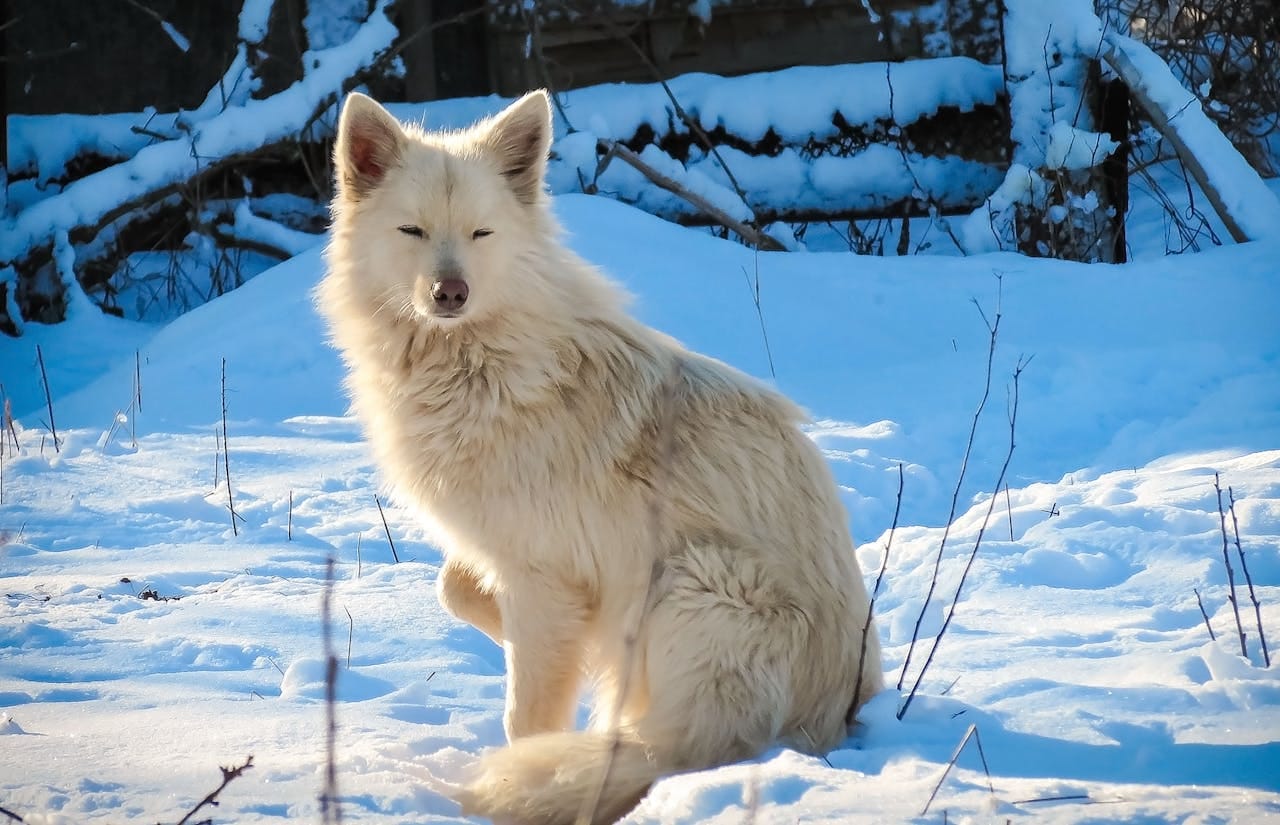
Dire wolf is no longer extinct. That sentence is both true and, depending on who you ask, deeply misleading.
On April 7, 2025, Colossal Biosciences announced that three wolf pups named Romulus, Remus and Khaleesi were alive and growing in a secret 2,000-acre preserve somewhere in the United States. The company called them the world’s first de-extincted animals. The story broke through one of the most chaotic news weeks of the year and made global headlines anyway. The images were extraordinary: snow-white wolf pups, huge already at five months, howling at six weeks old.
The internet lost its mind. Scientists lost their patience. And somewhere in between, something genuinely remarkable got buried under the argument about what to call it.
What Colossal Actually Did
The starting point was two dire wolf fossils: a 13,000-year-old tooth found in Sheridan Pit, Ohio, and a 72,000-year-old inner ear bone from a skull fragment found in American Falls, Idaho.
From those fragments, Colossal’s scientists extracted ancient DNA and assembled two high-quality dire wolf genomes, covering up to 91 percent of the total genetic sequence. They compared those genomes to living canids, including gray wolves, jackals and foxes, to identify the genetic variants responsible for traits unique to dire wolves: the heavier build, the wider head, the thicker coat, the pale colouration, the stronger jaw.
Then they edited gray wolf cells.
Using CRISPR-Cas9 gene editing technology, the team made 20 targeted edits across 14 genes in gray wolf cells taken from the blood of captive wolves. The edited cell nuclei were transferred into dog eggs whose own nuclei had been removed. Those embryos were implanted into surrogate domestic hounds selected for size and health. Eight transfers were attempted with an average of 45 embryos each. Two male pups were born on October 1, 2024. A female pup followed on January 30, 2025. No miscarriages or stillbirths.
Romulus, Remus and Khaleesi were alive.
The Problem with Calling Them Dire Wolves
Here is where the scientific community got loud.
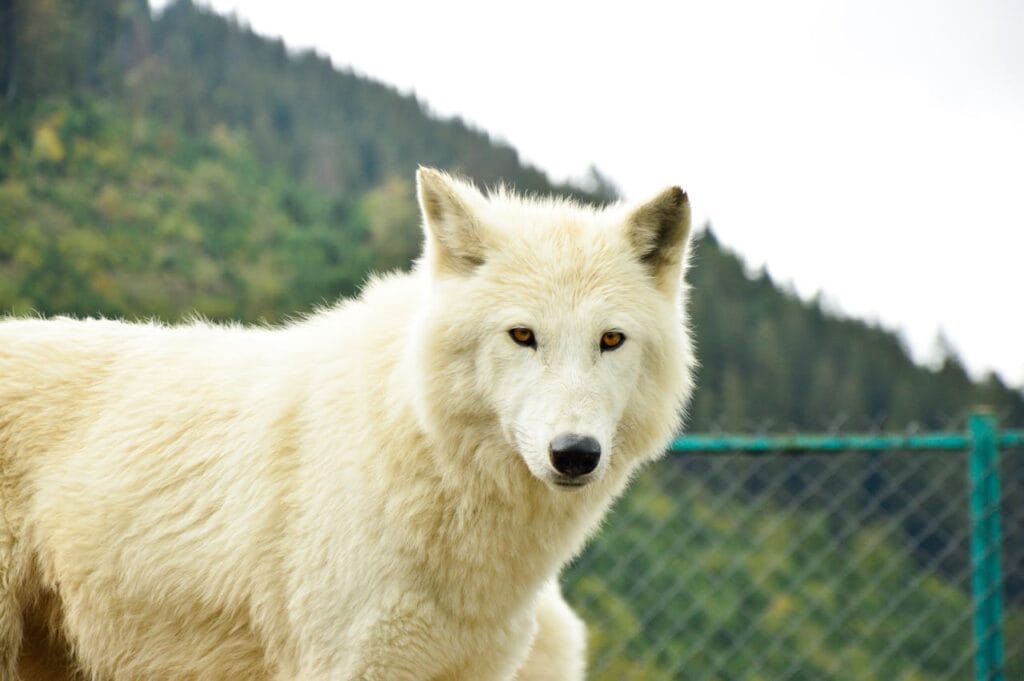
The gray wolf and the dire wolf share 99.5 percent of their DNA. What Colossal changed represents 20 edits across 14 genes, out of approximately 20,000 total genes. The animals are, by any strict genetic definition, gray wolves with a handful of dire wolf traits.
Colossal’s own chief scientist Beth Shapiro put it plainly when pressed: they are gray wolves with 20 edits that are cloned. This was framed as something the company had said from the beginning, though the marketing materials used the phrase world’s first de-extincted animal prominently and repeatedly.
Geneticist Elinor Karlsson, who sits on Colossal’s own advisory board, asked Shapiro directly: why are you calling this a dire wolf when it’s a gray wolf with seventeen or eighteen changes in its DNA? The question was not resolved before publication.
Science writer Carl Zimmer of the New York Times was characteristically precise: it’s a gray wolf clone with 20 dire-wolf gene edits and some dire wolf traits. University of Maine paleoecologist Jacquelyn Gill was less diplomatic. Jeremy Austin, Director of the Australian Centre for Ancient DNA, said it was not a dire wolf under any definition of a species ever.
The deepest problem is evolutionary. A 2021 study published in Nature, co-authored by Beth Shapiro herself, found that dire wolves may not even be wolves. They appear to belong to a distinct North American lineage of canids that diverged from the ancestors of gray wolves more than 5 million years ago. They were more closely related to African jackals than to the animal whose genome was used as the base for Romulus and Remus. One researcher described what a dire wolf actually looked like as a giant reddish coyote.
Colossal’s newer research appears to contradict these findings. That newer research has not yet been published in a peer-reviewed journal.
What Is Actually Remarkable Here
The argument about naming matters. It is not pedantry. When US Representative Lauren Boebert cited the dire wolf project during a 2025 House Natural Resources Committee hearing while advocating to remove gray wolves from Endangered Species Act protections, asking whether humanity could just bring wolves back if they went extinct, the consequences of loose language became concrete and political.
But underneath the argument is something that genuinely deserves attention.
Colossal extracted usable genetic information from a 72,000-year-old bone fragment. Seventy-two thousand years. The last Neanderthals were alive when that animal died. The techniques that made this possible represent a genuine frontier in ancient DNA science that did not exist a decade ago.
The company made 20 precise germline edits in a vertebrate animal, surpassing their own previous record of 8 edits in the woolly mouse project. The embryology worked. Three large canids were born healthy to domestic dog surrogates with no complications, at a scale that would have been considered impossible five years ago.
Love Dalén, a professor in evolutionary genomics at Stockholm University and an adviser to Colossal, put it carefully: there is going to be an argument in the scientific community regarding how many genes need to be changed to make a dire wolf, but this is really a philosophical question. It carries dire wolf genes, and these genes make it look more like a dire wolf than anything we have seen in the last 13,000 years. And that is very cool.
Romulus, Remus and Khaleesi at Six Months
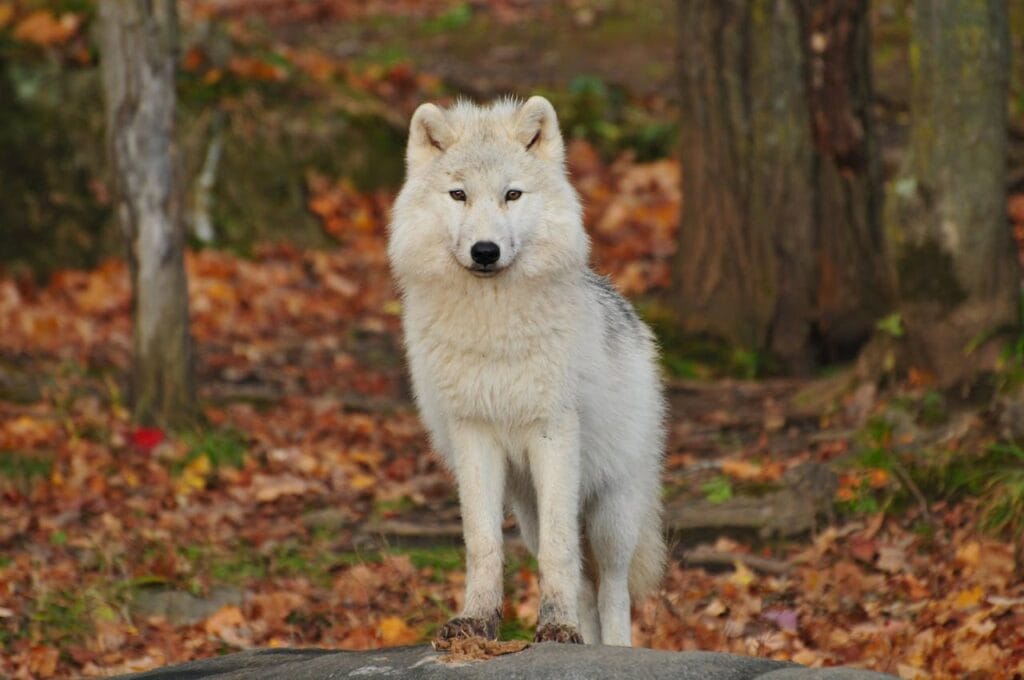
By six months old, Romulus and Remus measured nearly 1.2 metres in length and weighed 36 kilograms each. They are projected to reach 1.8 metres and 68 kilograms at full maturity, significantly larger than a standard gray wolf.
They are housed in a 2,000-acre ecological preserve surrounded by 10-foot fencing at an undisclosed location. They began howling at two weeks old. They began stalking, hunting leaves or anything that moved, very early on.
Khaleesi, the female born three months after the males, is named after the Game of Thrones character. The dire wolf was the inspiration for the direwolves in Game of Thrones. The naming is on the nose in a way that does not feel accidental.
Three animals live in a large enclosure doing what wolves do, watched by cameras, visited by scientists, unable to roam the thousand-square-mile territory that wild wolf packs require.
Whether their lives will extend beyond the preserve, whether a partner species will be bred, whether the Mandan, Hidatsa and Arikara Nation’s interest in hosting a controlled wild population on the Fort Berthold Reservation in North Dakota will come to anything, remains genuinely open.
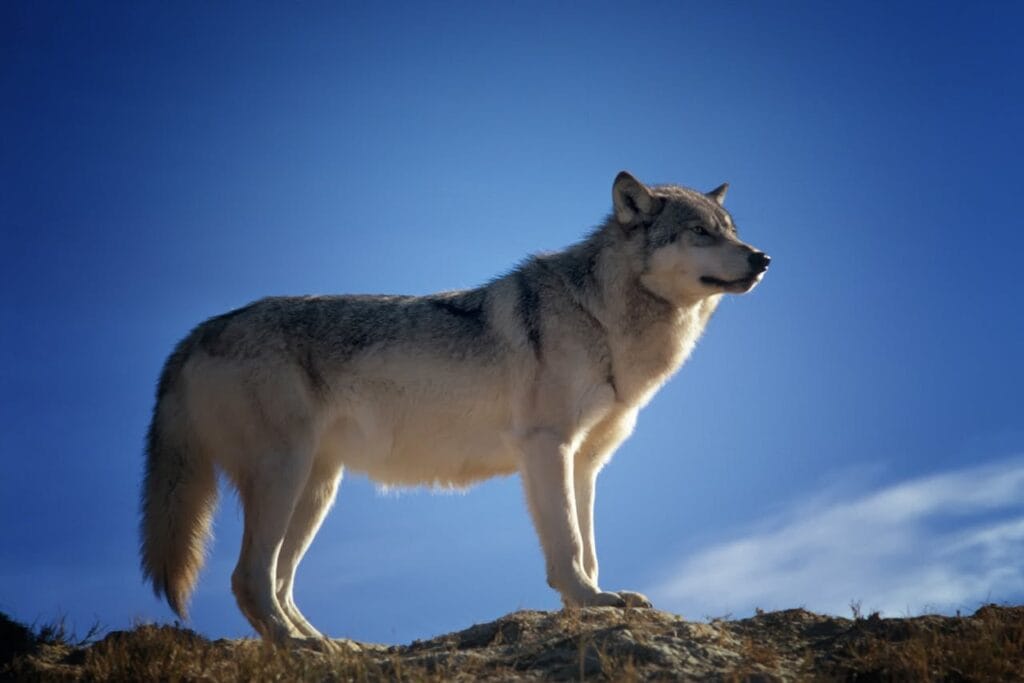
The Jurassic Park Question
MIT Technology Review placed the Colossal dire wolf project on their list of the eight worst technology flops of 2025. The IUCN, the world’s leading conservation authority, expressed concern that de-extinction projects may divert resources and public attention from threatened and endangered species that are alive today and in need of help now.
The Jurassic Park question is not whether de-extinction is possible. Colossal has demonstrated that a version of it is. The question is whether it is the right use of the extraordinary tools now available to biology.
The habitats the dire wolf once roamed no longer exist. The megafauna it hunted, mammoths, giant ground sloths, ancient bison, are gone. Romulus and Remus cannot be released into an ecosystem that would support what they are, because that ecosystem has not existed for 10,000 years.
Ronald Sandler, professor of philosophy and director of the Ethics Institute at Northeastern University, described it as follows: there is real technological innovation here. The question of what the innovation is actually for is separate, and harder.
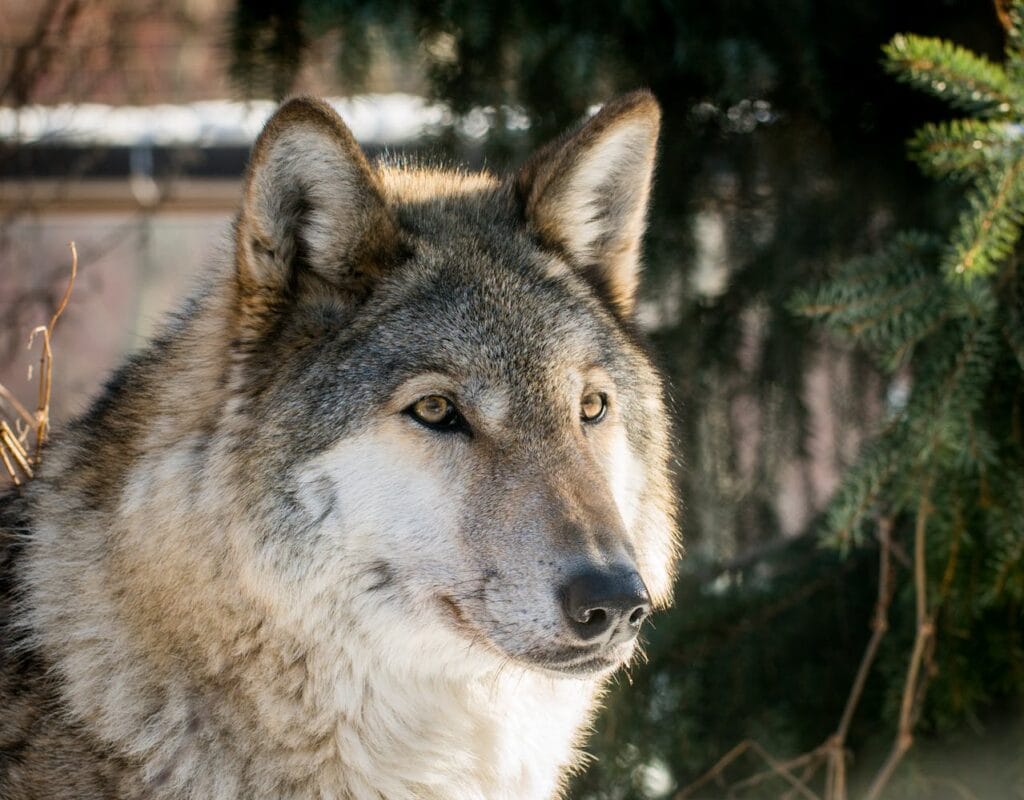
The Howl Worth Hearing
Colossal posted a video on the day of their announcement. The caption read: sound on. You are hearing the first howl of a dire wolf in over 10,000 years.
The howl was real. The animal producing it was real. Whether the animal is a dire wolf depends entirely on how you define the word.
What is not in dispute is what the howl represents: a window into what was possible with ancient DNA, CRISPR and the specific ambition of a company with a $10 billion valuation and a taste for naming things after Game of Thrones characters.
Science moved. The argument about what it means is still in progress.
Somewhere in a secret enclosure in the United States, three white wolves are very large, very healthy, and entirely unaware of the controversy they have caused.
Read next: Articles From Psychology


 Psychology · Sep 22, 2026Chimpanzees Have Accents. They Grow into Them.
 The Margin · Sep 17, 2026People Are Seeing Ads in Their Dreams.
 Slow Meridian · Sep 16, 2026Autumn Leaves