
Good news this week is buried under the usual avalanche of conflict, politics and economic anxiety. Which means most of the genuinely hopeful things that happened in the last seven days never made your feed.
Here they are.
The blindness epidemic nobody talks about is retreating
Trachoma is the world’s leading infectious cause of blindness. It spreads through contaminated fingers and flies. It disproportionately affects children in low-income countries. And for most of recorded history, it was considered essentially inevitable in the communities it touched.
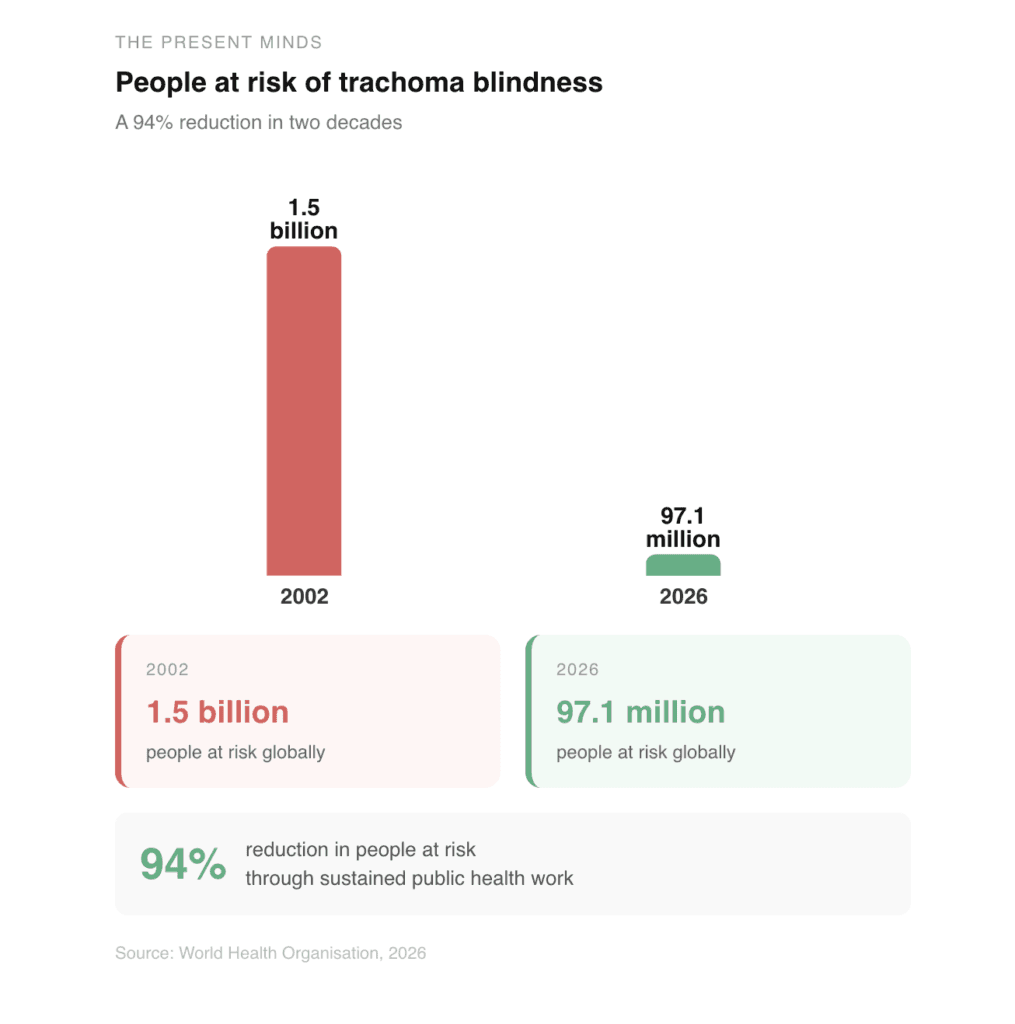
In 2002, 1.5 billion people were at risk globally.
This week, the World Health Organisation announced that number has fallen to 97.1 million. A 94 percent reduction in two decades.
Libya was just validated as the 28th country to have eliminated trachoma entirely, an achievement the WHO described as remarkable given years of political instability and humanitarian pressure on the country’s health system.
Improvements to sanitation, disease surveillance, and basic eye treatment did this. Not a breakthrough drug. Not a billion-dollar research programme. Just sustained, unglamorous public health work delivered consistently over twenty years.
Finland is happy again. for the eighth year running.
Finland has topped the World Happiness Report for the eighth consecutive year.
The ranking is based on surveys where people rate their own satisfaction with life across factors including income, social support, health, freedom, generosity, and trust in institutions.
Eight years is not luck. It is a signal about what a functioning society actually looks like: strong public services, genuine trust between citizens and government, and a culture that does not treat overwork as a virtue.

The UK switched on its first geothermal plant
Two decades in development, the United Downs geothermal power plant in Cornwall generated its first electricity this week.
It will power around 10,000 homes with low-carbon energy drawn from heat deep in the earth. It also produces the UK’s first domestic supply of lithium, a mineral critical for batteries and the broader clean energy transition.
Cornwall sits above one of Europe’s most promising geothermal resources. This plant is the proof of concept. If it performs as projected, it opens a replicable model for low-carbon baseload power that does not depend on sun or wind.
158 Giant tortoises returned to the galápagos
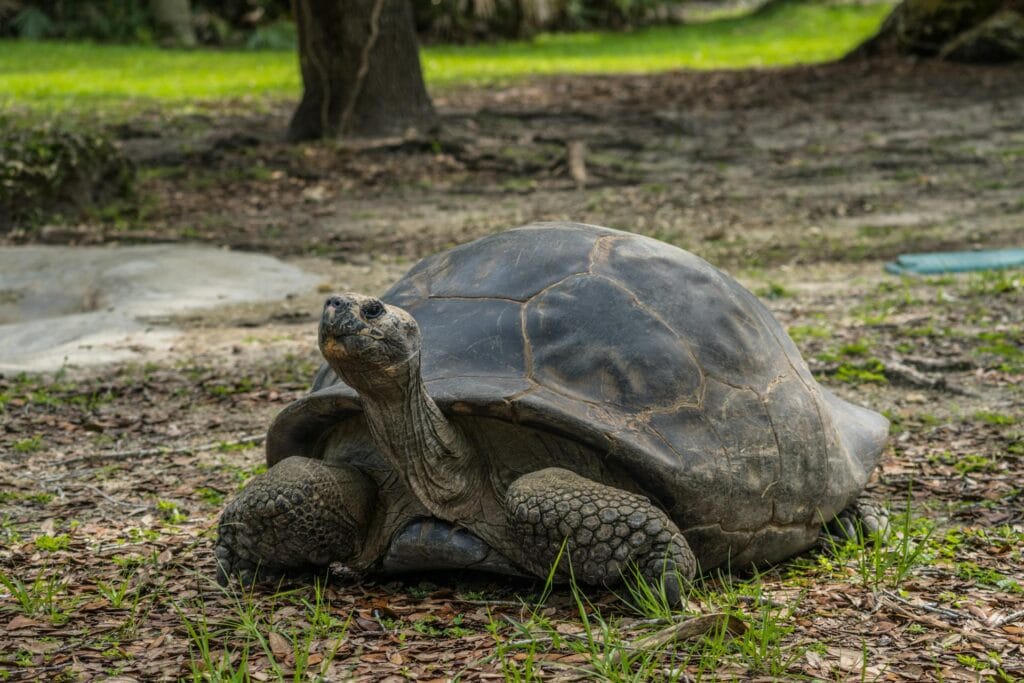
One hundred and fifty-eight giant tortoises were released this week on a Galápagos island where the species had been extinct for 180 years.
The tortoises were bred in captivity as part of a long-running conservation programme. Returning them to their original habitat restores not just a species but an entire ecological role. Giant tortoises are ecosystem engineers. They disperse seeds, clear vegetation, and shape the landscape in ways that support dozens of other species.
180 years is a long time for an island to go without them. This week it got them back.
A teacher in india won a million dollars for turning slums into classrooms
An Indian teacher won the $1 million Global Teacher Prize this week for converting open spaces in urban slums into outdoor classrooms.
The project reached hundreds of children who had no access to formal education. It required no permanent infrastructure, no large budget, and no government approval. Just the recognition that learning happens wherever a teacher decides to show up.
The prize, often called the Nobel Prize for teaching, is awarded annually by the Varkey Foundation. This year’s winner used the platform to call for investment in education in the world’s most underserved communities.
Next-Generation flu vaccines are coming
Each year, around one billion people get seasonal flu. Up to five million cases become severe. Up to 650,000 people die.
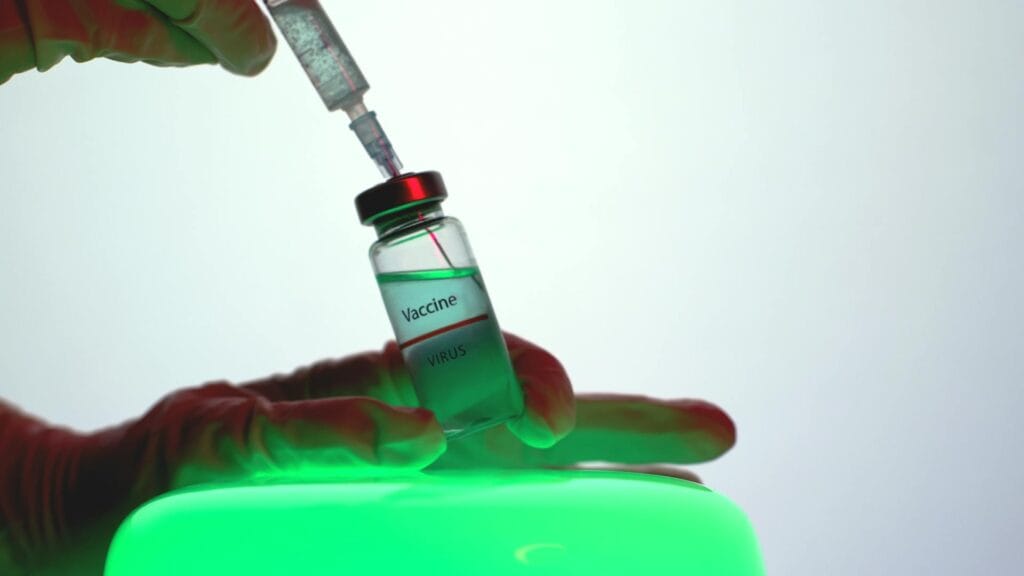
Current flu vaccines help but their effectiveness varies by season and protection lasts only a few months. The WHO announced this week that 46 next-generation influenza vaccines are currently in clinical development. The most promising offer broader protection across multiple flu strains and immunity that lasts significantly longer than one season.
The WHO estimates these vaccines could save millions of lives annually by 2050.
China’s most important river is recovering
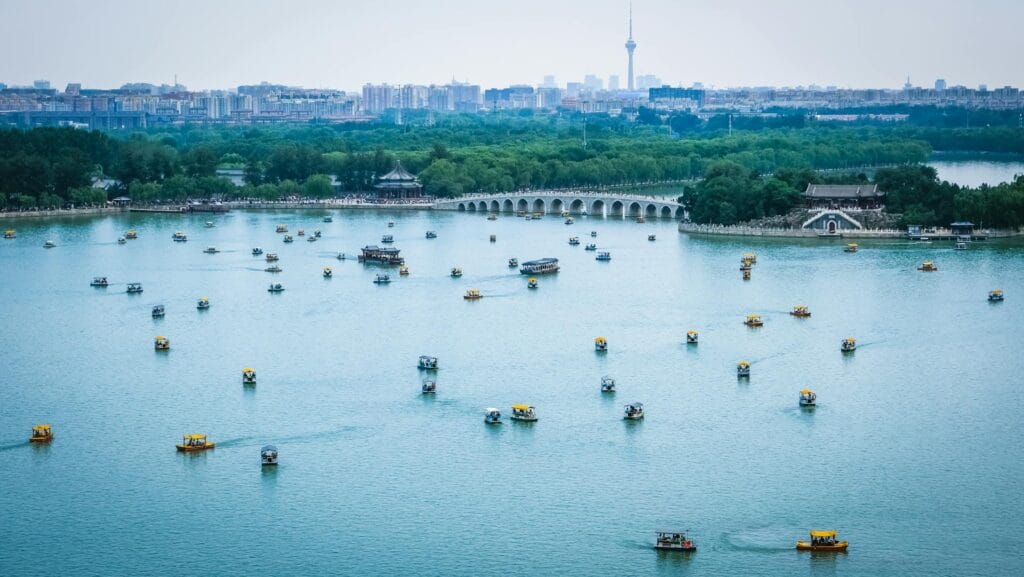
The Yangtze River, the world’s third longest, was once one of the most biodiverse waterways on earth. Decades of industrialisation and overfishing hollowed it out.
In 2021, China introduced a complete fishing ban and found alternative employment for displaced fishermen. This week, new research confirmed the policy is working. Biodiversity in the Yangtze is measurably recovering. Fish populations are returning to stretches of the river that had been effectively dead.
The researchers were careful to note that the recovery is fragile and would not survive a return to fishing. But fragile recovery is still recovery.
A cactus leather that actually works
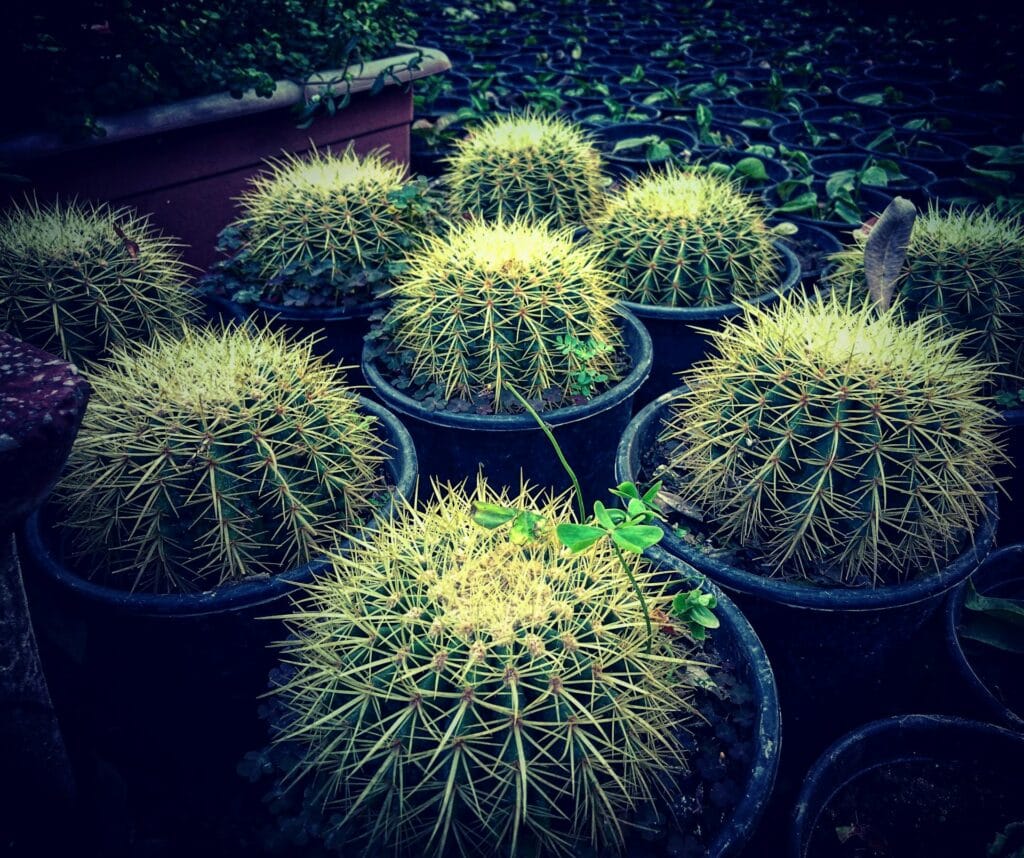
Two Mexican entrepreneurs spent years developing a leather alternative made from nopal cactus, the flat-padded variety common across Mexico and the American Southwest.
The material, called Desserto, does not require irrigation and the cactus regenerates after harvesting. It is now being used by fashion brands as a replacement for both animal leather and petroleum-based synthetic alternatives.
It is not going to solve fast fashion by itself. But it is a practical, scalable material innovation produced by two people who decided the problem was worth solving and went ahead and solved it.
Why this column exists
The moral fatigue research is clear. A diet of pure crisis coverage depletes the psychological resources people need to actually care about and engage with the world.
This is not a column that ignores problems. The same site that publishes this also covers cartel leaders, courtroom battles, wars and institutional failure with the same seriousness.
But the good news this week column exists because the feed is not balanced. Because trachoma retreating by 94 percent deserved a headline. Because 158 tortoises returning to an island after 180 years deserved a moment of your attention.
Because the world is doing both things simultaneously, falling apart in some places and quietly, stubbornly getting better in others.
And you deserve to know about both.
Read next: The World is Getting Better: More Proof From February 2026