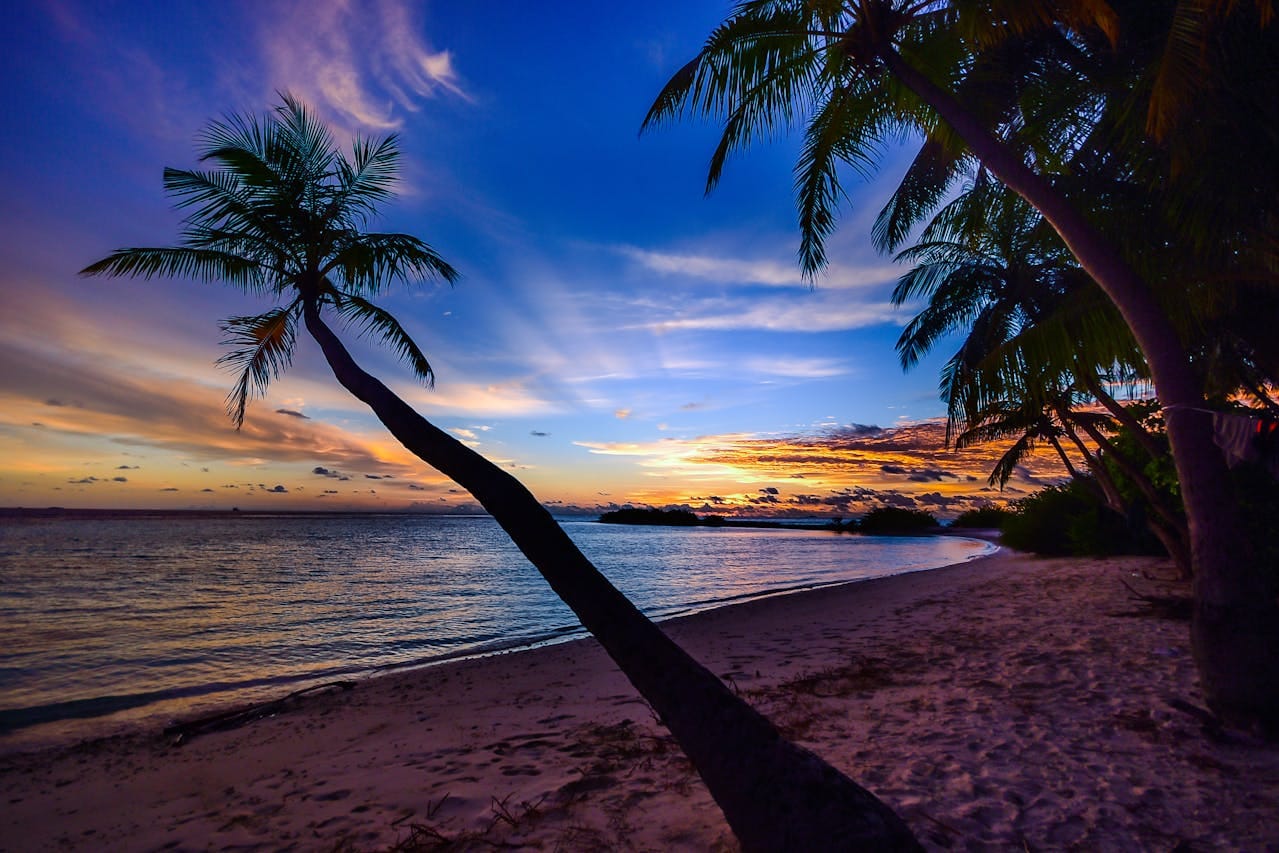
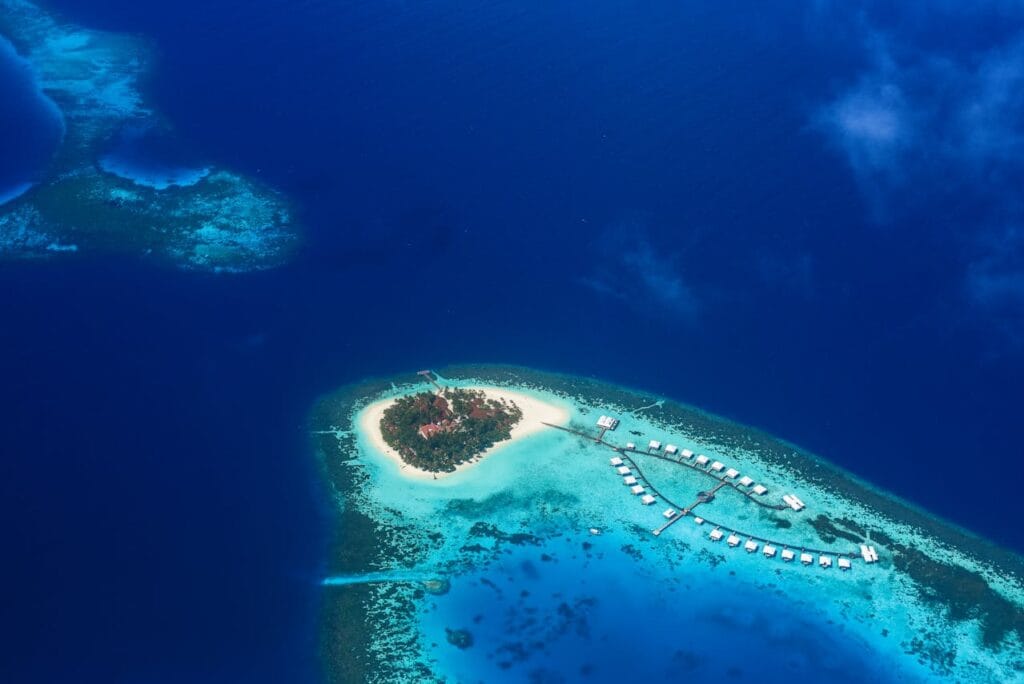
Indian Creek Island is a 300-acre strip of man-made land in Biscayne Bay, Miami. It has 41 homes. Its own government. Its own police force that patrols by land and by sea. A single guarded bridge to the mainland, where visitors show ID and may have their vehicles inspected before being allowed through.
Yesterday, Mark Zuckerberg paid $170 million to live there.
The deal closed on March 2, 2026, making it the most expensive residential sale in Miami-Dade County history. The property is a 28,000-square-foot, nine-bedroom limestone compound with 200 feet of Biscayne Bay frontage, a jazz lounge, a double-height library behind a hidden passage, a 1,500-gallon aquarium between the kitchen and dining room, and a Himalayan salt-wall sauna.
Three doors down, Jeff Bezos has spent $234 million on three properties and is combining two of them into a single compound.
Tom Brady lives there. Ivanka Trump and Jared Kushner live there. Carl Icahn lives there. Larry Page just dropped $173 million nearby in Coconut Grove. Sergey Brin is currently house-hunting in Miami Beach.
The richest people in the world are clustering. And the question worth asking is why.
What Indian Creek Island Actually Is
The island’s interior is dominated by the Indian Creek Country Club and a private 18-hole golf course. The initiation fee is $500,000. Membership is not available simply because you can afford it. You go through a lengthy admissions process. You wait.
The western side of the island, where Bezos and Zuckerberg now both own property, has lots of roughly 80,000 square feet each. The eastern side is considered slightly less prestigious at a mere 50,000 square feet per lot. Properties are traded entirely off-market.
No listings. No Rightmove. One agent talks to another agent, deals are done internally, and the transaction appears in county records weeks later.
Unlike the celebrity islands of South Beach, where tour boats float past celebrity mansions on the regular, Indian Creek’s marine patrol keeps onlookers away. The strategic landscaping ensures that almost no surrounding properties have a clear view of the island at all.
It is a bubble, one real estate agent said. No one gets on or off unless they have a reason to be there.
The Tax Story Behind the Migration
You can frame this as lifestyle. The sunshine, the water, the golf. But the financial reality is more specific.
California is in the process of voting on a proposed 5 percent wealth tax on residents with a net worth over $1 billion, retroactive to January 1, 2026. Florida has no state income tax. For Zuckerberg, whose net worth exceeds $220 billion, the California tax would represent an $11 billion liability. Moving residency before the cutoff eliminates it entirely.
This is described politely as the precise consequence of California’s proposed wealth tax by Miami real estate agents who are having the best quarter of their careers.
It is less politely described as the moment the people who built the platforms and own the infrastructure of modern life decided that the tax bills those platforms generated were someone else’s problem.
Google co-founder Larry Page dropped $173 million on a Coconut Grove estate. His co-founder Sergey Brin is actively searching. Ken Griffin, who bought a $106.9 million Coconut Grove estate in 2022, got there early. The migration did not start yesterday. But it is accelerating.
California has 246 billionaire residents who would be hit by the proposed tax. Even partial migration changes the calculus of the state’s budget significantly. The people who leave take more than their purchasing power with them.
What Clustering at the Top Actually Means
There is a sociological concept called homophily: the tendency of people to associate with others like themselves. It operates at every level of society. Neighbourhoods, schools, social circles. People cluster with people who share their circumstances.
At the scale of Indian Creek Island, homophily becomes something more structural.
When the people who run the largest companies in the world, who own the platforms through which information flows, who employ millions of people, and who collectively control more wealth than most countries, live in the same 300 acres and golf together on Sundays, the decisions they make about their businesses and their money happen in close proximity to each other.
This is not a conspiracy. It is a structural feature of how concentrated wealth organises itself spatially when it reaches a sufficient scale.
The political theorist Sheldon Wolin described this kind of arrangement as the privatisation of sovereignty: the accumulation by private individuals of the attributes once associated with the state. Their own government. Their own police. Their own admissions process for who gets to enter.
Indian Creek Island has all three. And it just got its newest resident.
The 30 Million to 170 Million Question
One detail in this story deserves a moment.
The sellers of Zuckerberg’s property, a cosmetic surgeon named Aaron Rollins and his wife Marine, bought the land in 2020 for $30 million. They built a mansion on it. They sold it yesterday for $170 million.
That is a $140 million gain in five years on a piece of land in Miami. Before taxes, which in Florida on a primary residence are considerably lower than they would be almost anywhere else.
The lot value increase at Indian Creek is not driven by any improvement in the land itself. It is driven entirely by who wants to be there and how much they are willing to pay to be there. The value of proximity to Bezos and Zuckerberg has been capitalised into the price of the dirt.
This is what extreme wealth concentration looks like when it hits the property market. The numbers become untethered from any relationship to cost, to use, to the labour required to build something. They reflect only the demand created by the presence of other extremely wealthy people.
What the Island Cannot Buy
Indian Creek Island offers privacy, security, exclusivity, and proximity to other people with similar levels of wealth and power. It offers a physical separation from the city it floats next to.
What it cannot offer is insulation from the world the people inside it helped build.
Zuckerberg’s platforms reach three billion people. Bezos’s logistics infrastructure employs over a million workers. The decisions made in those 41 homes, or the board meetings and government meetings those 41 homes’ residents attend, shape the conditions of life for hundreds of millions of people who will never see the island.
The bridge with the security checkpoint keeps onlookers out. It does not keep consequences in.
That is not a political statement. It is a structural observation about what happens when the people most responsible for the shape of a society cluster together in a place specifically designed to make them unreachable by it.
The island is beautiful. The Biscayne Bay sunsets on the western side are, reportedly, extraordinary.
And the world that paid for it continues on the other side of the bridge.
Read next: The Polycrisis: What Happens to the Human Mind When Everything Goes Wrong at Once ·
The World is Getting Better: More Proof From February 2026
What is dharma? what the mahabharata knew about losing everything

 Psychology · Sep 22, 2026Chimpanzees Have Accents. They Grow into Them.
 The Margin · Sep 17, 2026People Are Seeing Ads in Their Dreams.
 Slow Meridian · Sep 16, 2026Autumn Leaves