Khamenei dead. Three words that would have seemed impossible yesterday. Three words that make February 28, 2026 a date that does not unhappen.
By the time most people woke up this morning, the United States and Israel had launched a major joint military operation against Iran. Hundreds of strikes. Explosions across Tehran, Qom, Isfahan, Kermanshah. An internet blackout cutting a city of 10 million off from the world. And by afternoon, confirmed: Ayatollah Ali Khamenei, Supreme Leader of Iran since 1989, was dead.
The operation is called Epic Fury. The name tells you something about the era we are in.
This article is not a military briefing. There are plenty of those. This is about something harder to write and harder to read: what it feels like to be a human being alive on a day like this, and what history tells us about what days like this actually mean.
The weight of a single morning
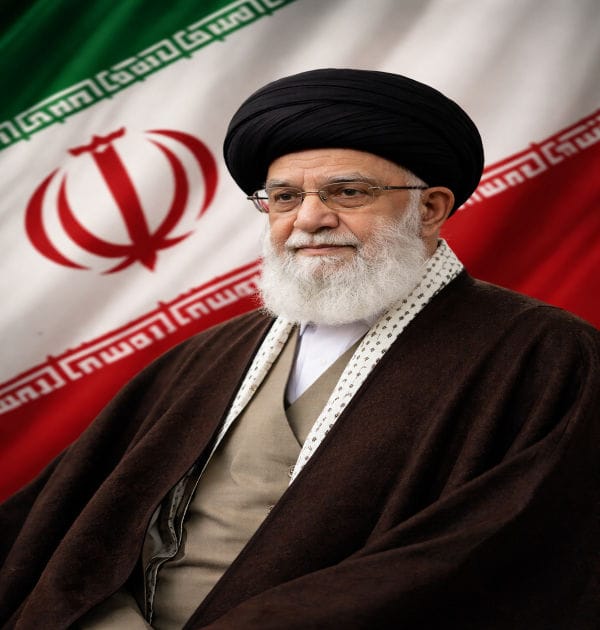
Khamenei ruled Iran for 36 years. He came to power when most people reading this were children, or not yet born. For an entire generation of Iranians, he was not a political figure. He was the permanent condition of their existence. The face on the wall. The voice on state television. The reason people disappeared.
Three days ago he gave a public address. This morning his compound was struck by seven missiles. Khamenei dead at 86, after 36 years as Supreme Leader.
The speed of it is part of what makes days like this so disorienting. History moves slowly for years, then all at once. The world you went to sleep in and the world you wake up in are not the same world, and there is no adjustment period offered.
In Tehran right now, some people are in the streets celebrating. Others are at pro-government rallies, carrying his portrait. Some are sheltering from strikes. Some cannot get signal to know what is happening three streets away. All of them are living through the same morning and having completely different experiences of it.
That is what a hinge moment in history actually looks like from the inside. Not unified. Not clear. Terrifying and electrifying and incomprehensible, all simultaneously.
What the Iranians in the streets are feeling
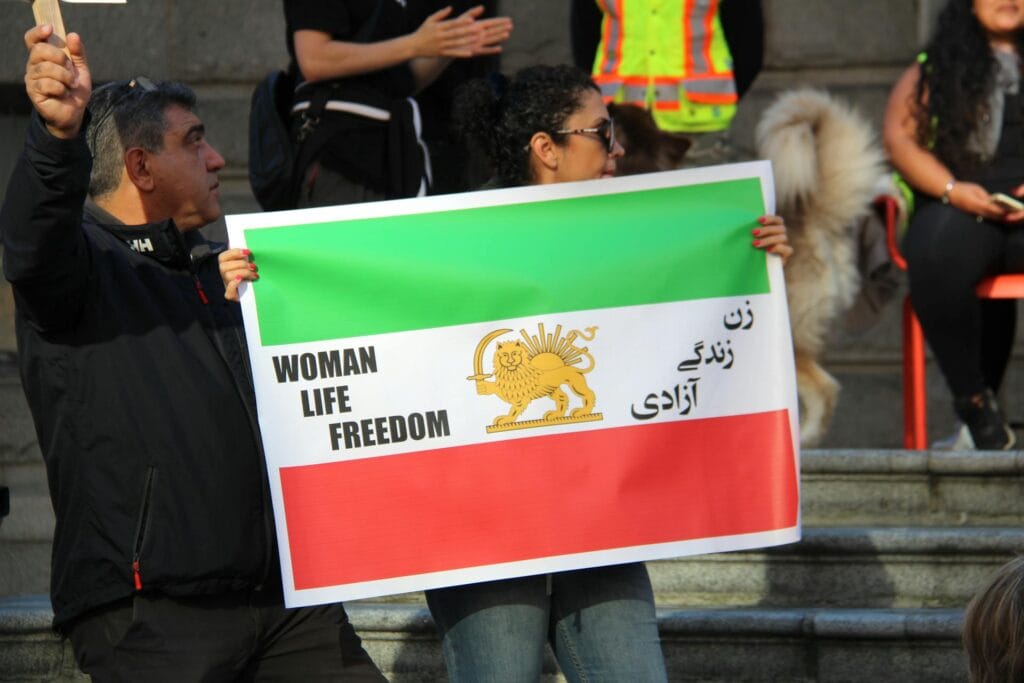
The videos are coming through despite the internet blackout. People laughing. People chanting. People who have lived under this regime their entire lives, who watched friends and family arrested after the 2025 protests, who watched more than 53,000 people detained in a single crackdown, out in the streets at personal risk because the moment is too large to stay indoors for.
Three days ago, Iran Human Rights confirmed more than 53,000 arrests following the regime’s use of military-grade weapons against protesters. Snipers on rooftops. Children at risk of execution.
These are the same people now in those streets.
The psychology of this moment for ordinary Iranians is almost impossible to hold from the outside. It is not simply joy. It is the specific vertigo of a person who has spent their entire conscious life under a system that seemed permanent, suddenly watching that system crack in a single morning.
It is the feeling that the cage door might be open. Combined with the terror that you do not yet know what is outside.
What history says about mornings like this
History is not encouraging about what comes next. That needs to be said clearly and without comfort.
The removal of a long-ruling authoritarian leader does not automatically produce the thing that follows it in the hopeful imagination. It produces a vacuum. And vacuums are filled by whoever is most organised and most willing to move fastest.
In Libya, the removal of Gaddafi produced years of civil war. In Iraq, the removal of Saddam Hussein produced a decade of sectarian violence and eventually ISIS. In Egypt, the Arab Spring produced Mubarak’s removal and then, within two years, a military government more repressive than the one before it.
None of these outcomes were inevitable. Each involved specific choices made by specific actors. But the pattern is real and worth holding alongside the footage of celebrations.
Iran’s constitution provides for an Assembly of Experts, 88 clerics, to elect a new Supreme Leader. That institution exists. Whether it can function after a night in which Israel says it targeted 30 senior regime officials and killed multiple senior IRGC commanders is a different question.
The most organised force in Iran right now, with the clearest chain of command and the clearest interests, is the Islamic Revolutionary Guard Corps. They are also the force with the most to lose from genuine democratic transition. Watch where they move in the next 72 hours more carefully than anything else.
The gulf is on fire too
This is not contained to Iran.
Iran retaliated within hours, launching ballistic missiles targeting Israel and US military bases across the region. Kuwait International Airport was attacked. Zayed International Airport in the UAE was hit. Missiles struck six Arab countries. One person was killed in Tel Aviv.
Saudi Arabia condemned what it called brutal Iranian aggression. The EU called an emergency foreign ministers meeting for Sunday. The UN condemned the strikes and called for de-escalation.
The Houthis announced they would resume attacks in the Red Sea.
A resident in western Tehran, reached by phone before communications were cut, said: they have hit many targets around me and we hear fighter jets and missiles exploding. That was hours ago. We do not know what they are hearing now.
What a world-changing day actually asks of us
There is a specific psychological trap that days like this set.
The scale of events produces either total absorption or complete shutdown. People either cannot stop scrolling or cannot bring themselves to start. Both are understandable. Neither is particularly useful.
What days like this actually require is something harder: the ability to hold multiple true things at once without resolving them prematurely into a single narrative.
It is true that Khamenei oversaw one of the most repressive governments of the last half century. It is also true that the strikes killed more than 200 civilians. It is true that Iranians in the streets are expressing something real and long-suppressed. It is also true that we do not know yet whether what comes next will be better or worse for the people living there.
It is true that this is a moment of historic significance. It is also true that we are, right now, too close to see its shape.
The moral fatigue article on this site describes what happens when people are overexposed to crisis: they go numb. They stop believing their attention means anything. Days like today are the extreme version of that pressure.
The honest response is not to look away. And it is not to perform certainty about what this means.
It is to stay with the discomfort of not yet knowing, to pay attention to the people most affected rather than the geopolitical chess, and to hold the question of what comes next with the seriousness it deserves.
The world we knew yesterday no longer exists. The world that replaces it is still being made. What it becomes will depend on choices made by people in Tehran, in Washington, in Jerusalem, and eventually in the streets.
We are watching those choices happen in real time.
Further Reading/References:
- https://en.wikipedia.org/wiki/Ali_Khamenei
- https://www.dummies.com/article/academics-the-arts/history/world/the-libyan-civil-war-free-of-gaddafi-after-42-years-163740/
- https://www.bbc.co.uk/news/articles/c05v8jzjn40o
- https://www.bbc.co.uk/news/articles/c05v8jzjn40o
- https://www.wsj.com/livecoverage/iran-strikes-2026/card/drone-attack-causes-damage-panic-at-kuwait-airport-GjmmBnex7j6G69nMUfSR?gaa_at=eafs&gaa_n=AWEtsqec9FBvyF1KOPNYeZaLdUsMZ29-Bvym0EkpZfHlaKxa_vRK97vwX2YCIXAw62s%3D&gaa_ts=69a3ad53&gaa_sig=6Jg2WVS9p31h6BGBCHXUoG-jsfYx1xLHfBJeSK5xdvnRa3gJ_Ih-Som_Z496_4IgSaKT7h9UNKKgV8yXepQvMw%3D%3D
- https://www.csis.org/analysis/operation-epic-fury-and-remnants-irans-nuclear-program