
Rainbow sea slug is one of the most visually extraordinary creatures living in British waters, and almost nobody knows it exists.
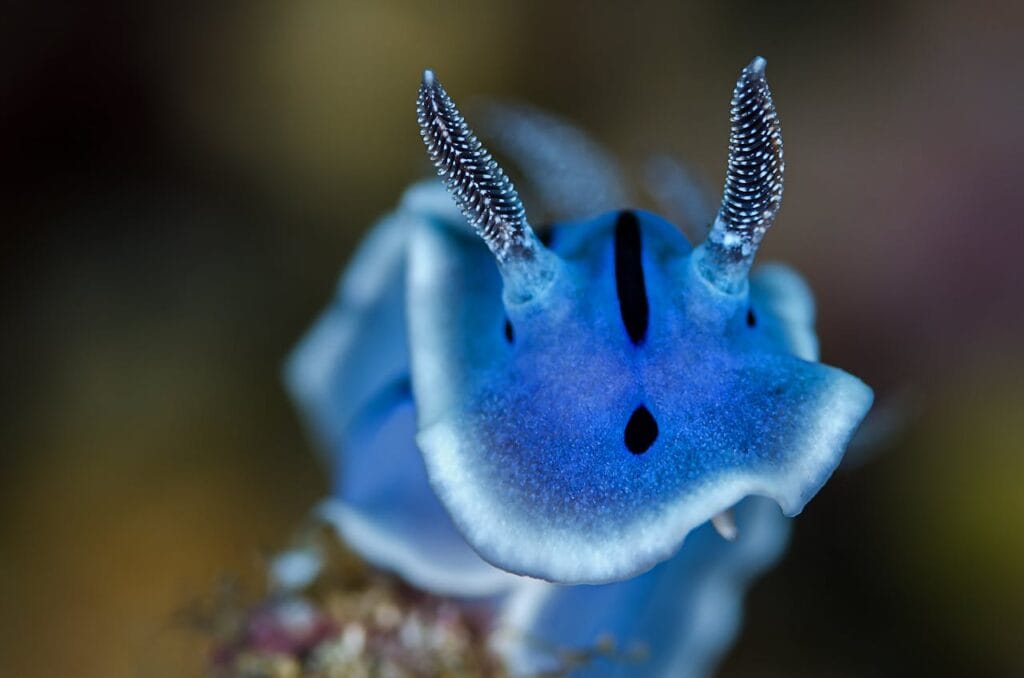
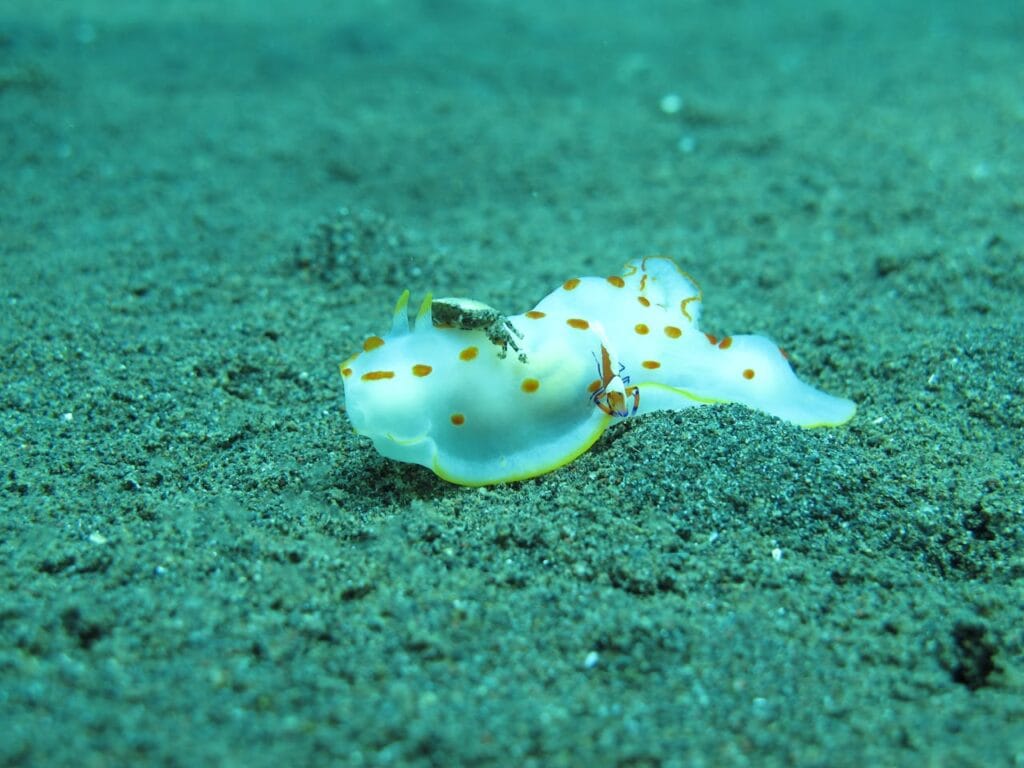
It is 3 centimetres long. Its body is translucent white, covered in vivid orange and yellow spots, fringed with feathery plumes that catch light like something made of stained glass. Its scientific name is Babakina anadoni. It belongs to a group of marine animals called nudibranchs, a word derived from Latin meaning naked gills, because their breathing organs are worn on the outside of the body, exposed and elaborate, like decorations.
It looks as though someone designed it for a coral reef in the Maldives.
It was found in a rock pool in Devon. And that is where the story gets serious.
Found by a schoolgirl on a family day out
The first recorded sighting of the rainbow sea slug in Devon was made in 2024 by Felix Lever, a school student, on a family rockpooling trip to Wembury Beach near Plymouth.
She lifted a rock and found something bright and unusual underneath. She placed it carefully in a viewing pot, photographed it, and posted it to her Instagram account. Her grandfather, Dr Paul Naylor, a local marine biologist and underwater photographer, identified it immediately.
Before that Devon sighting, only a handful ofrainbow sea slugs had ever been recorded in the entire UK. The first was off the Isles of Scilly in 2022. A volunteer with the Rock Pool Project found one on the south coast of Cornwall in 2023, describing how she had a hunch something interesting was hiding under a particular rock and lifted it to find the animal unfurling itself in full technicolour. Devon followed in 2024.
Three sightings in three years, in three different locations, each one further east and further north than the last.
The direction of travel is the signal.
Where It Is Supposed to Live
The rainbow sea slug’s natural range is the warmer waters of the Mediterranean and the Atlantic coasts of Spain, Portugal and France. It is not a British species. It has no evolutionary history in these waters. Its prey species, the sea anemones it hunts and feeds on, are here. But the water temperature that allows it to survive and reproduce was not, historically, something Britain’s seas could reliably offer.
UK sea surface temperatures have been experiencing a significant warming trend of 0.3 degrees Celsius every decade for the last 40 years, according to the National Oceanography Centre. That is a number that sounds modest. In terms of marine ecosystem impact it is enormous. Marine species are extraordinarily sensitive to temperature. A shift of one degree changes which species can survive where. A shift of three degrees, accumulated over a century, restructures entire communities of life.
The rainbow sea slug is not adapting to British waters. British waters are adapting to it. The sea is becoming somewhere the slug can survive. The slug is simply following the warmth northward, as its biology has always instructed it to do.
Coral Smith, Devon Wildlife Trust’s Marine Awareness Officer, said it plainly. The discovery is a strong indicator that the seas are warming due to climate change. Because it can now survive here means that other creatures adapted to colder water will be struggling.
That sentence deserves to sit with you for a moment.

Beauty as a Warning System
The nudibranchs are the most visually spectacular group of animals in British waters. Most people have never seen one because most people do not look.
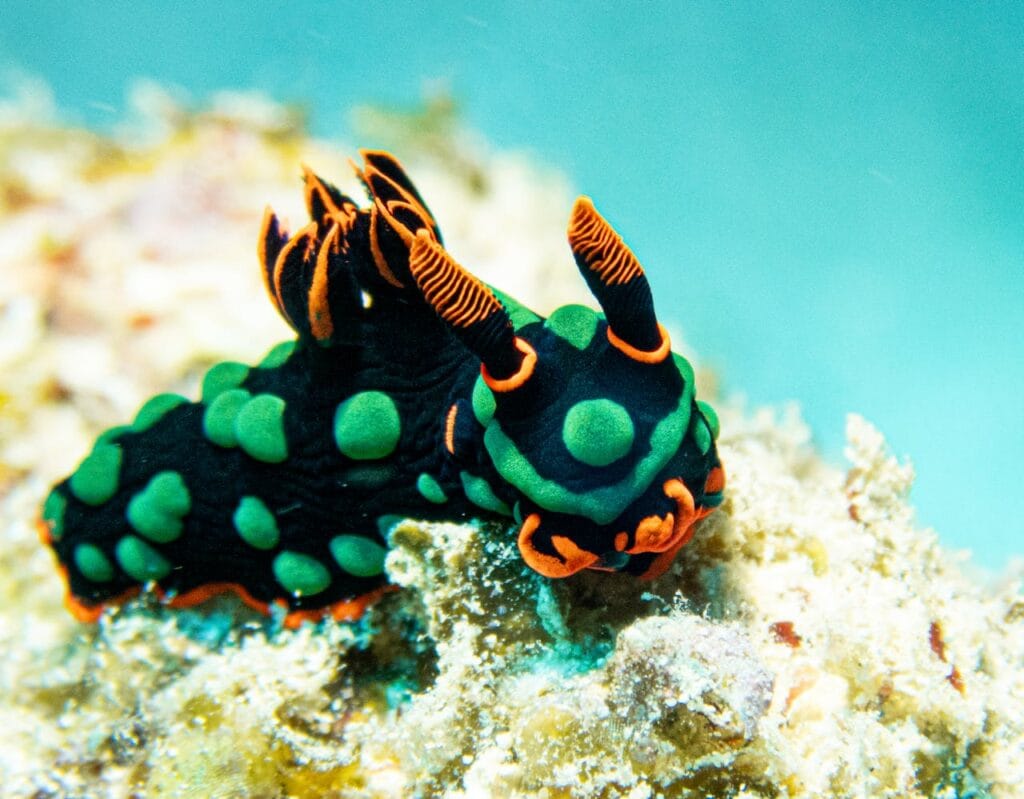
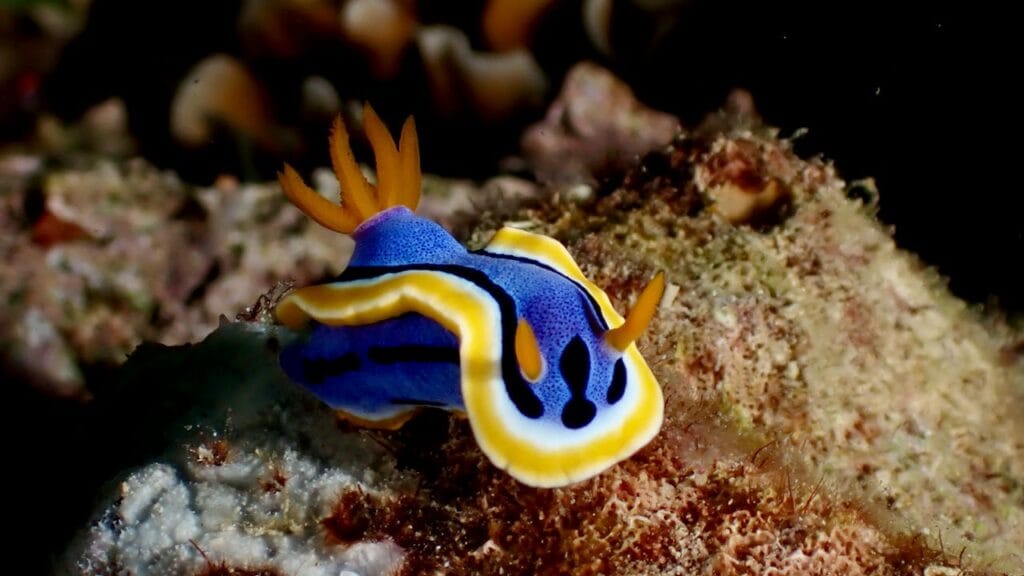
There are over 3,000 species of nudibranch globally. Roughly 100 species have been recorded in UK waters. They range from a few millimetres to several centimetres in length. They come in electric blue, crimson, gold, violet, and combinations that have no names because colour language was not developed with nudibranchs in mind. They are the birds of paradise of the sea floor, noticed only by the people who go looking.
In September 2025, Cornwall Wildlife Trust volunteers discovered another warm-water nudibranch appearing in UK waters for the first time. Spurilla neapolitana, known as the hair curler slug for the thick, curling outgrowths on its body, was found at Prisk Cove on the Helford. Its previous most northerly sighting had been in Brest, France, just weeks earlier. It is normally resident in the Caribbean, the Mediterranean, and the western Atlantic.
Brest to Cornwall in a matter of weeks. On the current trajectory, volunteers are now asking not if the next warm-water species will arrive, but which one and when.
What Citizen Science Is Telling Us
The rainbow sea slug was not found by a research institution or a government monitoring programme. It was found by a child on a day out, by a volunteer on a survey walk, by people who simply go to the coast and pay attention.
The Wildlife Trusts run a national intertidal survey programme called Shoresearch. Volunteers in Devon alone logged over 700 hours of surveys in 2024. Across the UK, those volunteers collectively clocked over 46,000 hours. They are recording climate change indicator species, invasive non-native species, and native species that are shifting their range.
The data they are gathering is not available any other way. The coastline is too long, the rock pools too numerous, the species too small and too easily overlooked for institutional science to cover alone. The picture being assembled of what is happening to British marine life is being built, rock pool by rock pool, by people who do it because they love the coast.
Matt Slater, marine conservation officer at Cornwall Wildlife Trust, described the hair curler slug discovery as highlighting the importance of citizen science. The rates of change in British seas, he said, are accelerating dramatically.
The 2025 marine review from the Wildlife Trusts documented a 1,500 percent increase in Mediterranean octopus sightings along the South Coast compared to 2023, an octopus bloom of a scale not seen in the UK for 75 years. Mauve jellyfish, normally found in the Mediterranean, washed up in hundreds on the shores of Cornwall and the Isles of Scilly. A loggerhead sea turtle was found in Cumbria. Humpback whales were sighted off Lancashire and North Wales.
These are not isolated curiosities. They are a pattern.
The Cold Water Species Nobody Mentions
Every warm-water species arriving in British seas is displacing something.
The creatures that evolved for the colder, cleaner, more stable conditions of historic British coastal waters are under pressure. Cold water fish species are declining. Native oysters, already devastated by overfishing and disease, face competition from invasive Pacific oysters that thrive in warming conditions. Pom-pom weed, an Asian seaweed that forms dense red tangles, was found across Devon in 2024 and could displace the barnacles and macro-invertebrates that native species depend on.
The rainbow sea slug is beautiful. Its arrival is genuinely exciting for the volunteer who lifts a rock and finds it there. And its presence in Devon waters is a direct consequence of conditions that are simultaneously making life harder for species that have been part of this ecosystem for thousands of years.
This is what the Devon Wildlife Trust meant by the complexity of understanding and communicating climate change in the marine environment. The story is not simply loss. It is not simply gain. It is a reshuffling of life at a speed that natural systems were not built to accommodate.
What the Rock Pools Are Saying
There is a particular quality of attention that rock pooling requires. You have to slow down, get low, be patient, let your eyes adjust to what you are looking for. The pools do not give up their inhabitants to a glance. You have to stay long enough for the stillness to become interesting.
The people who do this regularly are watching the British coast change in real time. Not through data sets or satellite images but through the specific, personal experience of a species being there one year that was not there before.
A 3-centimetre nudibranch, vivid with colour, found under a rock by a schoolgirl on a family day out.
It is a small thing. It is also, if you know what it means, one of the clearest signals available about the state of the sea.
The rainbow sea slug did not travel to Devon to deliver a warning. It came because the water was warm enough. The warning is ours to read, or not, as we choose.
Read next: The World is Getting Better: The Proof Your Feed Missed
Why are human babies so helpless at birth?
What is dharma? what the mahabharata knew about losing everything