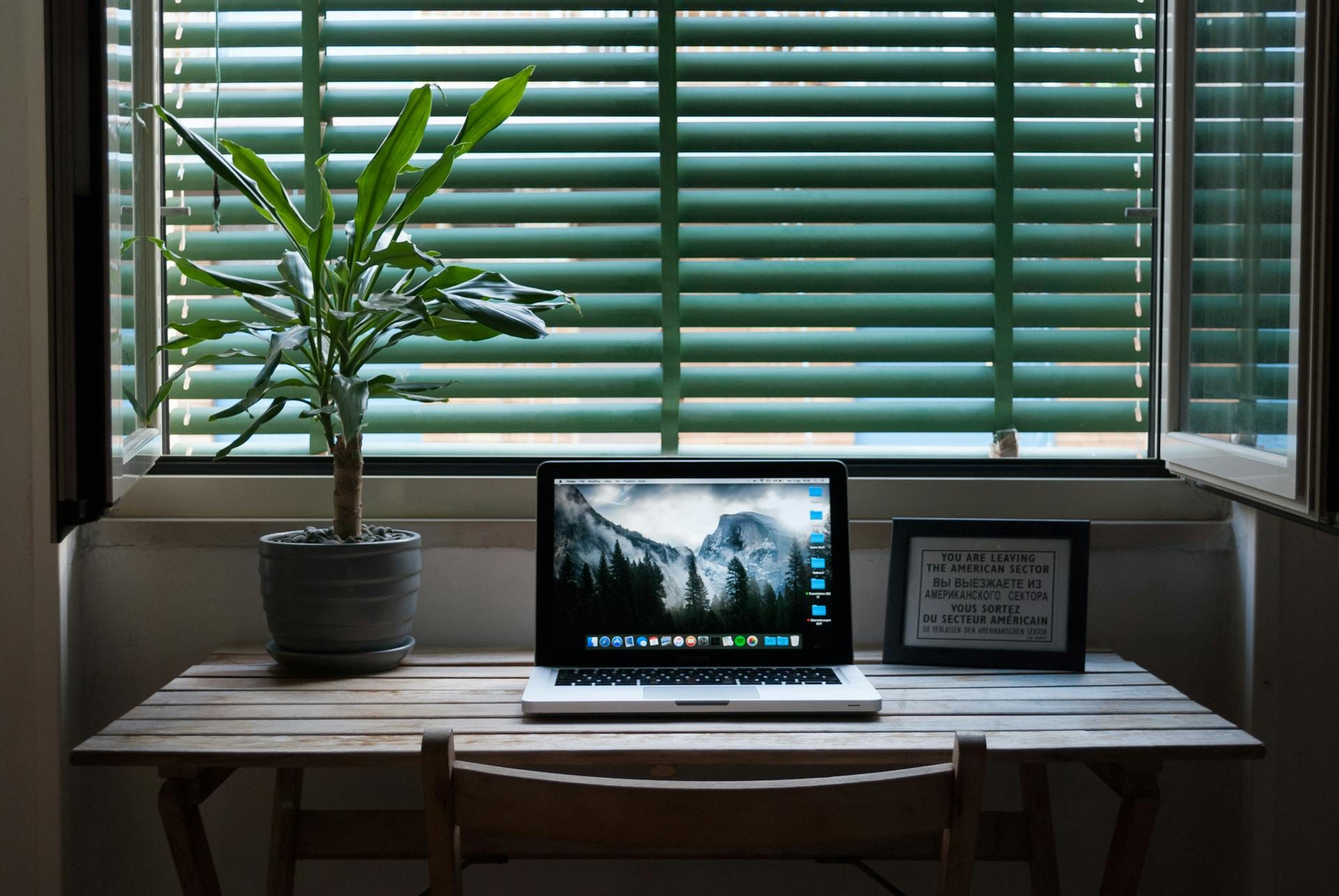
Remote work effects are easier to see five years in.
There is a moment many people recognise now.
It is late afternoon, or possibly evening. You are still at your desk. You did not decide to keep working. You just never officially stopped.
Somewhere between the last meeting and dinner, the day dissolved, and the version of you that was supposed to clock off and become a different person for a few hours never quite appeared.
You are home. You are always home. And that is starting to mean something you did not expect.
Five years ago, working from home felt like a gift that had been withheld for no good reason. When offices closed in 2020 and millions of people shifted to kitchens and spare bedrooms and living room corners, there was, underneath the fear of that moment, something that felt like possibility.
No commute. No open-plan noise. No fluorescent lighting and mandatory small talk. Just the work, and the life around it, finally allowed to coexist.
The experiment is now old enough to evaluate honestly.
What remote work delivered was real, but partial. The freedoms were genuine. So were the costs. And the costs, because they arrived quietly and accumulated slowly, took longer to name.
The Remote Work Effects Nobody Planned For
Start with what changed for the better, because it did change.
The commute was not a small thing. In cities like London, Mumbai, and Bengaluru, average commute times run to an hour each way, often more.
For millions of people, remote work returned roughly two hours of daily life that had previously been spent in transit.
That time did not automatically become rest or family time or anything productive. But it became available. The ceiling on the day lifted slightly.
For parents, and particularly for mothers, the shift had specific and measurable effects. The ability to be present for school pickups, or to handle a sick child without navigating complicated leave requests, or to exist in the same building as your family during the hours that previously swallowed you entirely, was not a small quality-of-life improvement.
It was, for many people, the difference between a manageable life and one that felt constantly overwhelming.
For people with disabilities, chronic illness, or anxiety disorders that made office environments genuinely difficult, remote work was not a compromise. It was, in many cases, the first professional arrangement that actually worked for them.
And then there is the simple fact of quiet. The ability to think without interruption, to move through work at your own pace, to avoid the specific drain of performing sociability for eight hours while also trying to concentrate. Many people became more productive.
The research, on balance, supports this for individual focused work, if not for the kind of collaborative, spontaneous exchange that offices do generate naturally.
These are real gains. They should not be buried in what came after.
What Gradually Came Undone
The problem with removing the boundary between work and home is that the boundary was doing more than you realised.
When you leave an office, something switches. Physically crossing a threshold, ending a commute, arriving somewhere that is not the place where you worked, produces a mental shift that turns out to be important.
Psychologists call it a transition ritual, a signal the brain receives that one mode is ending and another beginning. It is not glamorous. It is just a commute. But its absence, it turns out, has consequences.
Without the transition, work does not end. It recedes.
It recedes into the evening when you check one more email after dinner. Into the weekend when the laptop is visible from the sofa and a thought occurs that feels quick enough to act on. Into the early morning when you roll over and reach for your phone before you are fully awake because the boundary between you and your inbox is now measured in inches.
This is what researchers began calling boundary collapse. The walls between professional time and personal time did not fall dramatically.
They eroded. A little every day, in ways that were each too small to object to, until the two things occupied the same space so completely that separating them again required genuine effort.
In India, this dynamic took on a specific texture. Cultural expectations around availability, the assumption in many workplaces that responses should be fast regardless of hour, combined with the removal of any physical signal that the working day had ended, created conditions where people were reachable constantly and felt the pressure to remain so.
The flexibility that remote work theoretically offered was, in practice, not always available to claim.
In the UK, a similar pattern emerged. The right to disconnect, discussed at a policy level but inconsistently enforced, did not translate easily into a culture where being responsive was equated with being committed.
The office had imposed a structure nobody asked for but many people, in its absence, found themselves quietly missing.

The Isolation That Arrived without Warning
The social dimension of office life was never particularly celebrated.
People complained about it constantly. The forced conversations, the politics, the noise, the sense of being observed. The office as a social environment was not, in most accounts, a warm or nourishing place. It was tolerated.
Then it was gone, and something unexpected followed.
Loneliness crept in, particularly for people who lived alone, who were new to a city, who were early in their careers and had not yet built the professional relationships that make work feel like it connects to something larger than the task in front of you.
The office had been providing something that was never advertised on the tin: a reason to be around other people every day, whether you wanted to or not.
For younger workers especially, this was more than a social loss. The informal learning that happens in shared physical space, watching how experienced colleagues handle difficulty, absorbing the unspoken culture of a workplace, understanding through proximity how things actually work, disappeared.
What replaced it was a cleaner but thinner version of work. Efficient. Isolated. Missing the texture of being somewhere with other people.
The flexibility that remote work offered also revealed itself, for many, to be a partial illusion.
Flexibility implies control over your time. But control over your time, in most remote jobs, still belongs primarily to whoever sets the meetings. The calendar fills. The hours fragment. You are technically available to arrange your day as you please, but in practice the day is arranged for you through a series of video calls that could not quite justify being emails, and the gaps between them are too short to do anything meaningful and too long to rest properly.
The promise was autonomy. What many people received was the same structure, moved into their homes, with the commute replaced by additional availability.
The Version Nobody Planned For
Here is what five years has actually produced.
Most people do not want to go back to five days in an office. The surveys are consistent on this.
The benefits of flexibility, even partial and imperfect flexibility, are valued enough that removing them entirely has become a significant point of friction between employers and employees in multiple industries and countries.
But most people are also not thriving in the arrangement they have. They are adapting.
Finding workarounds. Creating artificial transitions, a walk before starting work, a deliberate shutdown ritual, physical boundaries within the home that signal different modes. Rebuilding, privately and manually, the structure that the office provided automatically.
This improvisation is not a failure. It is a reasonable response to a situation that arrived without instruction and is still, five years in, being figured out.
What has not happened is the honest reckoning.
Remote work changed the relationship between employers and employees in ways that mostly benefited employers. A workforce that is always home is a workforce that is always reachable.
The overhead cost of office space dropped. The expectation of availability increased. The employee received flexibility. The employer received something it had never previously had, a workforce that could be contacted at any hour without it feeling like an intrusion, because the intrusion and the home had become the same place.
Whether that trade was worth it depends entirely on where you sit inside it.
Some people built genuinely better lives around the new arrangement. The parent who sees their children. The person with a chronic condition who is no longer exhausted by commuting before the work even starts. The introvert who does their best thinking in quiet.
Some people lost more than they gained, and are only now, slowly, beginning to understand what.
The office was not working. But working from home, it turns out, is not simply the opposite of that.
Further Reading:
- HR Approved Way To Say Things I Can’t Say Out Loud At Work: https://amzn.to/4kO5jAP
- HR Approved 52 Ways To Inform Coworkers They’re Stupid: https://amzn.to/4aMd7yp

 Psychology · Sep 22, 2026Chimpanzees Have Accents. They Grow into Them.
 The Margin · Sep 17, 2026People Are Seeing Ads in Their Dreams.
 Slow Meridian · Sep 16, 2026Autumn Leaves