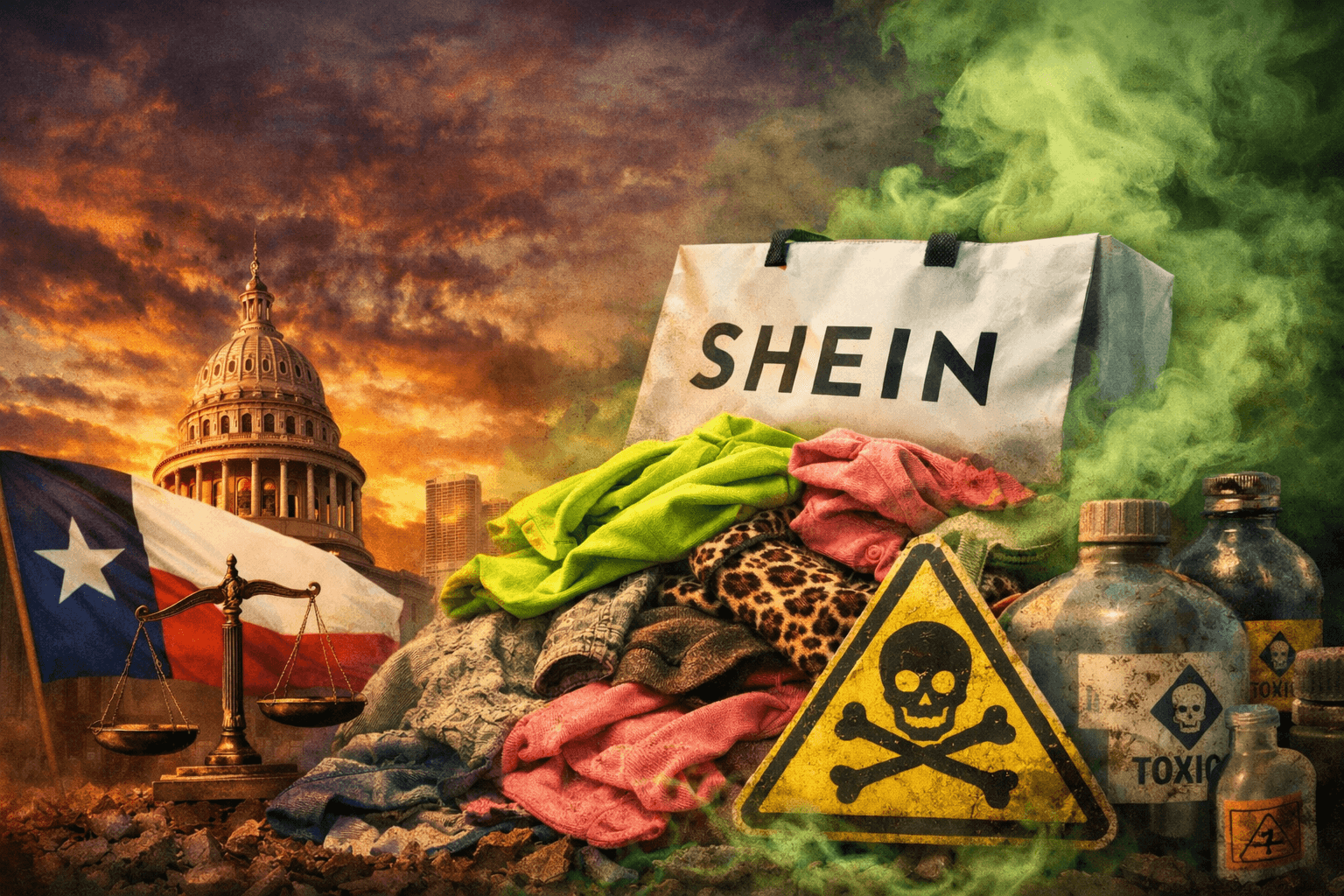
Generated by ChatGPT

Texas just sued Shein. The part about toxic clothing is harder to ignore.

Some links on this page may be affiliate links. If you purchase through them, we may earn a commission at no extra cost to you.
KEY TAKEAWAYS
  • Texas sued Shein in 2026 alleging the sale of products with toxic chemicals and undisclosed data sharing with the Chinese Communist Party.
  • Independent tests found hazardous substances in Shein products aimed at vulnerable groups like newborns and children.
  • The lawsuit claims Shein's data privacy policy fails to disclose CCP access mandated by Chinese law despite the company's relocation to Singapore.
  • Texas is pursuing significant penalties and a permanent injunction for clearer disclosures on product safety and data practices.
  • The case highlights broader concerns about fast fashion's supply chain shortcuts and the intersection of consumer safety with national security.
GLOSSARY
Texas Deceptive Trade Practices Act (DTPA)
A Texas law under which the state sued Shein for alleged deceptive practices involving toxic products and data privacy violations.
Shein toxic chemicals
Hazardous substances found in Shein products, including clothing and toys, that exceed accepted safety thresholds.
Chinese national intelligence law
A law requiring Chinese companies to provide the Chinese Communist Party access to data on demand, central to the data privacy allegations.
Prohibited Technologies List
A list by Texas banning certain technologies, including Shein, from government devices due to security concerns.
Fast fashion pricing model
A business approach that compresses supply chains and reduces costs, potentially compromising product safety and oversight.
Permanent injunction
A court order Texas seeks to require Shein to provide clear disclosures about toxic chemicals and data sharing.
FAQ
What are the main allegations against Shein in the Texas lawsuit?
Texas alleges Shein sells products containing toxic chemicals at unsafe levels and fails to disclose that American consumer data is routed to the Chinese Communist Party.
Why is Shein's data privacy policy under scrutiny?
Because it does not inform users that, under Chinese law, the company must provide data access to the CCP, raising concerns about undisclosed data sharing.
What types of products were found to contain toxic chemicals?
Products tested included clothing for newborns, pregnant women, school-aged children, and toys, all containing hazardous chemicals above safety limits.
How does the fast fashion model relate to the safety concerns raised?
Fast fashion's rapid supply chains may bypass standard safety testing, potentially leading to unsafe products reaching consumers quickly.
What legal outcomes is Texas seeking from the lawsuit?
Texas seeks financial penalties per violation and a permanent injunction requiring Shein to clearly disclose toxic chemical presence and CCP data access.
EDITORIAL NOTE
This piece is part of The Present Minds — essays on psychology, identity, and modern life.

Posted

in

by

Comments

Leave a Reply

Your email address will not be published. Required fields are marked *

The Present Minds
By Navneet Shukla April 8, 2026 Current

Texas just sued Shein. The part about toxic clothing is harder to ignore.

5 min read · 836 words
Tap to switch read mode. Original contrast is live.
Navneet Shukla
Written By Navneet Shukla Founder · Editor · Systems Architect

Navneet Shukla writes about how people think and how modern life shapes that thinking. The Present Minds is where he explores it.

Shein generated $30 billion in global revenue in 2023. On February 20, 2026, Texas sued it.

Attorney General Ken Paxton filed suit against Shein US Services LLC under the Texas Deceptive Trade Practices Act, alleging two things: the company sells products containing Shein toxic chemicals at unsafe levels, and it routes American consumer data to the Chinese Communist Party without telling users.

It was his fifth anti-CCP lawsuit in four days. The others targeted TP-Link, Anzu Robotics, Lorex, and Temu. Shein was the biggest name on the list.

Generated by ChatGPT

The Toxic Chemicals Charge

Independent laboratory tests, cited in the complaint, found Shein products containing toxic substances above accepted safety thresholds.

The items were not niche. They were clothing designed for newborns, pregnant women, and school-aged children. Toys sold on the platform tested positive for hazardous chemicals and heavy metals.

The complaint calls these products “silent carriers of poison.” That is the language of a legal filing.

Shein toxic chemicals were not found in edge-case products. They were found in the items marketed to the most vulnerable buyers.

Texas is seeking up to $10,000 per DTPA violation, rising to $250,000 per violation when the victim was 65 or older.

shein toxic chemicals

The Data Privacy Charge

Shein collects standard e-commerce data. Names, addresses, payment details, purchase history. The lawsuit’s argument is not that the collection happens. It is that users are not told where it goes.

Chinese national intelligence law requires Chinese companies to give the CCP access to their data on demand. Shein’s privacy policy, the complaint states, does not disclose this. The filing describes the platform as “not just a store, but a data siphon leading directly to the Chinese government.”

Shein was founded in China. It relocated to Singapore in 2021. Texas argues the relocation does not remove the obligations under Chinese law.

Texas Governor Greg Abbott had already placed Shein on the state’s Prohibited Technologies List for government devices in January, following a threat assessment by the Texas Cyber Command. The European Commission opened a parallel investigation under the Digital Services Act the same week. Florida’s new China Prevention Unit had subpoenaed the company two weeks earlier.

Shein’s data history adds context. A 2018 breach exposed more than 39 million accounts.

What Shein Said

Shein said it “strongly disagrees with the allegations” and will prove its position in court. The company stated it is “dedicated to protecting the health and personal information” of its customers and maintains high standards for product safety and data security.

To bolster its defense, the retail giant emphasizes its compliance with international safety protocols, arguing that its testing methods are rigorous and transparent.

Shein contends that the claims are based on flawed sampling and do not reflect the safety of the millions of items shipped daily. Furthermore, the company maintains that its data practices align with global industry standards, regardless of its corporate origins.

As the case proceeds, Shein faces the daunting task of rebuilding consumer trust in a volatile regulatory environment. With legal teams preparing to contest every lab result and privacy claim, this battle in the Collin County district court will likely set a massive precedent for how international e-commerce platforms operate within American borders.

The outcome could redefine the accountability of ultra-fast fashion.

The Bigger Picture: Shein Toxic Chemicals

Five lawsuits in four days is a political signal as much as a legal one. Texas is not moving quietly. The filings are part of a coordinated state-level campaign against Chinese-linked technology and consumer companies, running parallel to federal actions on TikTok, Huawei, and TP-Link. This aggressive stance positions Texas as a primary gatekeeper against foreign digital influence, treating commercial apps as national security concerns.

The Shein lawsuit lands a specific question on the table. Fast fashion’s pricing model compresses supply chains to the point where standard safety testing does not fit inside the timeline. When a garment travels from a factory floor to a Texas doorstep in days, the oversight gap widens.

The gap between what a product costs to produce safely and what it sells for has to go somewhere. Texas argues it went into the products themselves, through Shein toxic chemicals, and into the data of the people buying them.

By bypassing traditional retail safeguards, the platform allegedly traded consumer health for market dominance. The price was always real. It just was not on the label.

Where Things Stand

Shein has not been found liable. The lawsuit is a filing. The test results, the data law argument, and the named product categories are public record. The investigation began in December 2025. The case is before a Collin County district court.

The state now seeks a permanent injunction to force “clear and conspicuous” disclosures regarding Shein toxic chemicals and CCP data access. While the legal process unfolds, shoppers are left to weigh the low price tag against these documented risks. Shein’s $4 dress is still $4. That part has not changed.

Read Next: What I learnt from a teenage boat skipper in Montenegro

What I learnt from my kurdish barber in london

What I learnt from a bus driver in Scotland

Navneet Shukla
Written By

Navneet Shukla

Founder · Editor · Systems Architect

Navneet Shukla writes about how people think and how modern life shapes that thinking. The Present Minds is where he explores it.

Key Takeaways
  • Texas sued Shein in 2026 alleging the sale of products with toxic chemicals and undisclosed data sharing with the Chinese Communist Party.
  • Independent tests found hazardous substances in Shein products aimed at vulnerable groups like newborns and children.
  • The lawsuit claims Shein's data privacy policy fails to disclose CCP access mandated by Chinese law despite the company's relocation to Singapore.
  • Texas is pursuing significant penalties and a permanent injunction for clearer disclosures on product safety and data practices.
  • The case highlights broader concerns about fast fashion's supply chain shortcuts and the intersection of consumer safety with national security.
Glossary
Texas Deceptive Trade Practices Act (DTPA)
A Texas law under which the state sued Shein for alleged deceptive practices involving toxic products and data privacy violations.
Shein toxic chemicals
Hazardous substances found in Shein products, including clothing and toys, that exceed accepted safety thresholds.
Chinese national intelligence law
A law requiring Chinese companies to provide the Chinese Communist Party access to data on demand, central to the data privacy allegations.
Prohibited Technologies List
A list by Texas banning certain technologies, including Shein, from government devices due to security concerns.
Fast fashion pricing model
A business approach that compresses supply chains and reduces costs, potentially compromising product safety and oversight.
Permanent injunction
A court order Texas seeks to require Shein to provide clear disclosures about toxic chemicals and data sharing.
FAQ
What are the main allegations against Shein in the Texas lawsuit?
Texas alleges Shein sells products containing toxic chemicals at unsafe levels and fails to disclose that American consumer data is routed to the Chinese Communist Party.
Why is Shein's data privacy policy under scrutiny?
Because it does not inform users that, under Chinese law, the company must provide data access to the CCP, raising concerns about undisclosed data sharing.
What types of products were found to contain toxic chemicals?
Products tested included clothing for newborns, pregnant women, school-aged children, and toys, all containing hazardous chemicals above safety limits.
How does the fast fashion model relate to the safety concerns raised?
Fast fashion's rapid supply chains may bypass standard safety testing, potentially leading to unsafe products reaching consumers quickly.
What legal outcomes is Texas seeking from the lawsuit?
Texas seeks financial penalties per violation and a permanent injunction requiring Shein to clearly disclose toxic chemical presence and CCP data access.
Editorial Note

This piece is part of The Present Minds, essays on psychology, identity, and modern life.

Discussion
No comments yet. Be the first.