Some links on this page may be affiliate links. If you purchase through them, we may earn a commission at no extra cost to you.
Written by
Navneet Shukla
Author
Navneet Shukla writes about how people think and how modern life shapes that thinking.
The Present Minds is where he explores it.
KEY TAKEAWAYS
A simple haircut can reveal profound stories of displacement, identity, and resilience.
Human connection often transcends professional roles, creating spaces for genuine listening and shared experience.
The concept of home can be deeply personal and invisible to the outside world, carried in memory and language rather than geography.
Literacy and intelligence manifest in diverse forms, including the ability to communicate across cultures and experiences.
Sometimes the value of an encounter lies not in the service provided but in the authenticity and warmth exchanged.
GLOSSARY
Kurdistan
A non-recognized homeland referenced by the barber, symbolizing a lost or unacknowledged place of origin carrying deep cultural and emotional significance.
Displacement
The forced movement from one's home, as experienced by the barber who fled Kurdistan at fourteen, shaping his identity and worldview.
Lived testimony
Personal stories and experiences shared not as abstract facts but as real, embodied knowledge from direct involvement.
Slow violence
The gradual, often invisible harm caused by neglect or denial of recognition, as seen in the erasure of Kurdistan from official maps.
Non-literate multilingualism
The barber's ability to speak seven languages without being literate, highlighting different forms of knowledge and communication.
The Present Minds
The column series by Navneet Shukla focusing on everyday encounters and the subtle lessons they impart.
FAQ
What is the main lesson the author learned from the barber?
The author learned that some people carry the weight of their homeland invisibly, and that genuine human connection can reveal profound stories beyond surface interactions.
Why did the barber emphasize that he was from Kurdistan and not Turkey?
The barber highlighted his Kurdish identity to assert his distinct cultural and political background, especially given the historical conflict and misrecognition of Kurdistan.
How does the article portray the relationship between literacy and intelligence?
The article suggests that literacy is not the sole measure of intelligence or capability, as the barber's multilingualism and deep understanding of global politics demonstrate alternative forms of knowledge.
Why was the haircut itself described as imperfect or incomplete?
The haircut was rushed and uneven because the barber's attention was focused more on sharing his story and connecting emotionally than on the technical task.
What role does storytelling play in the barber's interaction with the author?
Storytelling serves as a means for the barber to keep his experiences and family real, to connect with others, and to bear witness to his displacement and identity.
EDITORIAL NOTE
This piece is part of The Present Minds — essays on psychology, identity, and modern life.
Tap to switch read mode.Original contrast is live.
What I learnt from my barber in London is something I realised only after the haircut was done and when I was already outside.
That is the thing about a good story. It keeps you warm long enough that you do not notice you are leaving with less than you came for.
It was one of those slow London Sundays that feels borrowed from somewhere warmer. The kind of afternoon where the city softens slightly and you think, yes, I could live here.
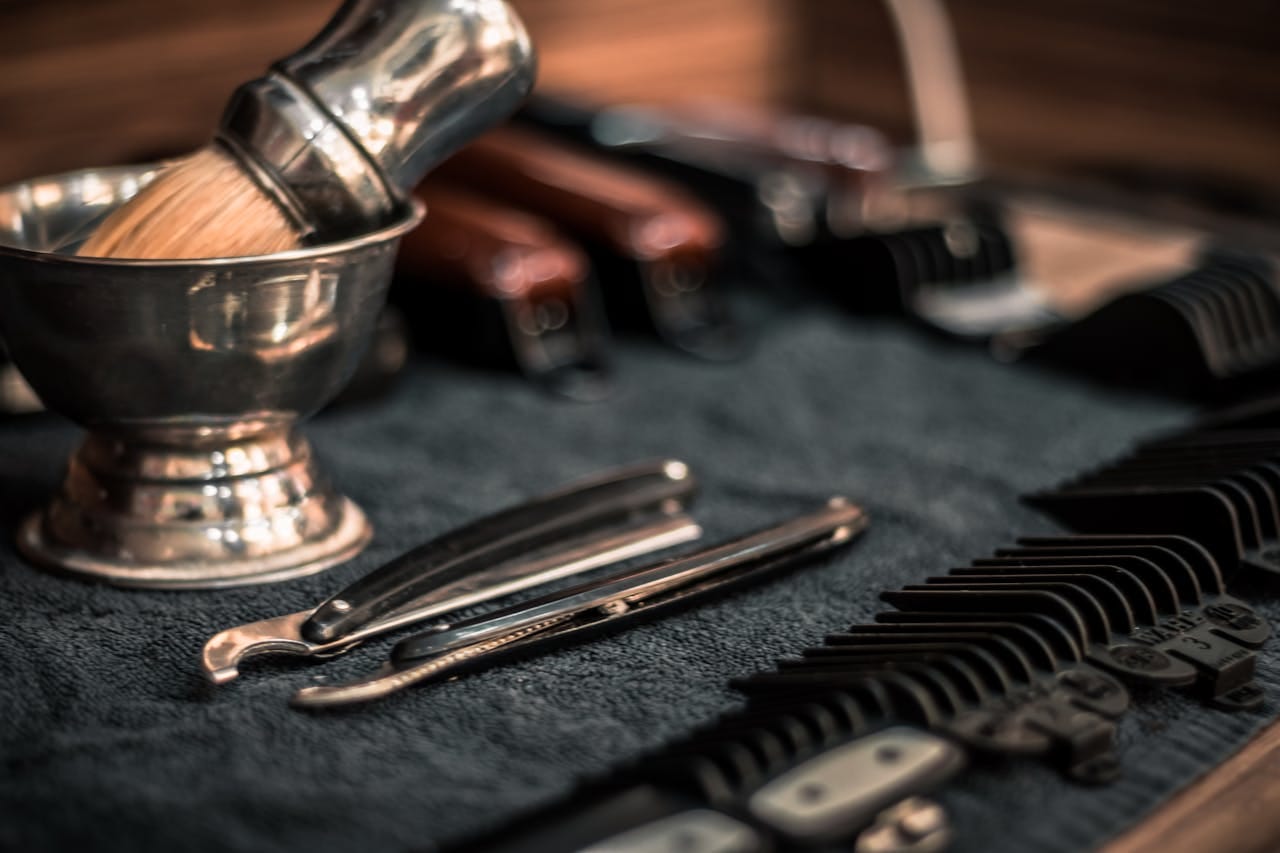
I walked into a barbershop on a quiet stretch of street, not because it looked particularly good, but because it was there and I needed a cut.
He greeted me the way certain people greet strangers. Not with the professional warmth of someone trained to smile, but with the specific, deliberate warmth of someone who has learned that people need to feel welcome before they will open. He asked me to sit. Promised me a sleek, fresh cut.
Made it sound like a small gift he was about to give me.
Then he asked where I was from.
I have been asked this question in enough countries to know it carries different weight depending on who is asking. Sometimes it is small talk. Sometimes it is curiosity.
Sometimes it is the first move in a longer conversation the other person needs to have.
This was the third one.
What I learnt from my barber and what i can teach you from it
I told him India. He asked about home. About family. About what it feels like to be far from it. He asked with a kind of focused attention that felt less like a barber making conversation and more like someone collecting proof that he was not the only one who knew what distance felt like.
Then he stopped. Left it there.
I asked where he was from.
He told me to guess.
I said Turkey. I had been recently and thought I recognised something in the cadence of his English, the shape of certain sounds.
He pulled back like I had said something wrong. Not rudely. More like a man who has had to correct this assumption many times and has made his peace with the correction but not with the cause of it.
The hardest thing about losing a homeland is that the rest of the world keeps mispronouncing it.
He said it the way you say the name of something that matters enormously and is treated as though it does not exist. Because Kurdistan does not exist. Not on any official map. Not as a recognised state.
It is a place that lives in the people who come from it, carried forward in language and grief and the particular anger of someone who watched their home disappear not through disaster but through the slow violence of being ignored.
He had left when he was fourteen. Not left. Run. Fled through Syria when the situation became what situations become when the world has decided a people do not count. He arrived in Britain with nothing.
His parents, his siblings, his entire family remained. They are still there now, sixteen years later. He cannot go back without risk. They cannot easily travel.
He told me this the way people tell stories they have told many times before, not because they have become comfortable with them, but because retelling is the only way to keep the facts from becoming abstract.
To keep the people in it real.
The shop was quiet. Slow Arabic music moved through the room like warm air, and I felt the geography shift slightly, the way music can dissolve the city around you and replace it with somewhere else entirely.
For a few minutes I was not in London. I was somewhere in the dust and the heat and the weight of somewhere I had never been but could almost feel.
Seven languages and not one of them written.
He talked and he cut. The scissors moved quickly. Too quickly, as it turned out.
He told me he was not literate. Then he told me he spoke seven languages. He said this without irony, without any sense that there was a contradiction to explain.
Literacy, for him, was not the same thing as intelligence or capability or the ability to reach across difference.
He had built an entire life on the understanding that the real language is the one that makes someone feel less alone.
He knew things about global politics that surprised me. Some of it was sharp. Some of it was the kind of biased certainty that comes from having a direct stake in events that most people encounter only as headlines.
All of it was lived. There is a difference between someone who reads about displacement and someone who was displaced at fourteen.
He was not making an argument. He was giving testimony.
And then, as quickly as the conversation had deepened, it rounded off. The way certain conversations do when the person sharing them has a practiced instinct for knowing when they have given enough.
He offered something a little cheesy, the kind of line you use to close a window without seeming like you are closing it. He offered to connect on Instagram.
He said he was going back next month, somehow, paperwork finally through, to see his family for the first time in God knows how long.
He wanted to show me his hometown.
I said yes without thinking.
I asked how much I owed him.
He sold me something real and forgot to give me what I actually came for.
He said whatever you can pay. He had liked talking to me and would not quote a price.
I felt generous. I felt moved. I paid accordingly.
He smiled. Then, almost as a footnote, almost to himself: all barbers like to talk and tell stories.
Then he picked up his phone. His eyes went somewhere else. The door had been opened, the conversation had been had, and now it was done.
I was being waved goodbye without being waved goodbye. I stepped outside. Looked for a reflective surface. Found one.
The back of my head was a mess. Uneven. Skimmed. The work of someone who had spent far more energy on the story than on the cut. I had paid a generous amount for a haircut that was, objectively, not worth the standard rate.
He sold me something real and forgot to give me what I actually came for. The strange thing is, I do not entirely mind.
I smiled. I do not know exactly why. Maybe because there was something honest in the whole transaction, even if the honesty was not in the haircut. He had given me something he genuinely had.
The story was real. The warmth was real. The longing underneath both of them was real.
He just ran out of attention before he got to the back of my head.
Maybe that is what happens when you spend sixteen years being more than what your job is. When the haircut is not really the point and never was.
When the shop is the only room where strangers sit close enough and stay still long enough to actually listen.
I learnt that day that some people carry their homes so lightly on the outside that you almost miss the weight.
I also learnt to check the mirror before I leave.
What I Learnt From is a column by Navneet Shuklaon The Present Minds — conversations, encounters, and the things ordinary moments quietly teach you.
Some links on this page may be affiliate links. If you purchase through them, we may earn a commission at no extra cost to you.
Written by
Navneet Shukla
Author
Navneet Shukla writes about how people think and how modern life shapes that thinking.
The Present Minds is where he explores it.
KEY TAKEAWAYS
A simple haircut can reveal profound stories of displacement, identity, and resilience.
Human connection often transcends professional roles, creating spaces for genuine listening and shared experience.
The concept of home can be deeply personal and invisible to the outside world, carried in memory and language rather than geography.
Literacy and intelligence manifest in diverse forms, including the ability to communicate across cultures and experiences.
Sometimes the value of an encounter lies not in the service provided but in the authenticity and warmth exchanged.
GLOSSARY
Kurdistan
A non-recognized homeland referenced by the barber, symbolizing a lost or unacknowledged place of origin carrying deep cultural and emotional significance.
Displacement
The forced movement from one's home, as experienced by the barber who fled Kurdistan at fourteen, shaping his identity and worldview.
Lived testimony
Personal stories and experiences shared not as abstract facts but as real, embodied knowledge from direct involvement.
Slow violence
The gradual, often invisible harm caused by neglect or denial of recognition, as seen in the erasure of Kurdistan from official maps.
Non-literate multilingualism
The barber's ability to speak seven languages without being literate, highlighting different forms of knowledge and communication.
The Present Minds
The column series by Navneet Shukla focusing on everyday encounters and the subtle lessons they impart.
FAQ
What is the main lesson the author learned from the barber?
The author learned that some people carry the weight of their homeland invisibly, and that genuine human connection can reveal profound stories beyond surface interactions.
Why did the barber emphasize that he was from Kurdistan and not Turkey?
The barber highlighted his Kurdish identity to assert his distinct cultural and political background, especially given the historical conflict and misrecognition of Kurdistan.
How does the article portray the relationship between literacy and intelligence?
The article suggests that literacy is not the sole measure of intelligence or capability, as the barber's multilingualism and deep understanding of global politics demonstrate alternative forms of knowledge.
Why was the haircut itself described as imperfect or incomplete?
The haircut was rushed and uneven because the barber's attention was focused more on sharing his story and connecting emotionally than on the technical task.
What role does storytelling play in the barber's interaction with the author?
Storytelling serves as a means for the barber to keep his experiences and family real, to connect with others, and to bear witness to his displacement and identity.
EDITORIAL NOTE
This piece is part of The Present Minds — essays on psychology, identity, and modern life.








Leave a Reply