
When having money still feels like not having money, what are the right things to look at? Explore in detail what Money Dysmorphia means and how it affects us.
Remembering what things cost no longer happens automatically and that loss feels quietly destabilising.
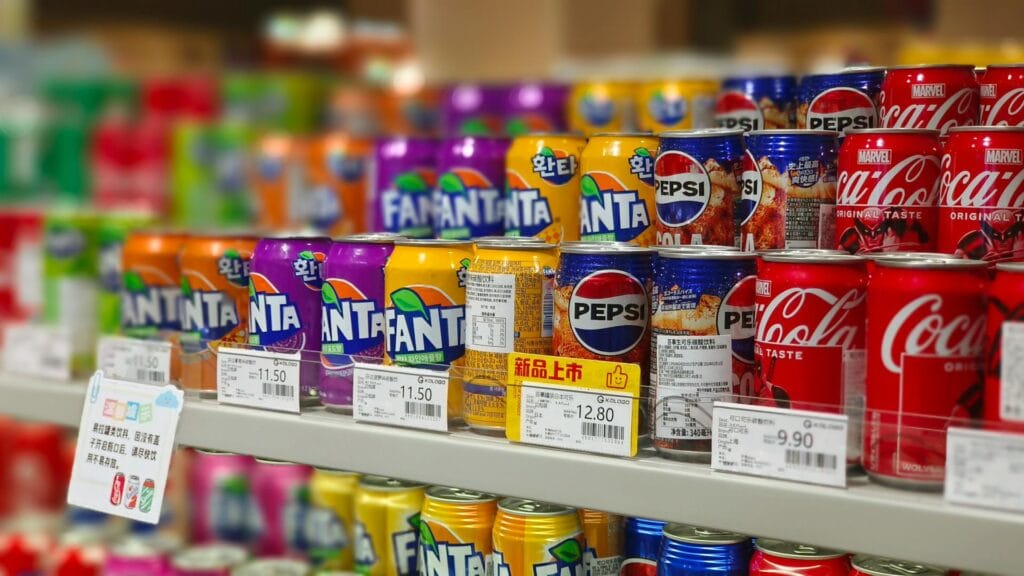
There is a moment that keeps repeating in ordinary places. A checkout line. A café counter. A supermarket aisle. Someone reaches for their phone not to answer a message but to confirm whether the price in front of them makes sense.
Not cheap.
Not expensive.
Just normal.
As if memory alone is no longer reliable enough to answer the question.
Prices float now. They do not anchor themselves.
You pay, feel a brief flicker of discomfort, then move on. A week later the number has vanished. A month later you cannot say whether it increased or whether it was always that way. The sensation remains but the detail is gone.
Nothing stays stable long enough to be remembered.
This is not forgetfulness in the ordinary sense. It is not distraction. It is not carelessness.
The mind is adapting.
It has stopped holding onto prices because prices no longer behave like facts. They behave like moods.
Remembering What Things Cost Used to Orient Life
Cost once acted as a reference point.
Not precise. Not calculated to the decimal. But close enough to register deviation. Bread had a range. Coffee had a range. Transport had a range. When something shifted, it felt meaningful.
A change implied a reason.
Now change is ambient.
Subscriptions adjust quietly. Fees appear without ceremony. Discounts rotate constantly. Inflation moves in the background while promotional language softens the edges. Numbers update so often that memory stops treating them as landmarks.
Why store a value that will not hold still.
When reference points disappear, comparison collapses. Without comparison, judgment weakens. Not because people stop caring about money, but because money stops offering something solid to stand on.
When numbers refuse to settle, they stop becoming memories.
This erosion mirrors the same flattening described in Why Modern Life Is Quietly Erasing Your Days where constant incremental change prevents experience from standing out sharply enough to be recalled.
Memory needs contrast.
Prices no longer provide it.

The Quiet Psychological Cost of Flexible Pricing
This discomfort runs deeper than budgeting.
Remembering cost is not only about affordability. It is about orientation. Knowing what things used to cost allows you to locate yourself in time. It answers whether life is becoming more expensive or whether effort is producing less return.
When that memory disappears, judgment becomes fuzzy.
Pressure is felt but cannot be traced. Something feels wrong but lacks a clear before and after. The unease remains vague and unanchored.
That vagueness is exhausting.
Instead of responding to specific increases, people carry a general background anxiety. Spending decisions become emotional rather than deliberate. Guilt replaces calculation. Hesitation replaces clarity.
The mind struggles not because numbers are complex but because they refuse to stay put.
This same instability appears in cognitive effort more broadly. In Why Thinking Feels Harder Than It Used To, the issue was not lack of intelligence but the absence of stable reference points. Thought becomes heavier when there is nothing firm to push against.
When remembering what things cost breaks down, confidence in decision making follows.

A Moment That Does Not Resolve
Sometimes it happens suddenly.
A receipt looks wrong but you cannot say why. The total feels high but you do not know compared to what. You stand there holding the bag aware that something shifted and equally aware that you will not remember this moment clearly enough to track it later.
There is no conclusion to draw.
Only the sense that money is no longer a story with a beginning middle and end.
Why This Is Not Just About Inflation
It would be convenient to explain this entirely through economics.
Inflation. Supply chains. Global instability. All of it is real. None of it fully explains the disorientation.
The deeper issue is instability without narrative.
When prices rise slowly and continuously without visible thresholds the mind cannot form before and after stories. There is no clear then to compare with now. Everything exists inside a stretched present.
This is why people say everything is expensive now even when they cannot name specific increases. The statement is experiential rather than analytical.
Memory requires contrast.
Contrast requires pauses.
When cost changes without pause memory disengages.
Tracking stops.
Trust erodes.
Confidence thins.
It is not that things became unaffordable overnight. It is that they became unrememberable.
And when cost becomes unrememberable it reshapes how people relate to work security and the future. Spending loses intention. Saving feels abstract. Planning loses texture.
Money becomes background pressure rather than a measurable reality.
When Having Money Still Feels Like Not Having Money: Takeaway
When remembering what things cost fails you lose more than numbers.
You lose progression. You lose fairness. You lose the sense that effort connects cleanly to outcome. Many people feel poorer without being able to locate when it happened.
That uncertainty lingers.
It shows up as hesitation before small purchases. As guilt after ordinary spending. As second guessing whether anything was worth it.
This is not a failure of discipline or literacy.
It is what happens when the ground shifts just enough that memory stops trying to stand on it.
And once memory lets go everything feels more expensive even when the numbers alone cannot fully explain why.
Read Next: Tagore’s The Postmaster: a story about being left behind
What marketing actually is (it is not what most people think)
Why are human babies so helpless at birth?
What is dharma? what the mahabharata knew about losing everything

 Psychology · Sep 22, 2026Chimpanzees Have Accents. They Grow into Them.
 The Margin · Sep 17, 2026People Are Seeing Ads in Their Dreams.
 Slow Meridian · Sep 16, 2026Autumn Leaves