
The fear of being replaced at work rarely announces itself dramatically.
You did not see a headline that triggered it.
It arrived more quietly than that. A tool at work that handles something you used to handle.
A meeting where someone younger spoke with a confidence that reminded you of yourself, but faster and with less of the hesitation you have accumulated.
A job listing that described your exact role but asked for half the experience and offered a lower salary than you currently earn.
Nothing dramatic. No one said anything unkind. Your position is fine. Your reviews are good. And yet something shifted, almost imperceptibly, in how you sit inside your own professional life.
You are good at what you do. You have always known this. But recently, in the background, a quieter question has started forming.
Whether being good at what you do is the same protection it used to be.
This feeling does not have a clean name yet. It is not redundancy, because you have not been made redundant.
It is not failure, because you are not failing. It is something more ambient than either.
A low, persistent awareness that the walls around your professional value are thinner than you previously assumed, and that several different forces are pressing against them simultaneously.
Understanding what those forces actually are, rather than what the most alarming version of the story says they are, is worth doing carefully.

The Fear of Being Replaced at Work in the Age of AI
Start with artificial intelligence, because it is impossible to discuss this feeling honestly without it.
The technology has moved faster than most working professionals had prepared for. Tools capable of producing competent written content, functional code, detailed analysis, client-ready summaries, and passable creative work are now widely available, inexpensive, and improving consistently.
They are not replacing entire professions in the dramatic, overnight way that early coverage sometimes implied.
But they are absorbing specific tasks within those professions, the tasks that used to justify hours of billed time or salaried effort, in ways that are already reshaping what employers expect from individuals.
A junior lawyer who once spent days on document review. A marketing professional whose first draft work can now be initiated by a prompt. A mid-level analyst whose standard reports can be generated in minutes.
None of these people have necessarily lost their jobs. But the specific activities that previously defined their contribution have become faster, cheaper, and in some cases automatable.
The question of what remains, what the uniquely human value is once the repeatable tasks are absorbed, is one that many people are answering quietly and privately, without much institutional guidance.
At the same time, the labour market in most industries has become considerably more crowded. Remote work removed geography as a limiting factor in hiring.
A company in London or Mumbai can now access candidates from a far wider pool than before, which is useful for employers and more competitive for applicants.
The credential inflation that has been building for two decades, more degrees, more certifications, more demonstrable skills required for roles that previously asked for less, has continued.
The bar for entry has risen. The number of people clearing it has risen with it.
Younger entrants to most fields arrive with technical fluencies that were not standard a decade ago.
They have grown up native to tools that older professionals learned mid-career. They are cheaper to hire, carry less accumulated institutional friction, and often move faster through tasks that rely on pure technical skill.
None of this is unfair. But for someone in the middle of their career, watching from inside it, the cumulative picture can feel quietly destabilising.
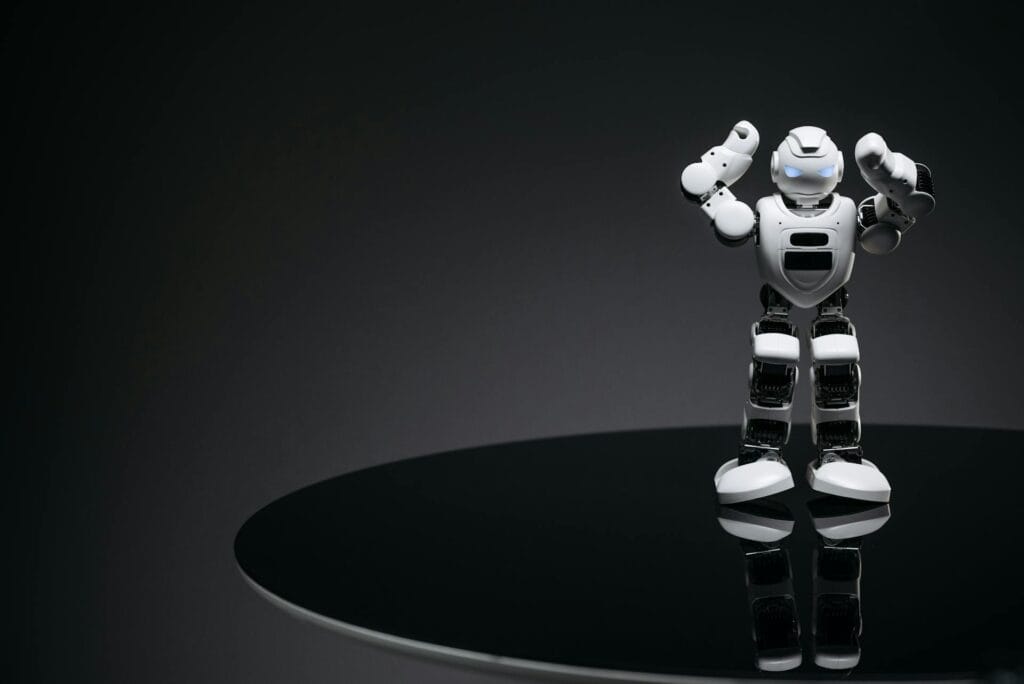
The Part That Is Harder to Say Out Loud
Here is where the feeling becomes more personal than structural.
Most people’s sense of professional security rests on a belief, usually unexamined, in their own distinctiveness. The idea that what they bring is not just competent but specific.
That there is a combination of experience, judgment, relationships, and sensibility that they possess in a way that is not straightforwardly replicable.
This belief is not delusional. Human judgment, contextual understanding, creative instinct, and relational intelligence are real and genuinely difficult to replicate.
The most sophisticated AI tools available are still significantly limited in precisely these areas.
But the belief in one’s own uniqueness tends to be broader than the evidence strictly supports.
People often include, in their private account of what makes them valuable, tasks and skills that are in fact fairly common. Work that is solid rather than distinctive.
Contributions that are reliable rather than irreplaceable. The gap between how unique people believe their professional value to be and how unique it actually is has always existed.
What has changed is that the gap is now more visible.
When a tool can produce a competent first draft, the question of whether your first draft was genuinely exceptional, or merely good enough to justify your salary, becomes harder to avoid.
When a younger colleague processes the same information faster, the comfortable assumption that experience automatically confers value gets quietly tested.
This is not a reason to collapse into professional despair. Experience, genuine expertise, and the kind of judgment that comes from years of navigating real complexity do compound into something real and hard to replace.
But it requires honesty about which parts of your work fall into that category and which parts were always more routine than you acknowledged.
That kind of honesty is uncomfortable in proportion to how much the comfortable version has gone unexamined.

The Identity Underneath the Job Title
Here is the part that goes deepest.
For most working adults, professional identity and personal identity are more entangled than they would comfortably admit.
What you do is not just how you earn. It is part of how you explain yourself to strangers, how you structure your sense of purpose, how you locate yourself in a social world that still organises itself significantly around work.
When the value of what you do feels uncertain, it does not stay neatly in the professional compartment. It seeps.
The anxiety of being replaceable is not purely about income or status, though it is partly about both.
It is also about the more fundamental question of what you are, if the work that has defined you turns out to be less singular than you thought. What the contribution actually amounts to.
Whether the decades of accumulated expertise represent something durable or something that the market is quietly revaluing downward in real time.
This is not a crisis most people discuss openly. It does not present as dramatic enough to justify that level of conversation.
The most uncomfortable possibility is not that you might be replaced. It is that the thing you would be replaced by might handle most of what you do reasonably well.
Not everything. Not the best of it. But enough to make the question sit there, quiet and uninvited, in the background of an otherwise ordinary working day.
Read Next: Therapy generation anxiety: the paradox nobody wants to admit
Why humans need to explore: the psychology behind every big ambition

 Psychology · Sep 22, 2026Chimpanzees Have Accents. They Grow into Them.
 The Margin · Sep 17, 2026People Are Seeing Ads in Their Dreams.
 Slow Meridian · Sep 16, 2026Autumn Leaves