
Personal branding pressure shows up in small moments.
Someone asks what you are into.
It is a simple question. Friendly, even. And yet something in you pauses before answering. Not because you do not know.
But because you are, briefly, aware that your answer is being registered. Filed. That it will contribute to the version of you that exists in other people’s minds.
So you think about it for a half-second longer than you should. You reach for something true but also interesting.
Something that says the right things about the kind of person you are. And then you answer, and the conversation moves on, and nobody noticed the half-second except you.
But you noticed it.
This small, barely visible performance is happening constantly now, across conversations and platforms and professional profiles and social media bios.
The pressure to present a coherent, legible, and ideally interesting self has become a background condition of modern life. Not dramatic enough to call a crisis. Persistent enough to be exhausting.
It has a name in the language of commerce: personal branding. And the fact that a term originally designed for marketing has migrated so thoroughly into how ordinary people think about their own identities is worth examining carefully.
Because something real has shifted in what it means to simply be a person, rather than present one.

How Personal Branding Pressure Reshaped Identity
The idea that individuals should market themselves is not entirely new. Self-presentation has always been part of social life. People have always managed impressions, chosen what to reveal and conceal, shaped the version of themselves they offer in different contexts.
But the scale and permanence have changed entirely.
Before the internet, self-presentation was largely local and temporary. The impression you made at a dinner party existed in the memories of the people there. It faded, shifted, was corrected over time by continued interaction. Your identity was something you lived, and it updated continuously through actual experience.
Social media changed the architecture of this. For the first time, ordinary people were given broadcast tools, platforms designed to transmit a version of themselves outward, at scale, to audiences they could not fully see or predict. And those platforms were not neutral containers.
They were structured around specific incentives: engagement, follower counts, likes, the algorithmic reward for content that performs.
What performs, reliably, is coherence. A clear aesthetic. A consistent voice. A recognisable angle on the world. The platforms did not just give people a place to express themselves.
They gave people a reason to curate themselves. And over time, curation became the norm, then the expectation, then the invisible pressure that operates even when no one is watching.
This pressure did not stay inside the phone. It leaked out.
People now approach their own personalities with something closer to editorial logic. What are my interests, and do they hang together? What does my taste say about me? Is there a throughline to who I am that would make sense to a stranger encountering me for the first time?
These are not questions people have always asked themselves. They are questions that make sense in a world where you might, at any moment, be encountered by a stranger for the first time, and where that encounter will leave a permanent, searchable record.
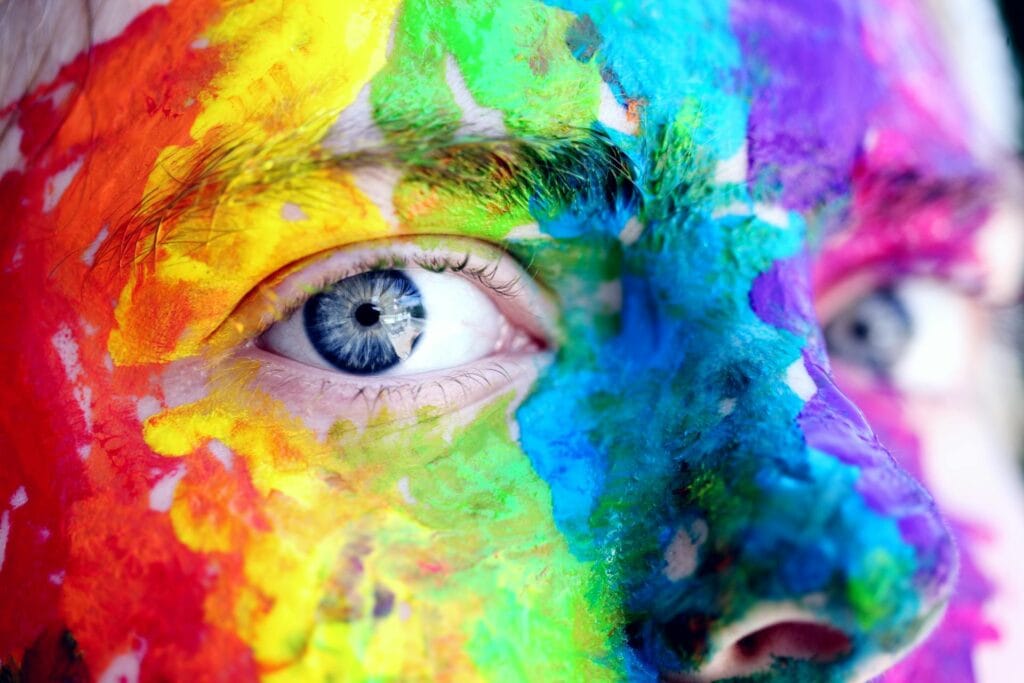 personal branding pressure” class=”wp-image-4745″/>
The Self That Has to Make Sense
There is a concept in psychology called narrative identity, the idea that people understand themselves primarily through the story they tell about who they are and how they got there.
A coherent narrative self, one with continuity and internal logic, is generally associated with psychological stability. It helps people make decisions, sustain relationships, and tolerate uncertainty.
What the personal branding era has done is take that natural human need for coherence and attach it to an external audience. The self no longer just needs to make sense to you. It needs to make sense to others, quickly, at a glance, before they scroll past.
This changes the relationship between identity and experience in a way that is subtle but significant.
Identity, when it develops naturally, is largely a byproduct of living. You become interested in things.
You have experiences that shape you. You change your mind. You contradict yourself across time and come to understand the contradiction as part of who you are.
The self that emerges from that process is not always legible. It is not always consistent. It is often surprising, even to the person inside it.
The branded self cannot afford that kind of mess.
The branded self needs clean categories. Interests that can be listed. An aesthetic that photographs consistently. Values that can be stated without ambiguity.
It needs to resolve into something a stranger can understand in thirty seconds, because thirty seconds is approximately what it gets.
People have started editing themselves toward that resolution. Not dishonestly, exactly. But selectively.
The interests that fit the throughline get amplified. The contradictions get quieted. The phases and enthusiasms and embarrassing reversals of taste get filed away. What is left is a more coherent person, and a slightly thinner one.

The Exhaustion Nobody Names
Here is what makes this genuinely difficult.
Most people did not decide to treat their identity as a brand. They were not handed a manual and asked to comply. They were simply placed inside systems that rewarded a certain kind of self-presentation, and responded, as humans do, to the incentives around them.
The adjustment happened gradually and feels, by now, entirely normal.
But normal does not mean costless.
The effort of maintaining a consistent public self is a form of labour that does not get acknowledged as such. It requires ongoing management. Deciding what to share and what to withhold.
Monitoring how you are coming across. Updating your presentation as circumstances change while maintaining the illusion of continuity. Feeling the low anxiety of a comment that landed wrong, or a version of yourself you put forward that did not quite match how you actually felt that day.
Underneath all of this is a question that is almost too uncomfortable to look at directly.
If you remove the curated version, the polished interests and consistent aesthetic and considered opinions, how confident are you in what remains?
How much of what you currently call your personality developed from genuine inner life, and how much was assembled in response to what seemed to resonate, what got engagement, what positioned you well in the rooms you wanted to be in?
That question does not have a clean answer for most people. And it probably should not. Identity has always been partly performed, partly social, partly assembled from available cultural materials.
There is no untouched authentic self waiting beneath the branding, pure and unmediated.
But there is a difference between an identity that grows outward from experience and one that is built backwards from reception. Between becoming someone and deciding what someone to be.
Whether those two processes are converging, or drifting further apart, is not a question the platforms are asking.
Further Reading:
- The Pressure Principle: https://amzn.to/4rC09KD
- The Let Them Theory: https://amzn.to/3OsWUXe

 Psychology · Sep 22, 2026Chimpanzees Have Accents. They Grow into Them.
 The Margin · Sep 17, 2026People Are Seeing Ads in Their Dreams.
 Slow Meridian · Sep 16, 2026Autumn Leaves