Why Lebanon is broken is a reason most people cannot name. Not the bombs. Not the banks. Not Hezbollah, not Israel, not the politicians who have spent forty years stealing in plain sight.
The reason is a census. One census. Taken in 1932. Never repeated.
Everything else flows from that.
The Arrangement
In 1932, Lebanon was a French mandate territory. The French counted the population and found a slim Christian majority. On the basis of that count, they designed a political system called confessionalism. Power would be divided by religion, permanently, in fixed proportions.
The president must be a Maronite Christian. The prime minister must be Sunni Muslim. The speaker of parliament must be Shia Muslim. Parliamentary seats are split equally between Christians and Muslims. Every cabinet, every senior civil service post, every army appointment follows the same logic. Your religion determines your political ceiling before you are born.
The French left in 1943. The arrangement stayed.
The system was not designed to be fair. It was designed to be stable. Those are not the same thing.
Lebanon spent the next forty years pretending they were.
What the Numbers Actually Became
By the 1980s, it was obvious to everyone that the demographics had shifted. The Muslim population had grown. The Christian population had shrunk and emigrated. The 1932 numbers no longer reflected the country living inside them.
The civil war that consumed Lebanon from 1975 to 1990 was fought, at its core, over this imbalance. Who holds power when the headcount that justified the original arrangement no longer exists.
The Taif Agreement ended the war in 1989. It adjusted the formula slightly, giving Muslims more parliamentary seats. But it kept confessionalism intact. And it kept the census buried.
Because here is the problem. The moment Lebanon counts its population again, the numbers will show a Shia majority. And if the numbers show a Shia majority, the logic of the entire system demands that Shia Muslims receive more power.
Which means Maronite Christians receive less. Which means Sunni Muslims receive less. Which means every powerful family, every sect leader, every political dynasty built on the current arrangement loses something.
So nobody counts.
Why Lebanon is broken is not a complicated answer. It is a simple answer that nobody in power has any incentive to say out loud.
The census is not missing because Lebanon cannot organise one. Lebanon is a country that somehow kept its restaurants open during a civil war. It can organise a census. The census is missing because a census would be a controlled demolition of the current order, and the people holding the detonator also live in the building.
The System That Keeps the Country Alive by Killing It
This is the part that makes Lebanon impossible to look away from.
Confessionalism is not only the source of Lebanon’s dysfunction. It is also the source of Lebanon’s social infrastructure. In the absence of a functional state, the sects became the state. Hezbollah builds hospitals and schools and roads in the south.
The Hariri family built Beirut’s downtown. Christian militias turned into political parties that still control entire towns. Every sect runs its own parallel government because the official government was never strong enough to run anything.
If you remove confessionalism tomorrow, you do not get a modern secular democracy. You get a vacuum. And the last time Lebanon had a vacuum, it had a fifteen year civil war.
This is the trap. The system is broken enough to collapse the economy, absorb a port explosion that killed over two hundred people with zero accountability, and allow a militia to operate its own foreign policy from the country’s south. But it is also load-bearing. Pull it out and the whole structure comes down.
The economists call this a bad equilibrium. Everyone inside it knows it is bad. Nobody can move first because moving first means losing everything while everyone else stays.
Lebanon has been in that equilibrium for ninety-four years.
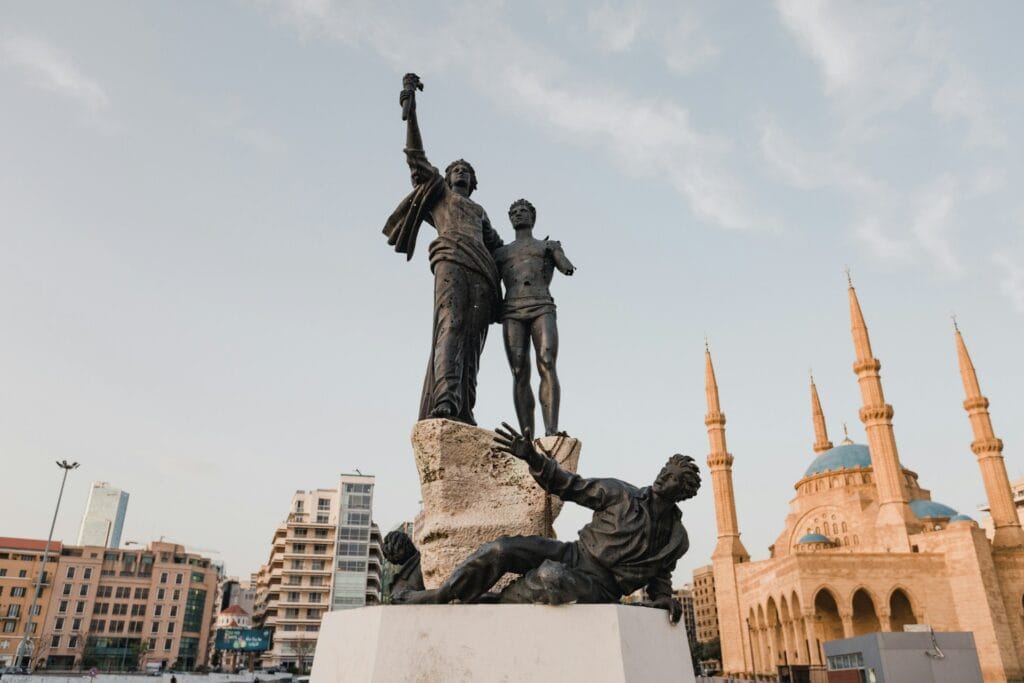
The Explosion That Changed Nothing
On the 4th of August 2020, 2,750 tonnes of ammonium nitrate that had been sitting in Beirut’s port for six years exploded. It killed more than two hundred people. It wounded six thousand. It destroyed entire neighbourhoods.
The ammonium nitrate had been flagged to Lebanese authorities repeatedly. Nobody acted. Because acting would have required a port authority official to make a decision that crossed sectarian lines of ownership and responsibility. So it sat there.
After the explosion, Lebanese citizens poured into the streets. The government resigned. International donors pledged support. Investigators were appointed.
Three years later, the lead investigator had been suspended twice, blocked by parliament members invoking immunity, and threatened. No senior official had been charged. The ammonium nitrate file had been distributed across enough sectarian jurisdictions that accountability became geometrically impossible.
The system did not fail to respond to the explosion. The system responded exactly as it was designed to. Diffuse responsibility. Protect the arrangement. Survive.
A country can absorb almost anything if the political system is resilient enough. Lebanon’s political system is extremely resilient. That is the problem.
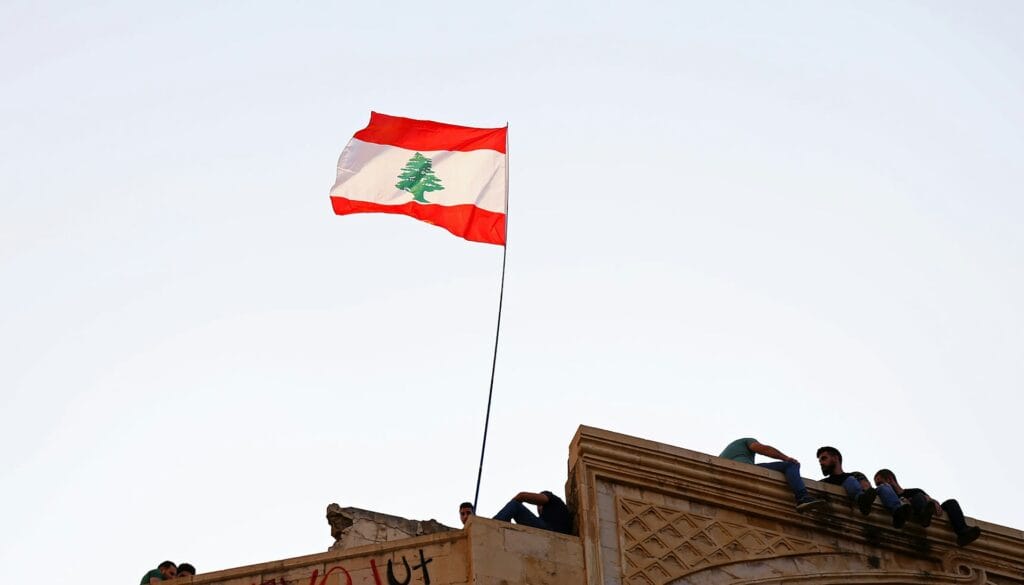
Why the 1932 Census Still Matters
Lebanon is not a failed state in the conventional sense. Failed states collapse. Lebanon does not collapse. It compresses. It survives at a level of dysfunction that would end most countries, because the sectarian infrastructure holds even when the state dissolves around it.
The currency lost ninety percent of its value between 2019 and 2022. The banking sector froze depositors’ accounts. Electricity runs for two hours a day in parts of the country. The response to all of it has been the same: each sect blames the others, protects its own, and the arrangement continues.
There will not be a census in Lebanon for the same reason there was not one in 1943, or 1970, or 1990, or 2006, or 2020. The count is not the problem. The count is the mirror. And the mirror would show a country that has been governed by a fiction for almost a century.
Everyone knows this.
The fiction continues anyway.
That is why Lebanon is broken. Not the bombs. The census. The one from 1932. The one nobody is allowed to take again.
Read Next: Texas just sued Shein. The part about toxic clothing is harder to ignore.