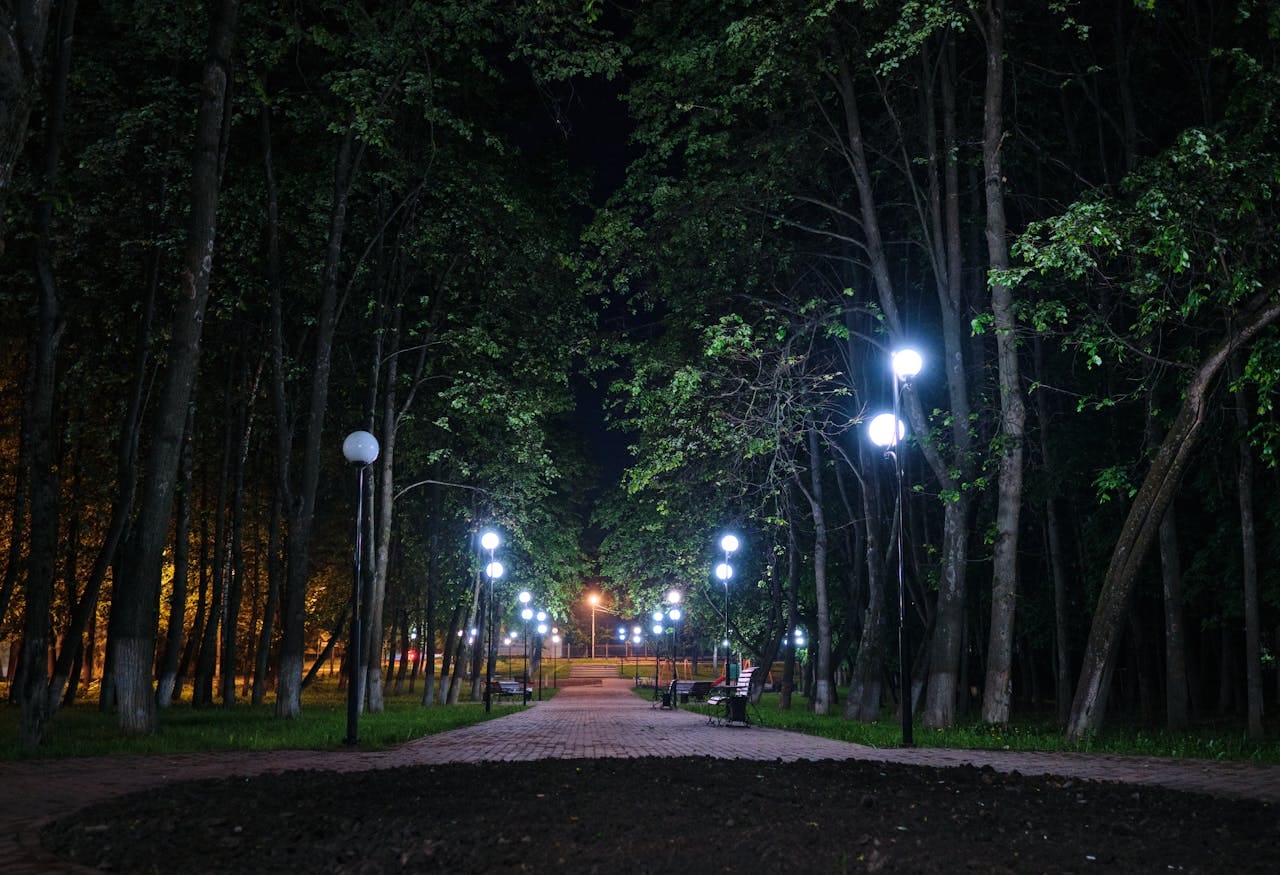
There is a version of arriving somewhere that is not really arriving. I know this because evening walks in Victoria Park have a way of correcting you before you even sit down.
You intended a different gate. The app had other plans.
I had been cycling for eleven minutes inside Victoria Park looking for somewhere to park the Forest bike. Not through the park, around it. Gate to gate, the kind of aimless loop that has no dignity and costs real money.
Forest and Lime have quietly built a business model on exactly this. You think you are renting a bike. You are actually funding a treasure hunt with no treasure, just slightly different signage at each gate and a meter that does not care about your confusion.
I found a rack eventually, near the Gore Road entrance, slightly out of breath, slightly annoyed. I decided this corner of the park was where I was spending my evening whether I liked it or not.
It turned out to be exactly the right corner.
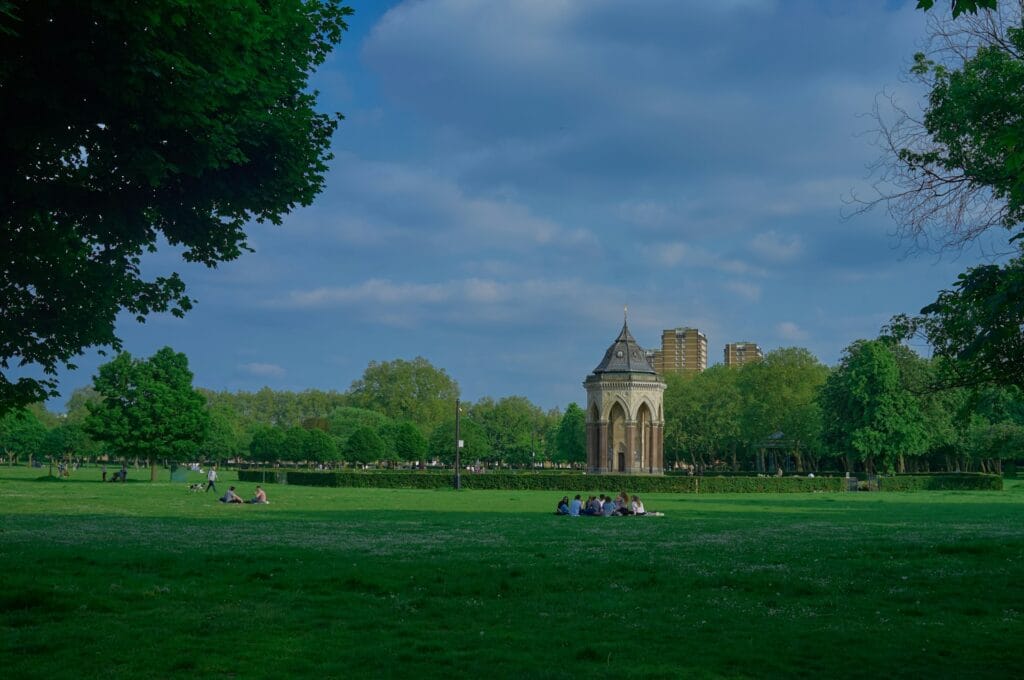
The Park at the Golden Hour
Victoria Park is enormous in a way that takes a moment to register. Not just in size but in atmosphere.
It does not feel like a break in the city. It feels like the city forgot to build here and then decided, eventually, that the forgetting was correct.
I found a bench set slightly back from the main path, near a cluster of trees doing something lovely with the last of the evening light. The kind of light that makes London look like it planned all of this.
It did not. London never plans the beautiful parts. They just happen, briefly, and then the cloud cover comes back and everyone pretends it was not there.
On my way in I had passed the pub on the corner. The one that is always full in the way only certain London pubs manage, which is to say completely and without apology. Bikes leaned against every available surface. Families at the outdoor tables. A group of men watching something on someone’s phone, all of them leaning in at the same angle.
The kind of scene that makes you feel warm even when you are on the outside of it.
Victoria Park in the evening makes the city’s brutality feel temporarily beside the point.
The Old Man and His Lap
I had been sitting for about ten minutes when I first noticed him.
An older man, somewhere in his seventies, moving along the path at a pace that suggested he was not going anywhere specific. Unhurried. Upright. Dressed in the kind of clothes that look like they have always been his clothes.
He passed my bench without looking at me and continued around the bend.
This is when I noticed the bench across from mine.
What the Light Was Doing
Two people. A bench about thirty metres away, slightly in the shadow of a larger tree.
I had clocked them when I sat down without really registering them. A couple, I assumed. The easy assumption. Two people, close on a bench, evening light. The brain fills in the rest without asking permission.
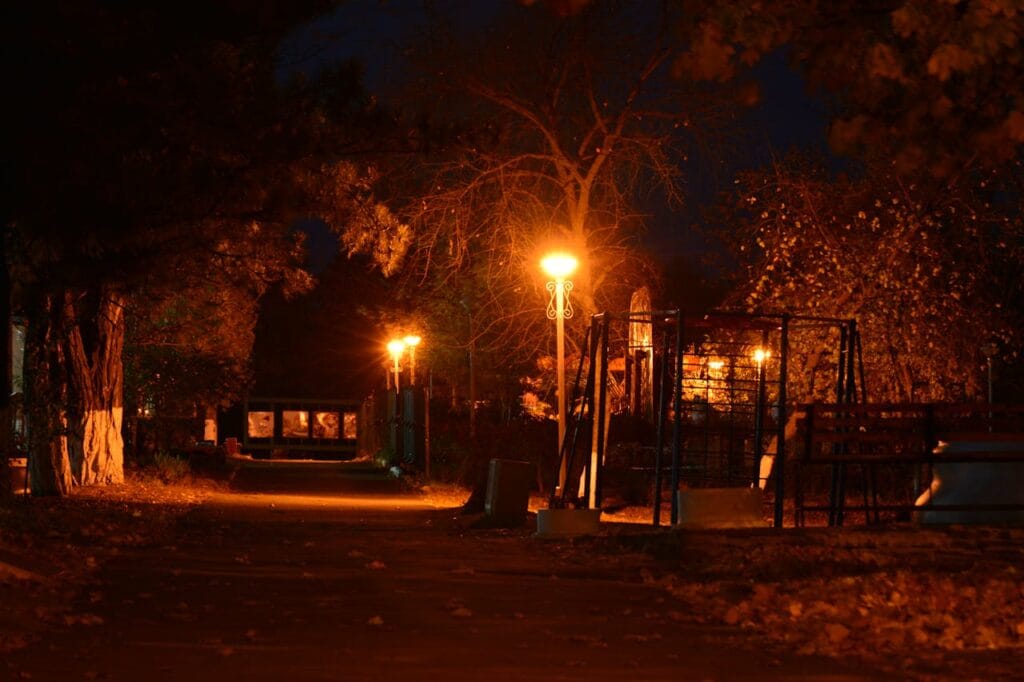
The light was changing properly now. That specific shift that happens in London parks around 8:30 in September, where the warmth drops out of the air before the darkness actually arrives.
The old man came around again. Same pace. Same posture. He passed without acknowledging anyone and disappeared around the bend a second time.
I looked back at the bench.
One of them was gone.
Not leaving. Not mid-leaving. Just gone. The way things go in a city that does not announce its transitions.
The remaining figure sat exactly as before. Same posture. Same stillness. As if the space beside them had always been empty.
London does not wait for you to be ready. It just moves.
I had looked somewhere else for thirty seconds and the scene had edited itself.
This is what evening walks in Victoria Park keep doing to me. They hand you a scene and then quietly revise it when you are not watching. You are left trying to reconstruct what was actually there versus what you decided was there.
What had I actually seen? Two people, I had assumed. One person, perhaps, and a bag, a jacket, something that read as company in the golden light and revealed itself as absence when the light changed.
Both are equally possible. The park was not offering clarification.
The psychology of this is uncomfortable. We do not watch cities neutrally. We watch them with whatever we brought with us.
I had arrived slightly irritated, slightly solitary. I had found a couple on a bench and let them mean something to me without their permission. I had borrowed their togetherness for my own evening.
And then one of them left, or had never been there. I had to sit with what that said about me rather than them.
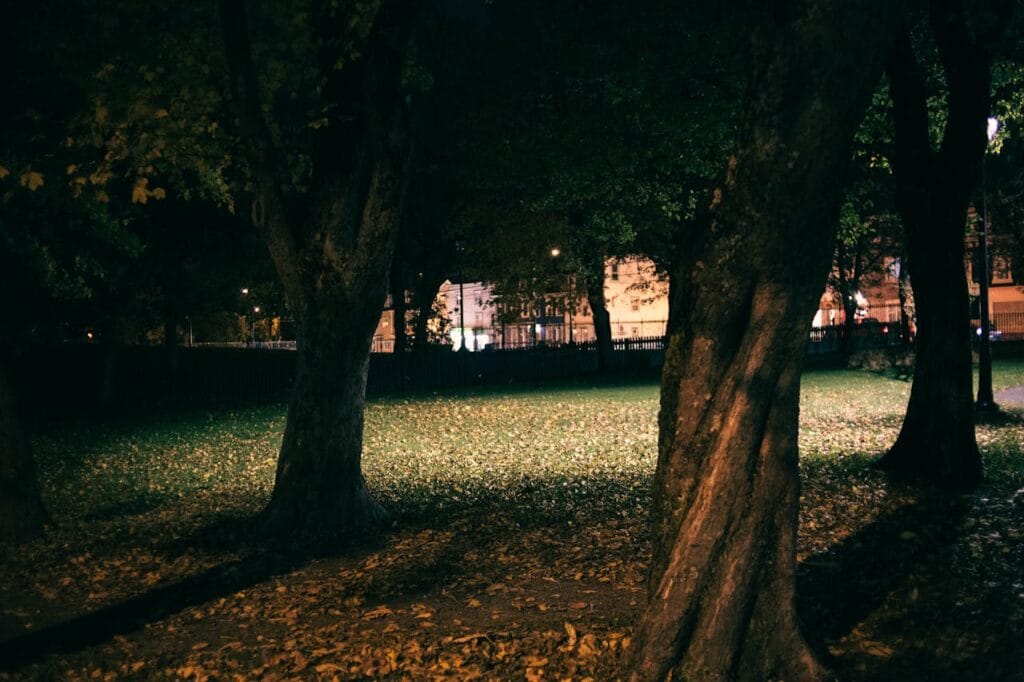
The Park After 9pm
The old man came around a third time.
I almost said something. I did not. He passed with the same unhurried certainty and I watched him go.
He had been doing this loop long before I arrived. He would probably do one more after I left. The park belonged to him in a way it belonged to nobody else that evening. The rest of us were visiting. He was simply continuing.
Researchers call it soft fascination. The idea that natural environments hold attention in a way that is restorative rather than draining. That watching trees and light and the general business of an outdoor space allows the mind to rest in a way that watching screens does not.
Evening walks in Victoria Park are not leisure exactly. They are maintenance.
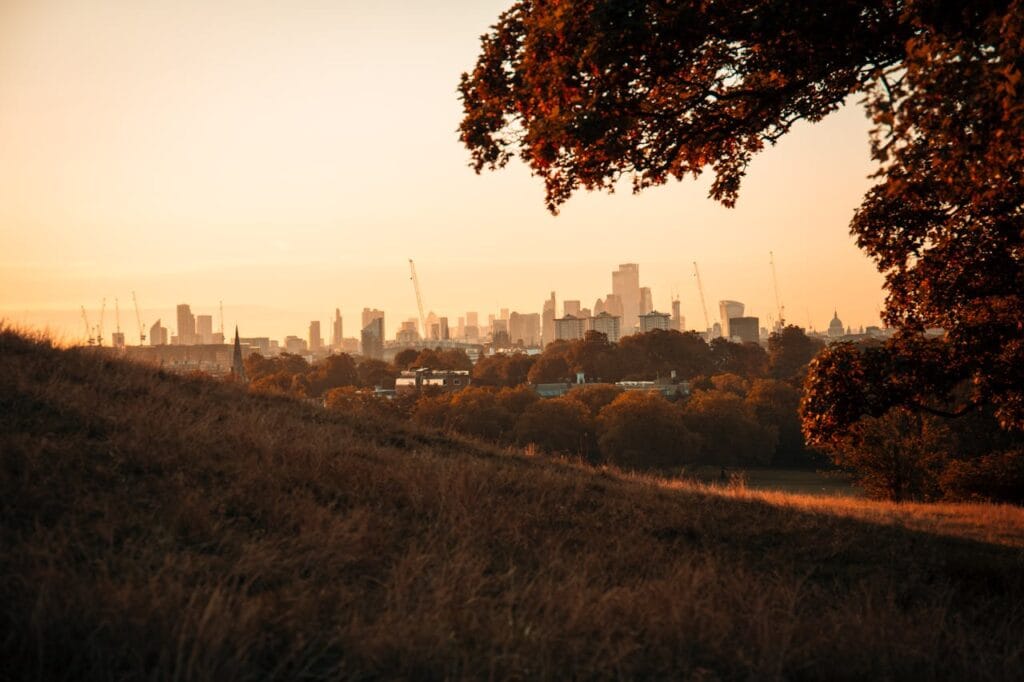
What the research does not account for is the specific texture of doing this in East London. The cranes visible from the north end. New glass towers catching the last light from the direction of Stratford. The park does not resolve this tension. It holds it quietly.
You can sit in the grass and watch the skyline changing and feel both things at once. The solace and the unease. London asks you to hold them in the same hand and keep walking.
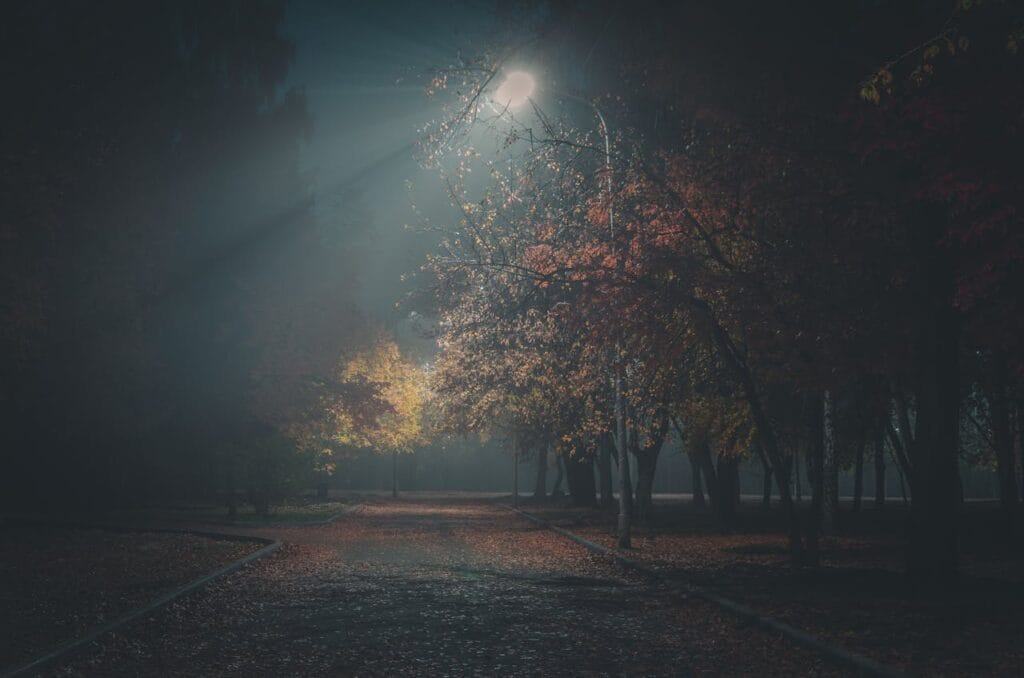
What the Pub Looked Like on the Way Out
I left around nine forty-five.
The path back took me past the bench. It was empty. Both sides, entirely. Whatever had been there, whoever, the park had absorbed it.
I stopped at the rack, unlocked the Forest bike. The app informed me cheerfully that I had saved an estimated 0.3kg of carbon emissions compared to a taxi.
I did not feel like arguing with the app.
The pub on the corner was different. Not winding down. Already done. Chairs going up on the outdoor tables. The bikes that had been stacked against the wall were gone. A member of staff collecting glasses with the efficiency of someone who had done this exact time for years.
Ten minutes earlier it had been full. Now it had the particular emptiness of a place that has finished being a place for the evening.
London switches states without transition. Full to empty. Golden to grey. Two people to one to none.
It is not being dramatic. It is just being honest about how quickly things move here, and how little it owes you a warning.
I cycled home along the canal path. The water was black and still. The lights from the flats along the bank made long shapes on the surface.
The old man was not there. He had probably finished his laps.
Victoria Park had kept whatever it knew. I kept cycling.
Further Reading: Evening Walks in London: What Whitechapel Taught Me About Watching
After Twenty Years by O. Henry: the promise both of them Kept

 Psychology · Sep 22, 2026Chimpanzees Have Accents. They Grow into Them.
 The Margin · Sep 17, 2026People Are Seeing Ads in Their Dreams.
 Slow Meridian · Sep 16, 2026Autumn Leaves