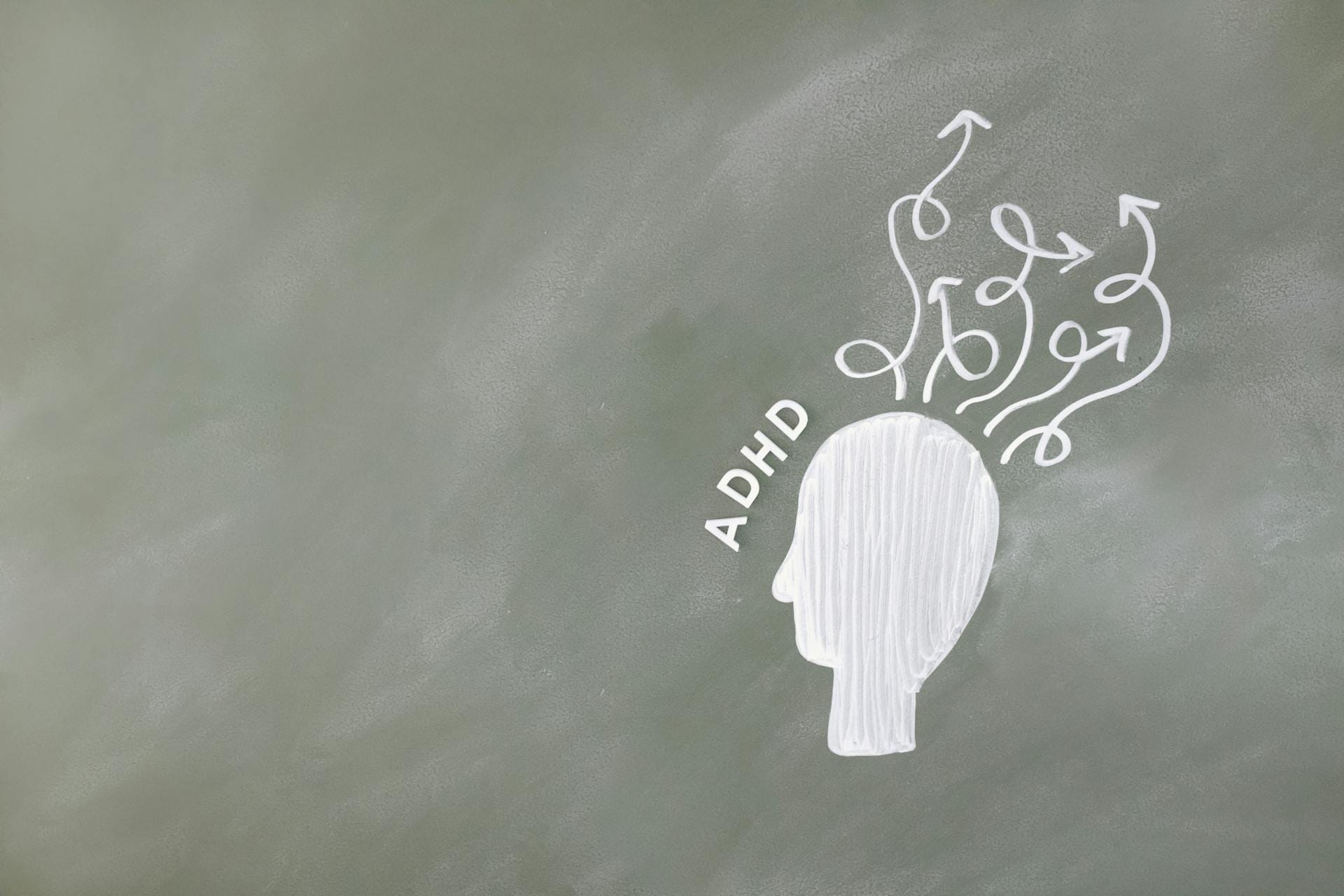
Adult ADHD has become one of the defining medical conversations of the 2020s.
A 2024 meta-analysis in The Lancet Psychiatry puts the global figure at 366.3 million adults. In the US alone, 15.5 million have been diagnosed, roughly half of them in adulthood rather than childhood.
Online searches for ADHD grew by 270 percent across 19 countries between 2019 and 2023.
Those numbers did not exist twenty years ago.
This article is not going to tell you ADHD is not real. It is real, well-documented, and genuinely debilitating when undiagnosed and untreated.
But it is going to ask a harder question.
In a world whose entire economic architecture is built to fragment human attention, how do you tell the difference between a neurological condition and the rational response of a healthy brain to an irrational environment?
What Adhd Actually Is
ADHD is a neurodevelopmental disorder. It involves structural and functional differences in the brain, particularly in the prefrontal cortex and the dopaminergic systems that regulate attention, impulse control and executive function.
It is highly heritable. It begins in childhood, even when it goes undiagnosed until adulthood.
The most consistently misunderstood feature is this: people with ADHD do not have a general attention deficit.
They frequently experience hyperfocus, the capacity to become so absorbed in something interesting that hours disappear entirely. The difficulty is not a lack of attention. It is inconsistent regulation of where attention goes, particularly when the task at hand is not inherently stimulating.
Women with ADHD are significantly more likely to present with inattentive rather than hyperactive symptoms. These are easier to miss. Easier to mask. Easier to explain away as personality.
The result is decades of unconscious compensation. Elaborate systems built to manage what others do automatically. And a diagnosis that finally arrives at thirty, forty, or fifty.
The relief of that moment, the sudden recontextualisation of a lifetime of struggle, is real. These are not people who were persuaded by a video that they have something they do not.

Why the Numbers Have Exploded
Several factors legitimately explain part of the increase.
Greater awareness brought a genuine population of previously undiagnosed people into the system. Reduced stigma made assessment more acceptable. Telehealth made it dramatically more accessible.
And the removal of workplace structure during lockdowns stripped away the coping mechanisms many undiagnosed adults had quietly built their entire professional lives around. Symptoms that had been managed for years became suddenly, acutely visible.
A population study in British Columbia found monthly diagnosis rates nearly quadrupled over a decade. The sharpest jump came after the pandemic ended, not during it.
Stimulant prescriptions grew 45.5 percent between 2012 and 2021. By 2024, 71.5 percent of US adults on stimulant medication reported difficulty filling their prescriptions due to supply shortages.
The supply of medication could not keep up with the pace of diagnosis.
That gap is worth sitting with.

What the Attention Economy Is Doing
The attention economy is the system in which human attention is the primary resource being extracted and monetised.
Every major platform is designed to capture attention and hold it for as long as possible. Variable reward schedules. Infinite scroll. Autoplay. Notification systems engineered to create the perpetual anticipation of something new arriving.
Research is now asking whether sustained exposure to this environment is producing ADHD-like symptoms in brains that were never predisposed to the condition, and whether it is making genuine ADHD significantly worse in brains that were.
A large longitudinal study tracking more than 8,000 children from age ten to fourteen found that social media use independently increased inattentiveness over time, even after controlling for genetic predisposition and family income.
Gaming and video watching did not produce the same effect. Social media specifically did.
The individual effect was modest. But researchers calculated that a single extra hour of daily social media use across the whole population would increase ADHD diagnoses by approximately 30 percent.
Teenagers currently average five hours of daily screen time, mostly social media. The share describing themselves as constantly online nearly doubled between 2015 and 2023.
A small effect, multiplied across an entire generation that has collectively shifted its habits by hours over a decade, becomes a very large outcome.
The TikTok Diagnosis Pipeline
By early 2025, Instagram and TikTok together had over nine million posts tagged ADHD.
Much of this content is genuinely valuable. For people who have spent years struggling without a name for what they experience, finding a community that describes their inner life back to them accurately is meaningful. Often it is the first step toward getting real support.
But a study evaluating the top 100 ADHD TikTok videos, which had collectively accumulated nearly half a billion views, found that fewer than 50 percent of the symptom claims aligned with actual DSM diagnostic criteria.
The content frequently frames ADHD through broadly relatable experiences. Poor time management. Inbox overwhelm. Difficulty with tedious tasks.
These are real struggles. They are also struggles shared, to varying degrees, by most people navigating contemporary life.
The question of where a common human difficulty ends and a clinical condition begins cannot be answered in sixty seconds. But for millions of people, that is currently where the answer is being sought.

Cause, Consequence, or Both
The attention economy is doing several things simultaneously.
It is worsening symptoms in people who genuinely have ADHD. The same dopaminergic regulation difficulties that define the condition make people with ADHD significantly more vulnerable to the variable reward mechanisms platforms deploy deliberately.
A meta-analysis of fifteen studies with over 35,000 participants found a significant positive correlation between ADHD and problematic social media use, stronger after COVID-19 than before.
It is producing ADHD-like symptoms in people without the condition. The longitudinal research is clear: the environment is independently affecting attention across the general population.
And it is shaping self-identification in ways that are simultaneously helpful and imprecise.
The telehealth providers who expanded access during the pandemic have since faced scrutiny for prescribing stimulants too readily. Meanwhile, an estimated 80 percent of adults with genuine ADHD remain undiagnosed or untreated.
Both of those things are true at the same time.
The system is over-diagnosing in some places and under-diagnosing in others. The chaos of social media self-identification is making it harder to tell which is which.

The Question Nobody Is Asking Loudly Enough
If the attention economy is producing a measurable population-level increase in attention difficulties, the appropriate response is not only clinical.
Diagnosing individuals and treating them with medication is necessary. But it addresses the person, not the system producing the problem.
Medicating people so they can function inside an environment deliberately engineered to fragment their attention is a reasonable short-term intervention. It is not a solution.
Adult ADHD costs the United States an estimated $122.8 billion per year in lost productivity, unemployment and additional healthcare. That figure does not include the cost of the attention fragmentation being caused deliberately by platforms that profit from it.
The medication shortage is the most honest available metric for how wide that gap has become.
If you are reading this and wondering whether you might have ADHD, that question deserves a real answer from a qualified clinician. Not a fifteen-minute telehealth call. Not a TikTok video. Not this article.
What this article can offer is a more precise version of the question worth asking.
Is what you are experiencing something that has been present across your whole life, in multiple contexts, since childhood?
Or something that has worsened significantly in the last five years, in step with how your relationship with technology has changed?
The first pattern points more clearly toward neurology. The second may too. But it may also point toward something else entirely: the perfectly rational difficulty of maintaining a human mind in an environment engineered, at enormous expense, to prevent exactly that.
Read next: Zuckerberg in Court: The Day Social Media Addiction Became a Legal
Why are human babies so helpless at birth?
What I learnt from my kurdish barber in london
Deep questions to ask someone to know them better (that actually work)


 Psychology · Sep 22, 2026Chimpanzees Have Accents. They Grow into Them.
 The Margin · Sep 17, 2026People Are Seeing Ads in Their Dreams.
 Slow Meridian · Sep 16, 2026Autumn Leaves