Ancient spiders survival feels terrifying in 7 quiet reasons
Some links on this page may be affiliate links. If you purchase through them, we may earn a commission at no extra cost to you.
Written by
The Present Minds
Administrator
A digital sanctuary for the overstimulated.
Clarity. Depth. Silence.
KEY TAKEAWAYS
Spiders survive through patience, not strength.
Redundancy is essential for survival in changing environments.
Spiders embody resilience by embracing controlled excess.
Modern efficiency can lead to fragility and burnout.
Persistence often outlasts dominance in nature.
GLOSSARY
Redundancy
In the context of this article, redundancy refers to the multiple solutions spiders employ for survival, ensuring they are not reliant on a single approach.
Controlled excess
This term describes how spiders utilize various types of silk and venom not just for survival, but to maintain flexibility and adaptability in their environments.
Persistence
Persistence in this article highlights how spiders continue to thrive despite environmental changes, contrasting with species that require stability to survive.
Fragility
Fragility is discussed as a consequence of modern efficiency, where systems that are overly optimized can collapse under stress, unlike the adaptable nature of spiders.
Continuation
Continuation refers to the spider's ability to endure through time and change, emphasizing that survival is about ongoing adaptation rather than achieving perfection.
FAQ
How do spiders demonstrate resilience?
Spiders show resilience through their ability to layer solutions and create backups. If one path fails, another holds, allowing them to persist in changing environments.
What does the article say about modern efficiency?
The article argues that modern life trains people to admire efficiency, which can lead to fragility. Optimized systems may collapse under changing conditions, unlike the spider's adaptable nature.
Why is redundancy important for survival?
Redundancy is crucial because it allows organisms to manage unexpected changes. Spiders do not rely on a single solution, which helps them survive when conditions shift.
How do spiders use silk in their survival?
Spiders produce multiple types of silk for different functions, creating a system that allows for recovery rather than perfection. This controlled excess is key to their survival strategy.
What lesson can humans learn from spiders?
Humans can learn the value of maintaining buffers and redundancy in their lives. The article suggests that resilience comes from having somewhere to fall within a system.
EDITORIAL NOTE
This piece is part of The Present Minds — essays on psychology, identity, and modern life.
Posted by The Present Minds • January 22, 2026 • Editorial
Ancient spiders survival feels terrifying in 7 quiet reasons
Ancient spiders survival is not about strength, but about patience stretched across time.
Long before trees formed forests, before birds learned to fly, before dinosaurs ever existed, something small and many-legged was already here.
Spiders were not waiting for the modern world. The modern world arrived after them.
They lived through ice ages, mass extinctions, shifting continents, atmospheric collapse. They watched dominant species rise, over-specialise, and vanish. And they remained—largely unchanged, quietly multiplying in corners no one paid attention to.
That kind of longevity isn’t an accident. It isn’t luck. And it definitely isn’t elegance.
It’s something else.
Ancient Spiders Survival Across Deep Time
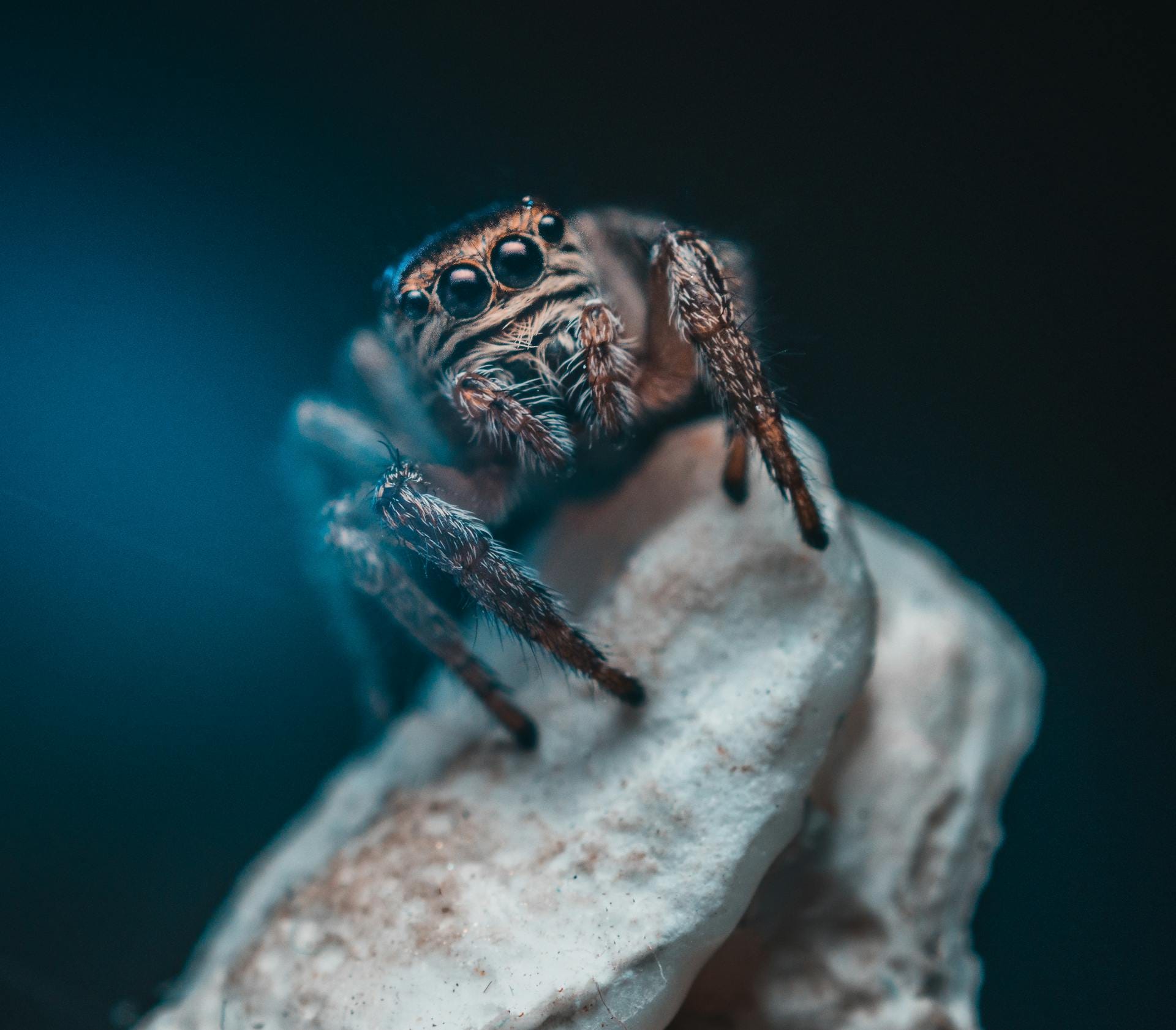
Ancient spiders survival has a way of showing up in ordinary rooms, the kind with toothpaste stains and a towel that never dries properly. A small body in a corner, legs folded like punctuation, waiting without apology.
The instinct is always the same. Notice. Flinch. Judge the distance. Decide whether the day is still clean.
Nothing about the scene feels historic, yet the reaction is old. Not fear of injury, not really. More like the discomfort of something that does not need you, does not seek you, and still belongs here.
It is strange how quickly modern minds try to rank the moment. Harmless or dangerous. Useful or useless. Kill it or let it live. The body wants a binary.
But the creature refuses to help with that.
There is a quiet insult in how little effort the spider seems to spend on surviving. No visible hustle, no constant scanning, no proud performance of fitness. Just presence that looks almost lazy until it starts to feel like a different kind of intelligence.
Ancient spiders survival and the comfort of redundancy
Modern life trains people to admire efficiency. The clean line, the single purpose, the system that does not waste a step. The spider is not built like that. It is built like something that expects the world to turn ugly without warning.
Redundancy is not decorative. It is a survival posture.
Spiders do not trust one solution. They layer. They overlap. They create small backups inside the body and outside it. If one path fails, another holds. If one meal disappears, another kind arrives. If one hiding place collapses, a thousand other corners exist.
That is why ancient spiders survival reads like patience, not strength. Strength demands a stable stage. Patience assumes the stage will crack.
In the fossil record, spiders show up early and stay. Not as one perfect design frozen in amber, but as a lineage that keeps finding ways to remain hard to erase. That phrase matters. Hard to erase is different from hard to defeat.
There is a human parallel that feels uncomfortable. Many people burn out not because they try too little, but because they remove every buffer from their lives. They run on one track. One identity. One pace. When that track breaks, there is nothing underneath to catch them. The spider does not live like that. It keeps slack, even when it looks like waste.
This is where a modern obsession with optimisation starts to look fragile. Optimised systems can be spectacular in stable conditions. They can also collapse like glass when conditions change.
A spider does not bet the whole organism on stability.
Silk, venom, and the art of controlled excess
Silk alone should not exist, at least not in the tidy way humans talk about nature. A material stronger than steel by weight, elastic enough to stretch, produced at room temperature, repaired and recycled. The problem is not that it exists. The problem is that one creature makes multiple kinds of it.
Dragline for structure. Sticky silk for capture. Wrapping silk. Egg case silk. Signal silk. Each one tuned for a different job, each one produced by a body that seems too small to hold that many specialised tools.
Excess is the point.
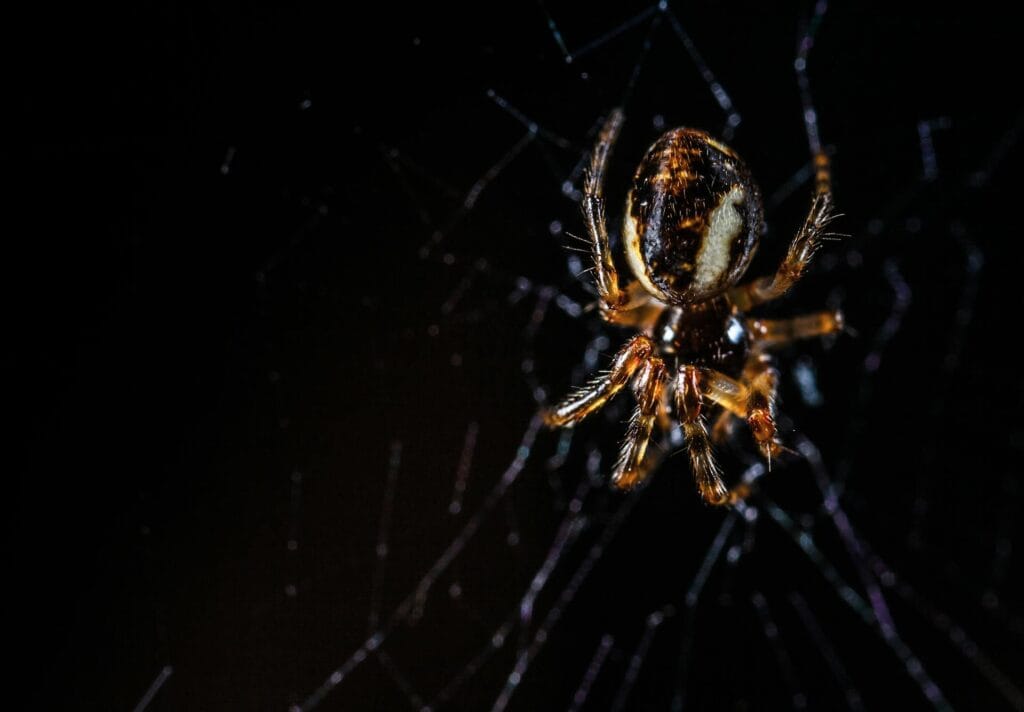
A web is not just a trap. It is a system with feedback. Tension becomes information. Vibration becomes language. The spider reads the world through a net it designed, then redesigns it again. Some species even eat the old web, take the proteins back, and spin the next version based on what the day feels like.
The web does not promise perfection. It promises recovery.
Venom works the same way. People imagine venom as brute force, a weapon meant to end things fast. Spider venom often behaves like precision engineering, a chemical conversation with the nervous system. The goal is control, not theatre. Immobilise without destroying. Preserve the meal. Reduce waste.
That restraint matters. Killing is loud. Control is quiet.
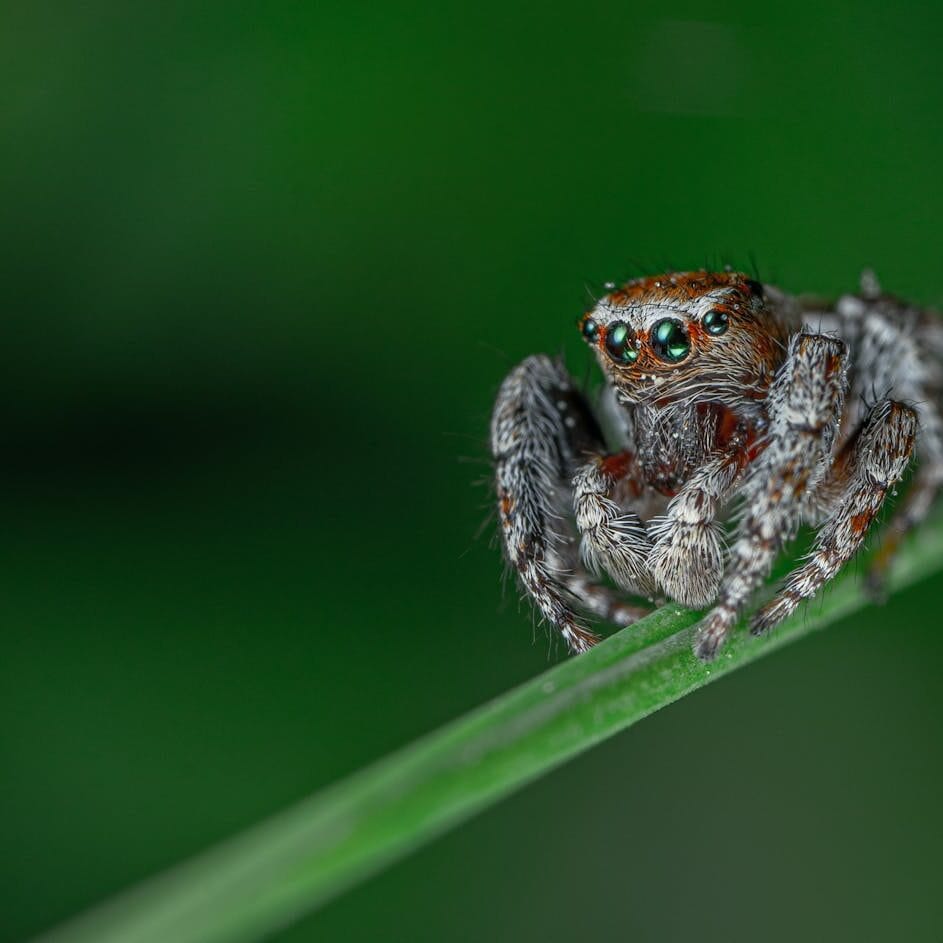
And then there is vision, or the lack of it. Many spiders barely see. Some see brilliantly. Many carry multiple eyes anyway, not because every eye needs to be perfect, but because the creature does not rely on one sensory story. Legs read vibration. Hairs read air movement. The web reads footsteps. Reality gets cross checked from different angles.
There is a thought that keeps appearing and then slipping away. Maybe spiders did not evolve to win. Maybe they evolved to keep playing even when the rules change.
What if the web is not a trap but a map, and we are the insects.
The spider in the bathroom and the future it refuses to predict
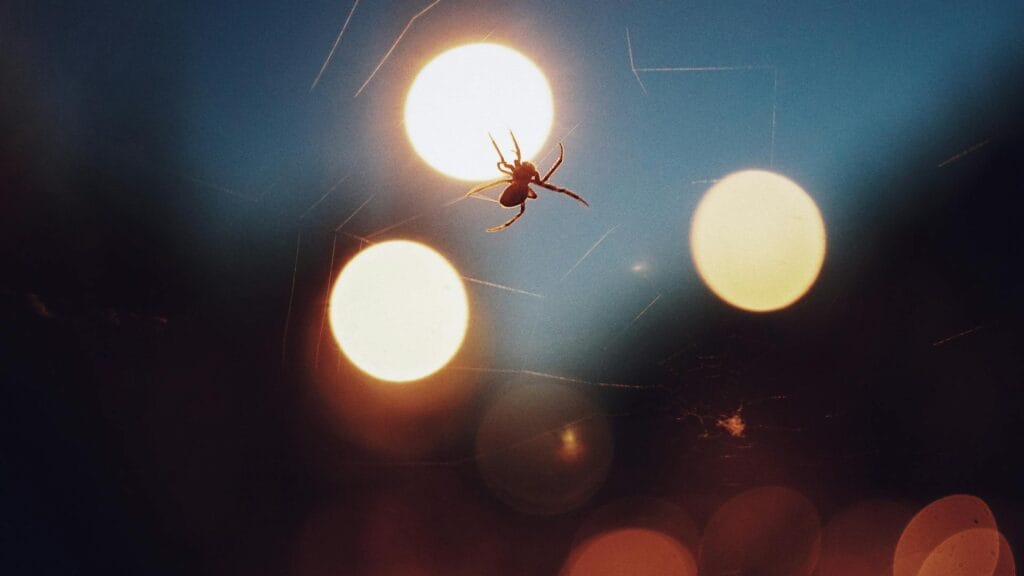
A spider on a bathroom tile at 2 a.m. does not care about human history, yet it carries the weight of deep time in its posture. The bathroom light clicks on. The creature does not panic. It adjusts. A small recalibration, like a system shifting load.
That moment feels petty, but it is concrete. It is where the idea stops being an essay and becomes a lived interaction. The nervous system tightens, not because the spider is powerful, but because it is unreadable. It does not have a face that offers reassurance. It does not move in mammalian rhythm. It does not negotiate.
Humans fear what they cannot predict. Spiders move like a refusal of prediction.
The irony is that most spiders are not interested in confrontation. They do not hunt humans. They do not plan attacks. They avoid. They hide. They persist beside us without trying to enter the story.
That is part of the reason they survive. They do not need the spotlight.
Dinosaurs dominated. Spiders persisted. Dominance looks impressive in the present tense. Persistence looks boring until it outlasts everything else. Many large creatures required stable environments and huge resource flows. When the environment shifted fast, the same specialisation that made them kings turned into a liability.
Spiders play a different game. Stay small. Stay distributed. Stay replaceable. Fail locally, survive globally.
It is tempting to turn that into advice, but it does not translate cleanly. Humans cannot live like spiders. Lives require meaning, not just endurance. Yet the metaphor keeps pressing anyway, especially when modern life starts stripping away redundancy in the name of productivity.
The cost shows up in attention and thinking. When everything becomes one surface and one stream, nothing ends cleanly. The mind stays ready, never finished. The easiest way to see the difference is to notice how hard it feels to hold one thought without being pulled away. That tension sits near what was explored in Why Thinking Feels Harder Than It Used To, where continuity matters more than intelligence.
Another cost shows up in exhaustion. When people remove every buffer, they become efficient right up until they become brittle. That is the quiet pattern behind Why Burnout Isn’t About Work Ethic Anymore, where strain comes from living slightly off centre for too long.
Maybe that is why ancient spiders survival feels unsettling. It suggests a truth modern culture keeps trying to forget. Resilience rarely comes from being lean. It comes from having somewhere to fall inside the system.
This does not mean redundancy is always good. Excess can rot into stagnation. Buffers can become excuses. Some spiders also die easily. Many webs fail. Many hunts miss. Yet the lineage holds because failure does not end the whole design.
A life that cannot tolerate failure becomes a life that cannot change.
The spider does not promise safety. It promises continuation.
And continuation is not comforting when the world asks everyone to be clean, fast, and explainable.
The spider just waits, unbothered, as if time is something other creatures misunderstand.
Some links on this page may be affiliate links. If you purchase through them, we may earn a commission at no extra cost to you.
Written by
The Present Minds
Administrator
A digital sanctuary for the overstimulated.
Clarity. Depth. Silence.
KEY TAKEAWAYS
Spiders survive through patience, not strength.
Redundancy is essential for survival in changing environments.
Spiders embody resilience by embracing controlled excess.
Modern efficiency can lead to fragility and burnout.
Persistence often outlasts dominance in nature.
GLOSSARY
Redundancy
In the context of this article, redundancy refers to the multiple solutions spiders employ for survival, ensuring they are not reliant on a single approach.
Controlled excess
This term describes how spiders utilize various types of silk and venom not just for survival, but to maintain flexibility and adaptability in their environments.
Persistence
Persistence in this article highlights how spiders continue to thrive despite environmental changes, contrasting with species that require stability to survive.
Fragility
Fragility is discussed as a consequence of modern efficiency, where systems that are overly optimized can collapse under stress, unlike the adaptable nature of spiders.
Continuation
Continuation refers to the spider's ability to endure through time and change, emphasizing that survival is about ongoing adaptation rather than achieving perfection.
FAQ
How do spiders demonstrate resilience?
Spiders show resilience through their ability to layer solutions and create backups. If one path fails, another holds, allowing them to persist in changing environments.
What does the article say about modern efficiency?
The article argues that modern life trains people to admire efficiency, which can lead to fragility. Optimized systems may collapse under changing conditions, unlike the spider's adaptable nature.
Why is redundancy important for survival?
Redundancy is crucial because it allows organisms to manage unexpected changes. Spiders do not rely on a single solution, which helps them survive when conditions shift.
How do spiders use silk in their survival?
Spiders produce multiple types of silk for different functions, creating a system that allows for recovery rather than perfection. This controlled excess is key to their survival strategy.
What lesson can humans learn from spiders?
Humans can learn the value of maintaining buffers and redundancy in their lives. The article suggests that resilience comes from having somewhere to fall within a system.
EDITORIAL NOTE
This piece is part of The Present Minds — essays on psychology, identity, and modern life.




Leave a Reply