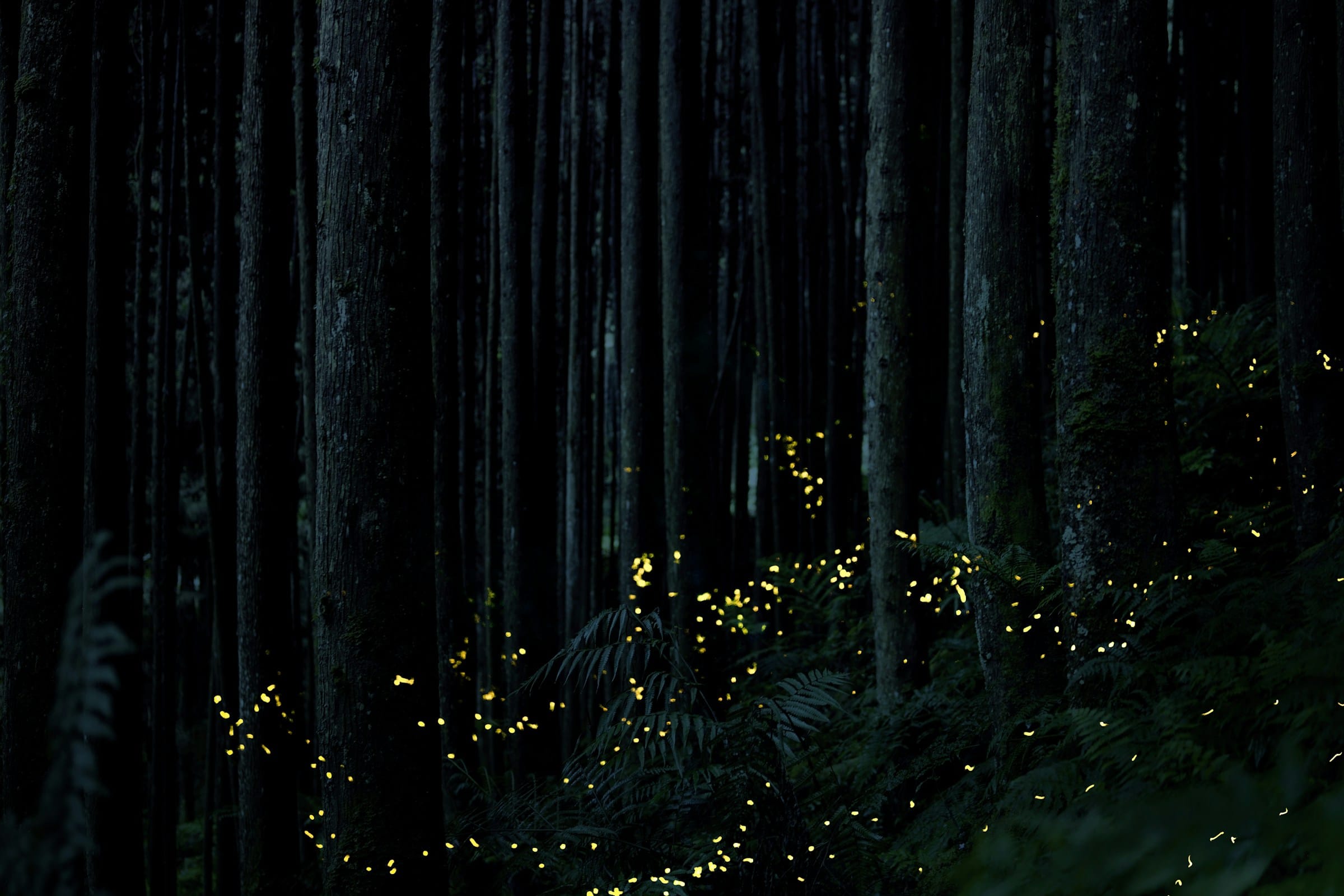
Are fireflies disappearing? The short answer is yes, in many places, measurably and quietly, for reasons that have everything to do with how humans have reorganised the night.
The longer answer is more interesting than the viral version of this story, which has been circulating in various forms since 2024 and tends to announce that we are the last generation who will ever see them. That claim is an exaggeration. The scientists who study fireflies have said so directly.
But the truth underneath the exaggeration is worth taking seriously. Because something is happening to fireflies, it is happening faster than researchers can study it, and most people will not notice until the summer evening they realise they cannot remember the last time they saw one.
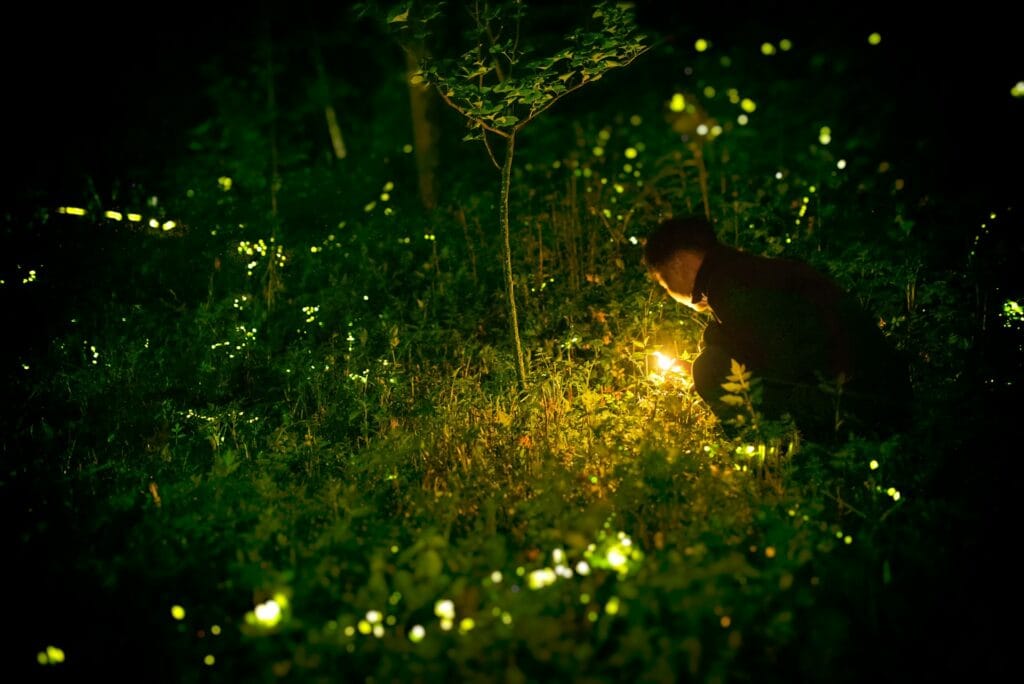
Are Fireflies Disappearing? What the Data Shows
Fireflies are beetles, members of the family Lampyridae, with over 2,600 species worldwide. Most people who have seen them have seen only a handful of those species, the ones that flash visibly on warm summer nights. The rest live in daylight, or underground, or in tropical forests far from anyone who might notice their absence.
Of the 2,600 known species, scientists have formally assessed the conservation status of fewer than 150. That is less than 7 percent. Of those assessed, 20 percent are already classified as threatened with extinction by the International Union for Conservation of Nature.
The number that cannot be seen yet is likely larger. Nearly half of all assessed species are listed as data deficient, meaning scientists do not have enough information to determine their status.
If those unknown species follow the same patterns as the ones we do know about, researchers at the Xerces Society estimate that as many as one in three North American firefly species may be at risk of extinction.
Firefly numbers have fallen by as much as 70 percent in some regions over the last decade alone.
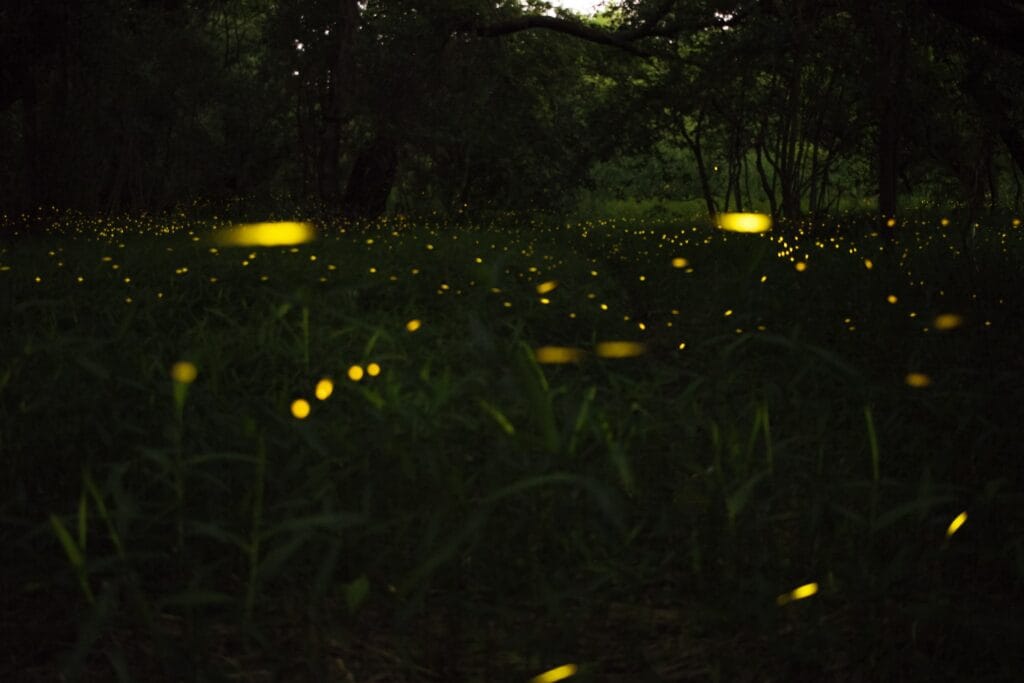
Three Things Killing the Light
So why are fireflies disappearing? The causes are not mysterious. They are the same forces that are quietly dismantling ecosystems across every continent, applied specifically to an insect that is more vulnerable than most.
The first is habitat loss. Firefly larvae spend most of their lives underground or in leaf litter, in wetlands, forests, and old fields with moist undisturbed soil. A firefly spends up to two years as a larva before it emerges as an adult for a few weeks of its visible, glowing life.
When wetlands are drained and woodlands are cleared, the larvae have nowhere to go. Entire local populations disappear not in a season but across a few years, quietly, without anyone writing a headline about it.
The second is light pollution. This one is specific to fireflies in a way that is almost cruel in its precision. Male fireflies flash to attract females. Females watch from the grass and flash back.
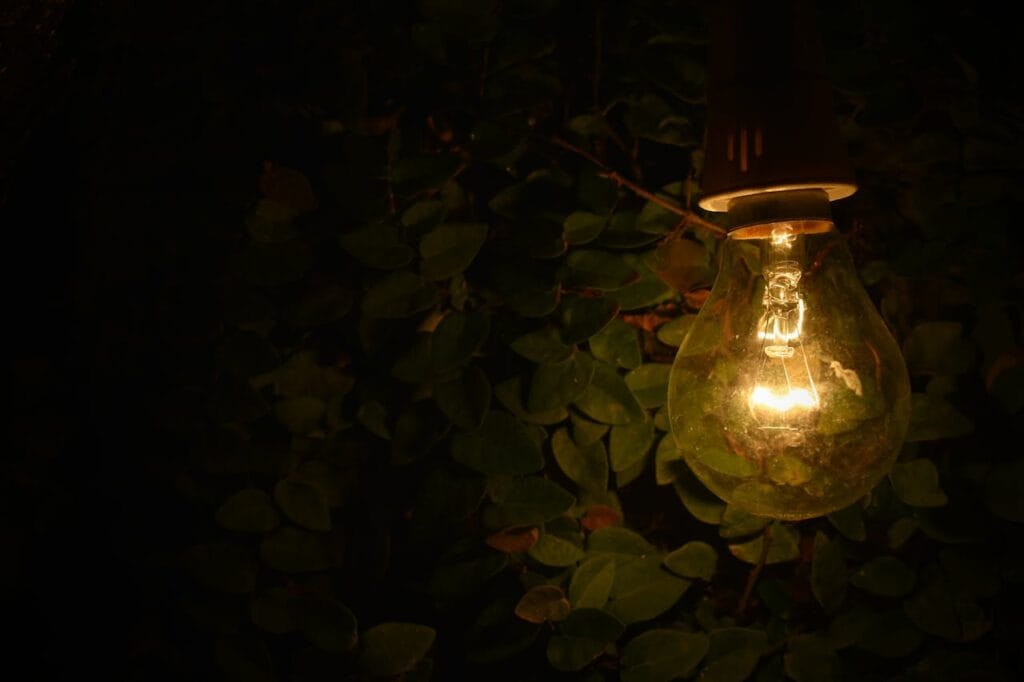
The whole system depends on darkness. Artificial light, street lamps, porch lights, the ambient glow of cities that now extends miles beyond their boundaries, drowns out those signals. Males cannot find females. Females cannot find males. The population does not collapse dramatically. It simply fails to reproduce, slowly, season by season, until there is nothing left to count.
The third is climate. A 2024 study analysing 24,000 citizen science surveys found that weather and climate are among the most significant variables predicting firefly abundance across the eastern United States.
Fireflies need precise seasonal timing to complete their life cycles. Drought dries out larval habitats. Flooding washes away eggs. Warming temperatures push emergence dates earlier, desynchronising species that have coevolved over millions of years.
Why the Viral Claim Is Wrong and Why That Does Not Matter
The claim that this is the last generation to see fireflies has been specifically addressed and debunked by entomologists. Eric Day of Virginia Tech said it plainly: it is extreme to say this is the last generation. Fireflies are doing quite well in places where they are protected and have decent habitat.
He is right. Are fireflies disappearing everywhere uniformly? No. In Great Smoky Mountains National Park, synchronous fireflies still draw such crowds that the National Park Service runs a lottery for viewing permits.
In Japan, where fireflies hold deep cultural significance, river restoration projects have successfully rebuilt firefly populations in rivers where they had vanished. In protected areas with managed light pollution and intact wetlands, fireflies are stable and sometimes thriving.
The species that are gone are gone. The Bethany Beach firefly, found only along a few stretches of the US Atlantic coast, was proposed for Endangered Species Act protection in 2024. It may not survive regardless of what happens next.
But the rest of the story is not a single countdown. It is a slow divergence between places that are paying attention and places that are not. Between habitats that have been protected and habitats that have been paved, drained, or illuminated into uselessness.
What Fireflies Are Actually For
Most people think of fireflies as aesthetic. A memory of childhood summers. A summer evening feature that makes warm nights feel different from ordinary ones.
The ecological reality is more functional. Firefly larvae are predators. They eat slugs, snails, and soil-dwelling insects, providing natural pest management in fields and gardens without any human intervention.
Their presence is a reliable indicator of ecosystem health. Where fireflies thrive, the soil is undisturbed, the water is clean, and the night is still dark enough for something small and soft to find a mate.
Their bioluminescence has also produced something of direct medical value. The enzyme luciferase, which generates the firefly’s light, is used in biomedical research to detect and study diseases including cancer.
The compounds that make a summer field glow are the same compounds now being used in laboratories to make cancer cells visible under imaging.
Losing firefly species is not only a loss of something beautiful. It is a loss of ecological function, medical potential, and a kind of natural measurement system that tells us, with unusual precision, how well or badly we are managing the places we live.
What the Memory Means
There is a reason the question of are fireflies disappearing goes viral every summer. It is not purely because of the ecology. It is because of the memory.
Almost everyone who grew up somewhere with fireflies has a specific one. A garden at dusk. A jar with holes punched in the lid. The particular quality of a summer evening that exists nowhere else in sensory experience.
Fireflies are woven into childhood in a way that is not true of most insects, and the prospect of a generation growing up without them registers as a loss that is partly ecological and partly something harder to name.
The scientists are right that the viral claim overstates the timeline. Fireflies are not vanishing next summer.
But the trajectory is real. Local populations that have already disappeared are not coming back. Species that are already threatened will require active intervention to survive.
And the suburban garden, with its pesticides and its porch light left on all night, is now genuinely inhospitable to an insect that survived for over 100 million years before it met a well-lit cul-de-sac.
Turn the light off tonight. Let the grass grow longer at the edge of the garden. Put nothing on the soil between May and August.
It will not save a species. But it might mean, in a small patch of somewhere, that the summer still has something to say after dark.
Read next: The Polycrisis: What Happens to the Human Mind When Everything Goes Wrong at Once · Good News, March 2026: The Stories the Algorithm Buried



 Psychology · Sep 22, 2026Chimpanzees Have Accents. They Grow into Them.
 The Margin · Sep 17, 2026People Are Seeing Ads in Their Dreams.
 Slow Meridian · Sep 16, 2026Autumn Leaves