From trusting everyone to trusting no one but yourself
Some links on this page may be affiliate links. If you purchase through them, we may earn a commission at no extra cost to you.
KEY TAKEAWAYS
Moving abroad alone reveals the often unspoken reality of profound loneliness and the absence of a built-in support system.
The safety and emotional support from family and friends at home is a privilege that becomes starkly visible only when it is lost.
Newcomers must learn to manage everyday tasks and challenges independently, which can be exhausting and isolating.
Trust becomes a complex issue abroad, as relying on strangers can lead to vulnerability and misguided advice.
The key to resilience is cultivating an internal sense of purpose and self-reliance, as external anchors and familiar identities are stripped away.
GLOSSARY
Silence
The emotional and social void experienced when there is no one to call or rely on after moving abroad.
Structural support system
The network of family and friends that provides emotional, practical, and historical support, often invisible until absent.
Privilege of safety
The taken-for-granted security and comfort provided by familiar relationships and environments at home.
Learning from scratch
The process of independently acquiring basic life skills and navigating new systems without prior experience or help.
Vulnerability to strangers
The increased risk of misplaced trust and reliance on unfamiliar people due to the absence of a trusted support network.
Internal anchor
An internalized sense of direction and purpose that sustains a person through the uncertainties of living abroad.
FAQ
What is the 'silence' that the article says nobody warns you about when moving abroad?
The 'silence' refers to the emotional loneliness and absence of immediate support when you realize no one is coming to help or check on you. It is not just physical quiet but the feeling of isolation from familiar relationships.
Why does the article describe safety as a privilege when moving abroad?
Safety is described as a privilege because at home it is an invisible comfort provided by family and friends who support you emotionally and practically. Moving abroad removes this support, making you realize how much you depended on it.
How does moving abroad affect trust in others according to the article?
Moving abroad makes you vulnerable to trusting strangers because you lack a familiar support network. This can lead to misplaced trust and reliance on advice that may not suit your personal goals or situation.
What kinds of challenges does one face when learning to live independently abroad?
Challenges include managing daily tasks like cooking, budgeting, navigating healthcare, and job searching, all without prior experience or someone to guide you. This can be exhausting and emotionally taxing.
What helps individuals survive and adapt to living abroad alone?
Survival depends on developing an internal anchor—a clear sense of purpose and self-reliance. This internal direction helps withstand external uncertainties and the loss of familiar support systems.
EDITORIAL NOTE
This piece is part of The Present Minds — essays on psychology, identity, and modern life.
9 responses to “From trusting everyone to trusting no one but yourself”
Deepak
As I reflect on the past four years, I’m overwhelmed with emotion, remembering the hardships and struggles you’ve faced. As a father, I’m pained that I wasn’t there to support you during your most trying times. Despite being aware of your daily battles, we could only offer guidance from afar, unable to share your burden. Your courage and resilience in managing every aspect of life, from education and cooking to excelling in your career, fills me with immense pride. Since you left for Canada, you’ve been constantly in our thoughts. We’ve longed for your return, yet as a father, I want you to be confident, bold, and independent. Today, I’m happy and proud of the strong, beautiful person you’ve become. Mummy and I are always here for you. We love you
I am speechless as for mother it is the most toughest decision to make that her part very crucial part is moving away for better life. Making choices is not so easy for Mother and daughter but leaving your comfort, secured place is the only way to become strong, independent and a fighter. Life is always topsy -turvy but You are the one who stand straight to face it and to succeed against all ordeals ❤️❤️❤️❤️
Ayushi writes often inspired by the places she wanders and the food she discovers along the way. Her pieces explore culture, curiosity, and what…
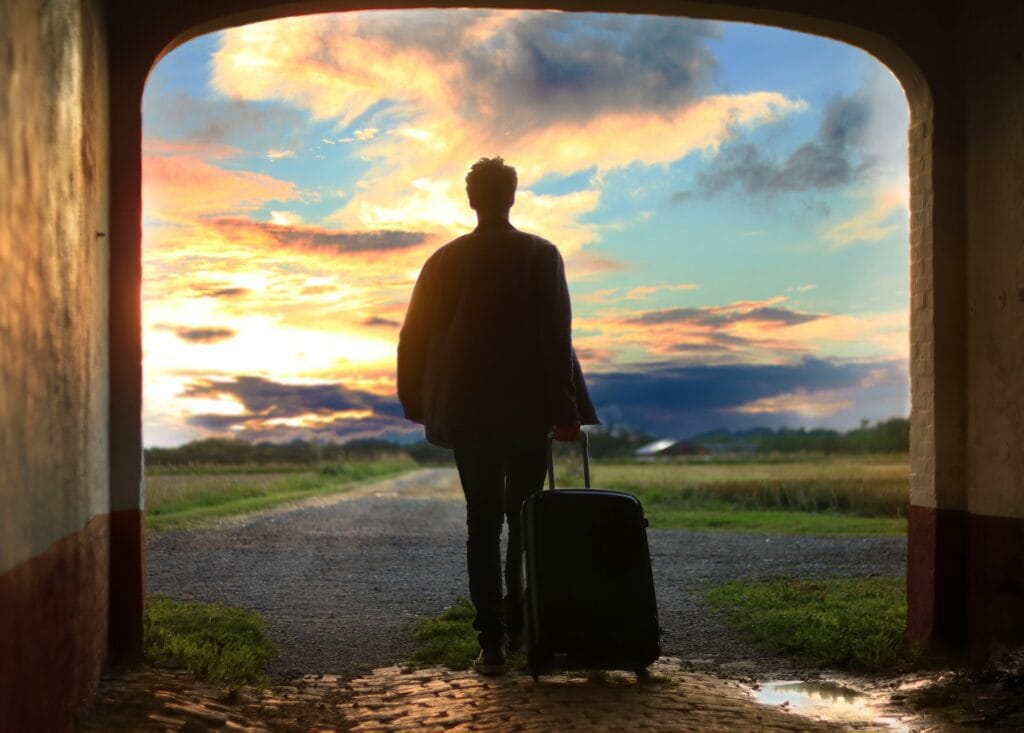
What nobody tells you about moving abroad alone is the sea of questions to come. Nobody warns you about the silence.
Not the silence of an empty apartment. Not the silence of a city that does not know your name. The silence that sets in when you realise that for the first time in your life, there is no one coming. No one to call.
No one who will drop everything and show up at your door.
That is the part about moving abroad that nobody talks about enough.
We talk about visas. We talk about cost of living. We talk about culture shock in the surface-level way, the food is different, the weather is brutal, the people are polite but distant.
What we do not talk about is the shift from relying on your family and friends to having no one that you can fully trust.
And that shift does not happen slowly. It happens the first day you land.
The Privilege You Did Not Know You Had
When you are home, safety is invisible. You do not see it because it is just the air you breathe.
If something goes wrong, you have your mother to hug you. Your father to reassure you. Your sister to sit with you after a bad breakup or a betrayal or just a terrible week.
You have people who know your history, who love you without explanation, who do not need context to show up for you.That is not just comfort. That is a structural support system that took years to build and that you are now, suddenly, without.
Safety is a privilege. You just do not know it is a privilege until the day it is no longer there.
I remember when I first came to Canada. I genuinely had no idea what this journey would teach me.
I used to believe that people are good and that people care about you, as long as you are building good connections, as long as you are putting in the effort.
I believed that the world more or less worked the way it did at home.
It does not.
When you arrive in a foreign country, you are left to fend for yourself from day one. People are not unkind. They are simply busy with their own survival, their own goals, their own lives they are trying to hold together in a country that is not theirs either.
The mentality of looking out for yourself is not selfishness here. It is a requirement. It is how you survive.
And yet, underneath all of it, underneath the ambition and the work and the running after success, what everyone actually wants is the same thing. Someone to rely on. Someone who feels like family. Someone familiar.
This is why so many people end up in the wrong relationships after moving abroad.
Not because they made a bad choice. Because they were lonely. Because warmth, even the wrong kind of warmth, feels like relief when you have been cold for long enough.
Before I moved, I had never worked a day in my life. I had never cooked for myself. I had never navigated a healthcare system alone.
My parents warned me. I heard them and I did not hear them. Everyone does it, I told them. I can too.
What they could not fully explain and what I could not fully grasp until I lived it is that learning from scratch while also managing everything else is a specific kind of exhaustion. There is no buffer. There is no one to absorb the overflow.
No one is coming to save you. You have only got yourself. That truth sounds empowering until you are the one who has to live it.
The moment it became completely real for me was when I got COVID for the third time, a few months after moving. I was living in a shared rental. I had a fever for four days straight. Four days that felt like months because I could not leave my room.
Not because someone was taking care of me. Because my housemates had work and their own responsibilities and they could not afford to get sick.
Was that selfish? No. It was exactly the same logic I would have applied if our positions were reversed. It was just life. But I had never had to apply that logic to myself before. I did not know how to be sick alone.
I did not know how to manage my own illness alongside the stress of missing work and sorting out medication in a healthcare system that does not work the way I was used to. At home, illness had always come with a support system built in. Here, it came with a to-do list.
That is the thing nobody puts in the brochure.
How do you learn to cook for yourself? How do you go to the grocery store, figure out what to buy, chop the vegetables, make the food, and then sit down and eat it alone in your room? How do you learn to budget?
To open a bank account in a new country? To apply for jobs in an industry that does not yet recognise your name? To navigate a system where every step requires research that nobody hands you?
These things seem simple from the outside. They are not simple when you are doing all of them at once, in a country that is not yours, with no one to ask.
The Problem With Trusting Strangers
When you have no one, you become vulnerable to everyone.
You are looking for a hand to hold. That is human and it is understandable. But the people around you, who are also from different parts of the world, different backgrounds, different ideas about what success means, they do not know you.
They know only the version of you that has been here five minutes.
Their advice is not always wrong. But it is not always right for you either.
When I first started looking for work, someone told me with complete confidence that I should start at a factory or work as a security guard.
That this was the path. That this was how you built a life here. It was practical advice. For someone else, it might have been exactly right.
But I had a different picture in my head of where I was going. If I had trusted that advice simply because I had no one else to ask, I would not be where I am today.
When you have no one, you become vulnerable to the first person who sounds certain. That certainty is not the same as wisdom.
This is where the real transition happens. Not the transition from home to a new country. The deeper one. The transition from trusting everyone to trusting no one but yourself.
It happens slowly and then all at once. You take advice that sends you sideways. You trust someone who does not deserve it.
You rely on a connection that turns out to be circumstantial. And eventually, you learn that the only constant, the only person who is always in the room, the only perspective that actually knows your full story, is yours.
The Only Anchor That Holds
What gets you through is having an end goal in your mind that you refuse to let go of.
Not a rigid plan. Plans change. But a direction. A sense of who you are building and what you are building toward. Because when the opinions start coming, and they will come constantly, from people who are kind but who do not know you, from people who mean well but who are projecting their own path onto yours, you need something to hold onto.
That something has to be internal. Nobody else can carry it for you.
The version of you that everyone at home knew and understood does not translate. You are, in many ways, starting from nothing.
But starting from nothing also means you find out very quickly what you are actually made of.
You learn to cook. You learn to manage your money. You learn to be sick without falling apart. You learn to sit alone with your thoughts and not run from them.
You learn that you can survive things that once would have seemed unsurvivable, not because they are easy, but because you had no choice but to get through them.
And somewhere in the middle of all that, quietly and without announcement, you stop waiting for someone to save you.
Because you already did.
This piece is part of Beyond Borders, a column on The Present Minds exploring the realities of living and building a life far from home.
Ayushi writes often inspired by the places she wanders and the food she discovers along the way. Her pieces explore culture, curiosity, and what it means to experience life a little beyond borders.
Moving abroad alone reveals the often unspoken reality of profound loneliness and the absence of a built-in support system.
The safety and emotional support from family and friends at home is a privilege that becomes starkly visible only when it is lost.
Newcomers must learn to manage everyday tasks and challenges independently, which can be exhausting and isolating.
Trust becomes a complex issue abroad, as relying on strangers can lead to vulnerability and misguided advice.
The key to resilience is cultivating an internal sense of purpose and self-reliance, as external anchors and familiar identities are stripped away.
Glossary
Silence
The emotional and social void experienced when there is no one to call or rely on after moving abroad.
Structural support system
The network of family and friends that provides emotional, practical, and historical support, often invisible until absent.
Privilege of safety
The taken-for-granted security and comfort provided by familiar relationships and environments at home.
Learning from scratch
The process of independently acquiring basic life skills and navigating new systems without prior experience or help.
Vulnerability to strangers
The increased risk of misplaced trust and reliance on unfamiliar people due to the absence of a trusted support network.
Internal anchor
An internalized sense of direction and purpose that sustains a person through the uncertainties of living abroad.
FAQ
What is the 'silence' that the article says nobody warns you about when moving abroad?
The 'silence' refers to the emotional loneliness and absence of immediate support when you realize no one is coming to help or check on you. It is not just physical quiet but the feeling of isolation from familiar relationships.
Why does the article describe safety as a privilege when moving abroad?
Safety is described as a privilege because at home it is an invisible comfort provided by family and friends who support you emotionally and practically. Moving abroad removes this support, making you realize how much you depended on it.
How does moving abroad affect trust in others according to the article?
Moving abroad makes you vulnerable to trusting strangers because you lack a familiar support network. This can lead to misplaced trust and reliance on advice that may not suit your personal goals or situation.
What kinds of challenges does one face when learning to live independently abroad?
Challenges include managing daily tasks like cooking, budgeting, navigating healthcare, and job searching, all without prior experience or someone to guide you. This can be exhausting and emotionally taxing.
What helps individuals survive and adapt to living abroad alone?
Survival depends on developing an internal anchor—a clear sense of purpose and self-reliance. This internal direction helps withstand external uncertainties and the loss of familiar support systems.
Editorial Note
This piece is part of The Present Minds, essays on psychology, identity, and modern life.
As I reflect on the past four years, I'm overwhelmed with emotion, remembering the hardships and struggles you've faced. As a father, I'm pained that I wasn't there to support you during your most trying times. Despite being aware of your daily battles, we could only offer guidance from afar, unable to share your burden. Your courage and resilience in managing every aspect of life, from education and cooking to excelling in your career, fills me with immense pride. Since you left for Canada, you've been constantly in our thoughts. We've longed for your return, yet as a father, I want you to be confident, bold, and independent. Today, I'm happy and proud of the strong, beautiful person you've become. Mummy and I are always here for you. We love you
PrachiMar 17, 2026
I am speechless as for mother it is the most toughest decision to make that her part very crucial part is moving away for better life. Making choices is not so easy for Mother and daughter but leaving your comfort, secured place is the only way to become strong, independent and a fighter. Life is always topsy -turvy but You are the one who stand straight to face it and to succeed against all ordeals ❤️❤️❤️❤️
AayushiMar 17, 2026
❤️❤️
Ian the WizzMar 17, 2026
Everyone who left home to build a life can relate to this. Good read
PalakMar 17, 2026
So beautifully written❤️ It really shows the strength it takes to live alone in a new country
Davinder SinghMar 17, 2026
So true ♥️ life is so hard
JJMar 17, 2026
Thanks for sharing your experience, it’s amazing to see how we can grow
SimranMar 17, 2026
❤️❤️
RuchiMar 18, 2026
Very well articulated the saga of emotions when you chose, which battle to fight for urself... loud applause 👏🏻👏🏻 n God Bless 🙌🏻🙌🏻
As I reflect on the past four years, I'm overwhelmed with emotion, remembering the hardships and struggles you've faced. As a father, I'm pained that I wasn't there to support you during your most trying times. Despite being aware of your daily battles, we could only offer guidance from afar, unable to share your burden. Your courage and resilience in managing every aspect of life, from education and cooking to excelling in your career, fills me with immense pride. Since you left for Canada, you've been constantly in our thoughts. We've longed for your return, yet as a father, I want you to be confident, bold, and independent. Today, I'm happy and proud of the strong, beautiful person you've become. Mummy and I are always here for you. We love you
PrachiMar 17
I am speechless as for mother it is the most toughest decision to make that her part very crucial part is moving away for better life. Making choices is not so easy for Mother and daughter but leaving your comfort, secured place is the only way to become strong, independent and a fighter. Life is always topsy -turvy but You are the one who stand straight to face it and to succeed against all ordeals ❤️❤️❤️❤️
AayushiMar 17
❤️❤️
Ian the WizzMar 17
Everyone who left home to build a life can relate to this. Good read
PalakMar 17
So beautifully written❤️ It really shows the strength it takes to live alone in a new country
The Signal
Join from right here.
No daily noise. No rushed inbox clutter. When something worth reading arrives, it arrives quietly.








Leave a Reply to Deepak Cancel reply