
Moral fatigue is not apathy. That distinction matters.
The person who has stopped retweeting every crisis, stopped signing every petition, stopped feeling the same spike of outrage at the fifteenth injustice of the week that they felt at the first, is not a bad person who has stopped caring.
They are a normal person whose capacity for moral response has been systematically depleted by an environment that demands it constantly, at industrial scale, with no recovery time built in.
This is what the research shows. And understanding it changes how you think about your own responses online.
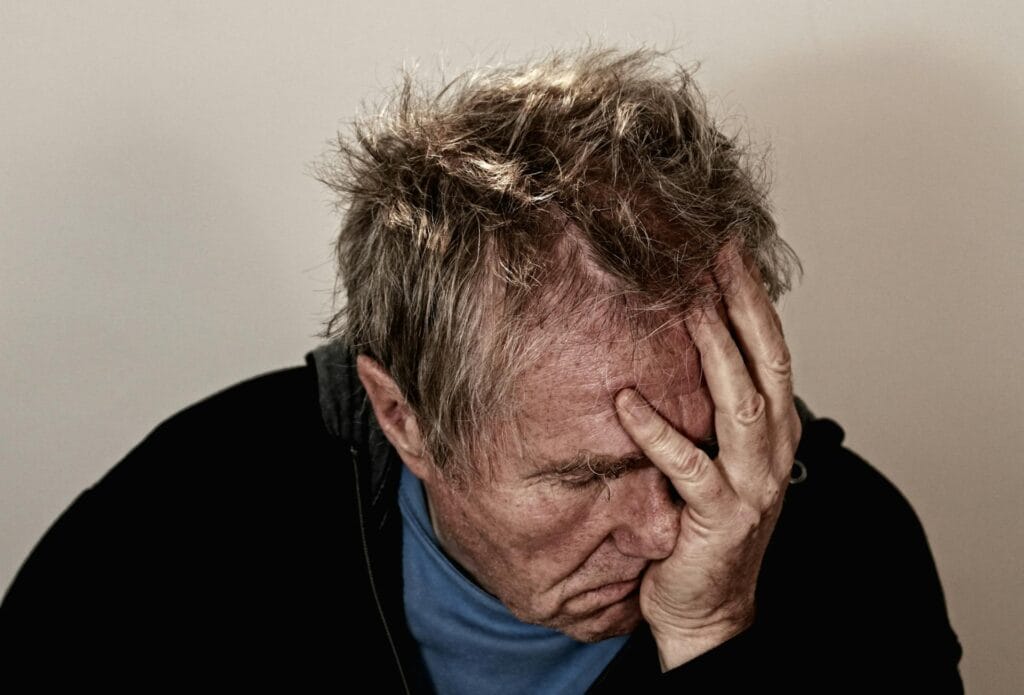
What Moral Fatigue Actually Is
Moral fatigue is the depletion of the psychological resources required to make and sustain ethical judgements and responses.
It sits within a broader family of related concepts. Compassion fatigue, originally described in healthcare workers exposed to sustained trauma, is the emotional exhaustion that comes from repeatedly empathising with suffering. Decision fatigue is the deterioration in decision quality after extended periods of choosing. Moral fatigue is the specific version that affects ethical engagement: the capacity to feel, judge, and act in response to what is right and wrong.
Like physical fatigue, it is not permanent. It is a resource that depletes under load and recovers with rest.
The problem is that the modern information environment provides the load continuously and the rest almost never.

The Science of Numbing
In 1994, psychologist Paul Slovic began researching a phenomenon he eventually called psychic numbing.
His central finding was counterintuitive and disturbing. As the number of people affected by a tragedy increases, the emotional response of observers does not increase proportionally. It decreases.
A single identified victim produces strong emotional response. A photograph of one child, one name, one face. Add a second victim and the response is slightly lower per person. Scale up to hundreds, thousands, millions, and the emotional response essentially flatlines.
Slovic called this the collapse of compassion. He described it as our feeling of compassion toward others fading when there is a large number of people in need.
The implication is brutal. The scale of a crisis is not what determines how much people care about it. A single story moves people. Statistics do not. Aid organisations discovered this long before the neuroscience confirmed it: individual fundraising appeals consistently outperform aggregate ones, often by large multiples.
Social media serves suffering at scale, continuously. The mechanism Slovic identified, the numbing that begins the moment suffering stops being individual and becomes statistical, is being activated every time a person opens their feed.

What Repeated Outrage Does to the Brain
Outrage is not a sustainable state. It is a spike, not a baseline.
The neural architecture of moral outrage involves activation of the amygdala, the brain’s threat detection system, combined with prefrontal cortex engagement as the person makes a moral judgement about what they are seeing. It is physiologically costly. It elevates cortisol and adrenaline. It demands cognitive resources.
In the natural social environment humans evolved for, outrage was triggered rarely, by specific local events, and dissipated as the situation resolved or was addressed. The physiological spike had time to come down before the next one arrived.
Social media compresses this entirely. Outrage triggers stack on top of each other with no resolution and no recovery interval. The body responds to each one as a genuine threat. Over time, under sustained load, the system begins to down regulate. The spike gets smaller. The physiological response diminishes. What once produced genuine distress begins to produce a duller, flatter reaction.
This is not a moral failure. It is the nervous system protecting itself.
Research on emotional exhaustion consistently finds that sustained exposure to high-arousal negative content produces progressive blunting of emotional response. The same mechanism observed in trauma workers, soldiers, and emergency responders applies, at lower intensity but far greater frequency, to ordinary people scrolling through a feed full of catastrophe.

The Identified Victim Effect in Practice
Slovic’s identified victim research has a practical dimension that social media platforms have not absorbed and activists have not fully reckoned with.
When you show someone a photograph of one Syrian child on a beach, they feel. When you show them a statistic about the hundreds of thousands of displaced people that child represents, they feel less.
This is not because they are callous. It is because the brain processes individual faces through different neural pathways than it processes numbers. Faces activate the emotional and empathic systems directly. Numbers require abstraction, cognitive effort, and a working model of scale that the human brain was not designed to handle intuitively.
The result is a perverse dynamic in crisis communication. The more a cause scales, the harder it becomes to communicate emotionally. The bigger the injustice, the more it is represented through aggregated statistics. The more it is represented through aggregated statistics, the less it moves people to action.
Combined with moral fatigue, this creates a ceiling on sustained engagement. The first wave of response to any crisis is genuine and often substantial. Sustained attention is much harder to maintain. And for most online causes, the algorithmic news cycle has moved on long before the crisis has resolved.

When Fatigue Becomes Silence
There is a specific social dynamic that moral fatigue produces online that is worth naming.
As fatigue sets in, participation in moral discourse becomes more effortful and less rewarding. Expressing outrage no longer produces the same sense of righteous energy it did initially. The social reward of being seen to care diminishes as the topic becomes saturated. The emotional cost of engaging remains. The cost-benefit calculation shifts.
The result is that the people most chronically exposed to moral demands online, those who follow news closely, who are engaged with multiple causes, who care most, are paradoxically among those most likely to go quiet.
They are not indifferent. They are depleted.
Research on activist burnout consistently finds that the people most committed to causes are at the highest risk of the exhaustion that eventually forces them to disengage. The same pattern occurs at the individual level for ordinary engaged citizens who are not activists in any formal sense but who have been treating their social media feed as a daily moral obligation.
Silence from these people is frequently misread as indifference. It is more often the endpoint of having cared too much, for too long, without adequate support or rest.

The Difference Between Fatigue and Apathy
This distinction is not semantic. It has real consequences for how moral fatigue is understood and addressed.
Apathy is a stable state of not caring. It is not responsive to change in conditions. It does not recover with rest.
Moral fatigue is a depleted state. It is responsive. Given space, distance, reduced load, and the recovery that comes from reconnecting with specific, individual, human-scale stories rather than aggregate statistics, the capacity for moral response returns.
The research on compassion fatigue in healthcare workers points to the same recovery mechanisms consistently: limiting exposure, reconnecting with individual cases rather than systemic abstractions, restoring a sense of personal agency and efficacy, and building explicit boundaries around the hours and conditions under which engagement with difficult material occurs.
Most people do not apply any of these principles to their social media use. They do not limit exposure deliberately. They engage with systemic abstractions constantly. Their sense of personal agency is minimal. And they have no boundaries around when and how they encounter suffering.
The fatigue, under these conditions, is predictable and inevitable.

What This Means for Anyone Who Cares
There is a practical question underneath all of this.
If moral fatigue is real, if it is a resource that depletes, if the modern information environment is structured to deplete it faster than it can recover, what is the honest response?
Disengaging from the news entirely is not the answer. That is not recovery. That is avoidance, and it comes with its own costs.
The answer is closer to what good therapists and good activists have always known: depth over breadth. One cause engaged with seriously, over time, with attention to individual human stories within it, maintains moral engagement far more sustainably than diffuse, passive exposure to every crisis simultaneously.
The scroll is not engagement. It produces the feeling of caring without the cognitive and emotional investment that genuine engagement requires. It depletes the resource while delivering little of the recovery that comes from meaningful action.
Paul Slovic’s research consistently shows that the emotional response to individual identified victims can be sustained and built upon. It is the shift to abstraction and scale that collapses it. The practical implication is to resist that shift wherever possible. To stay with the individual story rather than retreating to the aggregate. To allow one thing to matter fully rather than allowing everything to matter slightly.
That is not a comfortable recommendation in an environment that rewards breadth of engagement and punishes narrow focus.
But it is what the science says works. And the alternative, the good person who has been depleted into silence by an environment that asked too much of them too fast, is not serving anyone.
Least of all themselves.
Read next: The Psychology of the News Cycle: Why Certain Stories Hit Different
Why are human babies so helpless at birth?
What is dharma? what the mahabharata knew about losing everything


 Psychology · Sep 22, 2026Chimpanzees Have Accents. They Grow into Them.
 The Margin · Sep 17, 2026People Are Seeing Ads in Their Dreams.
 Slow Meridian · Sep 16, 2026Autumn Leaves