A digital sanctuary for the overstimulated. Clarity. Depth. Silence.
Quiet competence doesn’t usually go viral, which is why this clip caught people off guard.
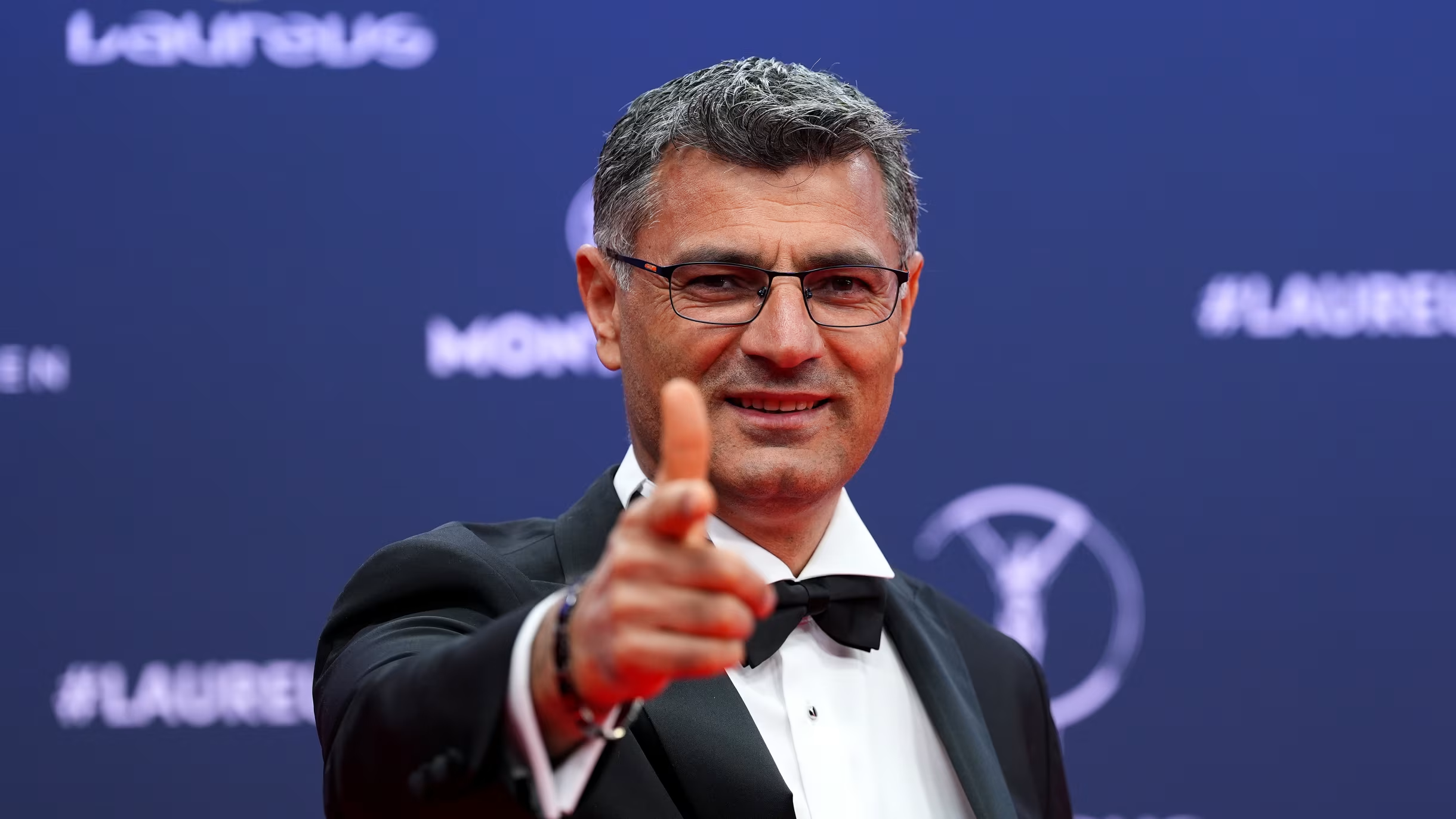
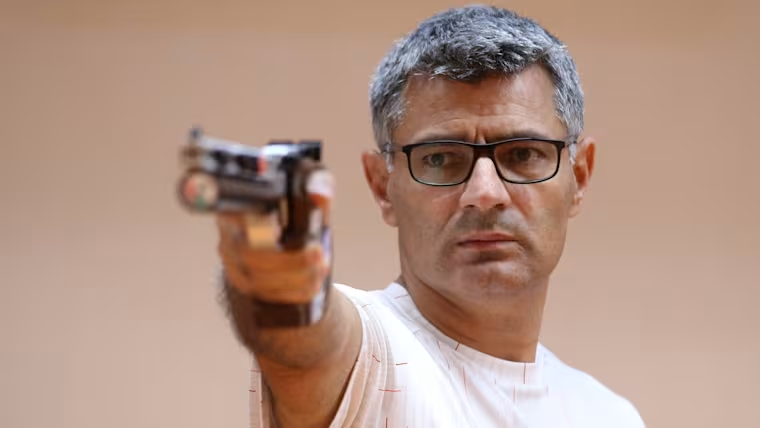
It started the same way a lot of modern stories start. Someone posted a clip. It was short, clean, easy to share. A man stood in a shooting lane, did his job, and won.
No wild celebration. No chest thump. No emotional speech. No dramatic moment for the camera.
He looked calm, almost bored, like he’d just finished a normal shift.
And that’s what made people talk.
The comments came quickly. Some people loved it. They called it cool, controlled, professional. Others couldn’t stop poking at it. They said he looked arrogant. They asked if he even cared. A few people went straight into jokes, because jokes are safer than saying “this makes me uncomfortable”.
It’s an odd reaction to have to someone doing well at something. But it’s common. When a person wins and doesn’t perform the win, it messes with people’s expectations.
Most sports clips that go viral follow a simple formula. Big moment, big emotion, big release. You get the shot, and you get the story. The viewer is told what to feel.
This clip didn’t do that.
It left a gap. It left a blank space where the usual theatre goes. And for some reason, that blank space felt loud.
That’s why this is interesting. Not because someone won. People win all the time. It’s because the way he won didn’t give the audience what they’re used to getting.
Why people struggled to read the calm
This is being written because the reaction was bigger than the event. The clip didn’t just go viral for sports reasons. It went viral because it hit a nerve about how people expect success to look.
A lot of people now treat visible struggle as proof. If someone looks stressed, exhausted, emotional, then the achievement feels earned. If someone looks calm, it can feel suspicious, like the work has been hidden or the person is showing off.
It’s strange, but it’s real.
On the internet, effort is part of the performance. People share the grind, the setbacks, the pressure, the late nights. That has made success feel like it needs a backstory. Not just to explain how it happened, but to make it acceptable.
A calm winner breaks that deal.
The tension here is simple. The audience wants a signal. Some sign that the moment mattered. The calm face doesn’t give it. So people fill the gap with guesses.
They decide what the calm “means” even if they have no idea.
That’s why the comments split into extremes. One side treated the calm as elite focus. The other treated it as coldness. Both reactions come from the same place: uncertainty.
If you can’t read someone, you start writing the story yourself.
There’s another reason it spread. Calm competence feels rare in public now. Online life is loud. People are rewarded for reacting. Even happiness is performed. Even gratitude is performed. So a quiet, controlled moment sticks out like someone wearing a suit at a house party.
It’s not that calm is better. It’s that calm looks unfamiliar. That discomfort mirrors what we explored in Why Effort Is Now a Performance, where visible struggle has become a kind of social proof.
And when something looks unfamiliar, people either admire it or attack it. Sometimes both at once.
What was actually happening, and why it looked so different
Here’s the practical context that most viewers never get.
Shooting sports are built around control. The whole point is precision under pressure. The athletes train their breathing, their posture, their timing, and their nerves. The “emotional moment” often happens off camera, hours earlier, or weeks earlier, or in the training block that nobody sees.
In sports psychology, this is basic. Why life breaks when everything becomes a goal. Elite performers try to reduce emotional spikes because spikes create mistakes. A shooter who can keep the body steady under stress has a real advantage.
So the calm is not an accident. It’s part of the skill.
Another simple truth: not everyone celebrates the same way. Some people go loud. Some people go quiet. Some people delay their reaction until later, when the body finally catches up. None of that is automatically good or bad.
But the internet has trained people to expect one version of emotion.
It expects visible release. It expects a face that tells you what to feel. When that’s missing, people assume something is wrong.
There’s also a cultural layer that shaped the reaction. Different countries, sports cultures, and generations have different “acceptable” ways to show emotion. In some places, restraint is respected. In others, restraint is read as ego. If you mix those audiences together online, you get the exact chaos you saw in the comment section.
And then there’s the masculinity angle, which people kept circling without naming it. A calm, contained man in a high pressure moment triggers assumptions. Some viewers see strength. Some see suppression. Some see a “real man” stereotype. Some get irritated because it feels like a rejection of modern emotional openness.
Again, the audience writes the story.
The threat of effortless outcomes
The clip also benefited from pure contrast. Most viral sports moments are loud and explosive. A silent moment stands out. It looks cinematic. It looks like a character in a film. That makes it easy to meme.
And memes travel faster than explanations.
So you had a perfect storm: a sport that rewards control, a clip that didn’t feed the usual emotion, and an internet audience that has become addicted to being told what to feel in two seconds.
That’s why it blew up.
Not because it was the greatest moment in sport. Because it was different enough to be argued about.
And arguments get more engagement than applause.
The part worth holding onto is not the judgement of the athlete. It’s the insight about the audience. A lot of people now struggle to accept skill that doesn’t come with a performance of struggle.
That’s not a sports issue. That’s a culture issue.
The clip just exposed it. What unsettled people wasn’t arrogance, it was quiet competence without explanation.
The comments will move on to the next thing soon enough. But it’s worth noticing what happened here, because it happens everywhere. In work, in relationships, in life online. People trust the visible effort more than the quiet result.
Sometimes the calm person is genuinely arrogant. Sometimes they’re simply trained. Sometimes they’re tired. Sometimes they’re private.
The internet doesn’t wait to find out.
It decides quickly, loudly, and with full confidence.









Leave a Reply to Jas Cancel reply