A digital sanctuary for the overstimulated. Clarity. Depth. Silence.
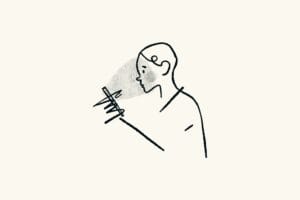
Why thinking feels harder now shows up in small humiliations before it becomes a philosophy.
A paragraph gets reread, then reread again, and the meaning stays slightly out of reach.
A tab opens for one reason, then another tab opens, and the original reason evaporates without a fight.
A thought arrives with weight, then breaks apart mid-sentence, as if it never had permission to finish.
Nothing in the mind feels broken. The friction feels external, like trying to walk through a room where the floor keeps moving.
The first lie is that the problem is laziness. The second lie is that the problem is intelligence.
The real shift is quieter. Thought now lives inside conditions that treat attention as temporary, interruptible, and always available to be borrowed.
Why thinking feels harder now is not a personal flaw
Thinking needs a protected interval. Not a huge one. Just long enough for an idea to form, test itself, and settle into a shape. That interval used to appear naturally in daily life. It appeared in commutes without constant pings, in boredom, in waiting rooms, in evenings where nothing demanded a reply.
Now the interval has to be built, defended, justified.
Even when the phone is silent, the posture of alertness remains. The mind expects interruption the way skin expects cold. That expectation changes the kind of thoughts that arrive.
They get shorter. They stop taking risks. They stay close to what can be finished quickly.
Depth starts to feel like an expensive hobby.
A person can be smart and still feel mentally slow when every thought has to compete with the possibility of being replaced. The brain does not only process information. It also negotiates whether it is safe to commit to an idea.
Commitment is the hidden cost.
A simple moment makes this visible. Someone sits down to write an email, then notices five unread messages, then remembers a bill, then checks the bank app, then notices a news alert, then returns to the email and feels oddly irritated. No crisis happened.
No dramatic distraction arrived. Yet the mind now feels scattered, and the email feels heavier than it should.
This is why advice about discipline often fails. The mind is not refusing effort. It is responding to an environment that rarely lets effort conclude.
There is a related distortion in Why Modern Days Feel Forgettable, where time stops registering because days contain activity without punctuation. Thought breaks for the same reason. It rarely gets an ending.
The always on world creates cognitive congestion
The most exhausting part of modern thinking is not the work. It is the background. The low hum of pending things. The soft pressure of being reachable. The subtle fear that silence will be read as neglect.
This does not feel like panic. It feels like posture.
The body learns to stay slightly braced. Shoulders remain raised without noticing. Jaw stays tight in the late evening.
Sleep arrives but does not complete the reset, because the system never fully leaves performance mode. Waking up feels like resuming, not beginning.
In this posture, thoughts collide.
An idea tries to form, then hits a half-finished conversation. It bumps into an unclosed task. It gets interrupted by a plan that has not been decided. The mind becomes less like a river and more like traffic.
Congestion looks like confusion, but it is not the same thing.
Confusion can clear with insight. Congestion clears only when the flow changes.
This is why even pleasurable thinking feels tiring. Reading fiction, listening to a long podcast, writing in a journal. The activity itself can be calm, yet the mind stays restless underneath, because it keeps one part of itself on standby.
Standby is expensive.
A strange detail: many people report becoming worse at remembering what they just read. The problem is not comprehension in the moment. The problem is consolidation afterward. When attention keeps shifting, the brain struggles to file anything deeply.
It knows what happened, but it cannot store the feeling of it.
So the day contains information, but the mind retains little texture.
At 2:13 p.m., the brain decides that nothing is real until it is shared. It does not say this in words. It just tightens slightly, as if experience is incomplete without an audience. Then the thought disappears. The clock keeps moving.
When thought loses endings the self starts to drift
Thinking is not only a tool. It is also an identity anchor. People know who they are partly through the kinds of thoughts they can sustain.
The long argument that gets held in the mind. The private question that gets returned to. The slow understanding that takes days to form.
When those processes shrink, the self becomes more reactive.
Life starts to feel like a sequence of responses instead of a direction. Mood follows notifications. Belief follows feeds.
The mind becomes competent at quick adaptation and less confident in slow certainty.
This is not because certainty is always good. It is because a self needs continuity to feel inhabited.
A concrete scene shows the cost. A person stands in a supermarket aisle, reading labels, then checking a recipe, then checking a message, then forgetting why the recipe was opened. The basket fills anyway, almost automatically.
Later that night, the same person feels oddly empty, as if the day contained no decisions, only movement.
Movement without decision is a subtle kind of erasure.
It is also why the mind starts to doubt itself. When thoughts do not finish, they leave behind a residue of incompletion. The mind notices the residue and interprets it as failure.
Not dramatic failure, just a quiet self-critique. Why can’t the mind stay on one thing. Why does everything feel slippery. Why does planning feel like pushing through fog.
The answer is not always personal.
Some struggles are accurate responses to the conditions.
There is a similar lag between living and feeling in The Strange Feeling That Life Is Happening Slightly Out of Sync.
Experience continues, but the mind arrives late. Thought does the same. It begins, then gets pulled away, then returns after the moment has already moved on.
A person can still think deeply. But deep thinking now requires something that modern life rarely offers for free: a boundary.
Not a perfect routine. Not a productivity hack. A boundary that says, this idea gets to finish.
Sometimes the boundary is a long walk without audio. Sometimes it is a notebook that stays offline. Sometimes it is a conversation that does not turn into content.
Sometimes it is simply refusing to multitask for ten minutes, even when the mind protests.
None of this guarantees clarity.
It only creates the possibility of completion.
The unsettling part is that completion can feel uncomfortable at first. A finished thought has weight. It creates responsibility. It asks for a choice.
A scattered mind can stay undefined. A coherent mind has to live with what it knows.
So the mind resists depth not only because it is hard, but because it is consequential.
That is why the hardest part of thinking now is not intelligence.












Leave a Reply to Md. Raieyn Cancel reply