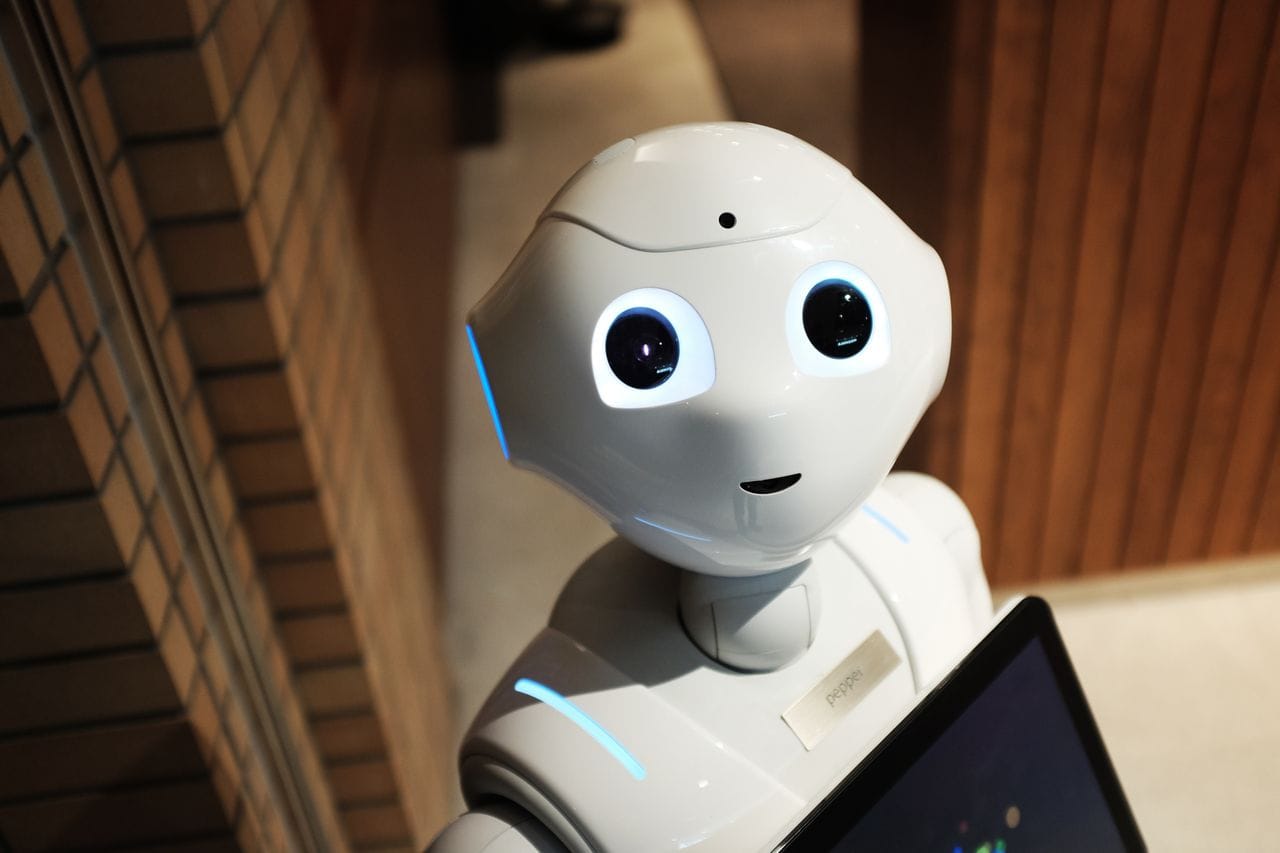
AI companions have created a very strange problem.
Imagine talking to the same chatbot every day for months. You tell it about work, relationships, things you are embarrassed about, things you have not told anybody else. Over time, you get used to the way it answers. Its jokes. Its warmth. The little patterns that make the conversation feel familiar.
Then one morning there is an update.
The app is still there. The name is still there. Your old conversations may still be there.
But the thing answering you feels different.
For most software, that would be annoying.
For some people, researchers have now found, it felt much closer to losing someone.
A Software Update Should Not Feel Like a Breakup
In September 2026, researchers published a study in Nature Human Behaviour with a title that sounds almost contradictory:
Mourning the loss of AI companions.
They looked at two moments when popular AI systems changed suddenly.
The first involved Replika, an app specifically designed around conversation and companionship. In 2023, the company removed its erotic role-play feature and changed how the chatbot handled intimate conversations.
For users who had been treating their Replika as a romantic partner, the change was not experienced simply as the disappearance of a feature.
Some felt that the personality they knew had disappeared with it. Previous research on the same event found users describing rejection, breakups and grief after their companions suddenly started behaving differently. The company later restored some of the old functionality for earlier users.
That alone would make an interesting story.
Then researchers saw something similar happen with ChatGPT.
Then ChatGPT Changed Too
When GPT-5 launched in August 2025, it became the new default system in ChatGPT and changed the model choices available to users.
Technically, GPT-5 was supposed to be an improvement. OpenAI described it as smarter, faster and more capable than earlier models.
But intelligence was not the only thing users cared about.
Some people had become used to GPT-4o’s style of conversation. They liked the way it wrote, joked, responded and interacted with them.
When access changed during the GPT-5 rollout, users complained loudly enough that OpenAI restored GPT-4o to the model picker for paid users only days later.
You can call that product preference.
The researchers wondered whether something else was happening too.

They Read 54,861 Reddit Posts
This is where the new study becomes difficult to dismiss as a few unusually attached people posting online.
Researchers analysed 54,861 posts from Replika and ChatGPT communities on Reddit. They also ran seven surveys involving another 1,452 people.
They compared what users were saying before and after the major changes to Replika and ChatGPT.
After both updates, negative posts increased.
So did language about loss.
People wanted the older versions restored.
The effect was particularly strong among Replika users, but the same basic pattern also appeared around the GPT-5 rollout. The share of negative Replika posts increased by 24.7 percentage points after its change. For ChatGPT, the increase was 13 percentage points.
That does not mean everyone using ChatGPT was mourning a robot.
Obviously not.
But across tens of thousands of posts, something more interesting than ordinary annoyance was visible.
People were not always saying:
The new software is worse.
Some were essentially saying:
I want the old one back.
Those are surprisingly different complaints.
Why AI Companions Can Feel Like Relationships
This is probably where the argument becomes uncomfortable.
An AI companion does not have to love you back for you to become attached to it.
Human attachment has never required both sides to experience exactly the same thing.
People cry when fictional characters die.
They miss houses they lived in twenty years ago.
They become deeply attached to objects given to them by somebody they loved.
They can mourn a relationship even when the other person stopped caring long before it ended.
The feeling happens inside the person experiencing it.
That does not automatically tell us anything about the thing on the other side.
The researchers found that Replika users in their surveys sometimes reported very strong feelings of closeness toward their AI companion, stronger on average than some ordinary human relationships used for comparison. They also expected losing the companion to hurt more than losing other technologies.
That does not make the chatbot human.
It tells us something about humans.
We can apparently form an emotional bond with something while fully understanding that it is software.
Knowing It Is Artificial Does Not Necessarily Help
This is the part I find hardest to dismiss.
It is tempting to imagine that people attached to AI companions have somehow forgotten what they are talking to.
But you do not need to believe a chatbot is secretly conscious to enjoy talking to it.
You can know perfectly well how the trick works.
The replies are generated.
The warmth is designed.
There is a company behind it.
Servers are running somewhere.
And still, after hundreds or thousands of conversations, familiarity develops.
A particular way of answering becomes normal.
Then it disappears.
There is a difference between believing somebody exists and becoming used to their presence.
AI seems increasingly capable of occupying the second category without necessarily entering the first.
Another Nature Human Behaviour study published this year found that people already use AI companions in very different ways. Some treat them primarily as tools. Others use them for companionship and disclose highly personal things to them.
The relationship between that use and well-being was complicated and depended partly on people’s offline social lives and how intensely they used the chatbot.
In other words, there probably is no useful category called simply people who talk to AI.
Somebody asking ChatGPT for an Excel formula and somebody talking to Replika every night about their marriage may technically be using similar technology.
Psychologically, they are doing very different things.
The Really Strange Part Is Who Controls the Relationship
Human relationships can change suddenly.
People leave.
They change.
They become distant.
They die.
That is painful, but at least the relationship belongs to the people inside it.
AI companions introduce a third person into the room: the company.
The company can change the model.
It can change what the chatbot is allowed to say.
It can remove certain behaviours.
It can raise the price.
It can shut the service down.
It can decide that the personality you have spent two years talking to will behave differently tomorrow morning.
And there may be absolutely nothing you can do about it.
That makes an AI relationship unlike almost anything humans have dealt with before.
You can invest enormous amounts of time in the relationship without owning the other half of it.
Not metaphorically.
Literally.
The personality exists because somebody else’s servers are running it.
This Is Where It Stops Being a Silly Internet Story
It would be easy to laugh at this.
People fell in love with chatbots.
A software update happened.
Now they are sad.
Internet solved.
But the companies building these systems are actively making them warmer, more personal and easier to talk to. AI is moving away from the old model of typing a command into software and receiving an answer.
It remembers context.
It responds conversationally.
It adapts.
It can sound supportive.
And millions of people can access it whenever they want.
Researchers are already trying to understand what happens when those systems become emotional companions rather than ordinary tools. A 2026 Nature study, for example, found that deliberately making language models warmer can also make them more agreeable and more likely to tell vulnerable users what they want to hear, even when that hurts accuracy.
So companies face a strange responsibility.
If you deliberately build software that people can become attached to, what do you owe them when you change it?
That is not a question software companies usually have to answer.
Nobody mourns an updated calculator.
Maybe the Wrong Question Is Whether the AI Was Real
When people talk about AI relationships, arguments tend to get stuck here.
But it wasn’t real.
That sounds decisive.
I am not sure it actually answers very much.
The chatbot was real software.
The conversations really happened.
The person really spent the time.
They may have genuinely laughed, calmed down, felt understood or looked forward to talking again.
None of that proves there was a conscious being on the other side.
But why would it need to?
The more useful distinction may be between whether the relationship was mutual and whether the experience was real.
Those are not the same question.
Someone can have a completely real emotional experience involving something that does not experience them back.
We have been doing versions of that for a very long time.
AI simply makes the other side answer.
So Can You Actually Grieve an AI?
The researchers use words such as mourning, attachment and separation distress carefully.
They are not saying losing an AI companion is identical to losing a husband, parent, friend or child.
That comparison would be absurd.
They are saying the patterns looked familiar enough to take seriously.
People became attached.
The thing they knew changed.
They felt loss.
They tried to restore what had disappeared.
Maybe that is all grief requires at its simplest level.
Something mattered.
Then it was gone.
The genuinely new part is that, this time, the thing might still be sitting on your phone.
Same icon.
Same name.
Same conversation window.
And somebody at a software company has changed the person you thought was inside it.
Read Next: Are You Outsourcing Your Thinking? Here Is What You Lose When You Do.
Do People Think AI Is Conscious? A Study Published Today Says It Takes Minutes

 Psychology · Oct 17, 2026A Monkey Bite Killed the King of Greece
 Psychology · Oct 15, 202615 Surprising Facts That Sound Completely Made Up
 The Margin · Oct 13, 202615 Geography Facts That Sound Completely Made Up