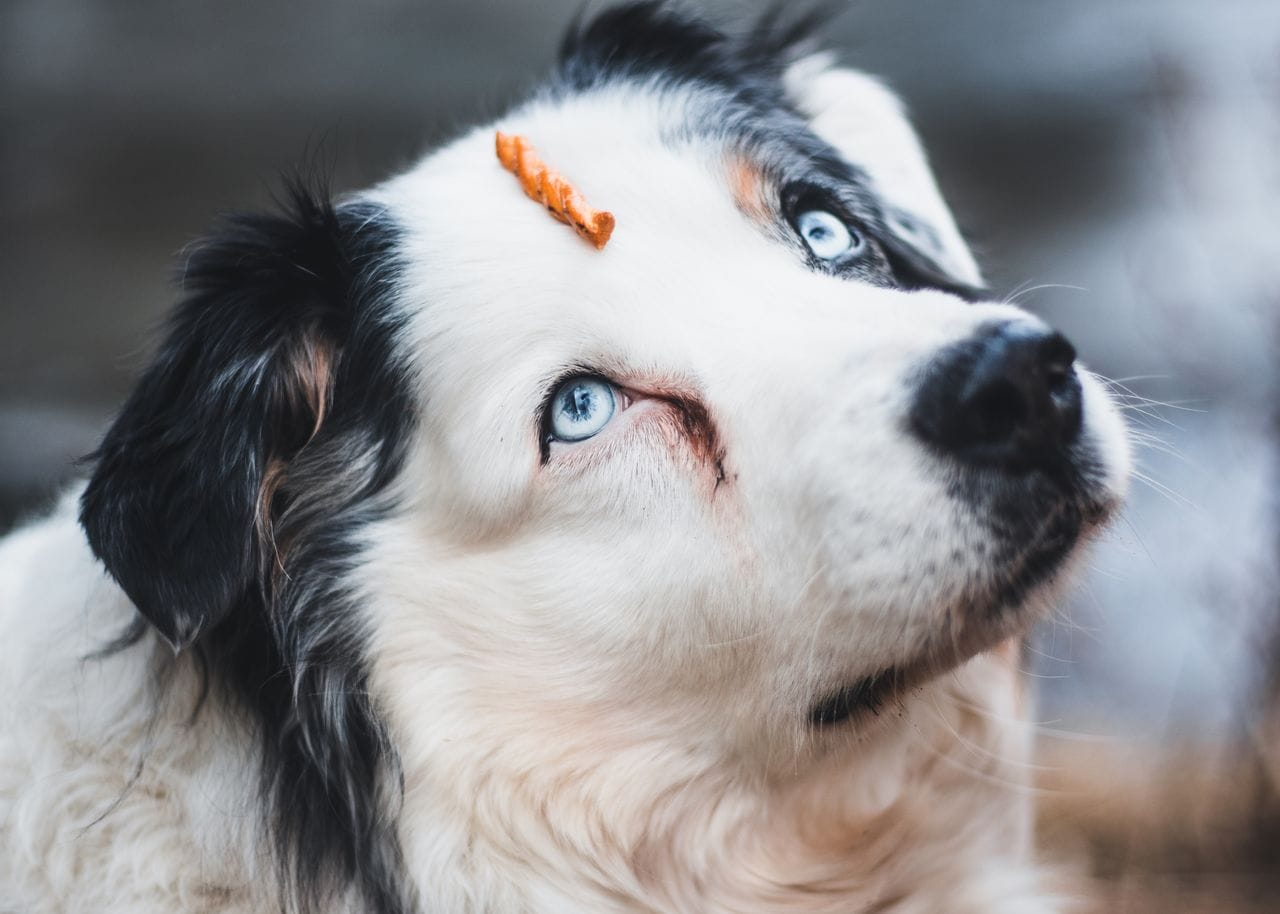
Do dogs miss you when you leave the house, or are we flattering ourselves?
It is easy to believe they do.
You pick up your keys and your dog watches. You close the door. Hours later you return and suddenly there is running, jumping, tail wagging, spinning, whining, perhaps a toy being carried around for reasons known only to the dog.
It certainly looks like someone noticed you were gone.
But dogs are also exceptionally good at getting excited about dinner, visitors, walks, squirrels and a plastic bag moving suspiciously in the wind.
So how do we know that enormous welcome is actually about you?
Scientists cannot ask a dog what it was thinking at 2:30 in the afternoon while you were at work.
They can, however, look at what dogs do when owners disappear, what happens when they return, how dogs respond to their owner’s smell, and whether another friendly human can simply take the owner’s place.
The answer becomes surprisingly personal.

Do Dogs Miss You, or Do They Just Notice You Are Gone?
One of the clearest things we know is that many dogs do not treat their owners like interchangeable humans.
Researchers have repeatedly found something called the secure base effect.
The phrase sounds technical, but the idea is very simple.
A dog behaves differently when its person is there.
In one experiment, dogs were given a task where they could work to get food. They spent more time trying to solve it when their owner was present. It did not matter much whether the owner encouraged them or simply sat there quietly.
Replace the owner with a stranger, and the effect disappeared.
Your presence itself seemed to matter.
Other studies using similar tests have found that dogs explore and behave more confidently around their owners than when they are alone or with unfamiliar people. Researchers have compared this, carefully, with the way young children use a caregiver as a safe point from which to explore the world.
That does not prove a dog spends the afternoon thinking, I wish Sarah would come home.
But it tells us the relationship is not simply:
human provides food, therefore human is useful.
The particular human matters.
Your Smell Matters Even When You Are Not There
A different experiment put awake dogs inside an MRI scanner and gave them several smells.
Their own smell.
An unfamiliar dog.
A familiar dog.
An unfamiliar human.
And a familiar human.
The person connected to the familiar smell was not standing beside them. The dogs were responding only to the scent.
All the smells produced activity in parts of the brain involved with smell, which is hardly shocking.
One stood out.
The scent of the familiar human produced the strongest response in an area of the brain linked with positive expectation and reward.
The researchers were cautious about what this means, and we should be too.
A brain scan cannot translate a dog’s thoughts.
But it does show that the smell of someone familiar carries a special positive meaning even when that person is nowhere nearby.
There is something lovely about that.
You can leave the room.
Apparently, part of you remains.
Dogs Behave Differently Depending on How Long You Were Gone
This may be the closest we get to the everyday version of do dogs miss you.
Researchers once recorded dogs at home after their owners left them alone for different amounts of time.
Sometimes just 30 minutes.
Sometimes two hours.
Sometimes four.
For most of the separation, the dogs did what dogs left at home often do.
Not much.
They rested.
They were not pacing around checking clocks or staring dramatically through rain-covered windows.
The interesting part happened when the owner came back.
After two or four hours apart, the dogs greeted their owners more intensely than they did after only 30 minutes. They showed more physical activity, more attention and initiated more contact.
Something about the longer absence had mattered.
The researchers could not tell whether the dogs actually understood how much time had passed or whether the owner’s return somehow revealed that difference to them.
Still, the dog behaved differently after a longer separation.
That makes the front-door explosion of excitement a little harder to dismiss as simply:
door opened, human appeared.

Some Dogs Even Produce More Tears When You Come Back
This sounds suspiciously like somebody designed a study specifically to make dog owners emotional.
Researchers in Japan measured the amount of moisture in dogs’ eyes before and after they were reunited with their owners.
In one experiment, 18 dogs were separated from their owners for five to seven hours.
When the owner returned, the dogs produced more tears.
The same increase did not appear when dogs reunited with another familiar person who was not their owner. Researchers also found evidence suggesting that oxytocin, a chemical involved in social bonding, played a role.
This does not mean dogs cry from sadness the way a person might watch the final ten minutes of a film and lose control of themselves.
Dog tears do not run down their faces in quite the same emotional display.
But their bodies respond differently when a particular person comes back.
Again, the owner matters.
Missing You Is Not the Same as Separation Anxiety
There is an important distinction here.
A dog can care about your absence without becoming distressed every time you leave.
Most dogs in studies of ordinary separation spend large amounts of the time resting. Some look toward the door, investigate the house or react to sounds, but being alone is not automatically a crisis.
Separation-related problems are different.
Some dogs bark or howl continuously, destroy things, scratch doors, pace, become extremely distressed or struggle to settle when their person leaves.
That is a welfare problem, not stronger proof of love.
In fact, research does not support the simple idea that the dogs who suffer most when alone necessarily have the deepest bond with their owners. Attachment and separation problems are more complicated than that.
A dog calmly sleeping on the sofa while you are away may still be deeply attached to you.
Being able to cope with your absence is not the same as not caring that you left.
Humans understand this perfectly well when it comes to each other.
Dogs Apparently Do More Thinking Than We Give Them Credit For
This connects naturally with something we looked at recently in The Margin.
Researchers studying dogs asked what happens when a dog wants to do something but has to stop itself. They found measurable changes in brain activity during that restraint, including a pattern resembling one associated with self-control in humans.
So that moment when your dog looks at the food, looks at you and reluctantly leaves it alone may involve more internal work than simple obedience.
[Read: Your Dog May Be Fighting With Itself When You Say No]
The same caution applies here.
We should not turn dogs into tiny humans wearing fur.
But we also probably should not reduce everything they do to simple reflexes.
Dogs remember people.
They form specific attachments.
They react to absence.
They react differently when those people return.
Their owner’s smell carries a particular positive value.
At some point, the ordinary word miss starts to feel less unreasonable.
But What Does “Missing Someone” Actually Require?
This is where the question becomes harder than it first appears.
Suppose your dog sleeps for three hours while you are gone.
Does that mean it did not miss you?
What if it never consciously pictured your face?
What if it simply noticed something missing from its normal world?
The footsteps are gone.
Your smell is weaker.
Nobody is moving around the kitchen.
The usual sounds are missing.
The door has not opened for a while.
Does missing someone require sitting there thinking explicitly about them?
Probably not.
Even humans do not miss people in one continuous, conscious way.
You can go about your day perfectly normally, hear a song, smell someone’s perfume or walk past a restaurant, and suddenly feel their absence.
Dogs live in a world dominated by smell, routine and social cues.
Their version of missing us may therefore feel nothing like ours.
We may be asking a human question and expecting a human answer from an animal experiencing the world very differently.

The Sock Experiment Is Somehow the Most Convincing
There is one small study I especially like because it contains no brain scanner and almost no drama.
Researchers left dogs alone with several different smells hidden inside cushions.
One contained lavender.
One contained dried beef.
One contained plain cotton.
And one contained a sock carrying the owner’s smell.
Many of the dogs spent much longer investigating the owner’s sock. Dogs that spent more time checking that smell also tended to lie close to it for longer. The researchers suggested that, for some dogs, the owner’s smell may act as a small substitute for the owner being physically present.
Imagine being beaten by a used sock in a popularity contest.
Even dried beef did not completely solve the problem.
So, Do Dogs Miss You?
We cannot know exactly what it feels like inside a dog’s mind.
That is the frustrating answer.
But it is not the whole answer.
Dogs form specific attachments to their people.
They behave differently when those people are present.
Their brains respond positively to familiar human scents even when the person is absent.
Longer periods apart can produce stronger reunions.
Some dogs seek out their owner’s smell while alone.
And their bodies can respond differently when their person finally returns.
So do dogs miss you?
If by miss we mean they understand absence, care about the particular person who is missing and respond when that person returns, the evidence gives us very good reason to think something close to that is happening.
It may not feel exactly like missing someone feels to us.
It probably does not need to.
The next time your dog loses its mind because you came back from buying milk, you still cannot know what happened in its head while you were gone.
But you can be reasonably sure of one thing.
It noticed you came back.
And you were not just any human walking through the door.
Read Next: Do Animals Get Bored?


 Psychology · Oct 17, 2026A Monkey Bite Killed the King of Greece
 Psychology · Oct 15, 202615 Surprising Facts That Sound Completely Made Up
 The Margin · Oct 13, 202615 Geography Facts That Sound Completely Made Up