
Some links on this page may be affiliate links. If you purchase through them, we may earn a commission at no extra cost to you.
KEY TAKEAWAYS
Modern marketing influences consumer choices subtly by embedding itself into familiar contexts rather than using overt advertisements.
Repeated exposure and emotional cues create a perceived need before consumers consciously recognize it, making decisions feel self-generated.
Psychological principles like the mere exposure effect, loss aversion, and social proof operate invisibly to shape preferences and urgency.
Digital algorithms and moment marketing reinforce familiarity and relevance, making marketing messages feel natural and integrated.
Awareness of these subtle influences can enhance consumer autonomy by encouraging more reflective and conscious decision-making.
GLOSSARY
Perception-Before-Need Effect
A marketing phenomenon where repeated exposure and emotional cues shape consumer perception first, leading to a sense of need emerging afterward.
Mere Exposure Effect
A psychological principle where repeated exposure to a stimulus increases preference for it through familiarity rather than direct persuasion.
Loss Aversion
A cognitive bias exploited in marketing where consumers react more strongly to potential losses, such as limited-time offers, than to equivalent gains.
Social Proof
The influence of collective behavior, such as ratings and reviews, that reassures consumers and shapes their choices under uncertainty.
Moment Marketing
A strategy where brands insert themselves into ongoing cultural events or trending conversations to gain attention within existing consumer engagement.
Aesthetic Marketing
Marketing that uses sensory elements like minimalist design and curated visuals to evoke emotional responses before rational evaluation.
FAQ
How does modern marketing differ from traditional marketing?
Modern marketing operates by embedding itself into familiar contexts and content rather than using overt advertisements. It focuses on subtle presence and integration, making influence less visible and more seamless compared to the transparent persuasion of traditional marketing.
What is the Perception-Before-Need Effect and why is it important?
The Perception-Before-Need Effect describes how repeated exposure and emotional cues shape consumer perception before they consciously recognize a need. This is important because it means consumers often feel their choices are self-generated, even though they have been influenced beforehand.
Which psychological principles underpin subtle marketing influence?
Key principles include the mere exposure effect, where familiarity breeds preference; loss aversion, which creates urgency through scarcity; and social proof, where consumer decisions are guided by others' behaviors and reviews. These operate below conscious awareness to shape decisions.
How do digital platforms enhance subtle marketing strategies?
Digital platforms use algorithms to curate content based on prior behavior, reinforcing exposure to similar ideas and aesthetics. This creates a self-reinforcing loop where familiarity increases perceived relevance, making marketing messages feel natural and integrated into the consumer's environment.
Can awareness of subtle marketing influence improve consumer decision-making?
Yes, awareness does not eliminate influence but sharpens autonomy by prompting consumers to question the authenticity of urgency, preference, and need. This reflective approach can lead to more conscious and deliberate choices despite the structural nature of marketing influence.
EDITORIAL NOTE
This piece is part of The Present Minds — essays on psychology, identity, and modern life.
Dr. Shalu Chopra explores media, communication, and the evolving relationship between information and society. Writing from the UK, her work reflects on how ideas…
This is how subtle marketing influence shapes consumer choices now.
Have you ever bought something and later wondered whether you actually needed it, or whether something quieter had already made the decision for you?
Perhaps it was a piece of jewellery that appeared just often enough while you were scrolling to stay somewhere in the back of your mind. Perhaps it was an offer framed as expiring today, which made it feel urgent rather than optional. The choice felt natural. It felt personal.
But when examined closely, it tends to reveal a pattern of exposure, of familiarity, of emotional alignment that was already in place long before you reached for your card.
This is how subtle marketing influence shapes consumer choices now. Not with a billboard. Not with a hard sell. With presence.

When Marketing Stopped Announcing Itself
Traditional marketing was transparent about what it was doing. Television advertisements, promotional messages, and high street banners clearly signalled their intent. Consumers understood they were being persuaded. The relationship, however unequal, was at least legible.
Rather than pushing messages outward, they embed meaning into the contexts where people are already paying attention. Marketing now appears as content, as recommendation, as aesthetic. It becomes less about persuasion and more about integration until it is indistinguishable from the environment it inhabits.
Consumers do not first identify a need and then search for a solution. Instead, repeated exposure and emotional cues shape perception gradually, and the sense of need emerges afterward.
By the time interest surfaces, the groundwork has already been quietly laid. The decision feels self-generated because the influence that preceded it has already dissolved into the background.
The most effective marketing today does not ask for attention. It arranges to already have it.

The Illusion of Discovery and the Psychology Behind It
Perhaps the most fascinating mechanism in modern marketing is the illusion of discovery.
Consumers frequently believe they have independently found a product, a trend, or an idea. Yet this sense of discovery is often shaped by carefully timed exposure, subtle repetition, and contextual relevance.
The choice feels personal. The pathway leading to it was already constructed.Several psychological principles operate beneath this surface.
The mere exposure effect, documented by Robert Zajonc, suggests that repeated exposure to a stimulus increases preference for it, not through persuasion, but through familiarity.
Familiarity reduces cognitive effort. It creates comfort. Over time, comfort becomes perceived preference, and perceived preference becomes a decision that feels like instinct.
Then there is loss aversion. Limited time offers, exclusive releases, and countdown timers do not change the product. They change the perception of what is at stake.
When time appears scarce, decision making shifts from analytical to emotional. Consumers act faster, evaluate less, and often interpret the urgency itself as a signal of value. The influence is quiet, but the mechanism is precise.
Alongside this sits social proof. Ratings, reviews, and popularity signals provide collective reassurance. When individuals face uncertainty, they default to the behaviour of others. A product with thousands of reviews feels safer than one without. The decision feels supported. What it also is, is shaped.
None of these mechanisms require the consumer to be aware of them. That is exactly the point.
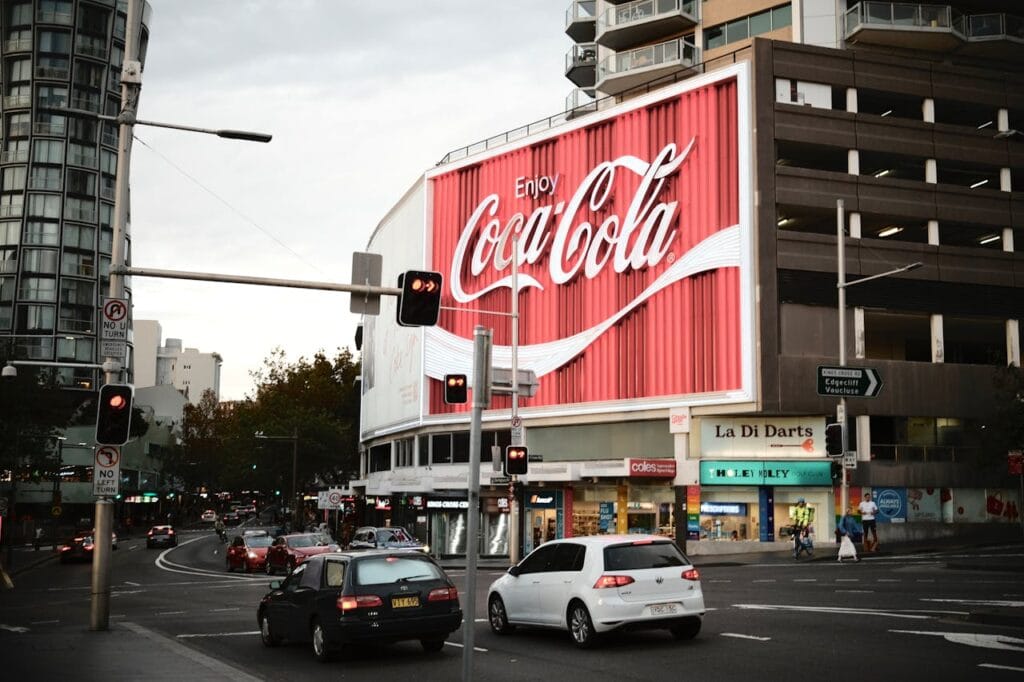
How Subtle Marketing Influence Shapes Consumer Choices Without Being Noticed
The process tends to follow a particular sequence: exposure, repetition, familiarity, cognitive ease, emotional association, perceived need, decision.
By the time a decision occurs, it feels intuitive rather than influenced. And because it feels intuitive, it is rarely examined.
Digital platforms accelerate this considerably. Algorithms curate content based on prior behaviour, reinforcing exposure to similar ideas and aesthetics. The more frequently something appears, the more familiar it becomes.
The more familiar it becomes, the more it resembles something the consumer was already looking for. The loop is self-reinforcing, and largely invisible.
Moment marketing adds another dimension. Brands respond to cultural events, trending conversations, and shared experiences entering contexts that already have attention rather than trying to create it.
The message feels natural because it appears within something the consumer was already inside. The brand is remembered not as an advertisement, but as part of a moment.
Aesthetic marketing works at the sensory level. Minimalist packaging, curated visual feeds, and carefully designed spaces generate emotional responses before rational evaluation has a chance to occur.
Consumers interpret aesthetics as signals of quality, of identity, of lifestyle alignment. The product becomes associated with a feeling. The influence operates below the threshold of conscious thought.
What unites all of these strategies is this: they do not present options. They structure perception.
Consumers operate within bounded rationality making decisions with limited time, limited information, and limited cognitive capacity.
Subtle marketing aligns with these conditions. It does not demand engagement. It integrates into the spaces where engagement is already happening.

Rethinking the Choices That Feel Most Personal
Understanding invisible marketing does not diminish autonomy. It sharpens it.
Awareness creates the conditions for more conscious decision-making. Questions begin to emerge that otherwise would not.
Is this urgency real, or has it been carefully constructed? Am I responding to genuine preference, or to the familiarity of repeated exposure? Is this need functional, or has it been emotionally assembled over time?
These are not comfortable questions. They do not eliminate influence influence is structural, not something that disappears once named. But they change the quality of the decision-making that follows.
The most striking insight is perhaps this: in a world shaped by subtle influence, the choices that feel most personal may also be the ones most carefully constructed.
Not through manipulation in any crude sense, but through the patient, precise arrangement of what feels familiar, relevant, and desirable long before the moment of choice arrives.
Marketing no longer appears as persuasion.
It appears as perception, already in motion.
And the choices it shapes feel, by the time they arrive, entirely like your own.
The Invisible Side of Marketing is part of The Prism — Dr. Shalu Chopra’s column on media, communication, and the ideas that move quietly through public life.
Dr. Shalu Chopra explores media, communication, and the evolving relationship between information and society. Writing from the UK, her work reflects on how ideas move through people, platforms, and public discourse.
Modern marketing influences consumer choices subtly by embedding itself into familiar contexts rather than using overt advertisements.
Repeated exposure and emotional cues create a perceived need before consumers consciously recognize it, making decisions feel self-generated.
Psychological principles like the mere exposure effect, loss aversion, and social proof operate invisibly to shape preferences and urgency.
Digital algorithms and moment marketing reinforce familiarity and relevance, making marketing messages feel natural and integrated.
Awareness of these subtle influences can enhance consumer autonomy by encouraging more reflective and conscious decision-making.
Glossary
Perception-Before-Need Effect
A marketing phenomenon where repeated exposure and emotional cues shape consumer perception first, leading to a sense of need emerging afterward.
Mere Exposure Effect
A psychological principle where repeated exposure to a stimulus increases preference for it through familiarity rather than direct persuasion.
Loss Aversion
A cognitive bias exploited in marketing where consumers react more strongly to potential losses, such as limited-time offers, than to equivalent gains.
Social Proof
The influence of collective behavior, such as ratings and reviews, that reassures consumers and shapes their choices under uncertainty.
Moment Marketing
A strategy where brands insert themselves into ongoing cultural events or trending conversations to gain attention within existing consumer engagement.
Aesthetic Marketing
Marketing that uses sensory elements like minimalist design and curated visuals to evoke emotional responses before rational evaluation.
FAQ
How does modern marketing differ from traditional marketing?
Modern marketing operates by embedding itself into familiar contexts and content rather than using overt advertisements. It focuses on subtle presence and integration, making influence less visible and more seamless compared to the transparent persuasion of traditional marketing.
What is the Perception-Before-Need Effect and why is it important?
The Perception-Before-Need Effect describes how repeated exposure and emotional cues shape consumer perception before they consciously recognize a need. This is important because it means consumers often feel their choices are self-generated, even though they have been influenced beforehand.
Which psychological principles underpin subtle marketing influence?
Key principles include the mere exposure effect, where familiarity breeds preference; loss aversion, which creates urgency through scarcity; and social proof, where consumer decisions are guided by others' behaviors and reviews. These operate below conscious awareness to shape decisions.
How do digital platforms enhance subtle marketing strategies?
Digital platforms use algorithms to curate content based on prior behavior, reinforcing exposure to similar ideas and aesthetics. This creates a self-reinforcing loop where familiarity increases perceived relevance, making marketing messages feel natural and integrated into the consumer's environment.
Can awareness of subtle marketing influence improve consumer decision-making?
Yes, awareness does not eliminate influence but sharpens autonomy by prompting consumers to question the authenticity of urgency, preference, and need. This reflective approach can lead to more conscious and deliberate choices despite the structural nature of marketing influence.
Editorial Note
This piece is part of The Present Minds, essays on psychology, identity, and modern life.
Leave a Reply