The Tiger in the Tunnel by Ruskin Bond: the story about what fathers leave behind
Some links on this page may be affiliate links. If you purchase through them, we may earn a commission at no extra cost to you.
KEY TAKEAWAYS
The story centers on ordinary courage and duty rather than heroic grandeur.
Baldeo’s axe symbolizes inheritance, continuity, and the passing down of responsibility.
The tiger represents natural danger, not villainy, highlighting survival rather than conflict.
Tembu’s quiet endurance and assumption of his father’s role illustrate the weight of family legacy.
Ruskin Bond portrays the harsh realities of life on the edge of civilization with empathy and realism.
GLOSSARY
Baldeo
The watchman and khalasi responsible for lighting the signal lamp and ensuring the railway tunnel is safe at night.
Tembu
Baldeo’s twelve-year-old son who witnesses his father’s death and takes up his duties afterward.
The Axe
A fragile but deadly tool made by Baldeo’s father, symbolizing inheritance, skill, and continuity.
The Signal Lamp
A lamp Baldeo must light every night to signal that the tunnel is clear for the train to pass safely.
The Tiger
A man-eating tiger that embodies natural danger and survival, not evil or villainy.
Khalasi
A railway worker responsible for manual tasks such as maintaining the signal lamp and clearing the track.
FAQ
Why is the story called 'The Tiger in the Tunnel' if it’s not really about the tiger?
The title draws attention to the immediate danger but the story’s deeper focus is on human endurance, duty, and inheritance. The tiger is a catalyst for revealing these themes rather than the central subject.
What does Baldeo’s axe represent in the story?
The axe symbolizes the passing down of knowledge, responsibility, and strength from father to son. It carries emotional weight beyond its physical function, embodying continuity across generations.
How does Ruskin Bond portray bravery in the story?
Bravery is shown as a necessity rather than a heroic choice. Baldeo’s courage arises from his obligations and the harsh realities of his life, not from a desire for glory or recognition.
What is the significance of Tembu’s actions after his father’s death?
Tembu’s decision to stay with his father’s body and later take up his duties reflects the quiet acceptance of responsibility and the continuation of family legacy in the face of loss.
How does the story reflect the lives of people living on the edge of civilization?
It highlights the daily struggles and uncelebrated sacrifices of ordinary people like watchmen and farmers, whose survival depends on fulfilling small but vital tasks without fanfare or choice.
EDITORIAL NOTE
This piece is part of The Present Minds — essays on psychology, identity, and modern life.
The Tiger in the Tunnel by Ruskin Bond: the story about what fathers leave behind
7 min read · 1,321 words
Tap to switch read mode.Original contrast is live.
Written ByNavneet ShuklaFounder · Editor · Systems Architect
Navneet Shukla writes about how people think and how modern life shapes that thinking. The Present Minds is where he explores it.
The Tiger in the Tunnel by Ruskin Bond is not really about a tiger.
You suspected this the first time you read it. You probably could not have said why.
Now you can.
It is about an axe. It is about a lamp. It is about a twelve-year-old boy sitting alone in the dark with his father’s body, keeping the hyenas away until morning.
It is about what gets passed down when everything else is taken.
The Man With the Lamp
Baldeo is not a heroic figure in the way stories usually offer heroic figures.
He is a watchman. A khalasi at a small railway station on the edge of a jungle. His rice field is too small to feed his family. So every night he walks through the dark to a tunnel cut into rock and checks that the signal lamp is lit and the track is clear. So the overland mail train can pass safely through.
That is the whole job. Keep the lamp burning. Keep the tunnel clear. Go home.
He is paid very little. He does it anyway. Not out of noble sacrifice. Out of arithmetic. The rice field is not enough. The lamp job makes up the difference. His family eats because he walks through the jungle at night.
Bond describes Baldeo’s axe with the line that stays in the mind long after the story ends. Fragile to look at but deadly when in use.
His father made it for him. It is the kind of object that carries something beyond its function. Familiarity. Inheritance. The specific confidence of a man who knows exactly what he is capable of because someone showed him first.
He carried the axe the way some people carry their fathers. Long after they are gone.
Stay in the Hut
On this particular night, Tembu is awake when Baldeo prepares to leave.
He is twelve years old. He has walked with his father before. He knows the tunnel, the dark path through the trees, the particular silence of the jungle at midnight. He asks to come.
Baldeo says no. It is cold. Stay in the hut.
This is the moment the story turns on. Not the tiger. Not the axe. This small, ordinary exchange between a father and his son at the door of a hut in the dark.
Baldeo knows what is out there. He has heard the stories about the man-eating tiger that haunts the area around the tunnel. A tiger he has never seen but that every villager describes with the specific certainty of people who live alongside something dangerous enough to require a story.
He sends Tembu back.
He walks into the dark alone.
The Signal Light
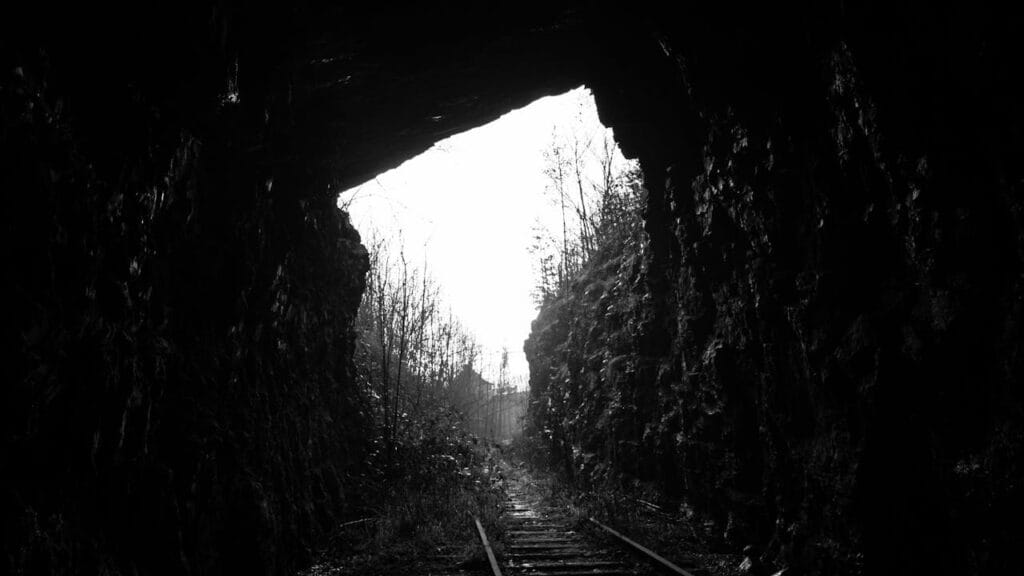
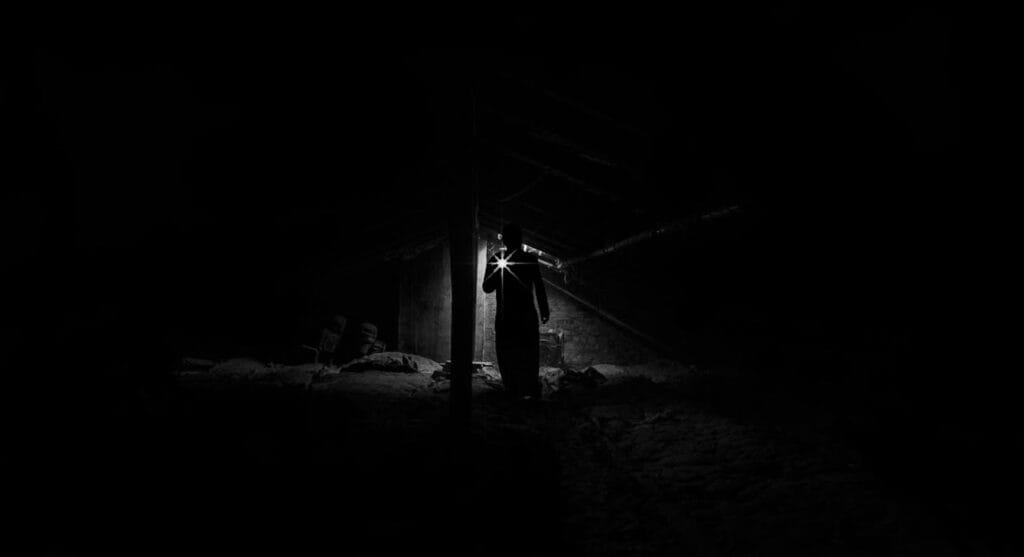
The lamp is out when Baldeo reaches the tunnel.
He hauls it down by its rope. He relights it. He hoists it back. He walks the length of the tunnel to check for obstructions. Dark at one end. Dark at the other. Somewhere out in the night the ground begins to tremble. The train is coming.
He returns to the entrance.
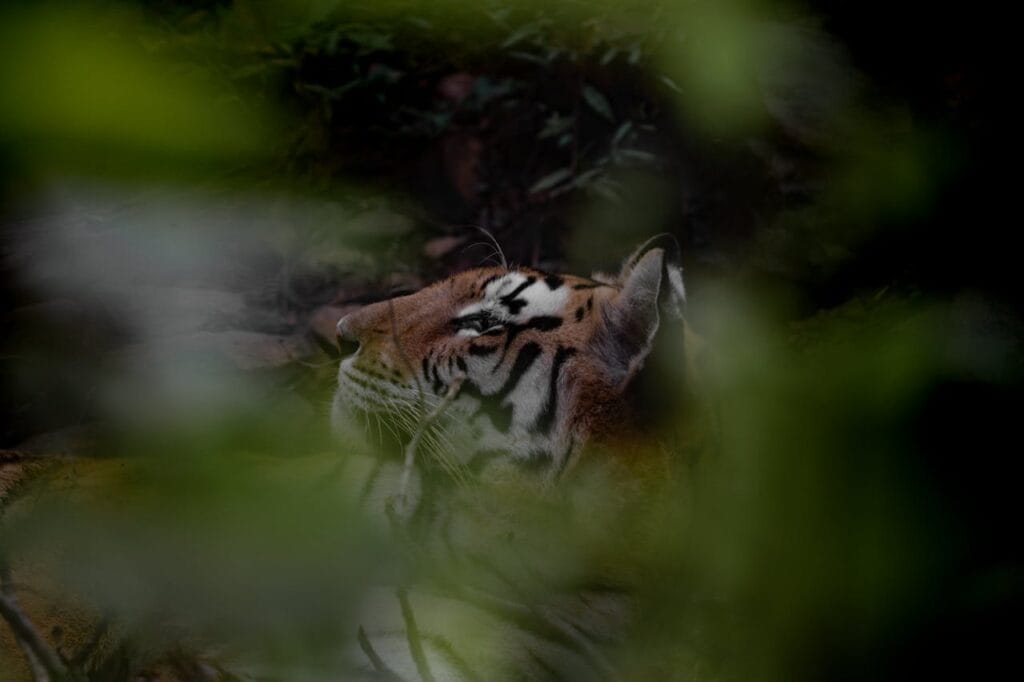
And the tiger comes.
Bond does not make this a slow approach. There is no circling. No warning. The tiger springs from the dark and it is there, between Baldeo and any possible retreat, and he knows immediately that running is not an option.
He puts his back to the signal post.
He raises the axe.
The first blow lands on the tiger’s shoulder. The tiger staggers. It attacks again. The second blow is harder. It almost severs the foreleg. The axe buries deep into bone.
And sticks.
Baldeo is left standing in the dark with nothing in his hands.
He had given everything the axe had. The axe had given everything it had.
The tiger tears him apart.
Two Deaths in One Night
The train is close now. The ground is shaking.
The wounded tiger, bleeding and disoriented, does not see it coming. It rushes into the tunnel. The overland mail enters at full speed.
When the driver stops at the next station to inspect his headlamps, he finds half a tiger attached to the front of the engine. Bond notes his reaction with quiet precision. The driver is shocked and amazed.
Back at the tunnel entrance, Tembu has come looking for his father.
He is not amazed. He is twelve years old and his father is dead on the ground and the hyenas are beginning to come out of the dark.
He sits down beside the body. He stays all night. He keeps them away.
This is the scene Bond does not linger on. He gives it very few words. But it is the scene the whole story has been building toward. A child in the dark beside his dead father, doing the only thing he can do. Which is stay. Which is not leave. Which is be there until morning when someone else can come.
The Morning After
The family mourns for two days.
Then Tembu picks up his father’s axe and goes back to the tunnel.
He lights the signal lamp. He checks for obstructions. He sits in the small hut and waits for the overland mail. Bond tells us he whistles softly to himself. That he is not afraid. That he has the axe, and he knows how to use it.
The story ends here. A boy at the mouth of a tunnel, lamp lit, axe in hand.
This ending is not triumphant. It is something quieter and more difficult than triumph. It is the moment a child becomes what the family needs him to be. Not because he chose it. Because there is no one else.
The axe did not make him brave. It made him continuous.
What Ruskin Bond Knew
Bond spent much of his life writing about India from the inside. The hills. The forests. The small railway stations where the jungle presses right up to the edge of human order and stops.
He understood something about the people who live at that edge. The watchmen and the khalasis and the farmers with small rice fields. People whose lives do not make headlines. Who do not have the luxury of philosophy because the lamp needs to be lit and the train needs to pass and the family needs to eat.
Baldeo is not a symbol. He is a man doing his job.
The tragedy of his death is not that he was brave. It is that bravery was simply required. The life he had built demanded it of him and he met that demand without ceremony or audience.
The tiger is not a villain. Bond is too careful a writer for that. The tiger is also just doing what it does. Two creatures at the entrance of a tunnel at midnight, each one trying to survive. Only one of them had a choice about being there.
What Stays With You
The thing that stays is not the tiger. Not the fight. Not the train.
It is Tembu. Sitting in the dark. Not leaving.
Bond did not write Tembu as a hero. He wrote him as a child doing the only thing available to him. Staying close to the person he loved for as long as staying was possible. And then, two days later, picking up the axe and going back.
Because the lamp still needs to be lit. Because the train still needs to pass. Because a father can leave you everything he knew and nothing he had and somehow that is enough to go on with.
The lamp is lit. The axe is in his hand. The tunnel is clear.
The train will pass safely through tonight.
It passed safely through last night too.
It cost more than the fare.
Purchase the Tiger in the Tunnel here : Buy on AMAZON
The story centers on ordinary courage and duty rather than heroic grandeur.
Baldeo’s axe symbolizes inheritance, continuity, and the passing down of responsibility.
The tiger represents natural danger, not villainy, highlighting survival rather than conflict.
Tembu’s quiet endurance and assumption of his father’s role illustrate the weight of family legacy.
Ruskin Bond portrays the harsh realities of life on the edge of civilization with empathy and realism.
Glossary
Baldeo
The watchman and khalasi responsible for lighting the signal lamp and ensuring the railway tunnel is safe at night.
Tembu
Baldeo’s twelve-year-old son who witnesses his father’s death and takes up his duties afterward.
The Axe
A fragile but deadly tool made by Baldeo’s father, symbolizing inheritance, skill, and continuity.
The Signal Lamp
A lamp Baldeo must light every night to signal that the tunnel is clear for the train to pass safely.
The Tiger
A man-eating tiger that embodies natural danger and survival, not evil or villainy.
Khalasi
A railway worker responsible for manual tasks such as maintaining the signal lamp and clearing the track.
FAQ
Why is the story called 'The Tiger in the Tunnel' if it’s not really about the tiger?
The title draws attention to the immediate danger but the story’s deeper focus is on human endurance, duty, and inheritance. The tiger is a catalyst for revealing these themes rather than the central subject.
What does Baldeo’s axe represent in the story?
The axe symbolizes the passing down of knowledge, responsibility, and strength from father to son. It carries emotional weight beyond its physical function, embodying continuity across generations.
How does Ruskin Bond portray bravery in the story?
Bravery is shown as a necessity rather than a heroic choice. Baldeo’s courage arises from his obligations and the harsh realities of his life, not from a desire for glory or recognition.
What is the significance of Tembu’s actions after his father’s death?
Tembu’s decision to stay with his father’s body and later take up his duties reflects the quiet acceptance of responsibility and the continuation of family legacy in the face of loss.
How does the story reflect the lives of people living on the edge of civilization?
It highlights the daily struggles and uncelebrated sacrifices of ordinary people like watchmen and farmers, whose survival depends on fulfilling small but vital tasks without fanfare or choice.
Editorial Note
This piece is part of The Present Minds, essays on psychology, identity, and modern life.







Leave a Reply